Baytown, TX February, 2018

We drove from NAC to Baytown on the eastern side of Houston in a steady rain, a hard driving rain at times and pretty much into the wind the whole way. It is about a three hour drive mostly on four lane divided roads. It had been raining on and off for several days and the road sides were very soft. We saw two semis off the road and stuck hard in the muck. The rain stopped about 2/3 of the way down.

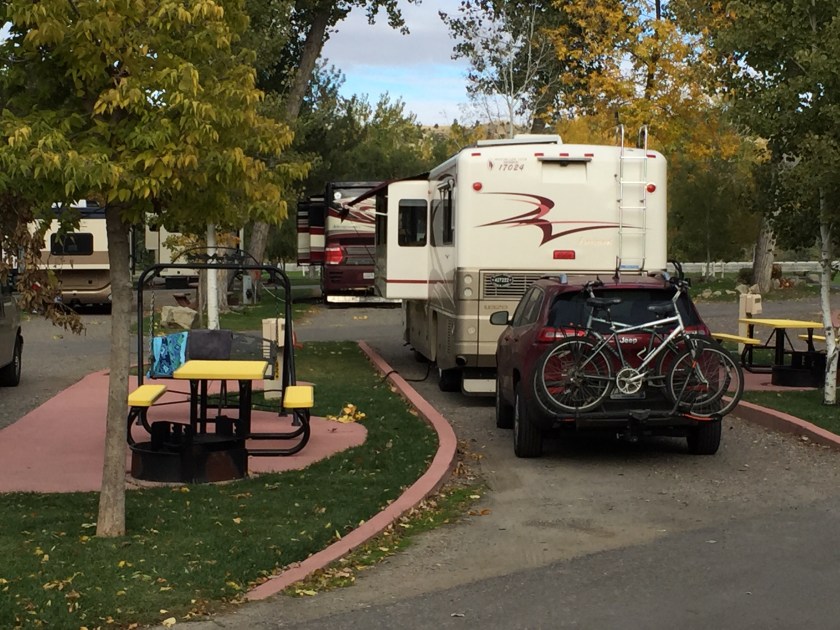
Rudy and Carolyn are full timers whose home base is on the side of a man-made lake at their friend Ralph’s place. He has several acres along the side of the lake and let Rudy and Carolyn put in a concrete pad with a steel framed cover over it down at one end. It is big enough for their coach, two cars and a storage shed. They have water, electric, a sewer hookup and DirecTV. It is quite nice. Ralph has a coach that rarely leaves its heated and air conditioned 60 x 40 ft coach house. There is a nice laundry room and bathroom and plenty of room for the things Ralph likes to collect like old gas station pumps and fire hydrants. There is about 20 ft of covered space at the end of the barn where the big garage doors are. There is also a 50 amp electric hookup, water and waste hookups too. It was not raining when we got there but Ralph insisted we pull in under the cover because more rain was on the way. The Jeep fit under the cover as well. We got electricity hooked up, added some water to the fresh water tank and settled in for a visit.

The next day I caught up on some work stuff, we did laundry, washed the coach and the Jeep, Carolyn’s car got washed too.

Rudy was off in the morning doing an AquaHot service call. This usually consists of replacing the diesel fuel filter, the nozzle that sprays the fuel into the burner chamber, cleaning out the burner chamber and the flame sensor and setting the gap on the spark starter. It takes Rudy and hour. It takes me about two. And he does several a week during the late fall and winter season. Sometimes there are other issues that he fixes like pumps, control circuits, relays, internal thermostats, motor bearings, clutches, fuel pumps and more. He is a whiz at diagnosing issues and getting them fixed. It is a good source of income for them.

We went out for dinner that evening to an Olive Garden because we had a gift card and so did Rudy and Carolyn. Dinner was good. I had a Bolognese sauce on pasta something or other. I have always liked Bolognese sauce but rarely make it any more. Susan had a Braised beef with gorgonzola and Alfredo sauce. We all had salad and bread too. We took half of our dinners home with us.

The following day was sunny so we all got into Carolyn’s car and headed to Galveston. It is about an hour and a half drive but we mostly went the back way not the interstate so we got to see all of the stuff along the back way. We saw two giant container ports, lots of areas that were flooded during last winter’s Hurricane Harvey and lots more damaged and rebuilt areas from Hurricane Ike (2008). Harvey was mostly rain, 49″ where Rudy and Carolyn live. Ike was very high storm surge.

It is just hard to imagine that much water anywhere. There is a car race track near Rudy’s place where there were more than 46,000 flood damaged cars. They get a salvage title and get resold to unsuspecting folks somewhere else.

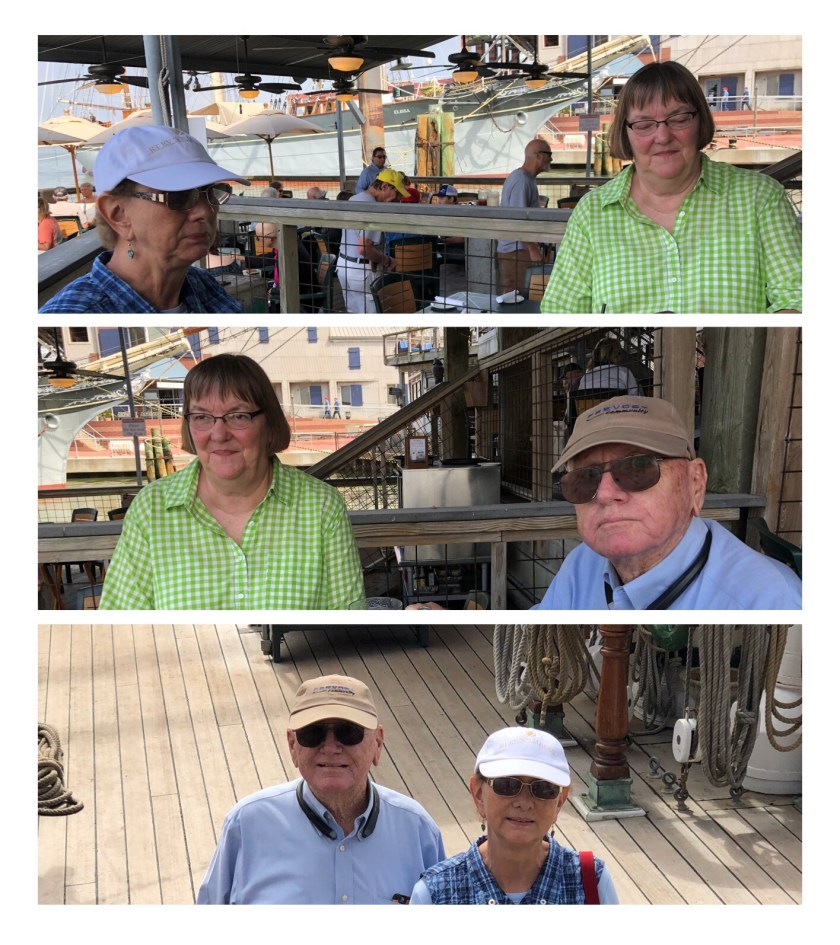
In Galveston we stopped to see the Elissa, a late 1800’s iron hulled, three masted sailing ship that has been restored. It now is at the Texas Seaport Museum in Galveston Harbor. It visited Galveston a couple times in the early 1900s and as a real part of Galveston’s maritime history it was rescued from the scrap yards in Greece. A repair team made it seaworthy enough to tow the 205 ft ship back to Galveston to complete the restoration back to her original form. Today the Elsissa is a National Historic Landmark. Her main mast towers nearly 100 ft above the water line.

We wanted to see the Elissa in part because Susan’s sister Nancy was on the crew when it sailed from Galveston to New York City in 1986 for the Tall Ships Celebration of the renovation of the Statue of Liberty.

She was the cook on this cruise in a pretty small kitchen.

Today the Elissa is maintained by a large crew of volunteers and trains crews in the ways of sailing a classic square rigged ship. Just learning what ropes were for what and the names of all the sails takes weeks. At least once a year the Elissa sets sail for sea trials and training in the Gulf of Mexico.

We had a nice visit, toured the ship, went through the museum and of course the gift shop.

We had a very tasty lunch at a restaurant just down the street.
And then further down The Strand to an ice cream and chocolate shop. We got some of both. It was nice to have tour guides like Rudy and Carolyn who know how to get around and where to park.

Rudy had a fellow named Gus as a person-in-training for Aqua Hot repair. Gus had been to the AH school and now had to get some hands on experience. Gus goes along with Rudy and does most of the hands on stuff while Rudy helps him learn the diagnostic process. Gus lives up near Lubbock, originally from Uruguay. His wife was along too and they were staying in a nearby RV park. Gus told me that coming to Houston was the furthest they had ever been in their motorhome.

One morning Rudy and Gus dismantled the guts of an AH right down to the bearings in the motor and put it all back together. After they were done we all piled into Carolyn’s car (all except Susan) and we went to a TX tradition, Whataburger. It is definitely not McDonalds, way better. I had a massive mushroom and swiss burger. Very tasty.

That evening we went to a small BBQ place. It was the size of an old fashioned small gas station because it once was. Ordered at the counter and they brought it out. It was different from the BBQ that we are used to but quite good. Nothing came home for leftovers.

I helped Rudy with a new small laptop for his coach and tried to get his printer to connect to his wifi, it would and then get lost, over and over. We fixed a louvered door in Ralph’s coach that had been damaged. We reglued it and added a couple screws for good measure.

As is always the case there seems like there were a few things we didn’t get to but mostly we just had a very nice visit with Rudy and Carolyn. They are good friends and we are glad to know them.

Next we head north(ish) about 80 miles to Onalaska, TX on the shore of Lake Livingston. We will be there for about three weeks.

More later,

Roger and Susan
A Stop in NAC, Feb, 2018

We left Maumelle COE after two nights (thinking three nights would have been better). Rain was forecast between there and NAC as everyone calls Nacogdoches. The AAA routing says four hours, we figure about five and a half and we are pretty close. We don’t drive the speed limit (75 mph on two lane state highways!) and we seem to catch most of the stop lights.

Foretravel has a campground which is really just a parking lot but they have 50 amp hookups and water. There is a laundry there as well. Lots of folks in for service stay there. Anyone else just passing through is usually welcome to stay as well. Nice because it was free. Well, free like Walmart. I went in to the Parts Department and bought a new pressure switch for the auxiliary air compressor and a couple of polyurethane bushings for the engine hatch. They help keep it from rattling.

There were several people in the campground, a couple that I knew. One was from New Mexico, the other from Northern Texas.

We had plans to meet Rudy and Carolyn Legett from Baytown the next day for a visit with Mary and Chappell Jordan. So that evening Susan and I went to Auntie Pastas for dinner. Susan had chicken piccata and I had pan seared red snapper. What a wonderful dinner. Service was attentive, food came quickly and hot. We got a baguette with dinner, we only had a small chunk of it and the wait person sent us home with another. These are baked on site and brought to the table still warm. The two we brought home became French toast a few days on. Way more than we could eat for breakfast so the rest got frozen for a quick breakfast another day. At dinner the folks sitting at the table next to us recognized us from the Foretravel Forum and introduced themselves. They were from Fort Worth and were staying over at Motorhomes of Texas.

Rudy and Carolyn stopped by in the morning and we followed them to Chappell and Mary’s home. NAC is the oldest city in Texas. It has about 20,000 people there plus another 11,000 students at Stephen F. Austin State University. It is also the county seat. This area is forested with pine trees and the lumber industry has been big for a long time. There are many grand homes in the historic district where Chappell and Mary live. They retired from Chappell’s Houston clock store (repairs and sales) in the mid 1990s and moved to a large 1890s home in NAC that was a bed and breakfast. They continued the B&B for five years or so and then it reverted back to a single family home once again. Lots of bedrooms and bathrooms. They are active antique furniture collectors so the whole house is stuffed with beautiful furnishings and 150 or so of Chappell’s clocks that he hung onto. Some are immense clocks, some stately grandfather clocks, many old English clocks and many just quite curious ones.

Rudy wanted me to meet Chappell because we share woodworking as a serious avocation. He will tackle almost anything. There were clocks, large dining and kitchen tables, small trays, end tables and many more things he has built all through the house. He likes working in Cherry and Curley Maple. His work was very well done, a joy to see. We went to his shop and looked at wood, looked at tools, talked about methods, tools and much more … boring to all but woodworkers. But just as much fun for Rudy to see us connect as he thought we might.

We went out for lunch and then back to their coach house where Chappell and Mary store their FT. More motorhome yakking and then back to their house. The gals stayed there and the guys went to look at motorhomes at Motorhomes of Texas. We looked at several then we went to MOTs second site to look at something else and ran into the folks we met the night before at dinner. And then to Xtreme Paint and Graphics to say Hi to friends there and then back to check on the gals. (This guys/gals this is a TX thing). They were fine, they had a detailed tour and lots of chatting about everything. So after a cup of coffee we all said goodbye and departed.

What a pleasant and enjoyable day.

And then we went out for dinner with Mike and Jackie Harbordt, more good friends from NAC. They too have a FT, something we have in common but we all share an interest in books and authors and the things they say, how they say them and what that all says to us. Lots of common thought here. Last time we were down here Mike gave me a book of blog pieces written by Pat Conroy. He is an interesting author whose works include “The Great Santini”, “The Lords of Discipline”, “The Prince of Tides” and more. He was raised in a strict military family and went to the Citadel, a South Carolina military college. His writing reflects much of his own life experiences and life at the Citadel. His blogs speak of his friends, friendship, writing, reading, authors and language. I started the book, Susan picked it up and finished it in a flash and went on to read other of his books, I like to say I am on my third reading. I read one entry, stop and think about it and then again some more and then go back several entries and read them again because I need to understand what was said. And then forward again.

This has made me think about what is said and how. Much more about how friendships emerge and strengthen and sometimes not and how important they can be. And what happens when you lose a long time friend.

We had a very nice dinner with Mike and Jackie. We will be seeing them in about six weeks over in Fredericksburg, TX when the Bluebonnets should be in bloom. It is always a pleasure to see them and share a meal and a conversation.

On to Baytown next. We were getting ready to leave and the folks from Fort Worth showed up for a short show and tell. And then on we all went. It was pouring rain. Buckets.

More later,

Roger and Susan.

Texas, Winter 2018

Our departure date has been Feb 20 for some time now. The last two winters in Minnesota have been mild. This winter has been cold, lots of overnight temps below zero. A few small snowfalls and one where we got “buried” with 14 inches. It was pretty light and fluffy so easy to deal with.

Projects were done, we started looking at weather as we do when heading home. In the middle of winter leaving can be just as hard. We need two clear days to get far enough south that we will be where it is warmer. All through early February it had been very cold in Texas, below freezing often, ice and snow and rain. We moved our hoped for departure date up to the 16th from the 20th to open up the window. Weather heading south looked better earlier and worse at home than heading south on the 20th.

The Oak Tree

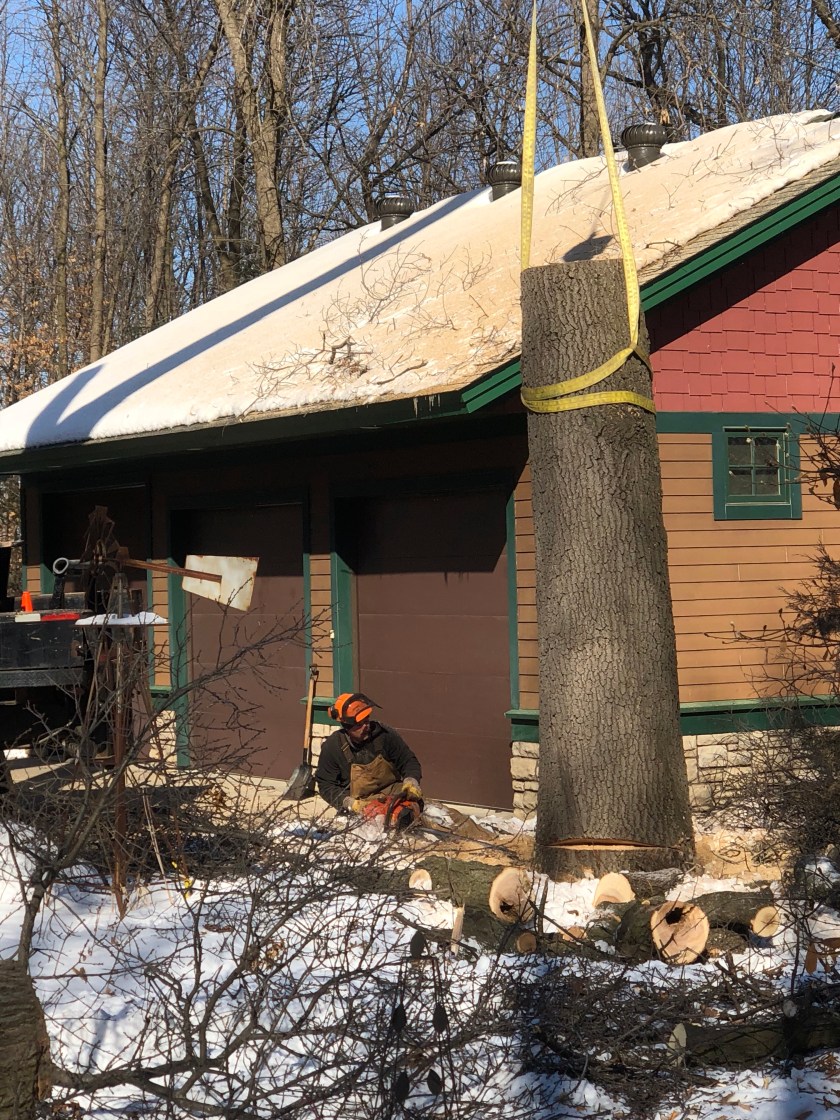
And then there is the other stuff. In prep for our Solar Project (and because it was dying and rotting from the inside out) the old oak tree at the corner of the garage needed to go. Our tree cutter, Eric, got up into the top with his lift truck and said it wasn’t going to get better with even a severe trimming and had long spiral cracks running down into the base of the tree from lightning strikes so we said remove it. I hate cutting down trees especially oaks and this one had been there for a hundred years or so. It was over 3 ft in diameter at the base. Eric cut down as many of the branches as was safe to do with his boom truck and then got a crane in there to hold chunks as he cut them off. The rest of the big branches came down and then the trunk. They cut off an 8 ft section that weighed about 6,000 lbs and then the last 12 ft section that weighed close to 10,000 lbs.

Eric’s 4 ft chain saw just barely went through the base.

And a tug from the crane and it was free. The big logs went off to a saw mill to see what lumber they could get from them.

All this was going on while we were getting the coach ready for travel.

Leave

We were ready so we left on the 16th. We forgot a few things maybe because we left early or because of distractions or just because. Nothing we can’t live without but they get added to the list.

Seven degrees when we left, straight down 35 into Iowa, cloudy into Missouri and south of Kansas City to a WalMart that is easy in and out, just off the interstate. It is free to stay there but then you go inside and pick up some of this and that and pretty soon it is $25 anyway. Much warmer there, right around freezing.

The next morning we headed south on I49 towards Alma, Arkansas, it was raining most of the way, not hard but wet. Then SE on I40 towards Little Rock. We almost got there but turned south to cross the Arkansas River and then back up the other side to Maumelle Corps of Engineers (COE) campground. We have been here before. It is right on the river and a nice place to stop for 2 or 3 nights.

It was cloudy there but not raining. Cool, but it felt warm to us. We de-winterized the water system. Drain all of the RV antifreeze in the pipes, add water, flush everything out, repeat a couple times, drain the water tank. Add some bleach to the fill side of things and start filling the water tank. Let it sit and then drain it all out and do it again and drain that out. Then fill the tank with the filters and water softener in place. Takes a couple hours. Better than frozen pipes.

The Arkansas River connects to the Mississippi River. It has locks and dams for navigation and just like at home, barges and tow boats go by.

This is a very nice stopping point on our way south. It seems remote but there is shopping and service nearby. There is plenty of room to get out and stretch your legs and just let the slower part of being elsewhere catch up and abandon the busy-ness of getting ready to go. A good start.

More later,

Roger and Susan
Edits

  • Fixed year in Title

Winter Projects, 2017

When you get home from being elsewhere there are always things that need to get done, things promised, things left over and things that need to get started. And then there are the things you don’t even know about yet. Lots of those.

Coach Projects

Not much here that is new. We had a small radiator leak. I started noticing a drip here or there after the Tetons on our way to Oregon. Some driving days there was nothing, other days there might be a wet spot 4-5 inches across. I had part of a gallon of antifreeze along and added that to the 11 gallons of coolant in the engine and radiator. We never leaked enough to need any more.

I took it up to Cummins and they thought it would be a simple repair, they ended up rebuilding the entire radiator. It was a couple coach bucks (thousands) plus the oil change (38 qts) and transmission synthetic fluid change. Pretty much burned through that year’s and some of next years maintenance budget. It is all well and fixed now. It was due for a coolant system flush and clean and fill and new filters again anyway.

Shop Work

When we built our house we left a shallow recess along one wall of the short hallway between the master bedroom and the master bath. The opposite side of the hallway opens into the walk-in closet. We like a few shows on HGTV and this now called the “en suite”. French for a room with a ceramic shrine connected to a bedroom. We never heard of that when we built the house. Anyway, the idea was to build a cabinet of some sort into that space to store linens or clothes. After many years of thinking about it work commenced two years ago on this project about two weeks before I fell on the ice and tore up my shoulder. Six months of recovery and rehab meant no shop work. I got back at it in a disjointed fashion, some here and some there. The lower carcase (internal framework) and face frame, the doors, and all of the drawers got made a year ago. When we got home I started up again, promising to get it finished before we left for TX. The center and upper sections were made and assembled. All three parts came into the house for fitting into the recess which was pretty close to plumb and square but not exactly. The cabinet has to fit in with a very well fitting edge on one side and a bit of room for expansion on the other.

Back to the shop for final mounting of the drawers. The slides have to be in just the right place so that the drawers fit into the openings and flush to the face frames. 3/64″ allowance all around the drawer to the face frame (that is less than 1/16″). There are three doors on the upper section, they all fit with the same tolerance. I added LED lighting to the middle section and to the interiors of the upper section.

Six coats of a catalyzed oil finish leaves just the right color, sheen and feel to the birch. And then back into the house, positioned just so, locked into place and it was done.

102″ tall x 60″ wide. 13 drawers. A lighted center section and more storage behind the upper section drawers.

Now I can finish the door trim. It passed Susan’s approval (two thumbs up!) and mine too. The drawers are filling up. I really enjoy working in the shop, it is soothing, methodical and detailed work that for me is quite pleasing.

Solar Panels

No, not more on the coach but for the house. We looked into getting solar panels on the roof of the house. Did it make sense? What was the cost? What were the benefits? Would it pay for itself? The answer seemed to be Yes to all. There are significant State and Federal tax benefits to help pay for the installation, very substantial rebates from the local utility company and State law requires the local Utility to buy back excess power at the current retail price of electricity.

We can put in up to 120% of our average annual use. Than means almost 13,000 watts for solar panels on the roof. On average we will generate 100% of our usage and sell 20% back to the utility. At night we will buy some power but most of that is off-peak power at a much lower rate much less than we sell back during the day. The savings from not buying power from the utility and selling the excess back means that it should pay for itself while we can still enjoy it.

So we are going to move forward with it. Engineering, design and permitting are in the works. If it all meets our final approval work begins in late May.

Planning for the Next Trips.

We thought about going to a South Carolina beach State Park this winter. Either Edisto or Hunting Island. They are nice parks, right on the ocean and 1/2 price for snowbirds. The weather there this winter was terrible, glad we didn’t go. And then we were considering the Gulf Shores are east of Mobile. We started checking on places more than six months before we wanted to be there and there was nothing available anywhere for any length of time.

We are heading for Texas Hill Country in winter 2018. South of Austin, north of San Antonio. Livingston, Georgetown and Fredericksburg. Lots to do down here, the Hill Country should be a place we can go if we just want to go south. And over time we have met lots of nice folks down this way.

We are going to Michigan (upper and lower) in the summer of 2018. Maybe Gulf Shores in Alabama for winter of 2019. Maybe the Canadian Maritimes for summer of 2019. The way the travel world is today a year of lead time is needed for many places. 44 years ago when we started our RV life reservations were almost unheard of and almost never needed.

TX🔜

More later,

Roger and Susan
The Way Home To Hastings, Fall 2017.

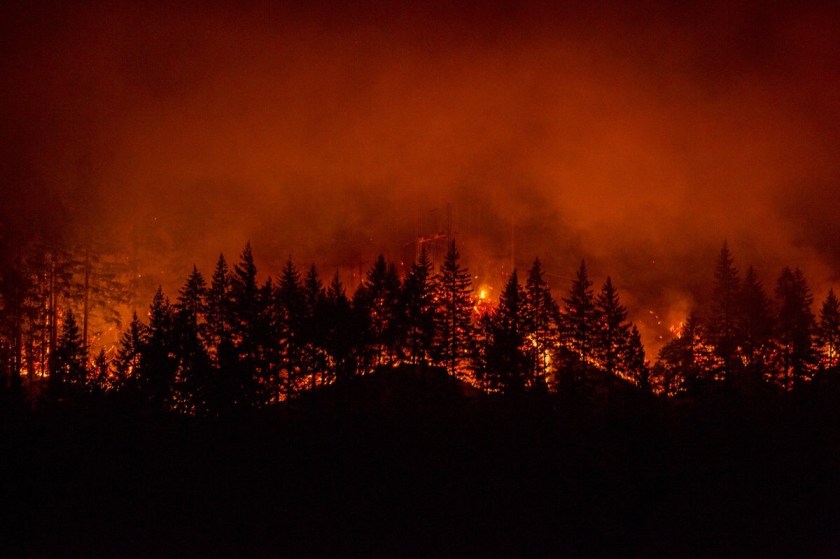
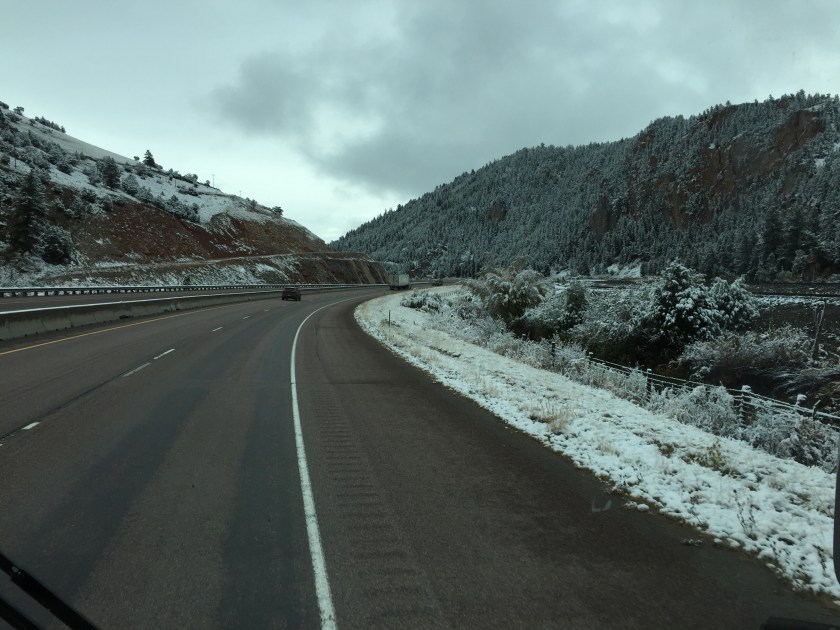
The way home, no matter the time of the year, is always framed by weather. We look closely to see what is brewing and where along the possible routes and times for the way home. This time was no different. Across Oregon into Washington, then Idaho and across Montana and North Dakota and into Minnesota. Temperatures were dropping in Montana through the mountains. Some snow was expected in the higher elevations. We were hoping to stop in Helena, MT to visit a friend but he was off to the UK for wedding. Next hoped for stop was at Medora, ND for a visit to Teddy Roosevelt National Park and a day off from driving. Rain was expected across Oregon, Washington, Idaho and western Montana following the snow line. Massive fires along I84 along the Columbia River had closed that route for almost three weeks. The west bound lanes had opened a week or so before we were looking to leave. The fires had burned right to the edge of the highway on the east bound side. Cutting down trees for safety delayed those lanes opening until just three days before we left.

So waiting for a few days sometimes improves things but this time it did not look like we were going to be so lucky. The roads had reopened and weather was coming.

Time to go.

We left Ft Stevens headed for Plymouth COE Campground in Washington just across the Columbia River from Umatilla, OR. We needed fuel. Fred Meyer was about the cheapest around at $2.89/gal but after looking at the drive in and out of their station we passed. All of the other stations and truck stops were at $2.99 – $3.09. Gas Buddy showed a Costco at $2.53 in Portland near the airport. So we went into the Costco near Ft Stevens (which did not have a gas station) and renewed our lapsed membership and drove to the Costco in Portland and saved $.45 per gallon on 120 gallons. My sister, Judy and her husband Bruce drove from their home on the West Slope to meet us at Costco, perhaps a hot dog for lunch. But the place was packed. We took up an entire lane for half and hour and then with nowhere to go we left. Judy and Bruce were headed up the Gorge to see the fire damage so we agreed to meet for lunch at the Cascades.

There are locks and dams here, smaller cruise ships and commercial traffic go much further up the river.

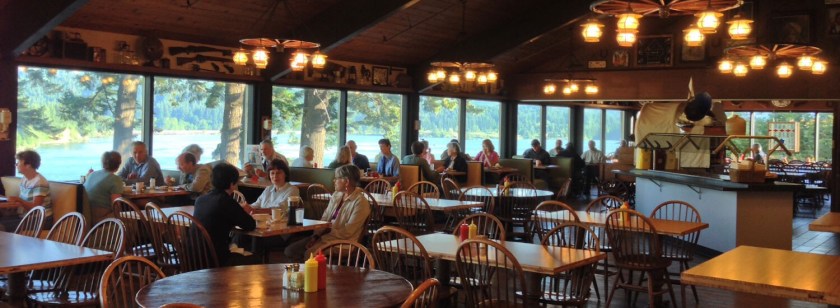
The restaurant was a cafeteria/buffet/fast food combination. You ordered and paid at the counter, some things you picked up like a buffet or cafeteria, somethings they brought out to your table. It was good. Judy and Bruce used to bring their kids, Eric and Sarah, up here for lunch and a Sunday drive up the Gorge.

Fires were serious along here and evidence of burns were everywhere. Hundreds if not thousands of burned trees had been cut down along the eastbound lanes back a hundred feet or so depending on how tall the remaining tress were.

After a night at Plymouth COE in Washington (nice place) we headed through Spokane and Idaho and into Montana. It was getting colder and higher. We spent the night at Alberton, MT. An odd campground, close quarters with a bar and a “casino”, a room with video poker machines.

It snowed a bit that night. Not much where we were but at nearby higher elevations. Driving was OK but wet and messy.

And then to Billings where we stayed in the very first KOA in America. It was off season so it was much less expensive.

Pretty fancy, nice laundry which we used. I broke the rules and hosed off the coach and toad, just to get the chunks off. Then I notice almost everyone else was doing the same.

Next up, Medora, ND on the western edge. It is the entrance to Teddy Roosevelt NP. We have been trying to get here for several years, this time we were going to stop, stay for a couple night and see some of the park.

The campground we have stayed at before was closed! But when we called they said come anyway, they keep a dozen or so spots open for the winter. We got there, got situated, the coach was a mess. Susan asked if we could rinse off the Jeep. The owner said wash it and the coach. So we did. His wife came by later and told us that it had been a dry year, 2″ of rain total for the year!

Medora was like a ghost town. In the summer this place is packed with tourists. Susan stood in an intersection and in every direction, no traffic, no people. There were two places open for meals. The Hotel was way expensive. The other place was actually busy but the service was slow and the food unremarkable.

Teddy Roosevelt NP

Before TR was president and after his wife and mother died he came to North Dakota to rediscover and renew himself. He started a cattle ranch which didn’t do so well but the experience here was life changing for him. He liked the tough cowboy spirit, the hard work and the people.

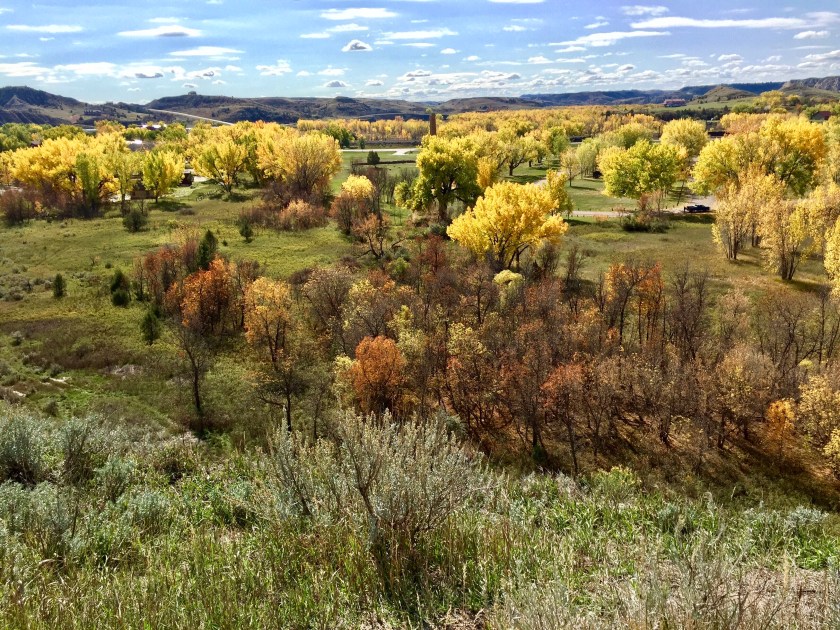
The land is almost like the Badlands, rough and dry. It was Fall and quite colorful.

We went to the Visitors Center, looked at the displays, got a TRNP patch for our collection and then set out on a 35 mile drive through the park.

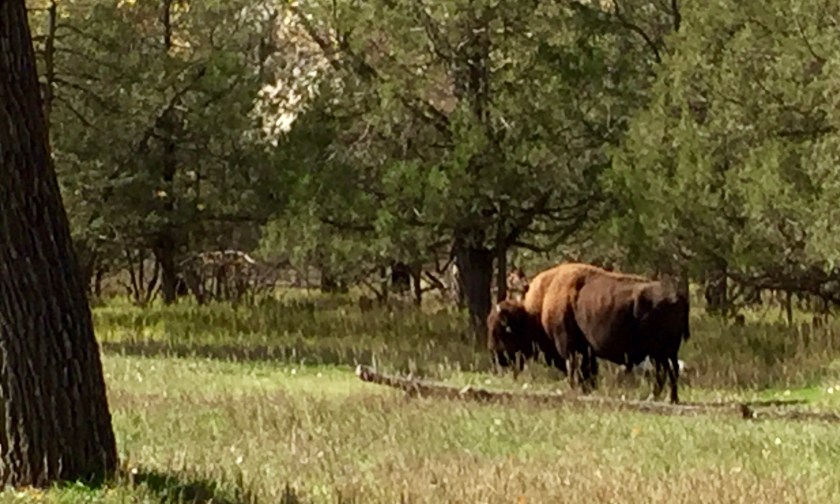
There are Bison here, lots of them and they are much closer to where you go than in Yellowstone. They seemed docile but Bison are unpredictable. We looked but did not get any closer than the front seat of the car.

This big bull was right in the campground in the park, only a few hundred feet from tents and RVs.

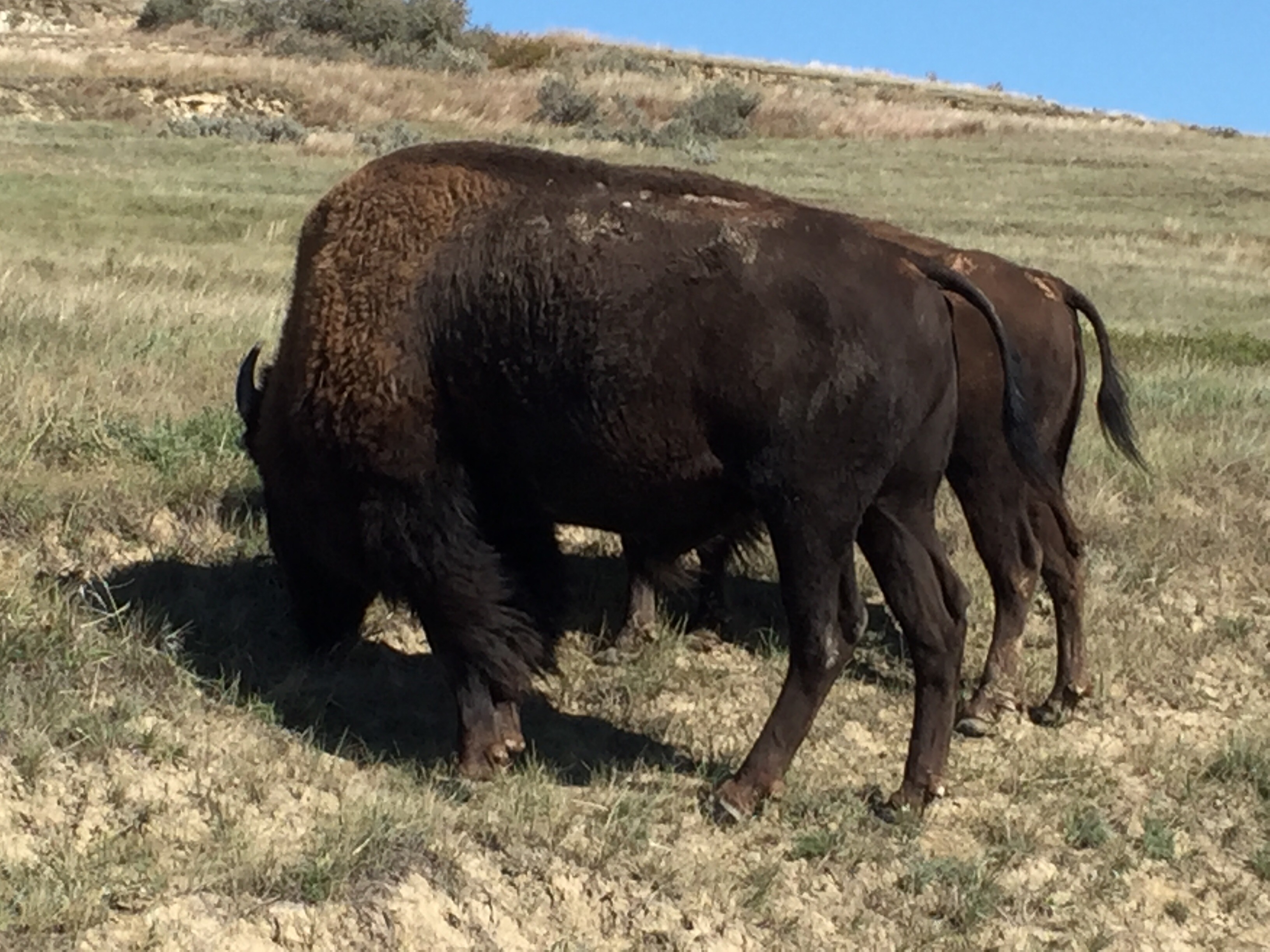
This pair was in a group of twenty or so right along the side of the road. Females weigh about 1,000 lbs. Males can weight up to 2,500 lbs. They are not small animals.

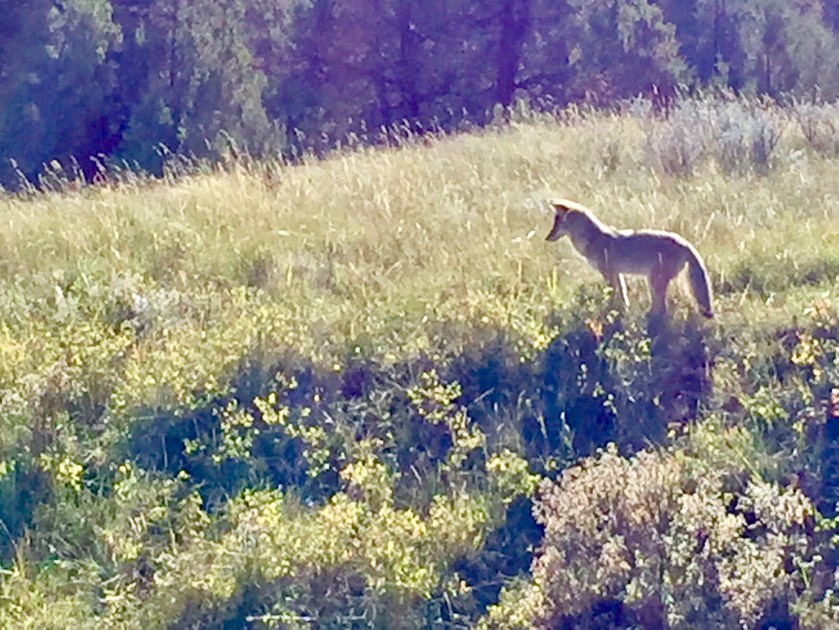
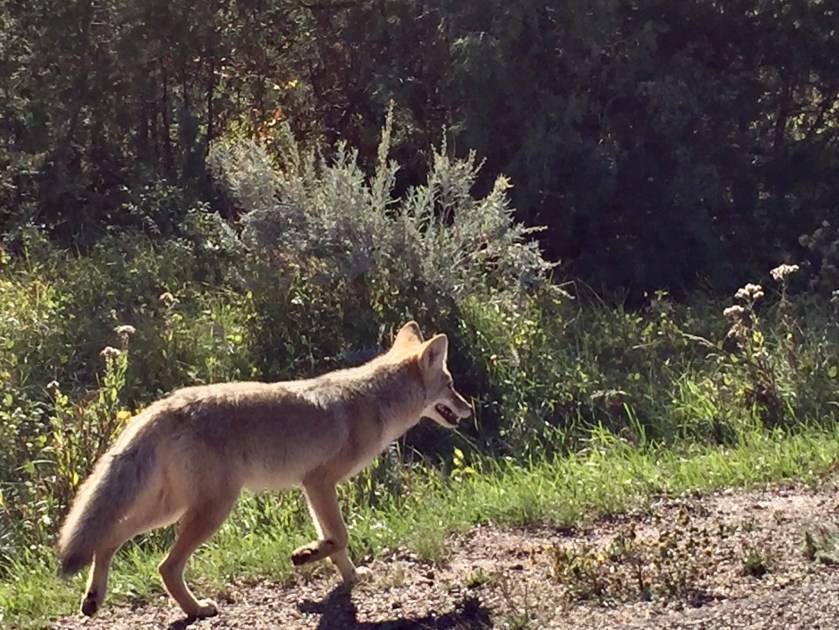
This coyote was right next to the car. He paid no attention to us at all.

He spotted something in the grass, a mouse or something and watched with great intensity and then pounced. Lunch.

And there were turkeys too.

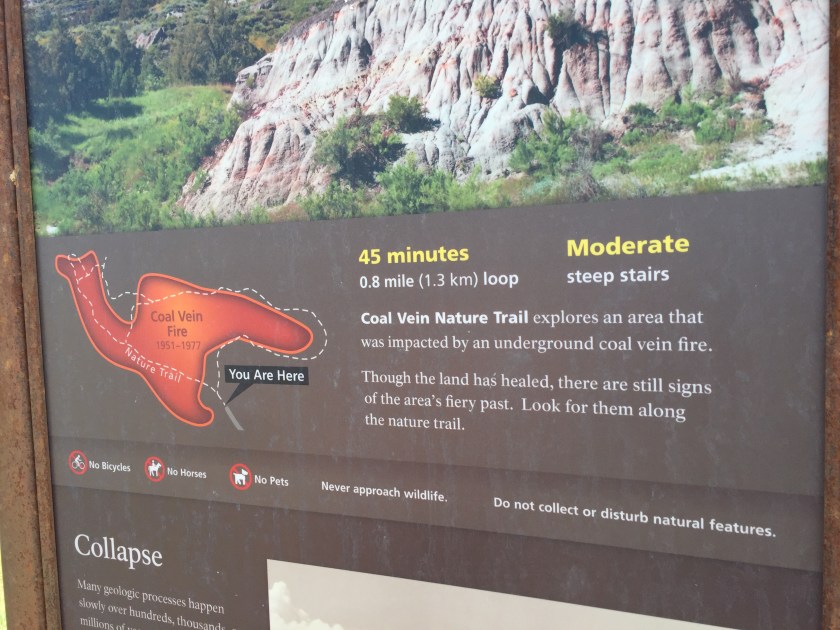
We stopped after driving down a side road to read about an underground fire in a coal vein that burned for 26 years.

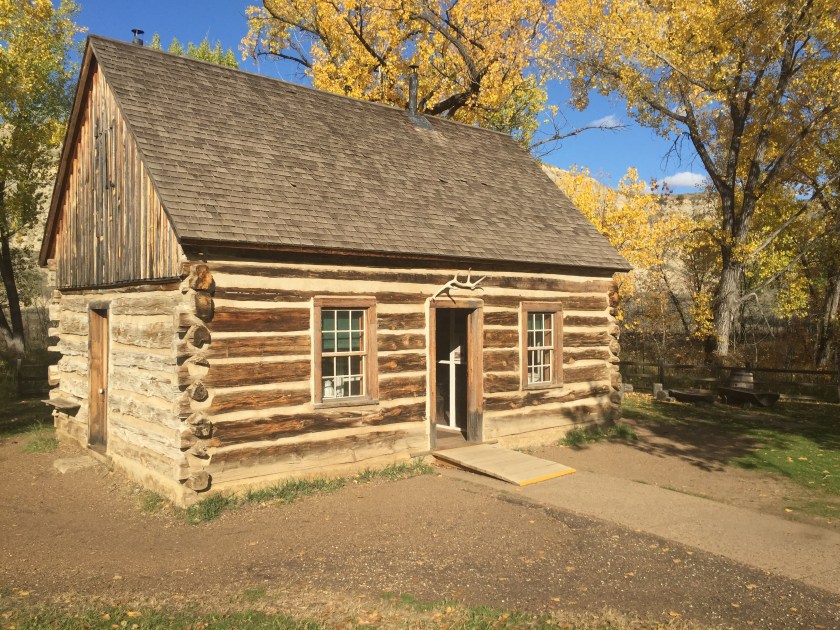
At the end of the drive back at the Visitor’s Center and the Gift Shop we went to see an actual log building from Teddy Roosevelt’s ranch.

Pretty rustic but authentic. Not at this site but moved here for preservation. There is hardly a square inch of it where someone hasn’t carved their initials.

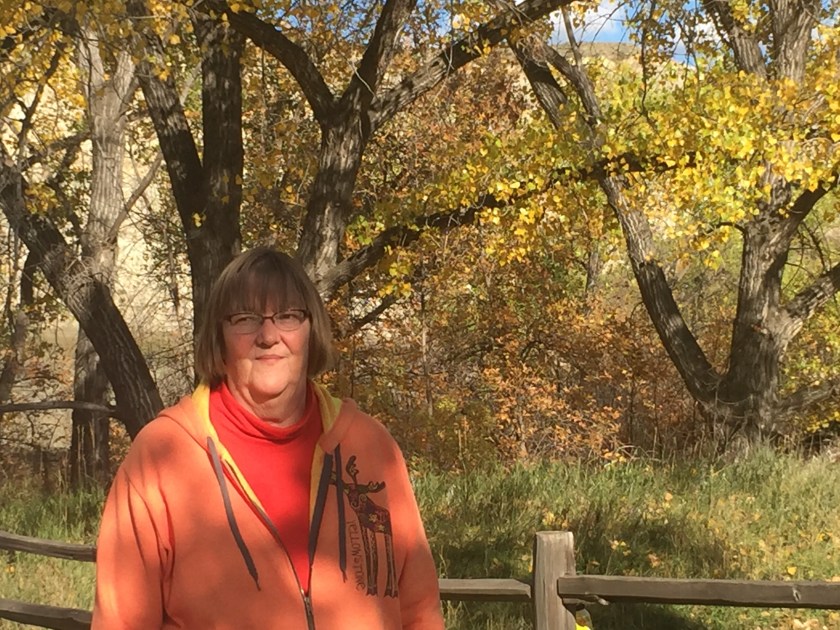
Susan’s Yellowstone hoodie blended well with the fall colors.

Home

I know this is way late but here none the less. Part of the process of returning home is the inevitable rush of things to do. It starts long before you get there, we can just feel it sucking up every available second. And then we are there and the whirlwind is full force. Before you know it a month or two has gone by, or three.

We leave soon for Texas after a full and busy time at home. TX🔜

More later

Roger and Susan

Christmas, 2017

Christmas, 2017

We are sending our warmest wishes from “Up North” to all of our Foretravel Friends and to those who are traveling along with us on our blog.

It has been another wonderful year for us. We were able to get to Texas, New Mexico, Arizona and Utah last winter and Wyoming and Oregon this past summer and everywhere in between. We visited with FT friends in the Tucson area, fought off a rattlesnake at McDowell Mountain and spent two amazing weeks in Zion National Park. We managed to see the big solar eclipse in a wide open space in Grand Teton National Park, spend a month on the Oregon coast and meet our great great nephew Ryan when we were in Oregon. He was just 2 months old. That makes us great greats. Sounds old.

We added solar panels on the coach this past summer along with some new batteries and other parts that now let us stay pretty much anywhere we want for almost as long as we want without running the generator or being plugged in. Eventually we run out of water or fill up our waste tanks but for a week in the Tetons and a week up in Yellowstone – we were off the grid.

This coming winter will find us in the Texas Hill Country for a while and then closer to home this summer so we can catch up on some of the tasks at home that make it so appealing to be here when we are. There is always room for visitors if you are up this way.

All of you help make this RV experience better for us. Thank you! We have been blessed to make so many new acquaintances and some very dear friends.  Many of you we have actually met, many are in the still-to-meet group but we are working at it.

Have yourself a merry little Christmas

Faithful friends who are dear to us

Here’s to the magic of the season and a happy, healthy 2018!

Roger and Susan

Fort Stevens State Park, Oregon, Summer 2017

Ft Stevens State Park is at the far NW corner of Oregon right where the Columbia River goes into the Pacific Ocean. Not too far to the east is Astoria. Ft Stevens is a very large park. The campground has 174 full hookup sites, 302 water and electric sites, 6 tent sites, 15 yurts and 11 cabins and a hiker/biker camp. There are lots of good bike trails, a fishing lake, good beach access and lots of things to see and do.

There really is a Ft Stevens which started out as a Civil War Fort to protect the Columbia River from ourselves. It was modified in WWI to protect against the Germans I suppose and much more during WWII to protect us from the Japanese. It is all there to visit on walking tours. There is a twice a week tour in a WWII monster truck. Visitors ride in the back on benches. They have a small visitors center and of course a gift shop.

Near the site of the Civil War site – an enormous excavation (for a moat) and earth moving (for a huge raised area for cannon) activity for most stationed there – there was the remnants of a long house made by Native Americans long before any of this fort stuff was here. It was more than 100 ft long and maybe 30 ft wide and was used as a fishing camp when the salmon were coming up stream.

We went to visit the Fort. Lots of walking.

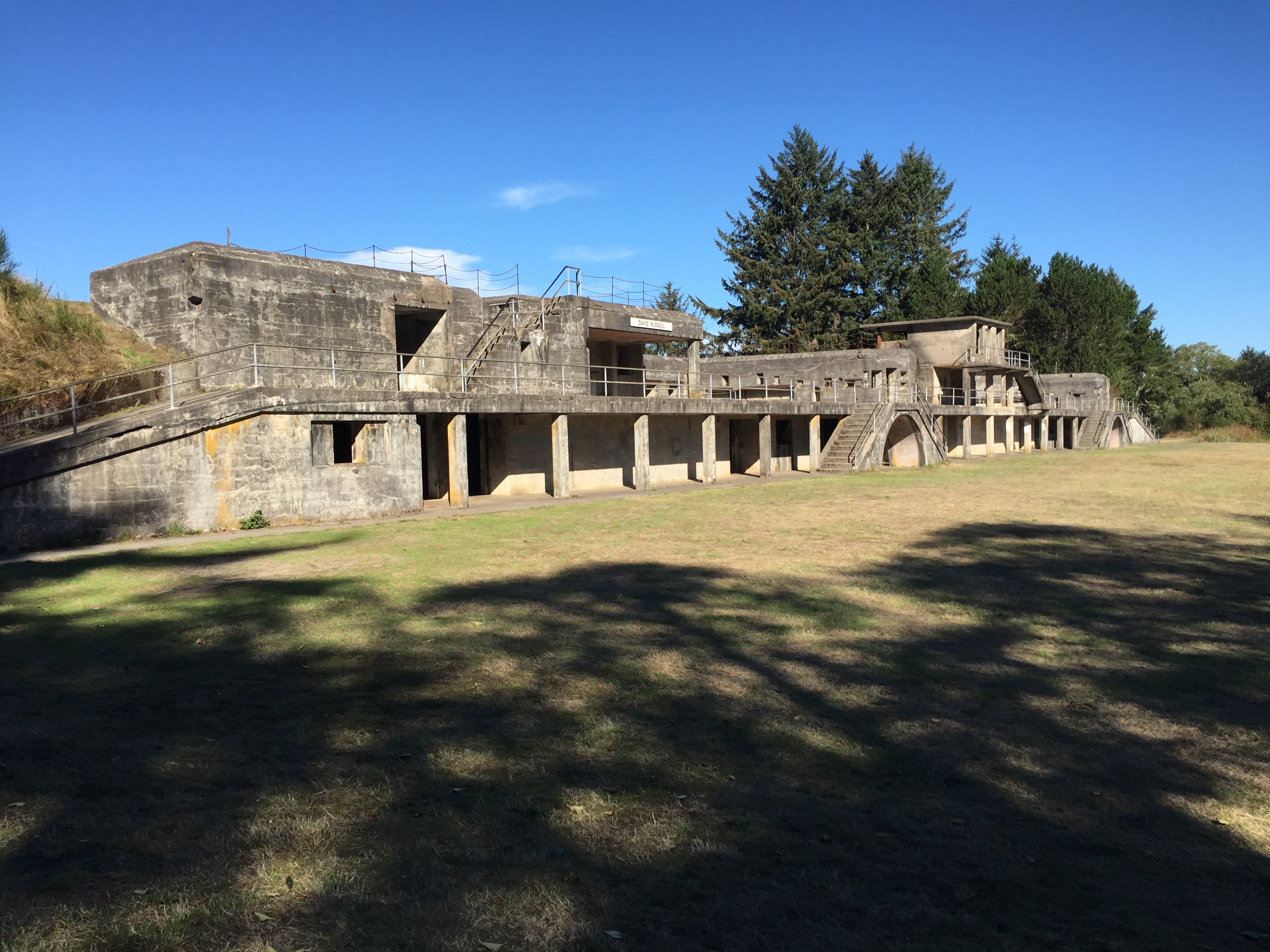
This is the Battery Russell, the best preserved of the WWII batteries. There were several of these batteries in various configurations over a couple miles along the coast. All of them were back from coast 1/4 to 1/2 mile. There were towers where spotters watched for targets and sent targeting information to the batteries.

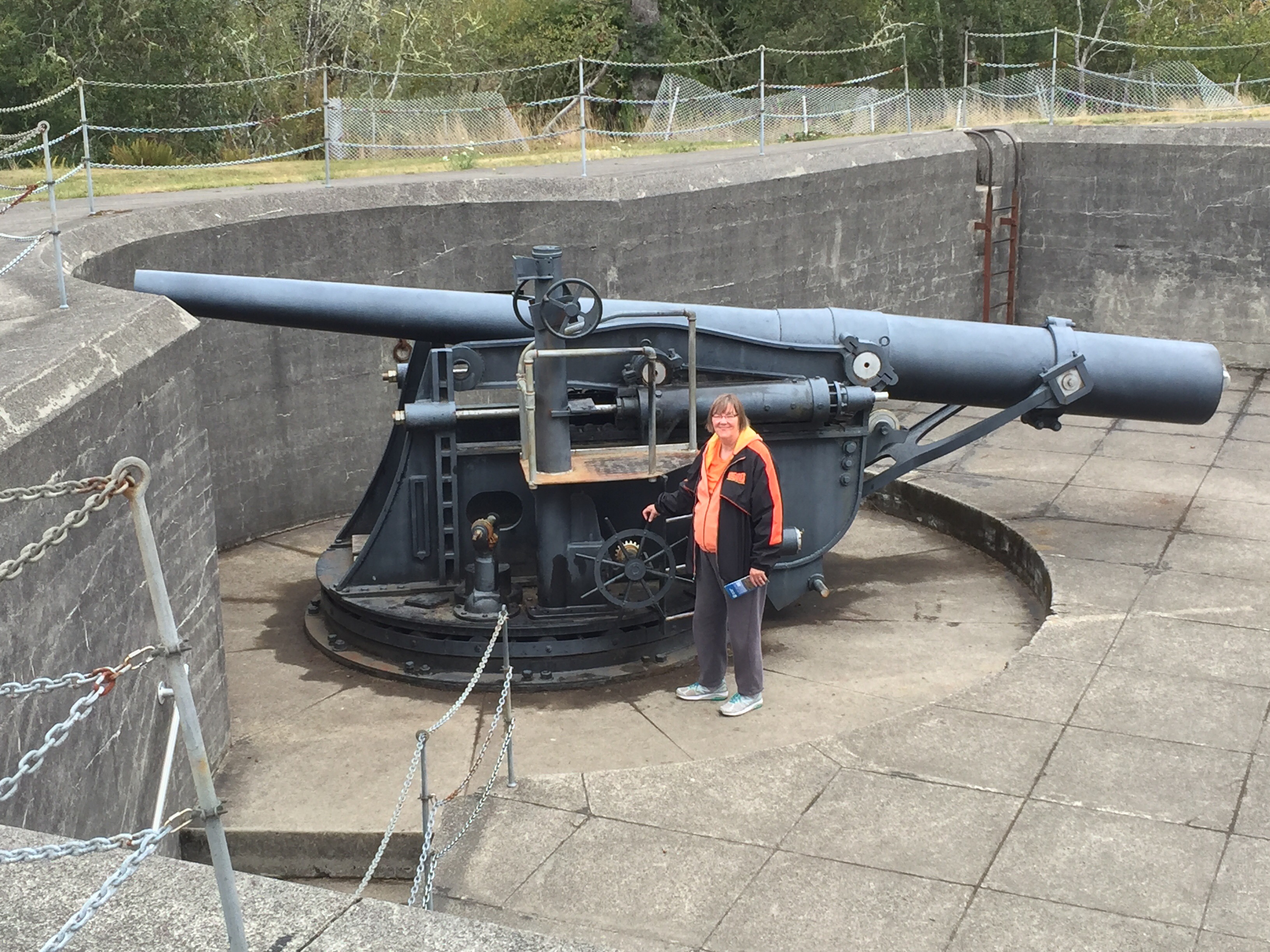
These were mostly 10” pop up cannons. They were loaded and aiming instructions set and then the gun rotated and rose up and fired. The recoil pushed the cannon back into a crouched position. This is the only cannon that looks like this. Most of the rest have been removed or are in much worse shape.

One battery was built with three of these guns each in a recess that completely surrounded the gun. The one above is not even surrounded half way around. The battery with the completely surrounded guns was completed, guns installed, crews trained and in the first live fire training exercise six crew were killed from the concussion contained in the closed surround. The guns were removed and shipped to France after DDay and the battery was never used again.

Battery Russell was shelled by a Japanese submarine one night in 1942. 17 shells landed, none doing any real damage. It was cloudy and foggy so no one could see the submarine. The sub commander had no idea of the guns emplacements that could easily have sunk his boat if he had been seen. This is the only military installation in the continental US to come under fire during WWII. An oil field near Santa Barbara had been shelled earlier from a Japanese submarine. Did you read about that in grade school?

We also saw evidence and a display about Japanese Balloon Bombs. These were gas filled paper balloons launched from Japan into prevailing winds that brought them over the US from Alaska to southern California and as far east as Michigan. These had altitude controls and timing devices. They had incendiary bombs and anti-personnel bombs designed to start fires and injure civilians. More than 9,000 were built, perhaps 1,000 made it to the US. The actual number is hard to say. Some started fires. Six people were killed in rural eastern Oregon when they came upon a balloon bomb that had landed and disturbed it. It exploded and caused the only WWII US combat casualties in the lower 48 states.

We had a really nice campsite. But cell phone service was terrible. It was hard to figure since this park is very near an urban area. Our great great nephew (yikes! That means we are a great great aunt and uncle) (he is only 2 months old) lives with his mom and our great nephew and his Grandma in St Helens, OR about 2 hrs upriver. They came down for a visit one day.

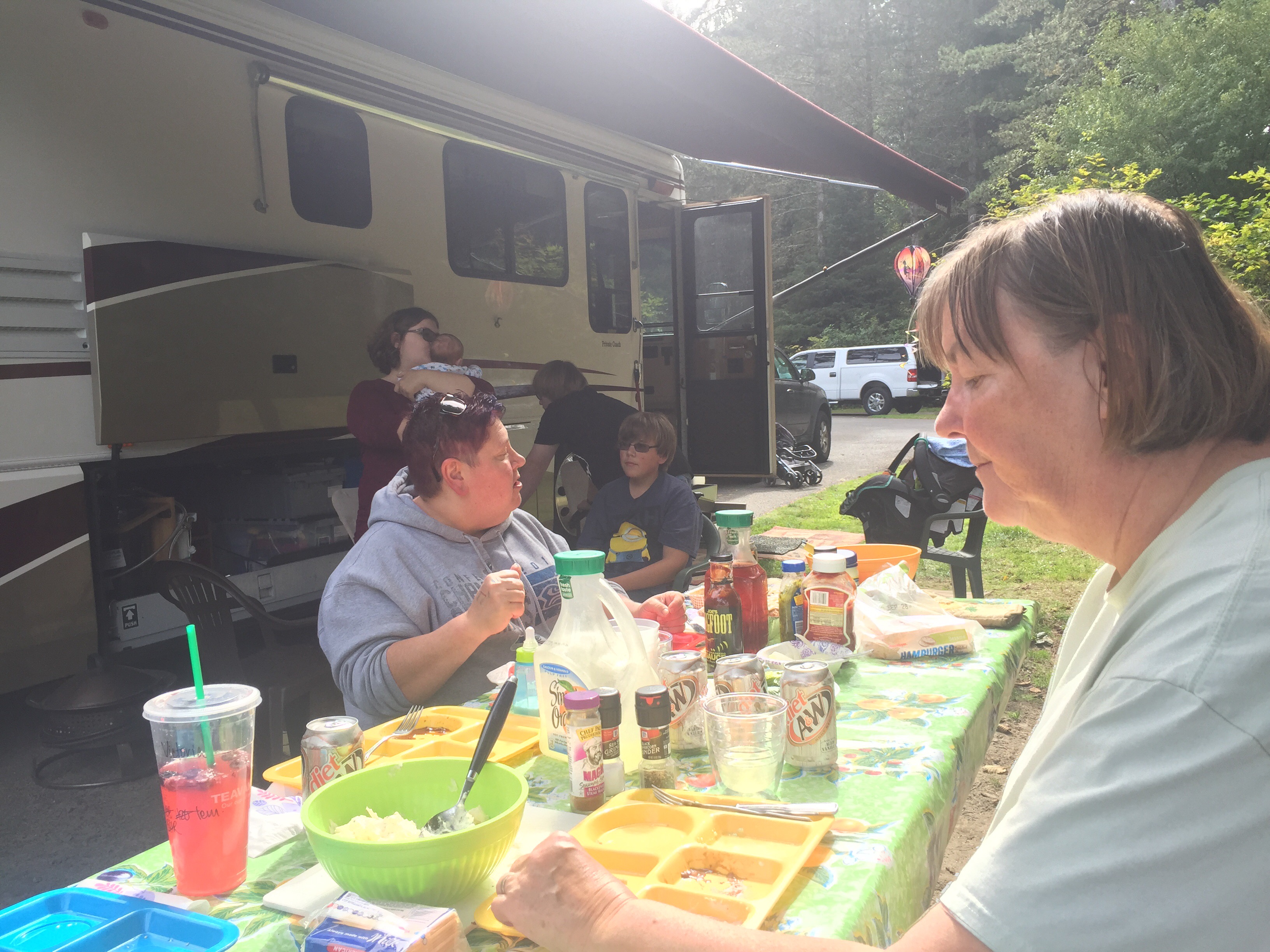
A picnic with our cool picnic plates. Susan, Cyndi, Victoria (mom) , Ryan (the featured person) , Hunter (sitting) and Charles (dad).

Some great great auntie time.

And a bit of great great uncle time too. What a wee one.

We had a nice visit, lunch and a walk and then they were off. Fun!

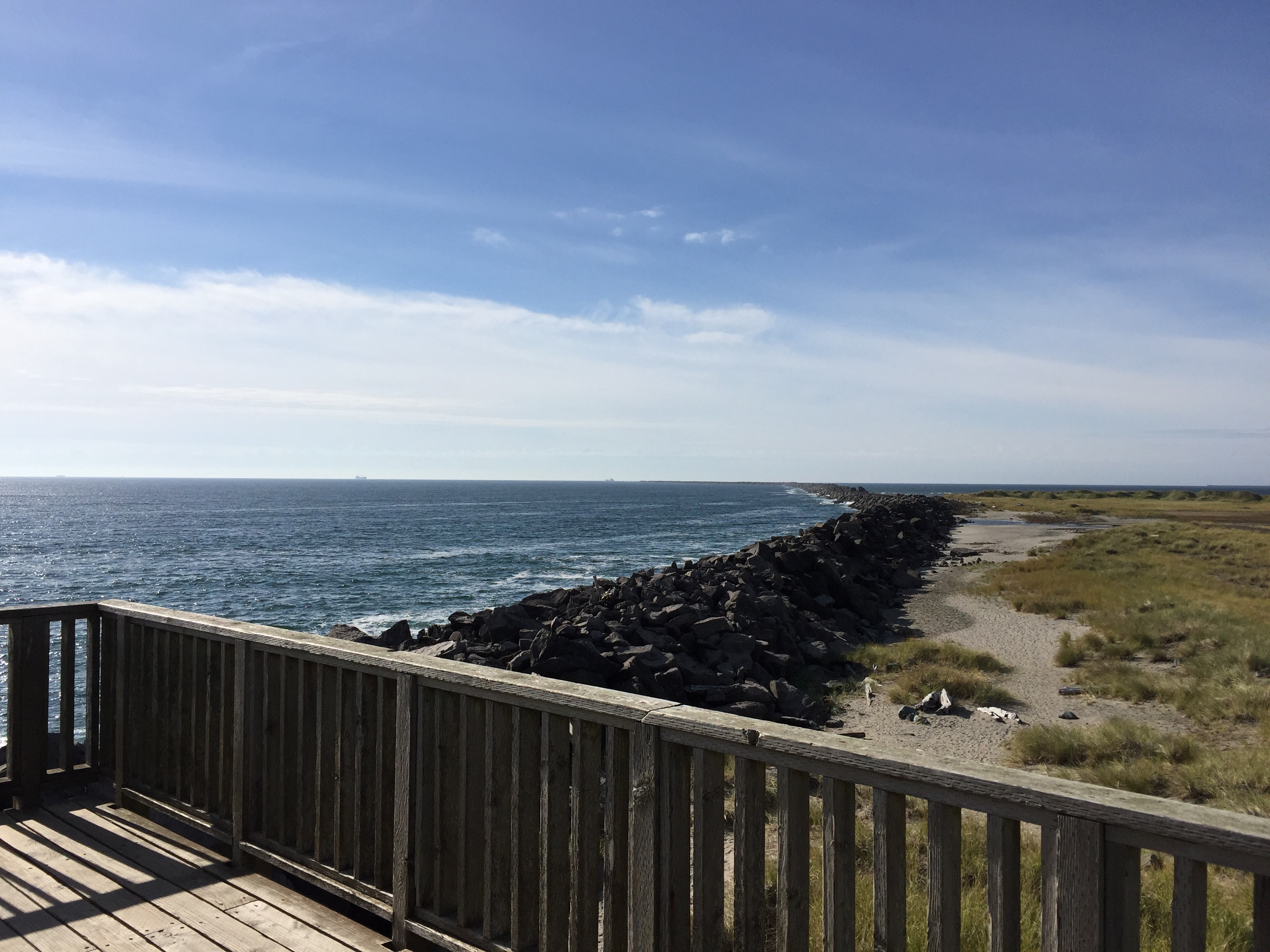
Lots of beach to walk on here. All the way to the south jetty at the entrance to the Columbia River about five miles away.

You can drive over the dune and down onto the beach. Pretty neat. We did this on a couple days.

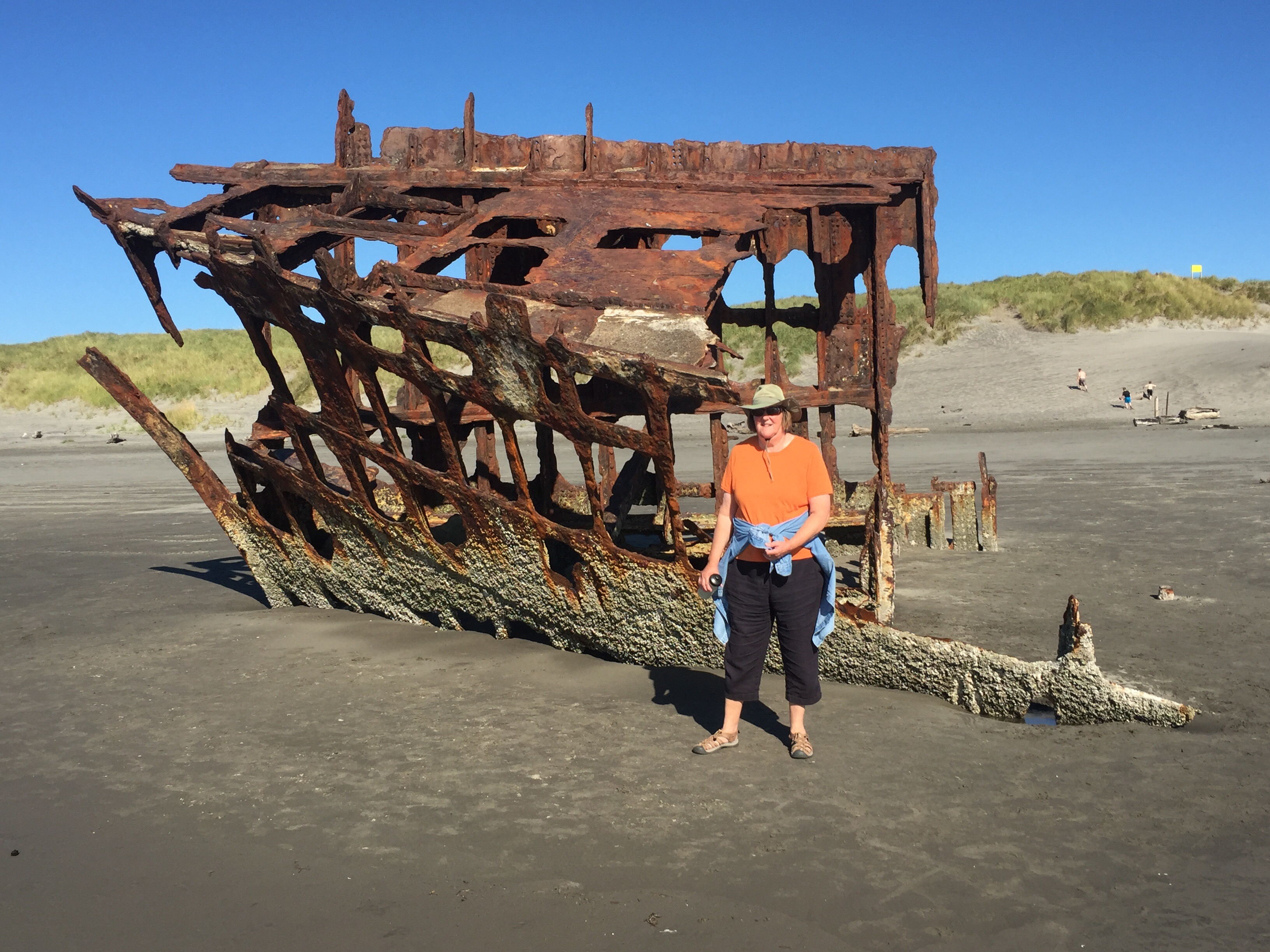
This park has it all. Even a shipwreck. The Peter Iredale from about 1906. This is all that is left, a bit of the bow.

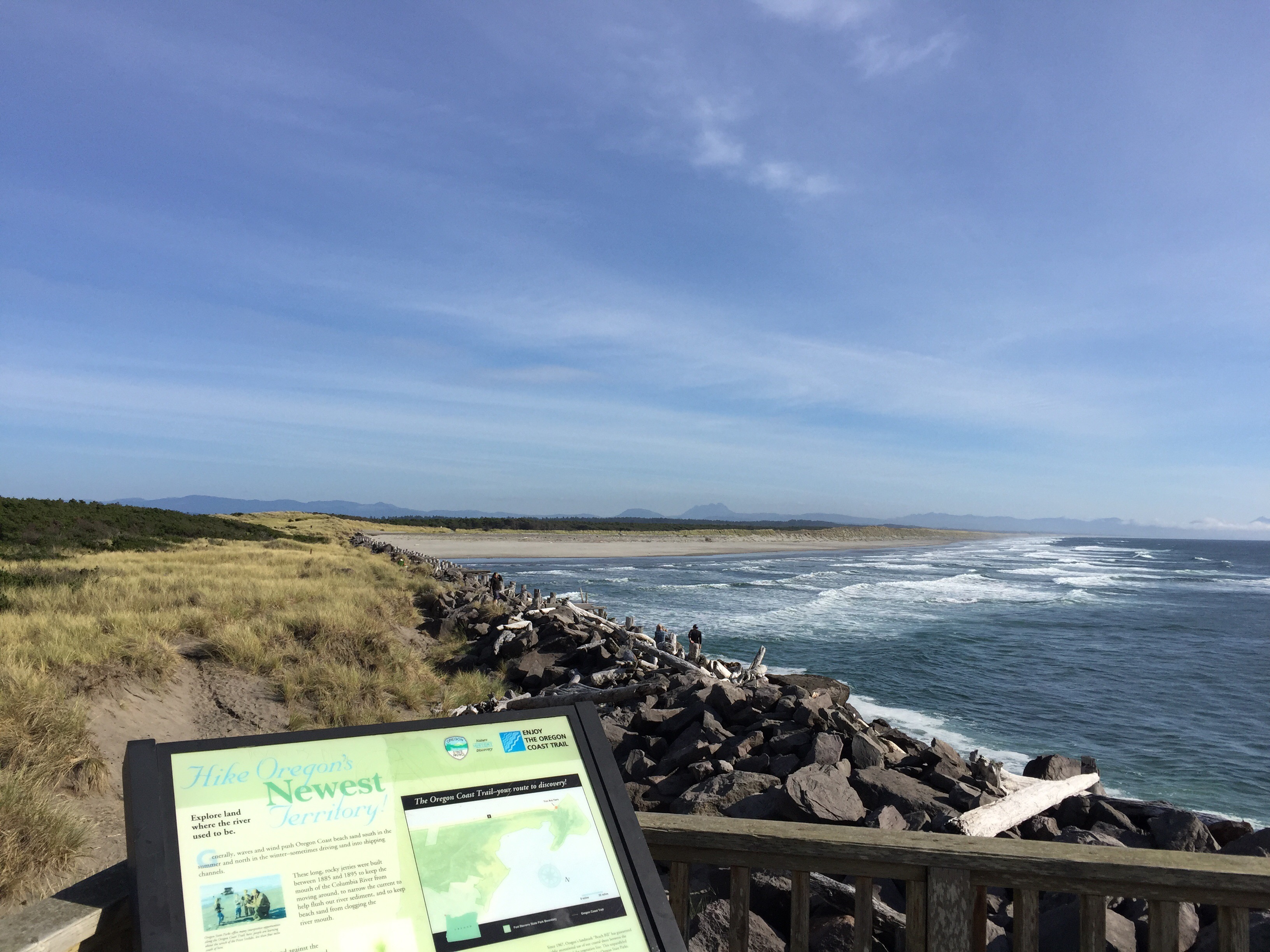
Starting in 1885 the Army Corp of Engineers began building a railroad trestle across a bay and across the end of the peninsula and out eventually 4-1/2 miles into the ocean. And then trains began hauling huge rocks out along the tracks dumping their loads further and further out, millions and millions of tons of rock. The jetties – there is one on the north side as well – took 27 years to build and was finished for just 55% of the original budget.

At the south jetty which extends 4-1/2 miles out into the ocean, the sand has filled in along the shore and added almost 1/2 mile of new beach over the last 150 years since the jetty was built.

Astoria

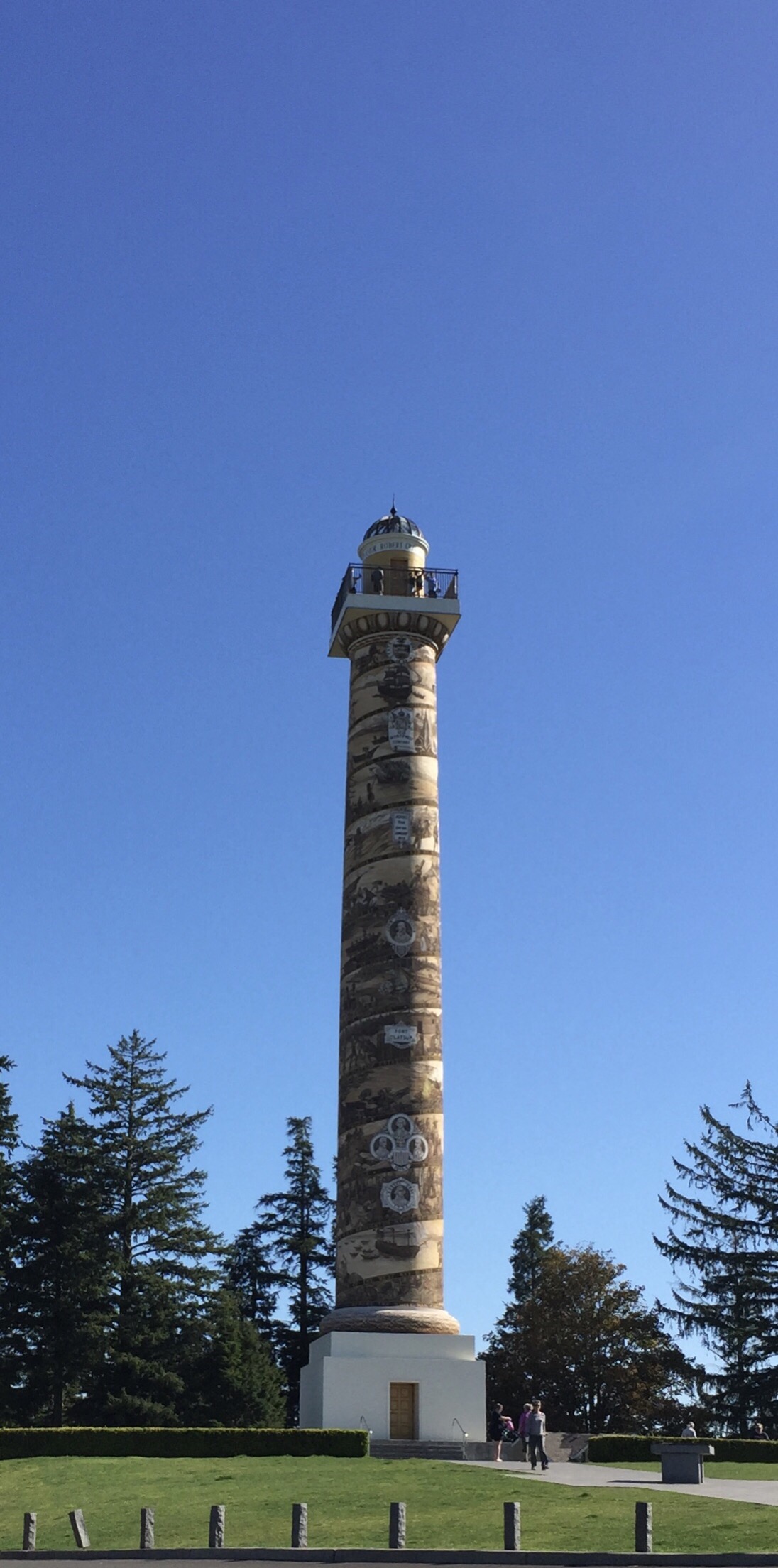
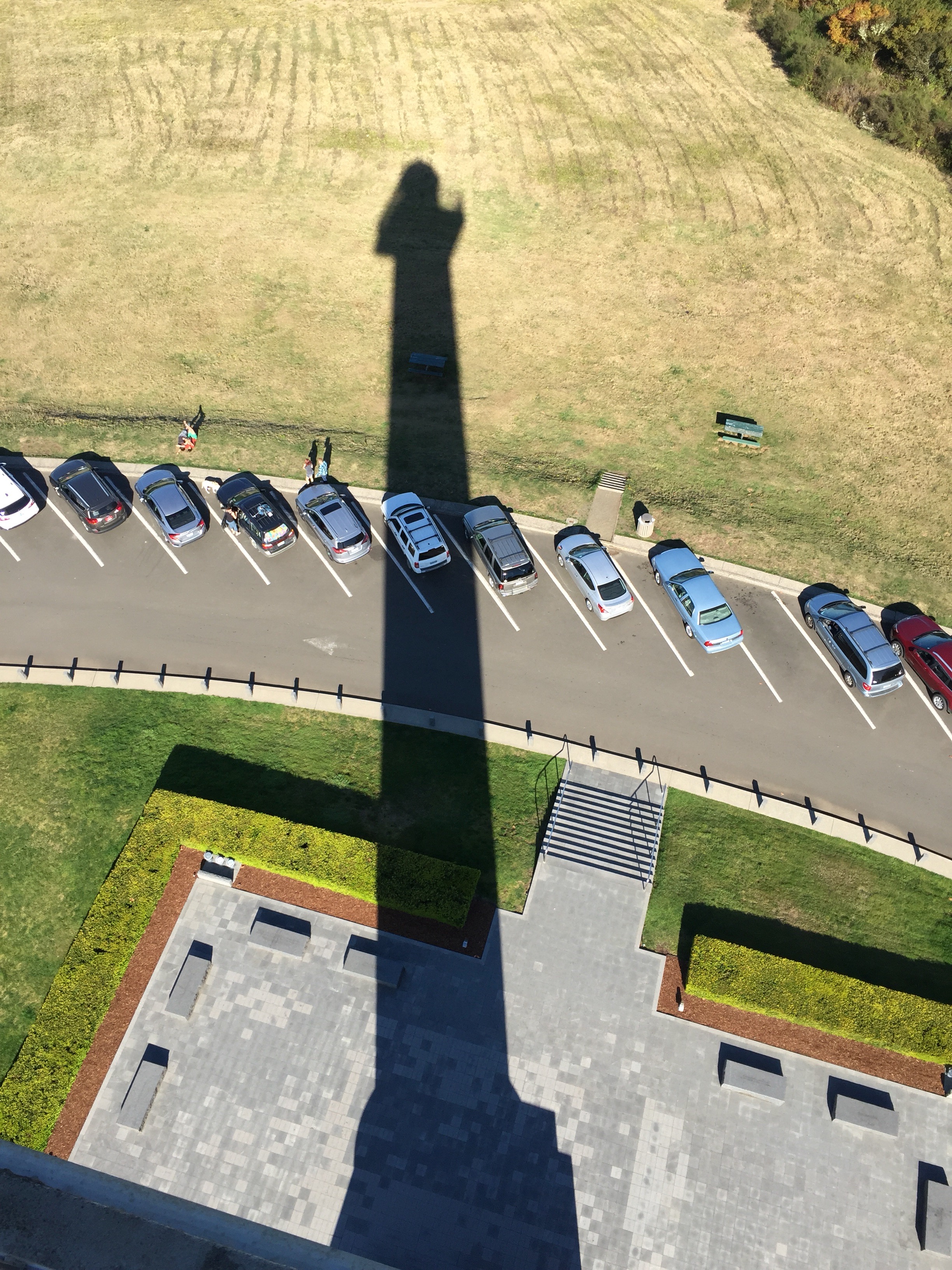
We went into Astoria a couple times. We visited the Astoria Column, it is on a 600 ft high hill and is 125 ft tall. 164 steps to the top. I climbed, Susan’s knee was sore so she cheered me on.

Tall! And a view.

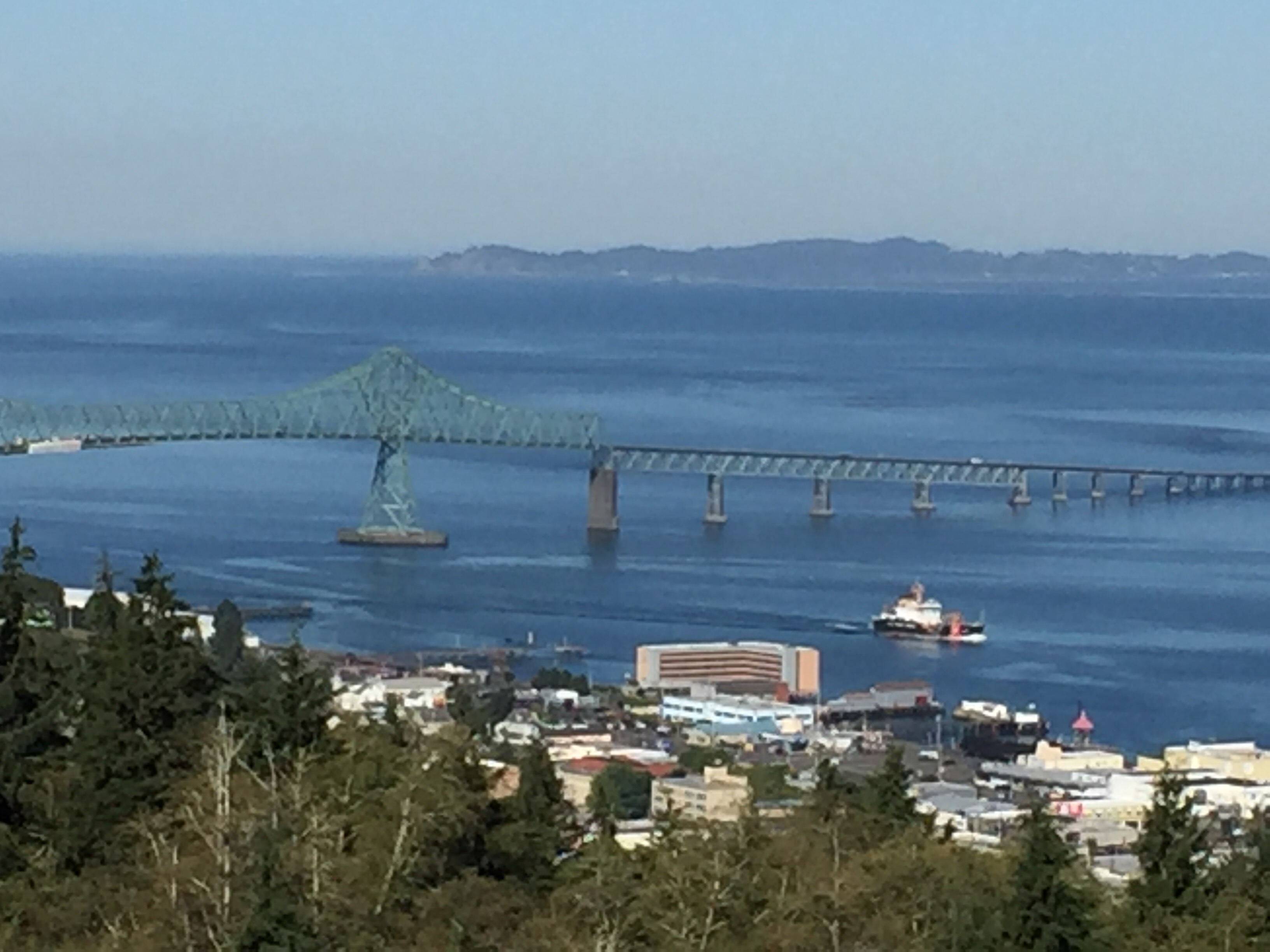
And there is a big bridge too. About 4 miles long and almost 200 ft above the river.

We went to a canning museum. Tuna and salmon were the main thing that was canned here. Bumble Bee Tuna was a big one. The cannery is now part museum, part housing, part offices and food places.

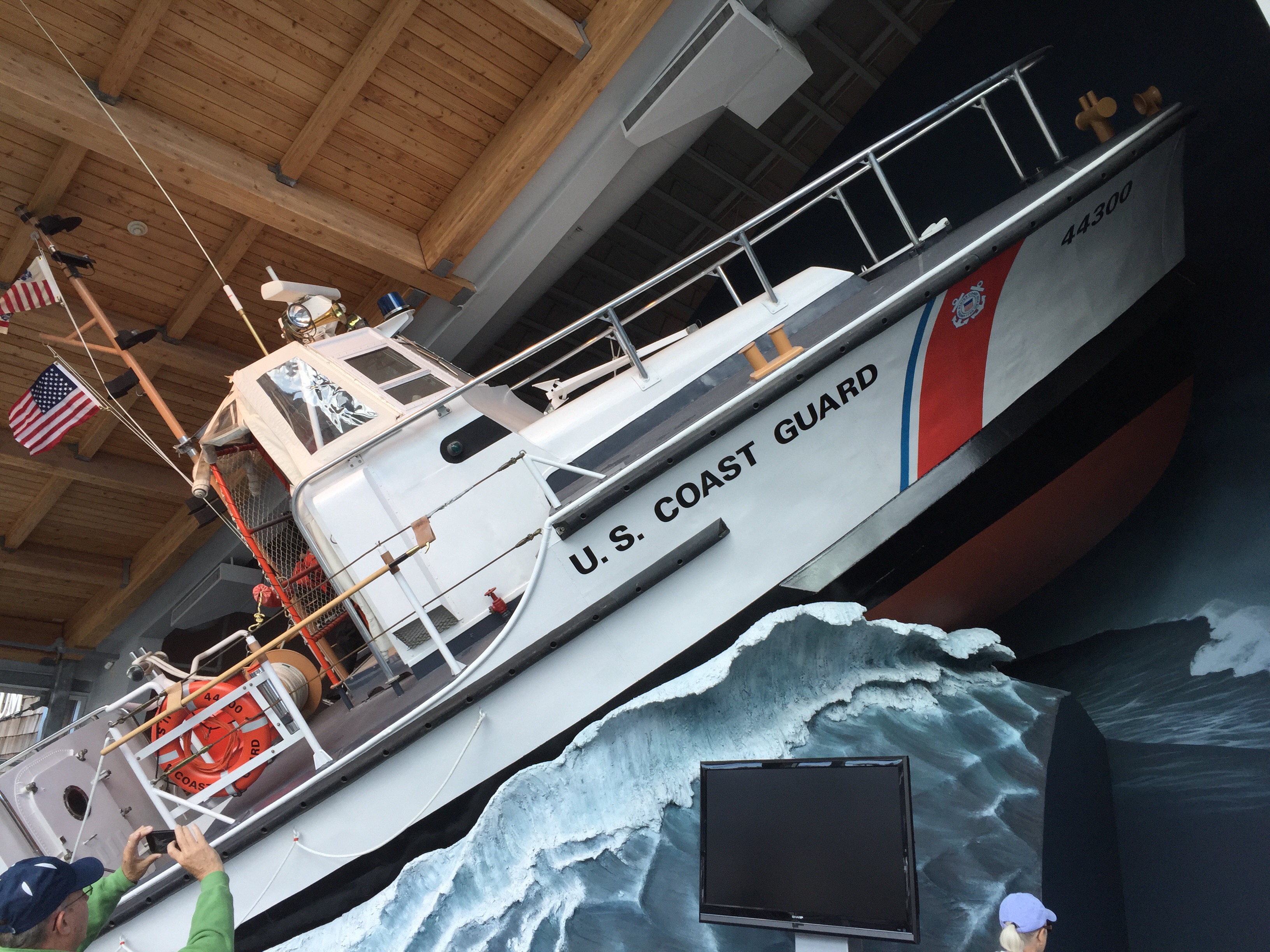
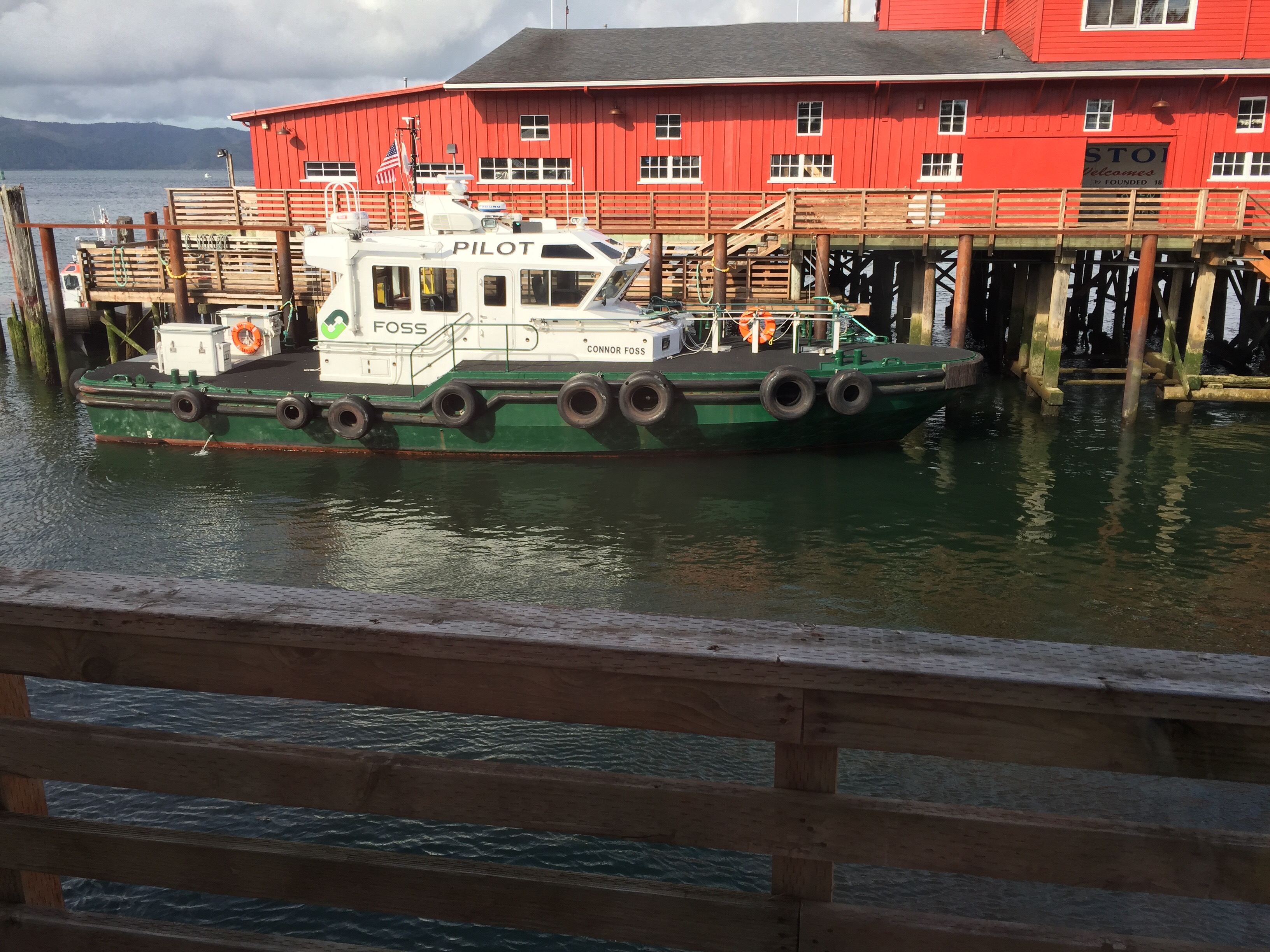
We also went to the Columbia River Maritime Museum. This is another one of those museums that is much bigger inside than it appears from the outside. If focuses on the river, fishing industry, the Pilot boats which take Bar Pilots out to ships entering and exiting the river and River Pilots who guide the ships up the river as far as Portland.

This is an actual Coast Guard rescue boat now retired. Waves over the sand bar at the opening of the Columbia make this one of the most treacherous passages in the world.

This is the Pilot Station where pilot boats and Pilots are dispatched. There was a very nice restaurant nearby, Clemente’s, where we had a great lunch.

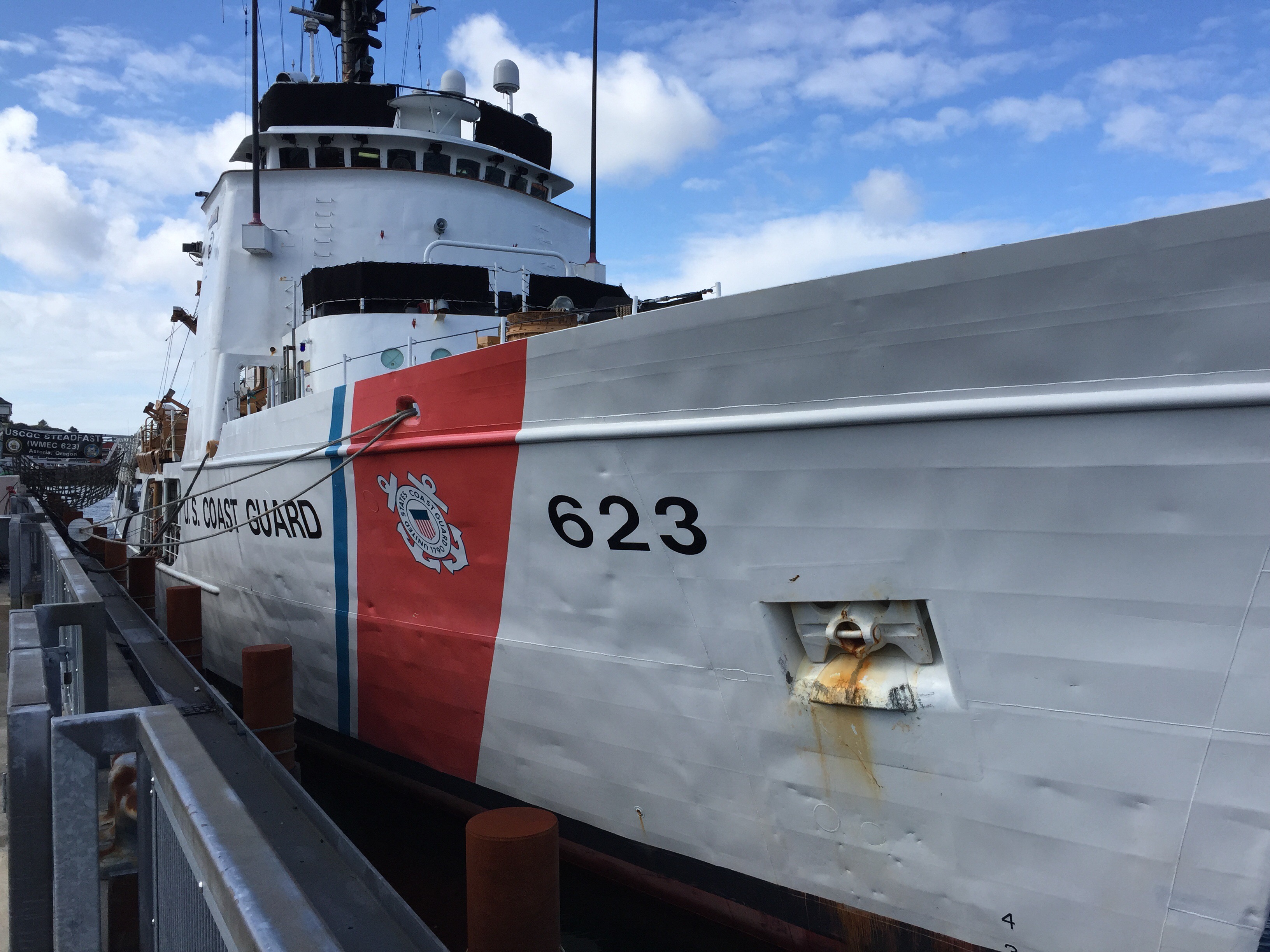
There was a Coast Guard ship at dock there too.

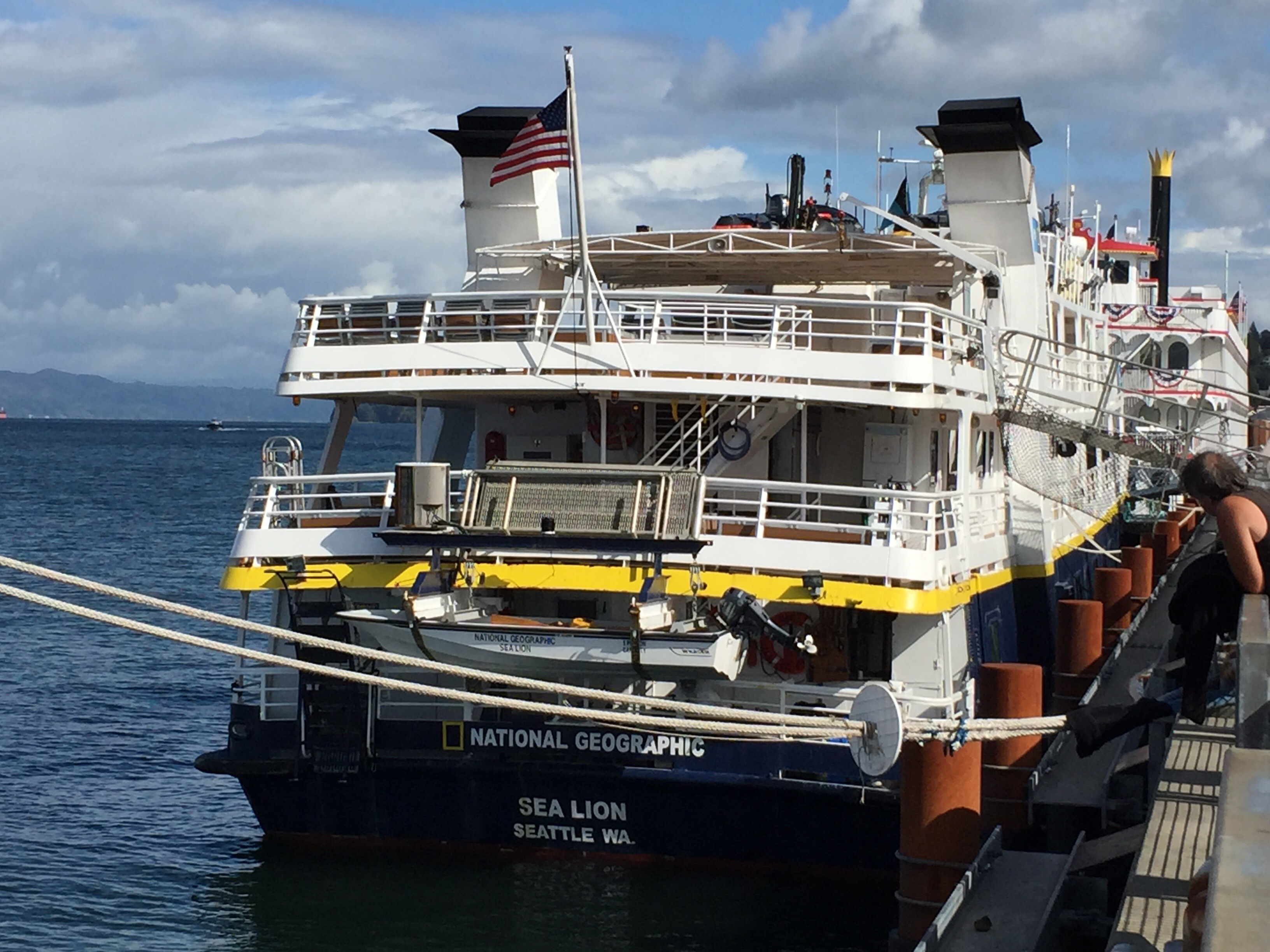
And a National Geographic cruise ship (small).

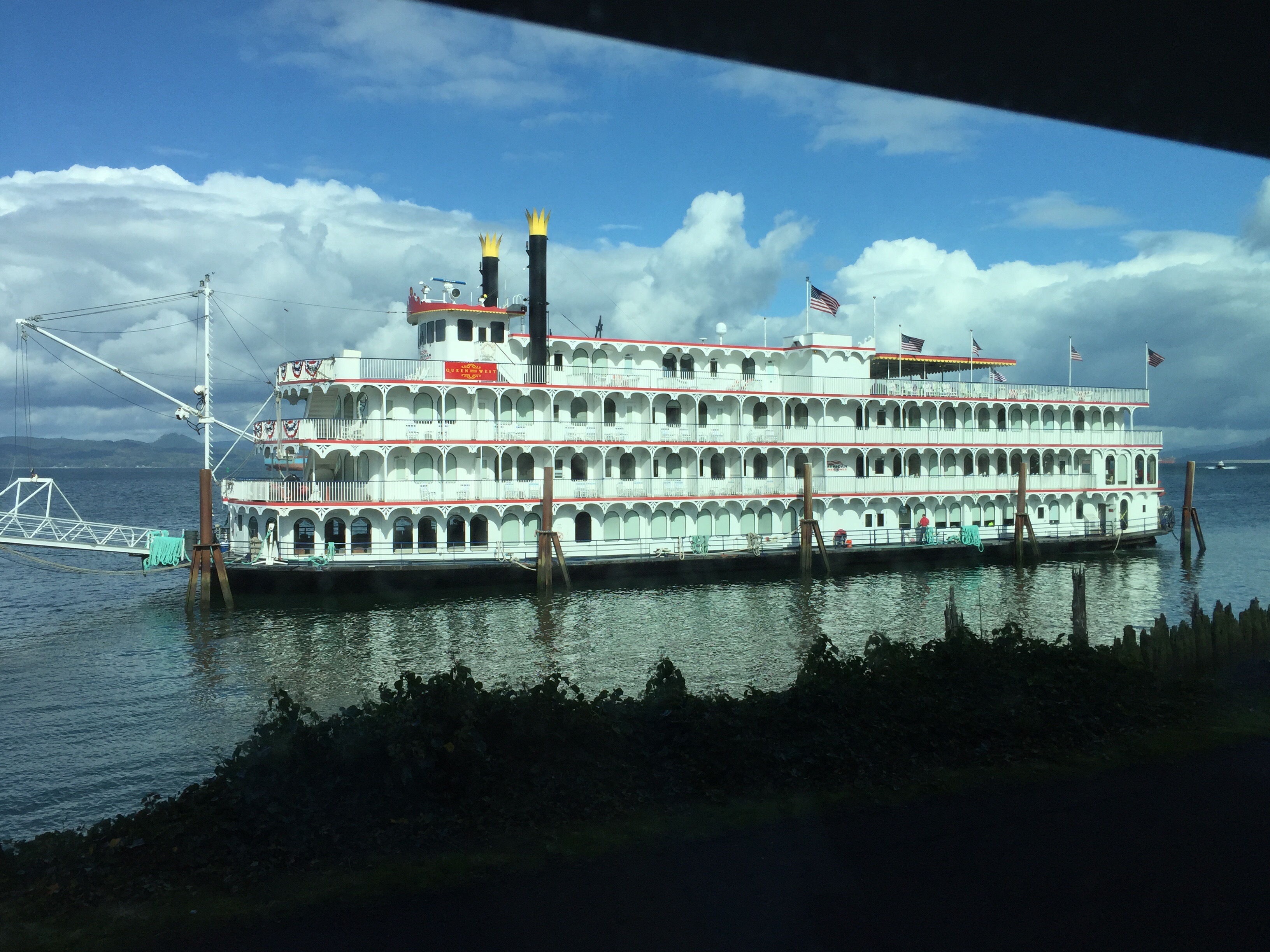
And a paddlewheel boat.

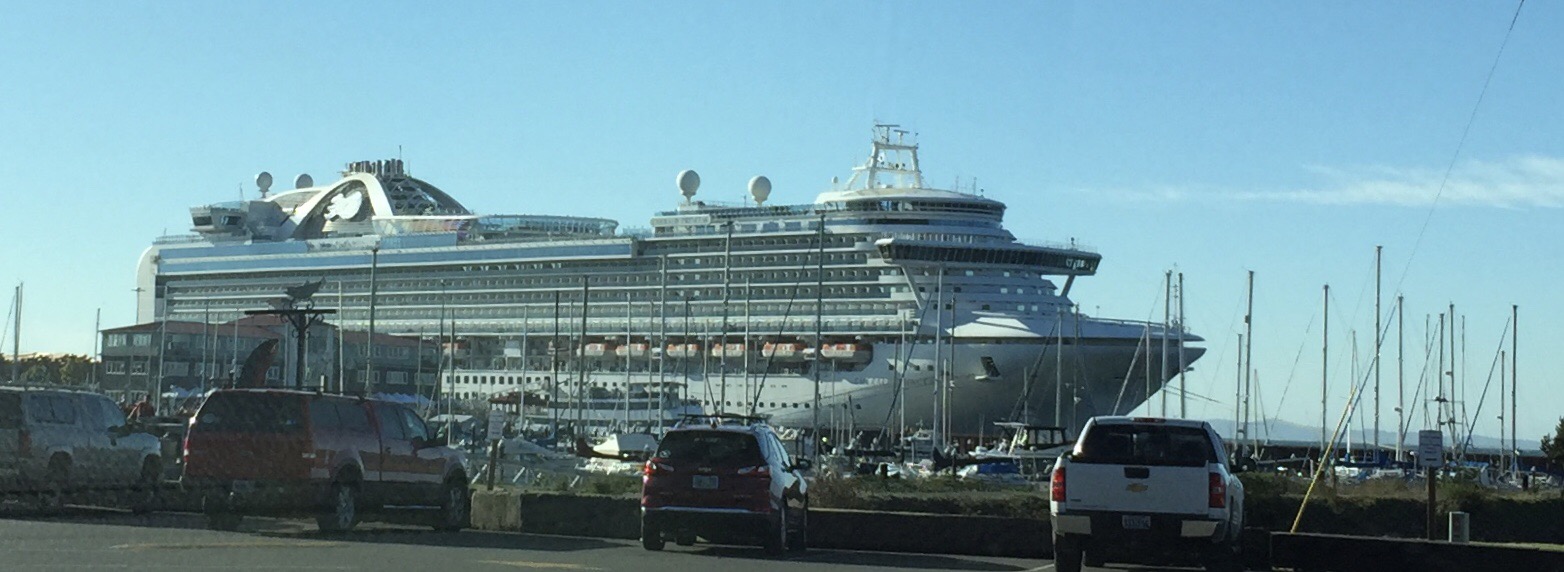
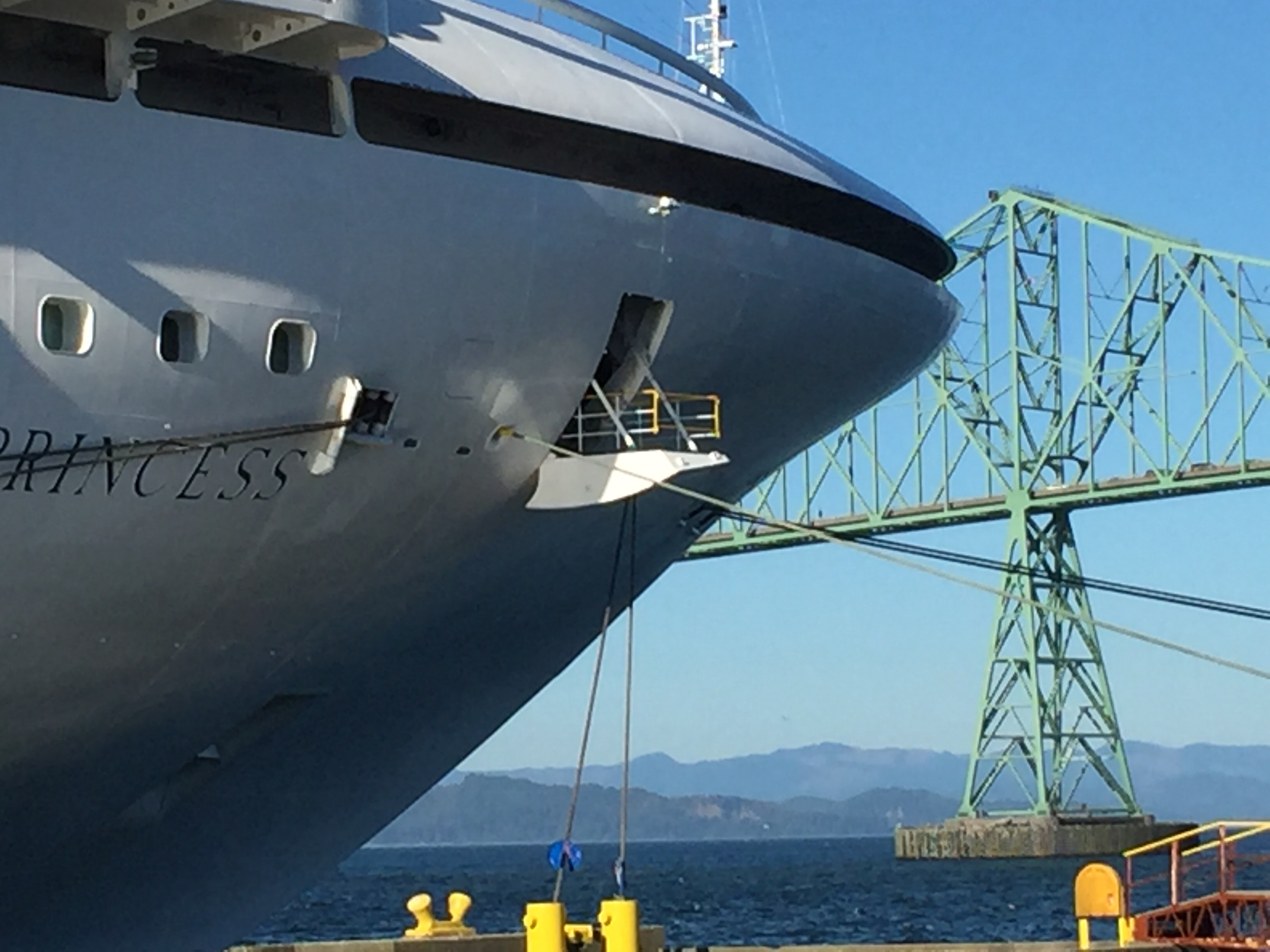
Down at the other end of the waterfront there was a cruise ship (big).

I like where they make mis-behavers walk the plank.

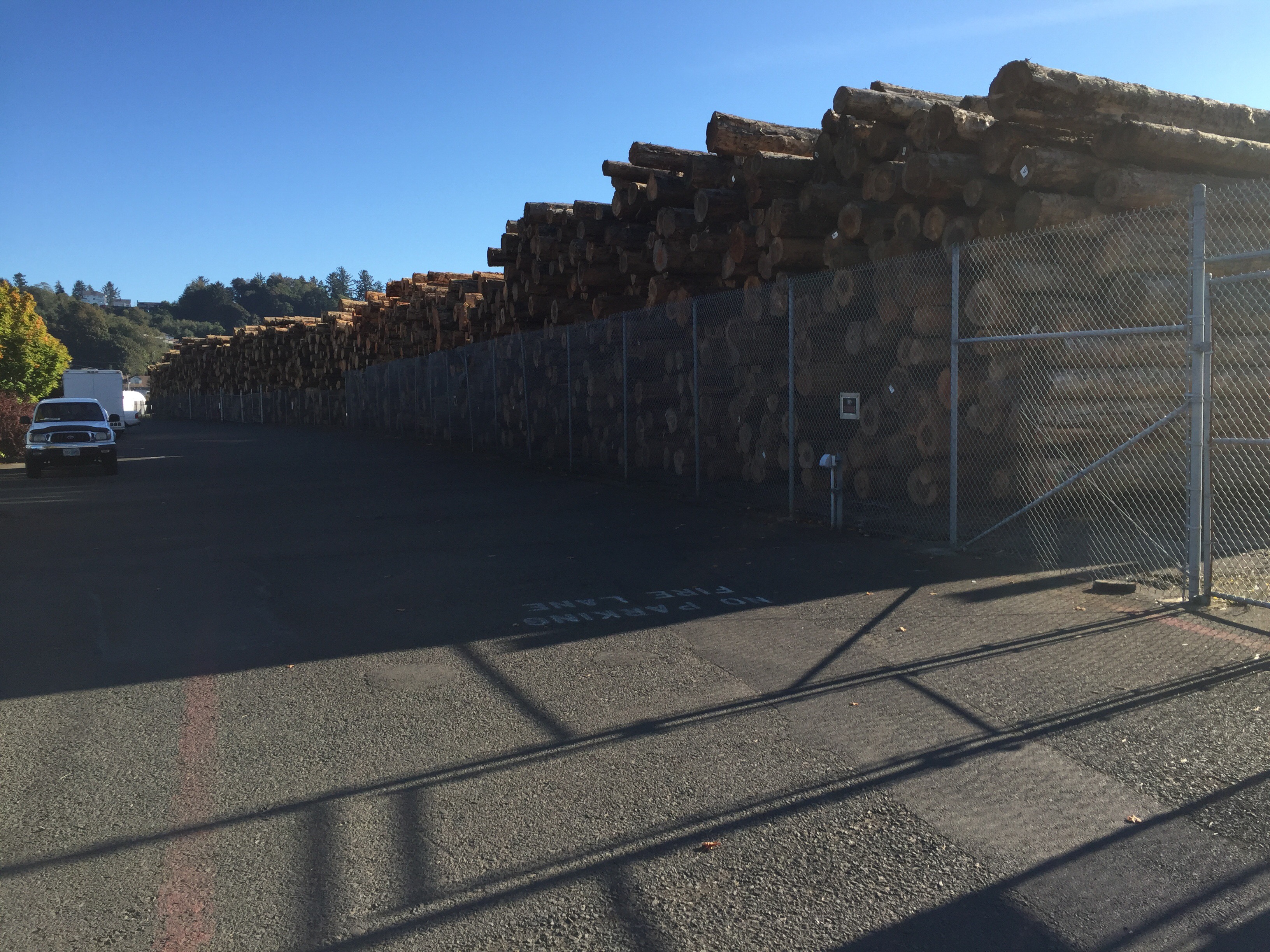
And the big stack of logs heading overseas to become something we buy here. This was just the first row of logs. There were a dozen more like this one.

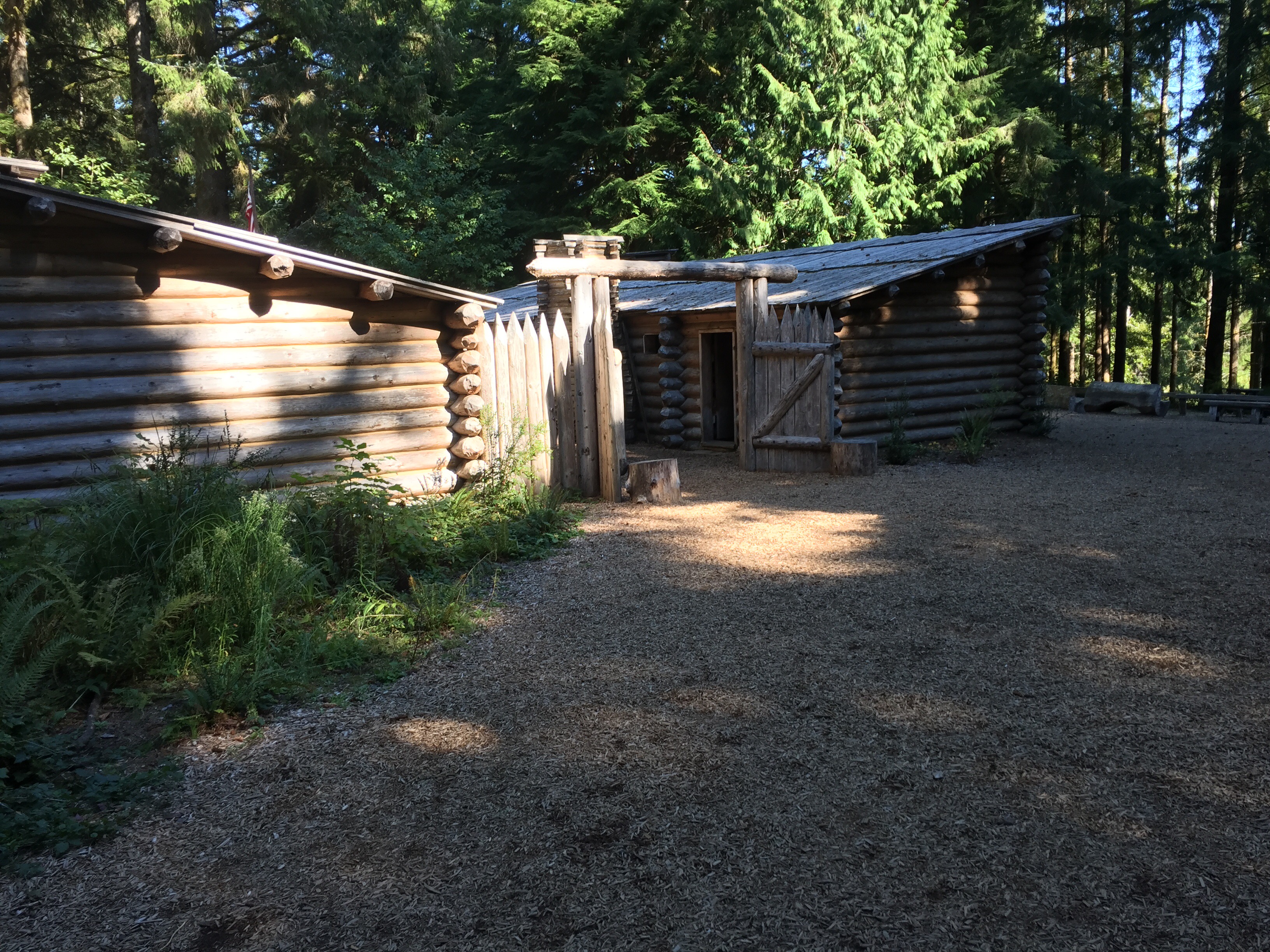
We also went to see Fort Clatsop National Historic Site where the Lewis and Clark Expedition spent the winter. Pretty small quarters for almost 40 people. This is a reproduction of the buildings on the actual site.

This was the last stop on our best-of Oregon Beach Parks coastal adventure. While we were here Rich and Peggy Bowman from Ohio joined us for a few days in their Foretravel. It is always fun to see coach friends.

We are heading east towards home soon. The weather watch is on and it looks like a front is heading that way across Montana and if we get going we will be behind it.

More later,

Roger and Susan
Nehalem Bay State Park, Oregon, Summer 2017

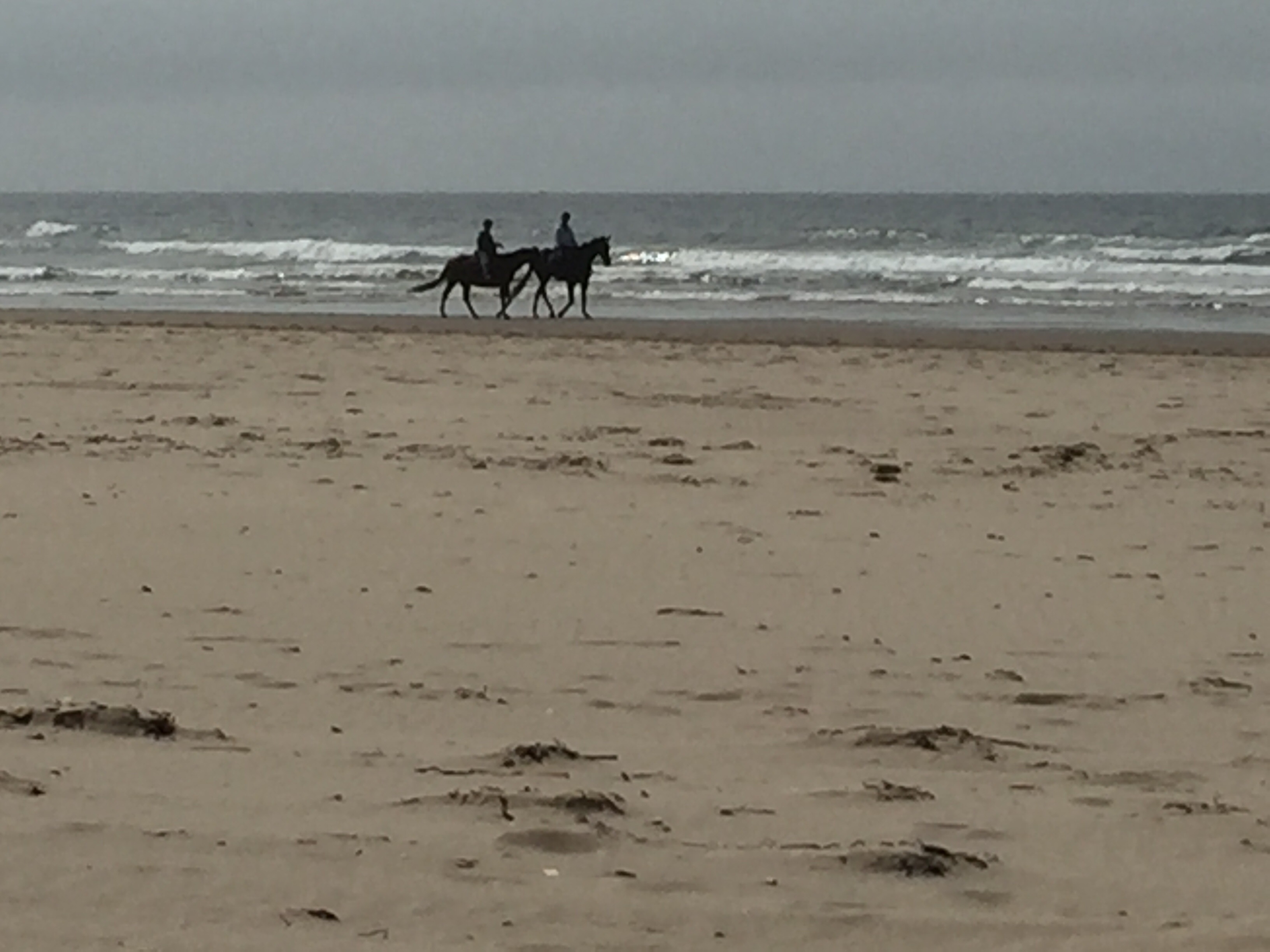
We were at Nehalem Bay State Park two years ago. It is a pretty large park, about 300 camp sites in six loops, a horse camp, and air field with air camp sites, about 30 yurts for camping and several miles of trails for hiking or biking. And just over the typical beach dune there is a five mile long flat beach perfect for walking, sitting in the sun, flying kites, horseback riding or maybe swimming (more likely wading).

I usually had shorts and a t-shirt on. Susan had more sense.

You can rent horses here. Many people bring their own. The horse camp was full most of the time.

Even though it was after Labor Day the campground was full almost every day. A Park person told us that the campground is open all year round and even in the middle of the winter when it is colder and very wet it is about 1/4 full. All of the campsites have electric hookups and water. When your waste tanks are full you have to make a trip to the dump station. We are good for two weeks if we are careful, 10 days if we are in a normal use mode.

Just two miles away (a walk or bike ride is easy) is the small town of Manzanita. Lots of touristy shops. A great toy store. A couple of good places to eat and every Friday a nice Farmer’s Market. Manzanita is one of the best parts of staying here. Big enough but not a tourist trap.

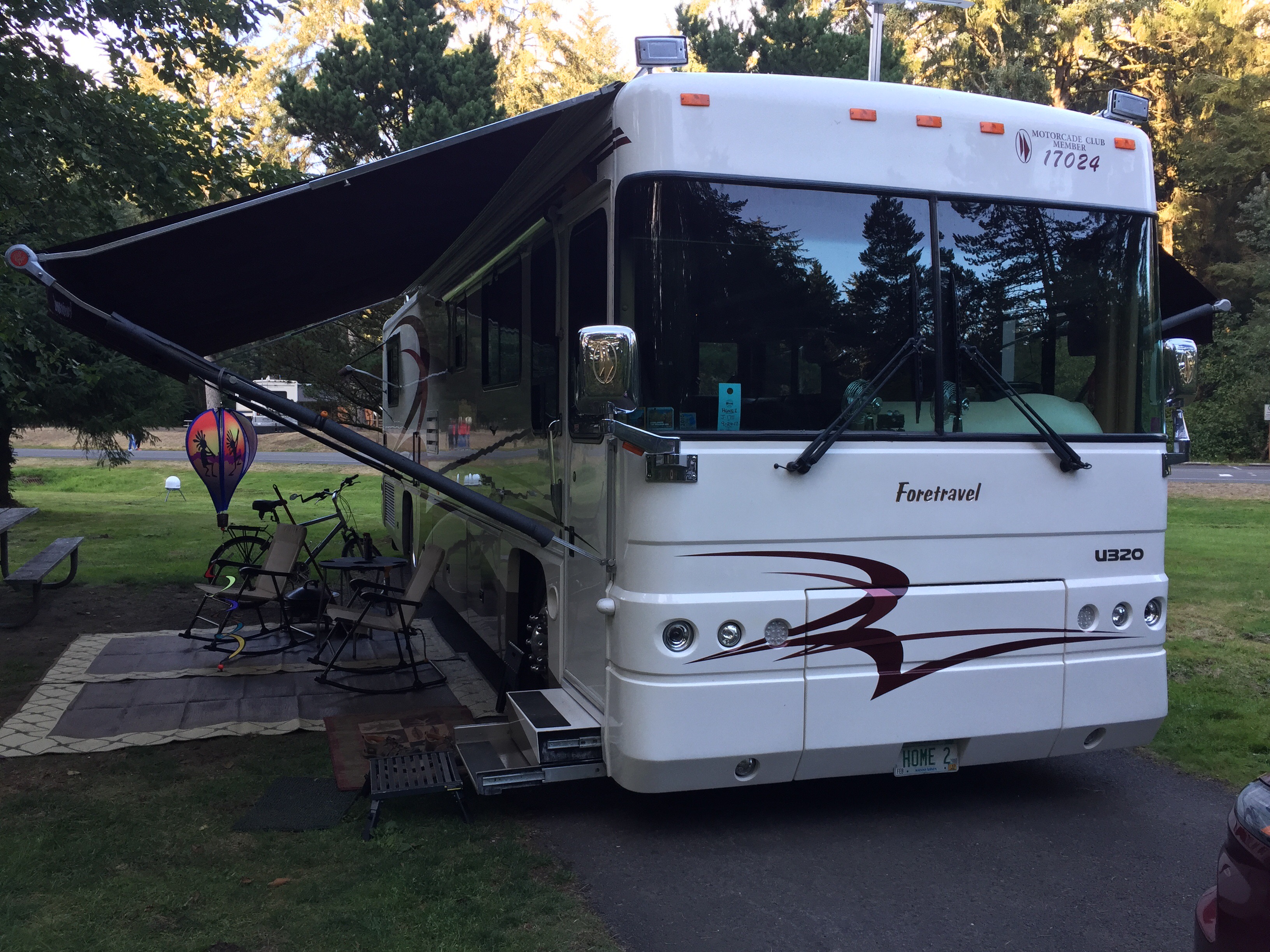
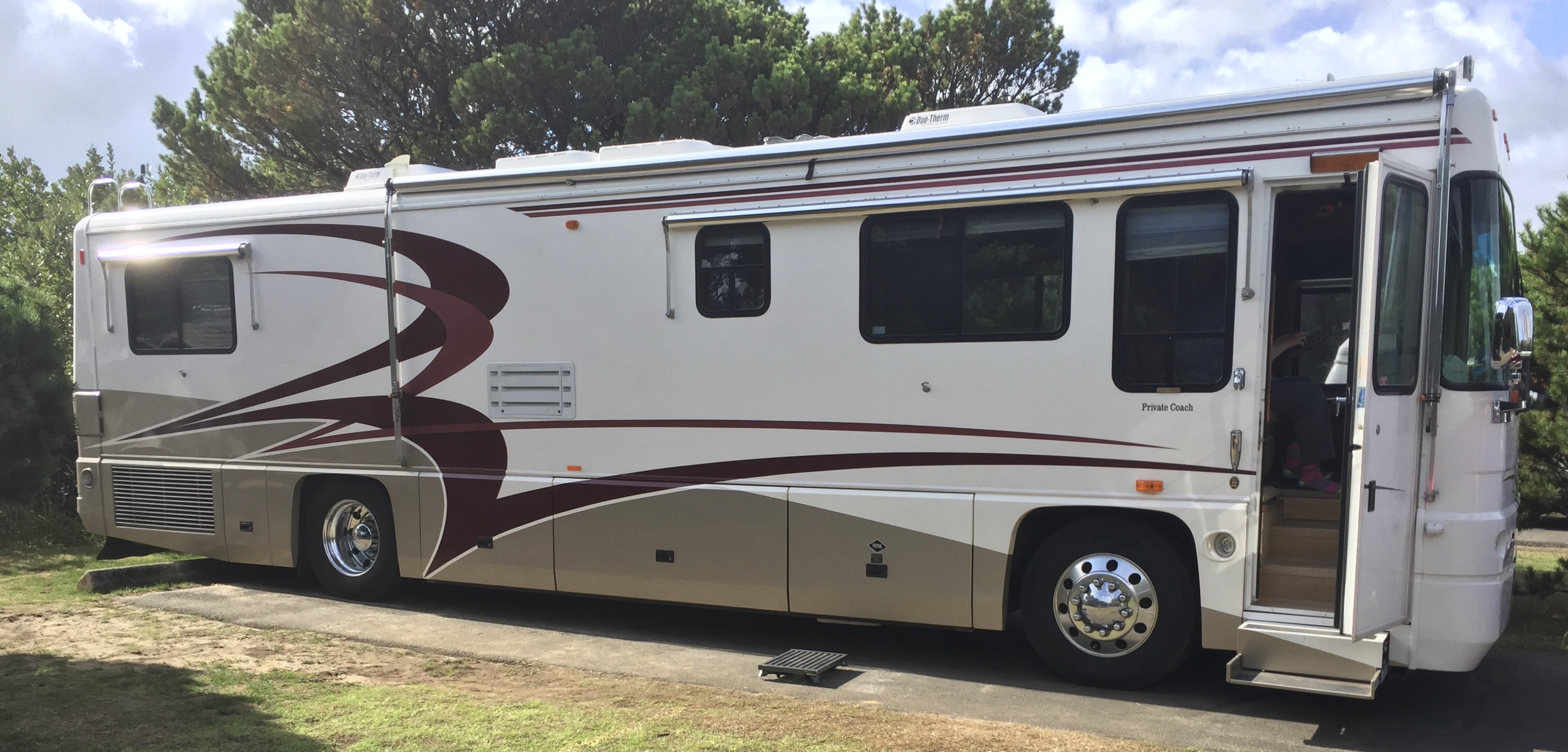
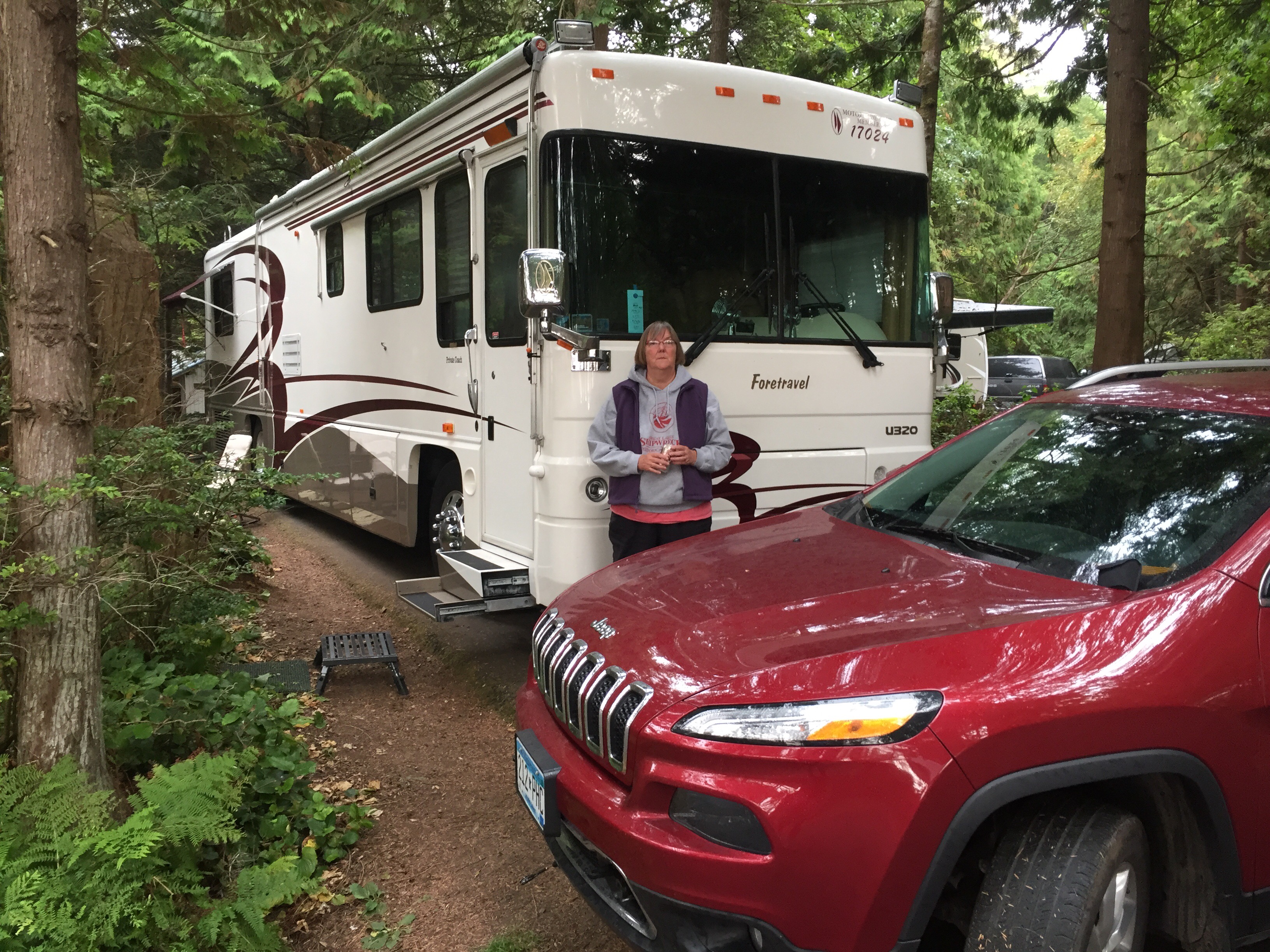
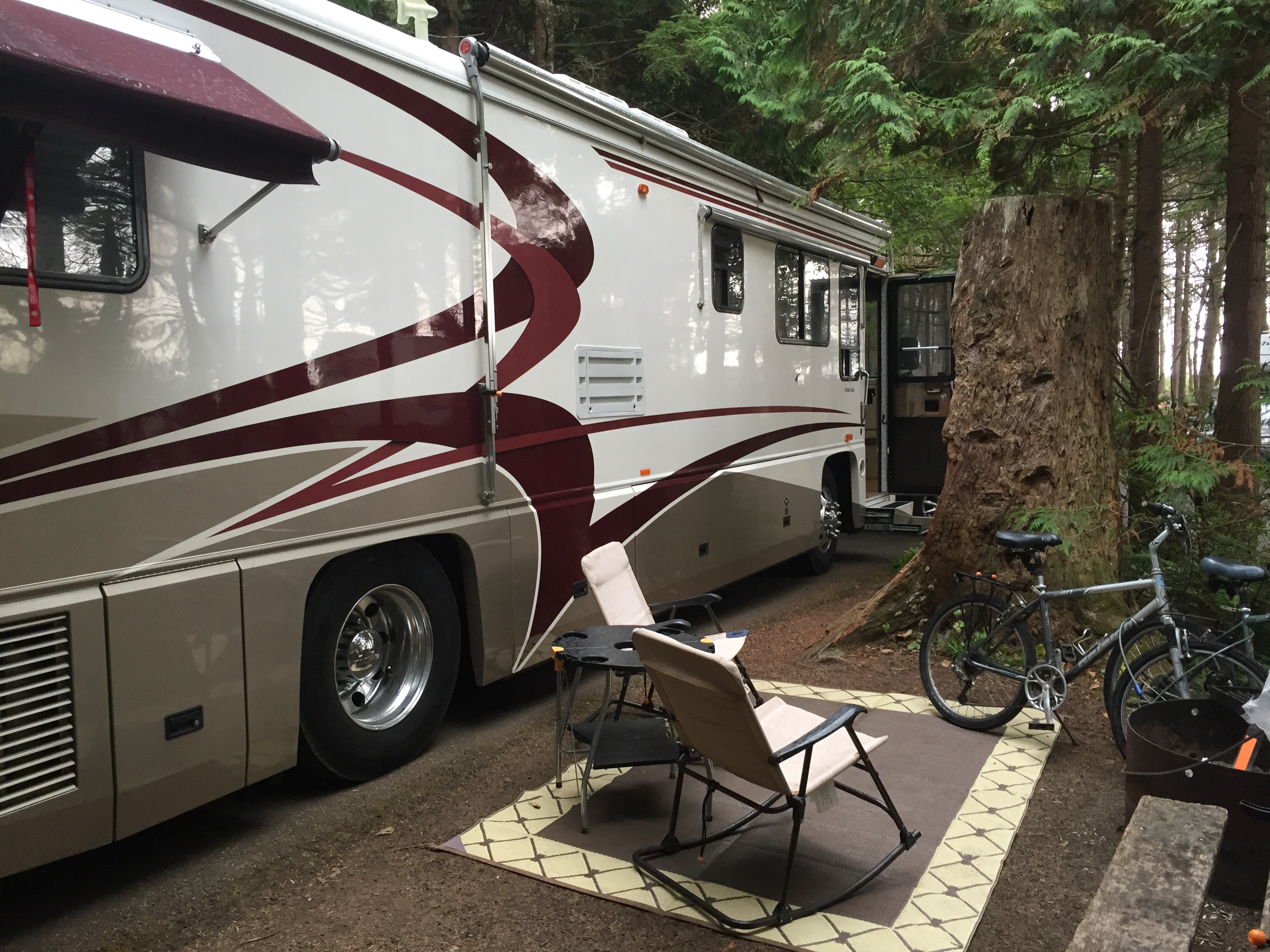
Well here is a boring coach picture but this is how we start out at each campsite. We chose this site because we were going to get some solar here and a good DirecTV satellite link. Cell service was also pretty good here unlike most of the beach parks we have been in so far.

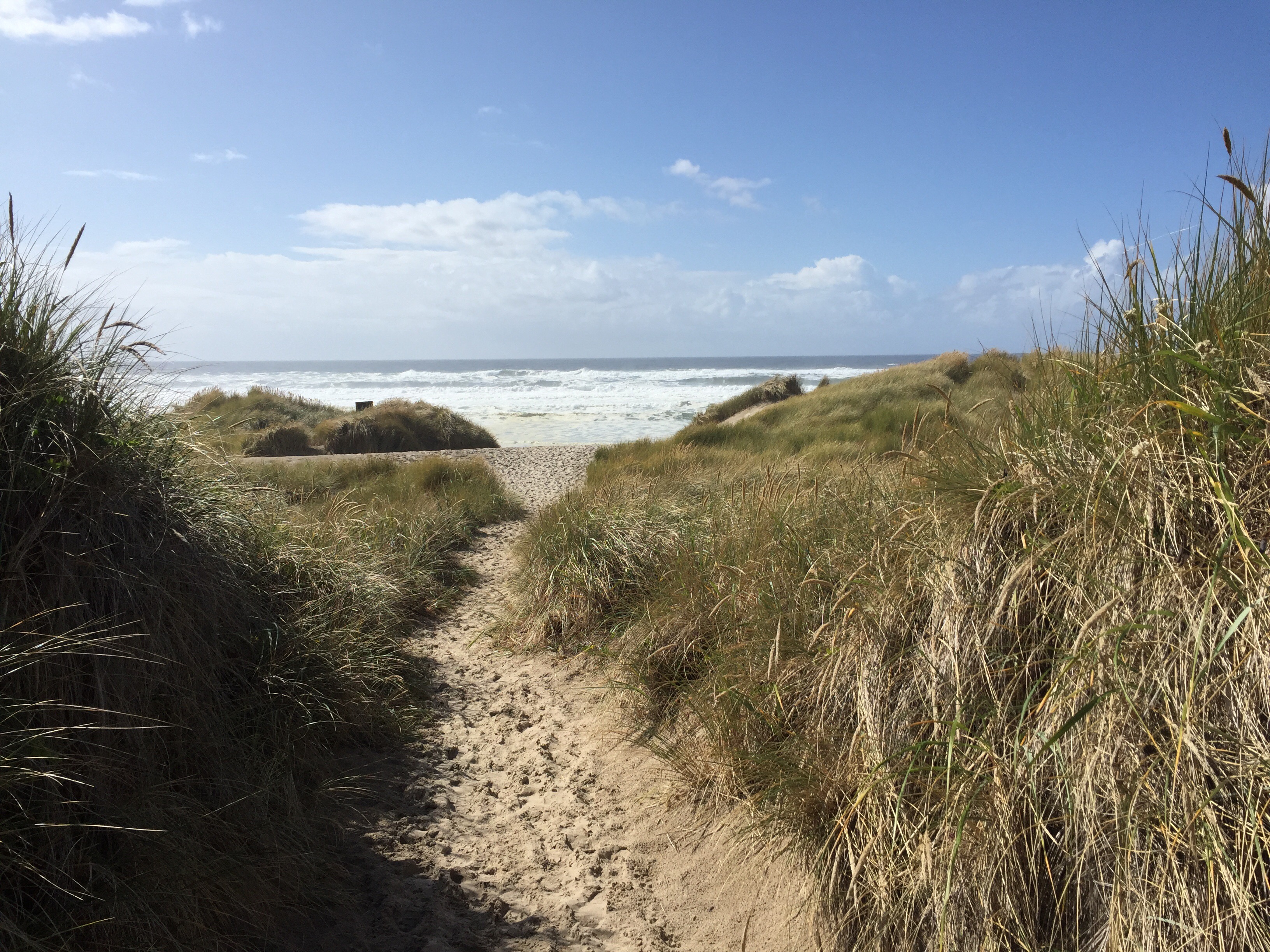
Every trip to the beach starts with a short hike over the dunes. Some access points are more of a climb than others.

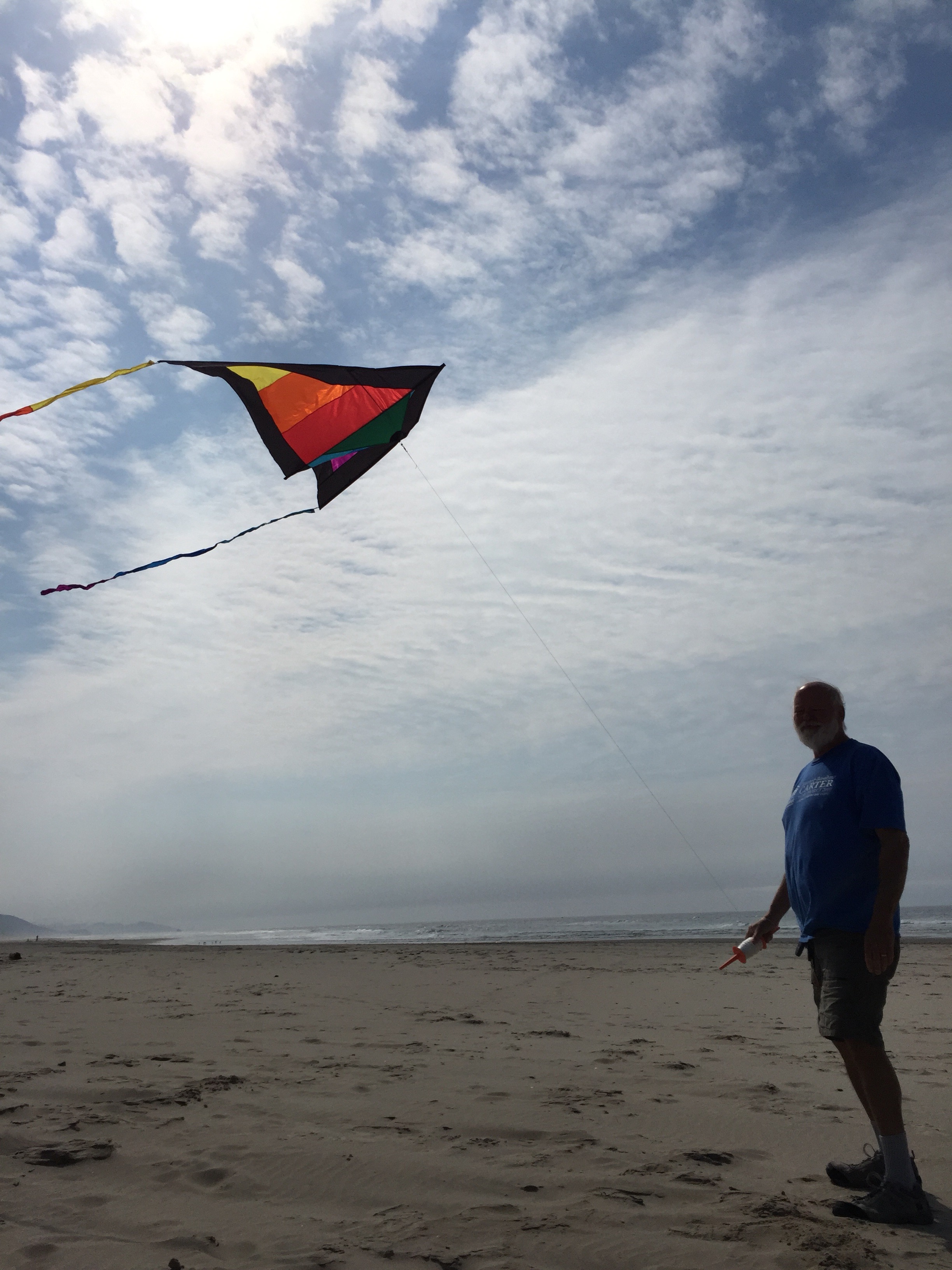
There was always a breeze on the beach. Good for kites. This is a 60” Delta kite on 900 feet of 50 lb test line. I had about 400 ft of line out and it was quite a pull. Good shoulder exercise. Winding it up was a real chore.

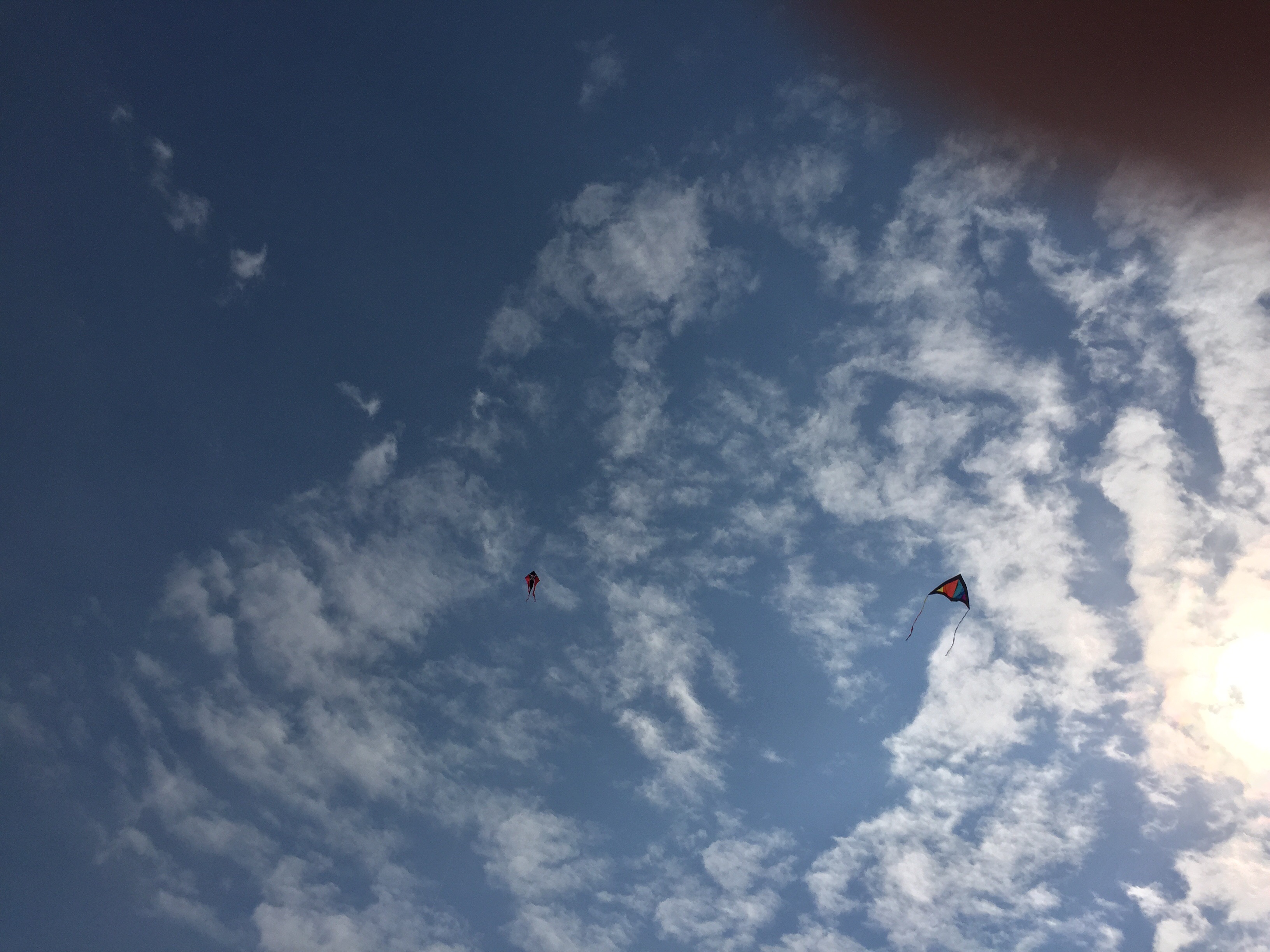
I had two kites up at once. The one on the left is a smaller Delta kite with a Pirate theme and long streamers. I bought this one in Texas last winter for my great nephew Hunter. I had to make sure it worked well. It did.

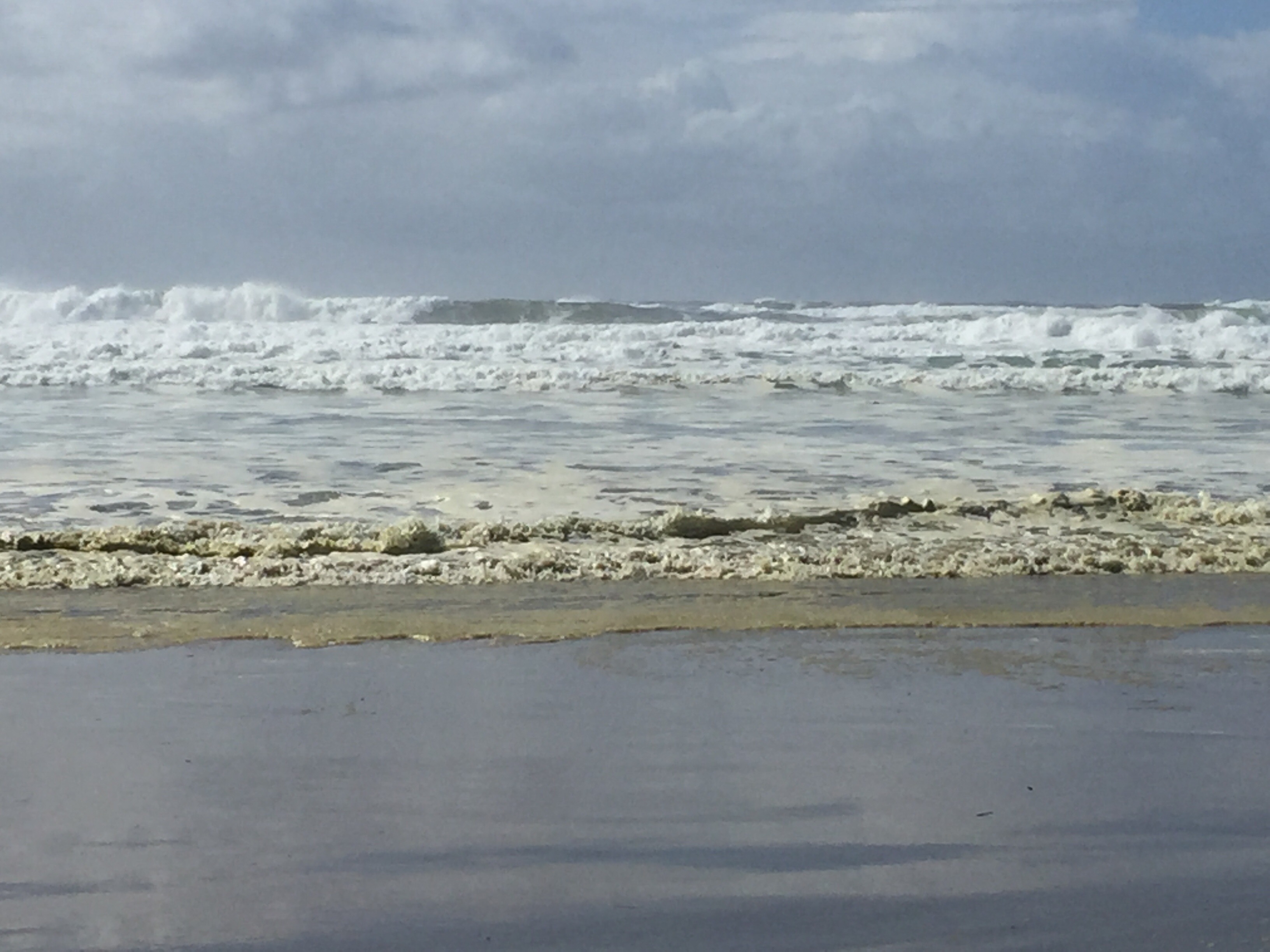
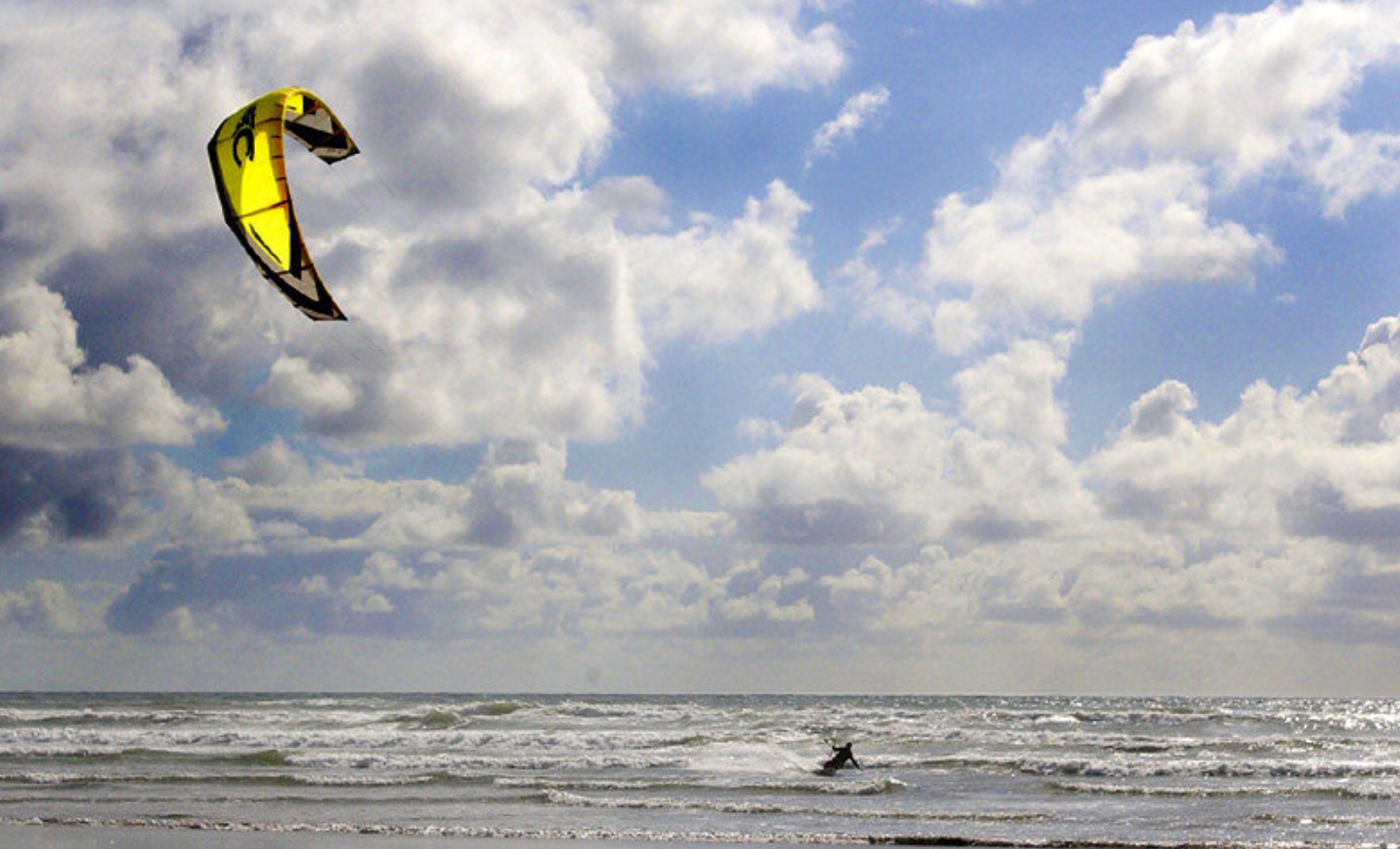
Waves everyday. Not a great surfing beach but there were kite boarders out there almost every afternoon.

I think this takes some serious practice.

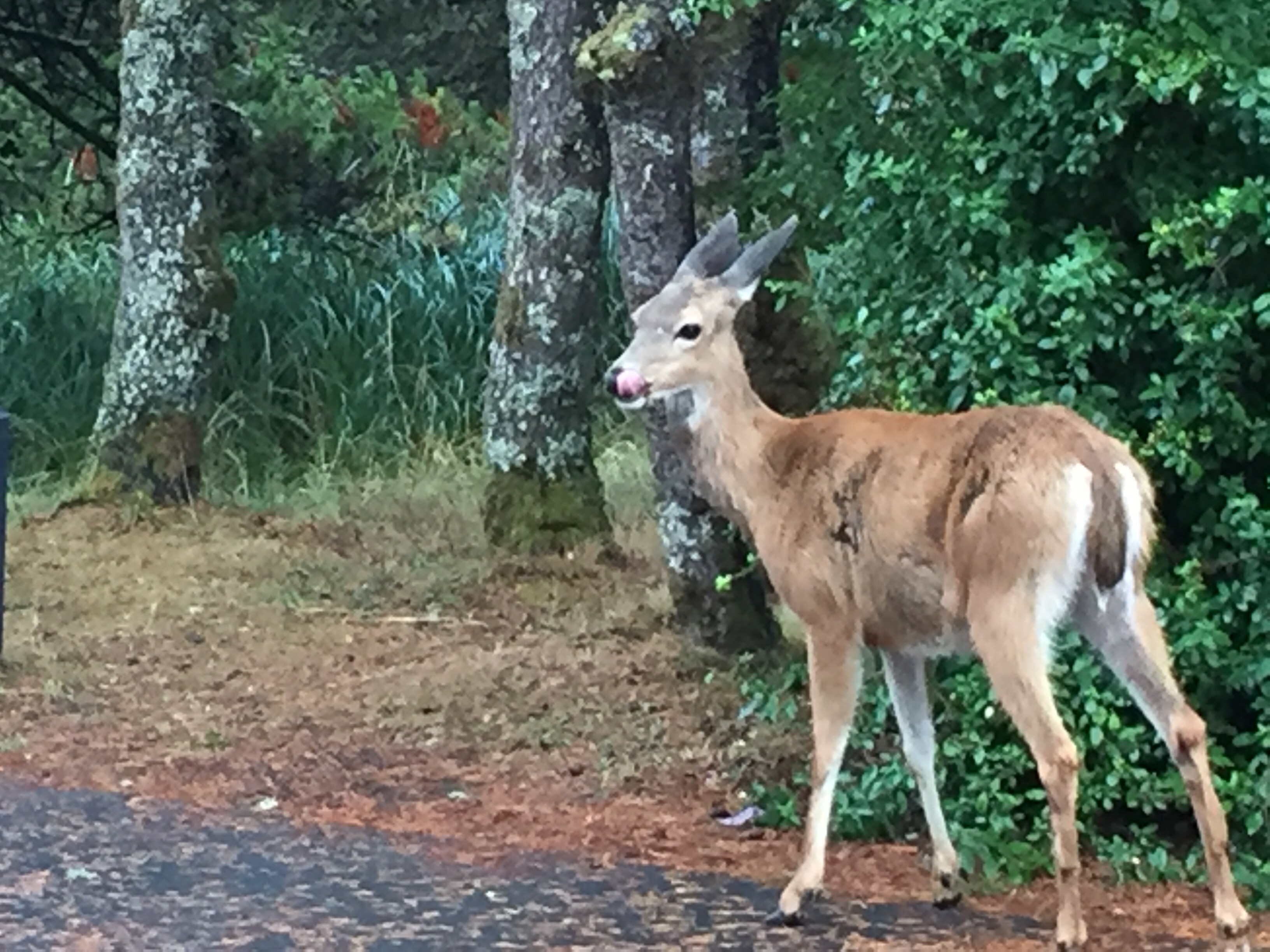
Back in the campground there were always visitors. Lots of deer and even elk.

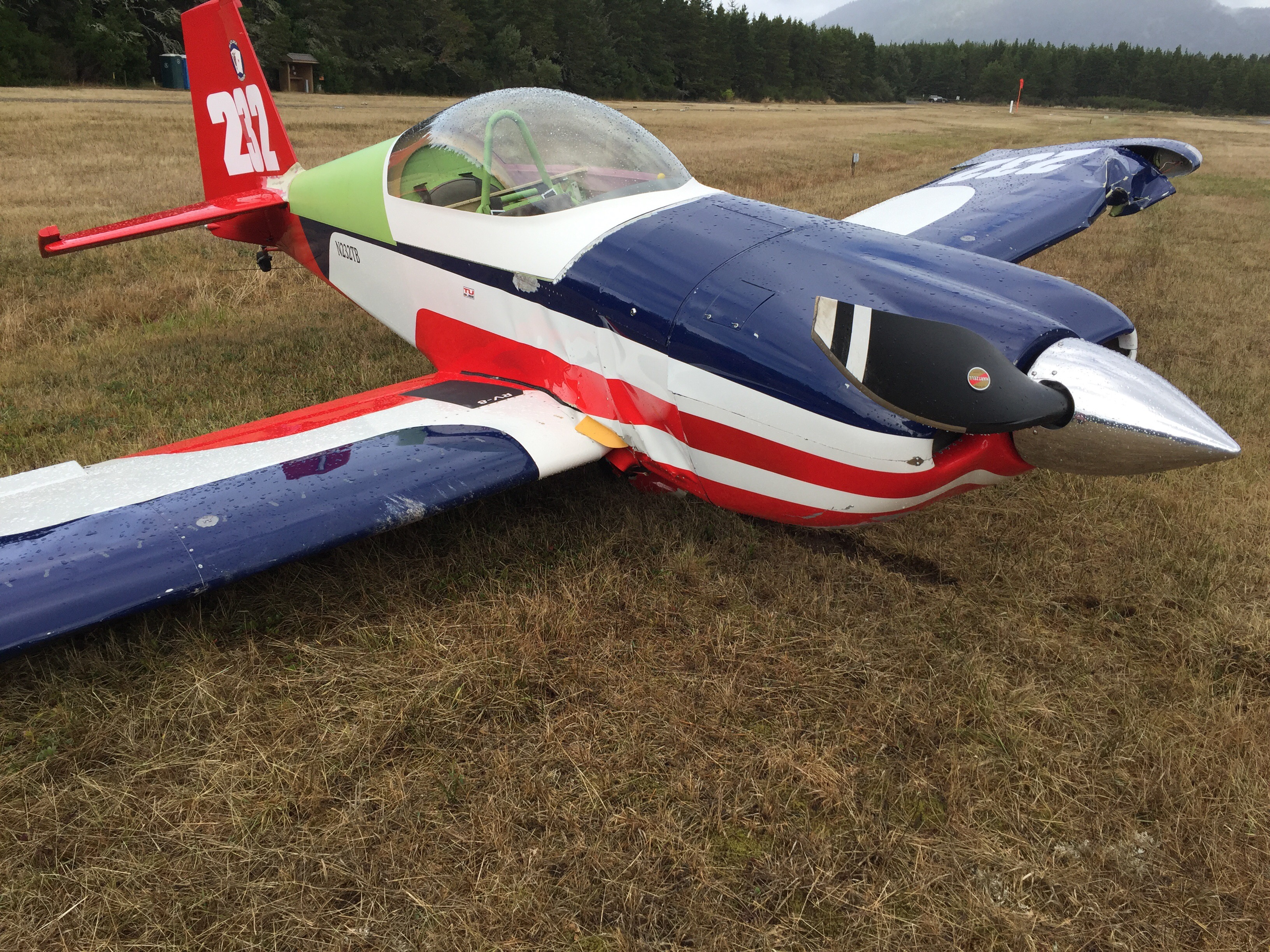
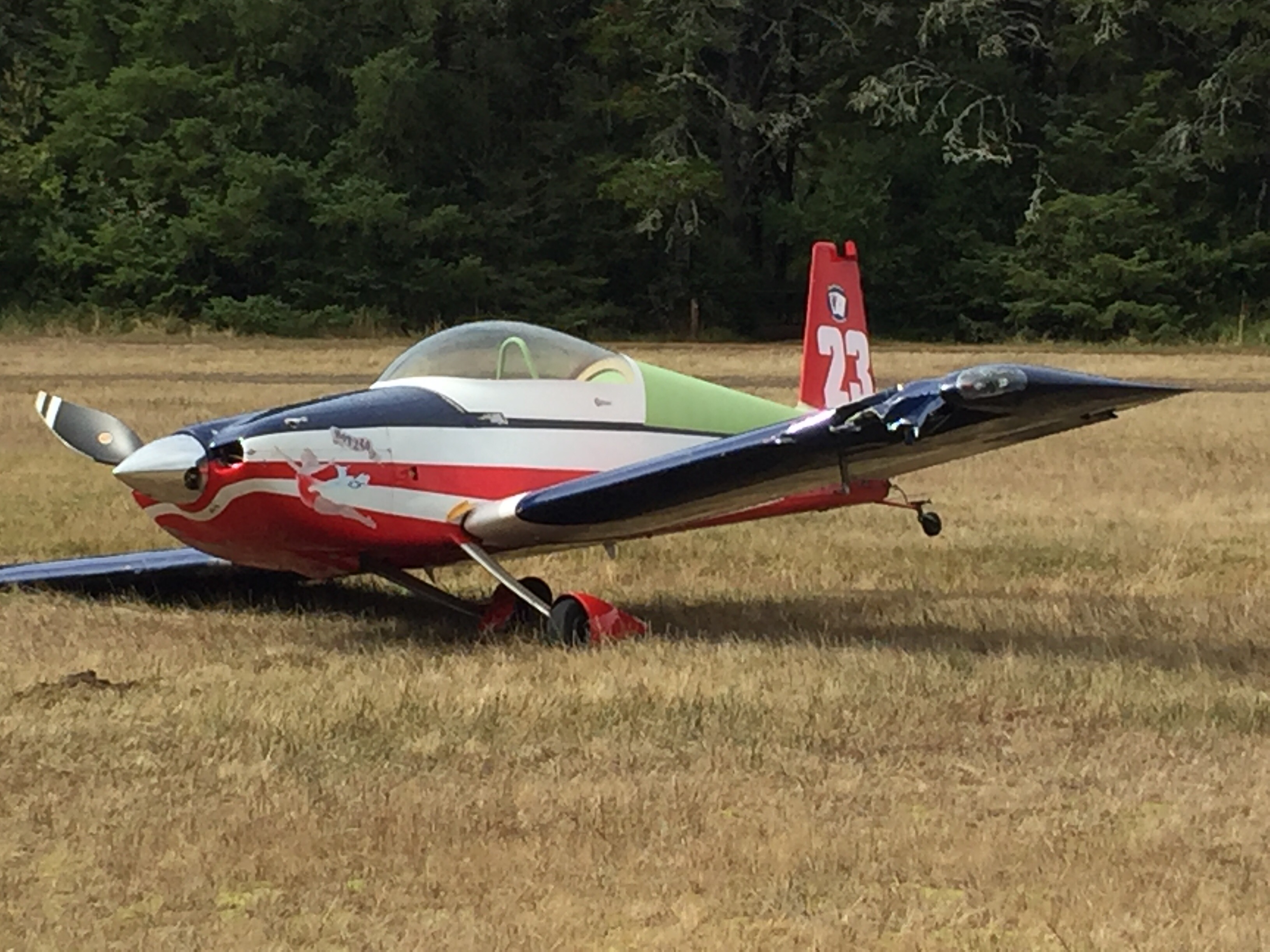
Unfortunately one afternoon a small plane was landing at the airfield and a bull elk ran out in front of it. The plane hit the elk and spun around right into the cow elk who was following the bull. Both elk died and were taken to the local food shelf, the plane was totaled, the pilot and passenger were OK.

Pretty sad to see this much damage. We went back to look again the next day and the plane was gone.

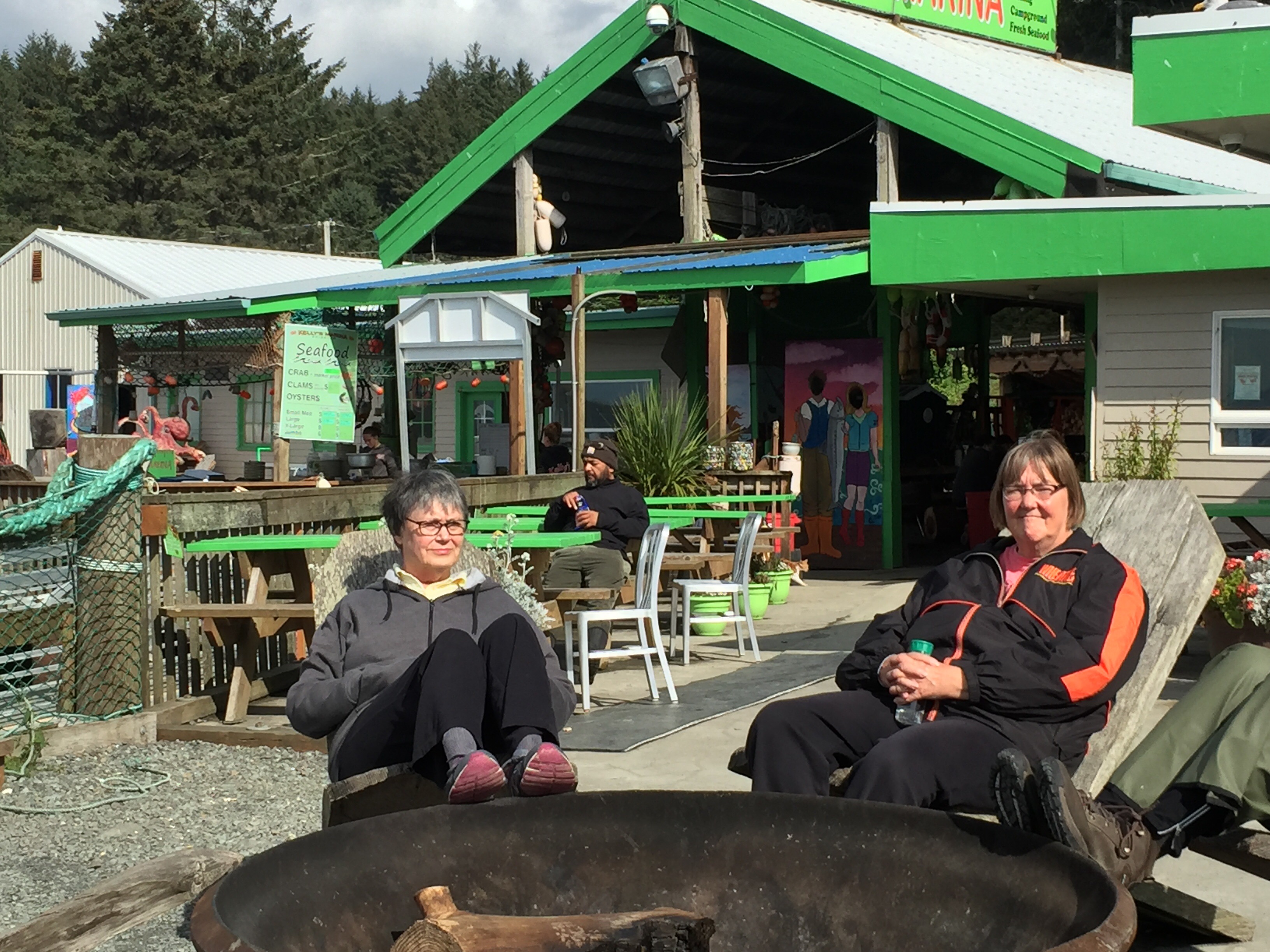
My sister Judy and her husband Bruce have a beach house about 2 miles from the campground. One afternoon we drove to the other end of Nehalem Bay to Kelly’s Marina where they have fresh live crab. You pick out the one you want and they boil them on the spot. After dunking them in cold water to stop the cooking process they were cleaned. The cleaner picked out the crab’s heart. It was white and shaped like a star. Not surprising it tasted like crab, a bit salty. So crab was on the menu for dinner that night with a baguette and salad. Yum!

We sat around a large fire pit while waiting. The chairs were made single slabs cut from logs.

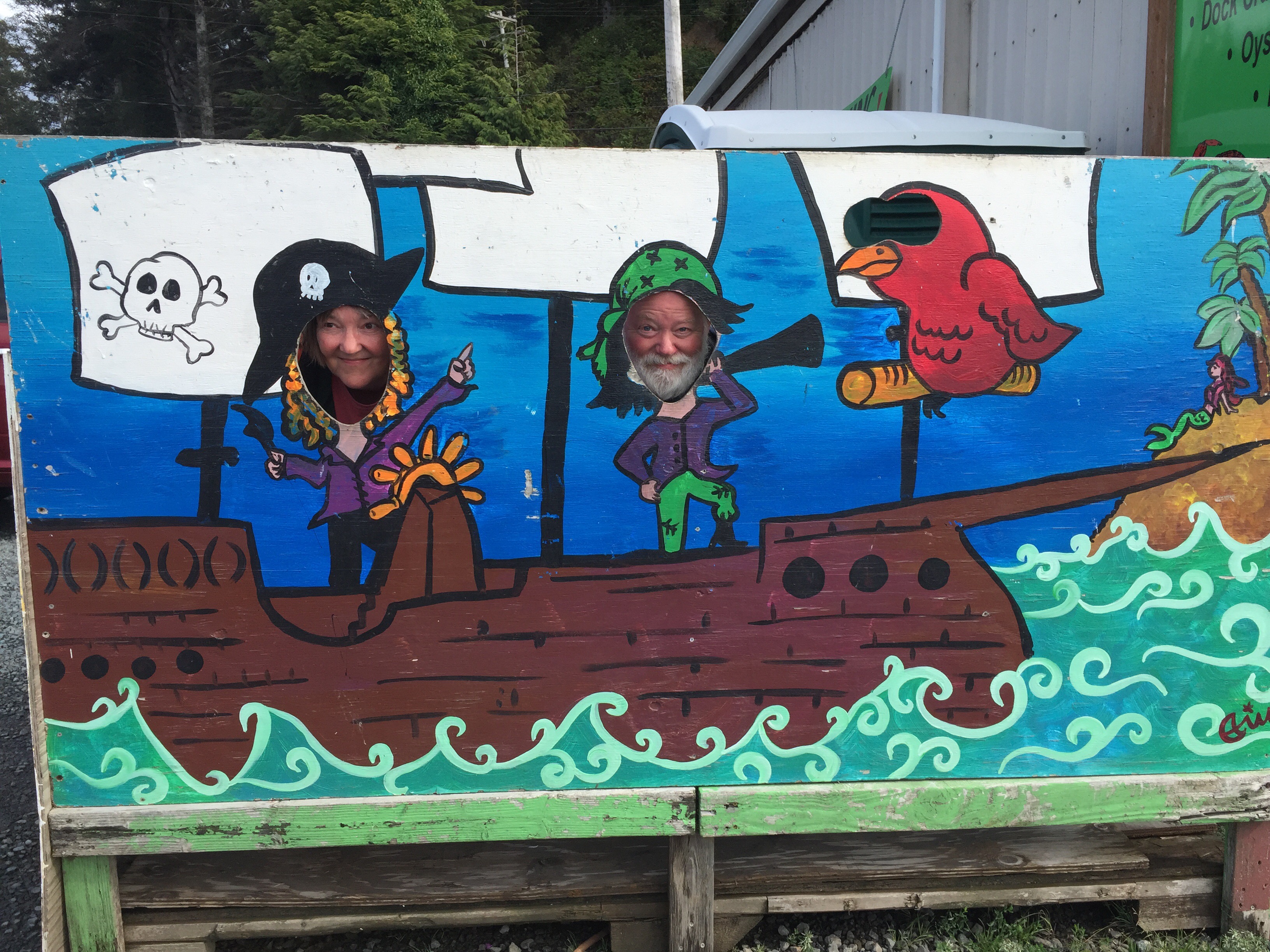
And we couldn’t resist posing for a pirate picture.

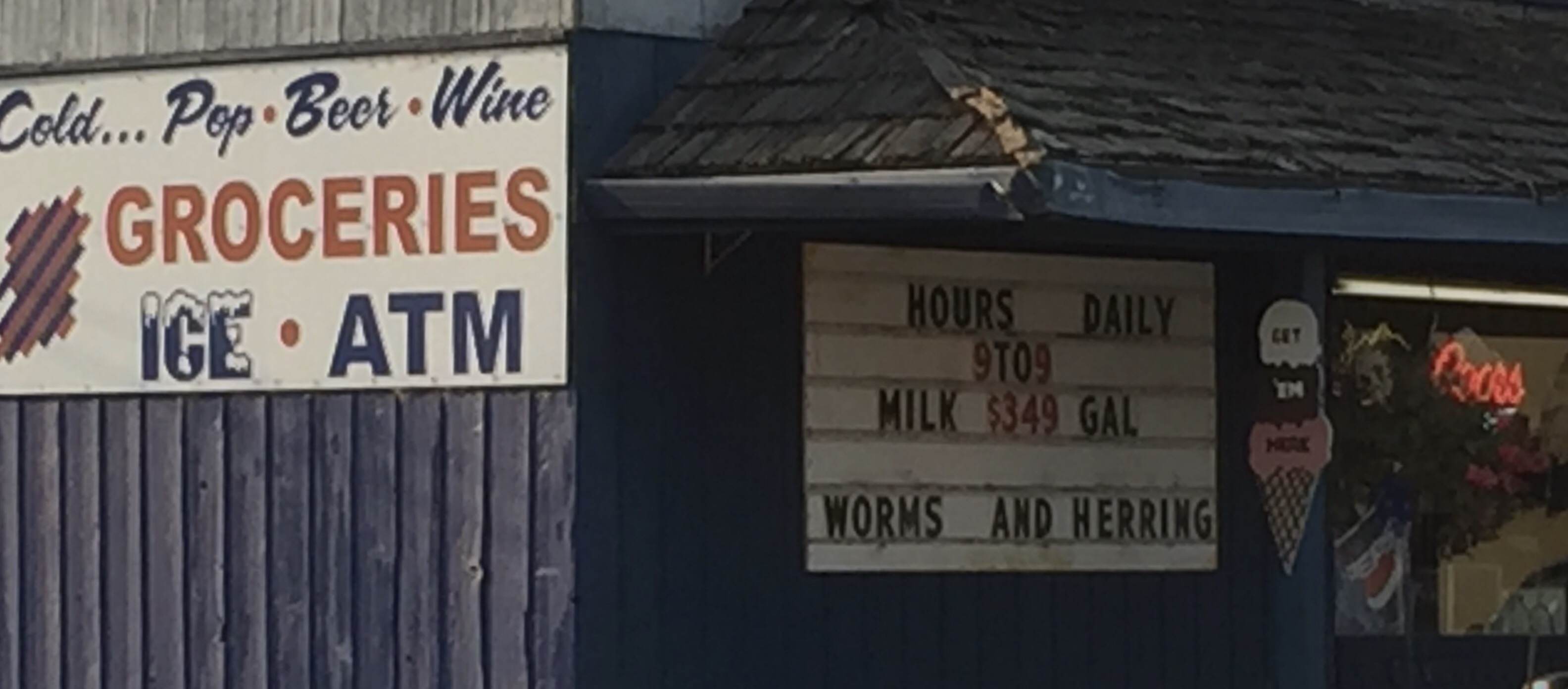
We also visited Garibaldi for lunch at Fisherman’s Corner. And breakfast at Wanda’s in Nehalem. Nehalem also has the Dollar-ish store. It is sort of an upscale dollar store if that is possible. I found a new screw driver for the coach and a great ice cream scoop. The small grocery store across the street has some interesting deli items.

So far Nehalem Bar State Park is the best of the best beach state parks for us.

Next we head north to Ft Stevens State Park where the Columbia River empties into the Pacific Ocean.

More later,

Roger and Susan
Cape Lookout State Park, Oregon, Summer 2017

Number three on our “Best of” State Park tour was Cape Lookout State Park near Oregon’s cheese heaven, Tillamook.

The campground is along the beach behind the dunes that run all along the beach. From the Cape looking north you can see the long beach and the lower end of Netart’s bay. As it seems in many Oregon parks the camp sites are snug getting into.

We fit in any case, sometimes it takes some wiggling but we get in. Many of these parks have very little room for your car or extra parking for your car if it doesn’t fit. When they say the site is 45’ long that is it. Usually no room at the other end to hang over the pavement, there are bushes or trees there. So many times the car gets squeezed in sideways.

Check out the tree next to the coach. It wasn’t a cut off stump, the tree broke off at some point. We enjoyed a great welcome relief from smoke. I84 from Portland east was closed going both ways for a couple weeks due to smoke and fires burning right up to the interstate. The fires near Sisters and Harris Beach were still burning as well. Lots of folks were hoping for some rain.

It didn’t rain rain here but pine needles. Lots of them. I got up and swept the roof of the coach before we left and we had to sweep the awnings too. Back home we might buy bales of pine needles. Here they are everywhere.

This park was land originally donated by the US Lighthouse Service. Additional land was donated by Louis W Hill of St Paul MN. He was the president of the Great Northern Railway at the time. This area was logged for big cedar timbers. Additional land was purchased over time. In the 1930’s the CCC developed the picnic and day use area. The campground opened in 1954 and quickly grew to its current size.

During WWII a B-17 Bomber on coastal patrol crashed into the Cape. It took a full day for rescue crews to reach the sole survivor. Today there is a road out to trailheads at the Cape and a trail to the crash site.

This gives you an idea of how big the trees were. Stumps like this are all over the park almost 100 years after the trees were cut down. Even in this wet, salty environment they last a long time.

Not quite the Hawai’i beach experience – cool, windy, often cloudy – but it’s a beach and the ocean and not very many people. Great for walks, looking at everything and kite flying. And every night we could hear the ocean surf, very nice.

Next up two weeks at Nehalem Bay State Park.

More later,

Roger and Susan
Sunset Bay State Park, Oregon, Summer 2017

On the top ten list of beach front State Parks Sunset Bay was near the top. It is near Coos Bay. There are three connected State Parks – Sunset Bay, Shore Acres and Cape Arago.

We thought Harris Beach was a tight fit for getting into the camp site but Sunset Bay was even closer. The issue was backing into the site with hedge rows along either side of the road and a narrow opening into what was actually a pretty large site. It was complicated by all of the other campers whose cars and pickup trucks were sticking halfway out into the narrow lane. It took three or four back and forths but we got in.

The campground was packed, two of the loops including the one we were in were filled with a church family camp thing. They all had their signs out in front of the campsite with mom and dads names and those of the kids, in some cases lots of kids. There was one site with 12 bicycles, half of them in the lane. The group had two adjacent sites that they used for gathering together for what ever it was they were doing. Lots of people moving back and forth, lots of joyful noise. They all seemed to be having a great time. The night before they all left they had a big barbecue. Someone from their group stopped by later in the evening with a big bag of sliced up tri-tip steak that was left over. We took that. They had potatoes too but we declined. We repackaged the steak into four bags, probably 3/4 pound each and froze them. They make great fajitas.
Sunset Bay is a small bay with a very small opening to the ocean. This makes it very calm and very shallow, a great beach for kids.

It has a nice wide sandy beach that was almost always filled with people. In spite of its name we never saw a sunset at this park. Clouds and smoke got in the way. There was an odd noise though that we could hear everywhere. Sort of a two tone wee-woo. My guess was that it was something left over from the hippies of the 60’s – most of them were still here. The park ranger told us that it was a wave actuated fog horn sort-of-thing. Wee going up the wave and woo on the way down. There were actually two of them like sentinels at the gates to Coos Bay.

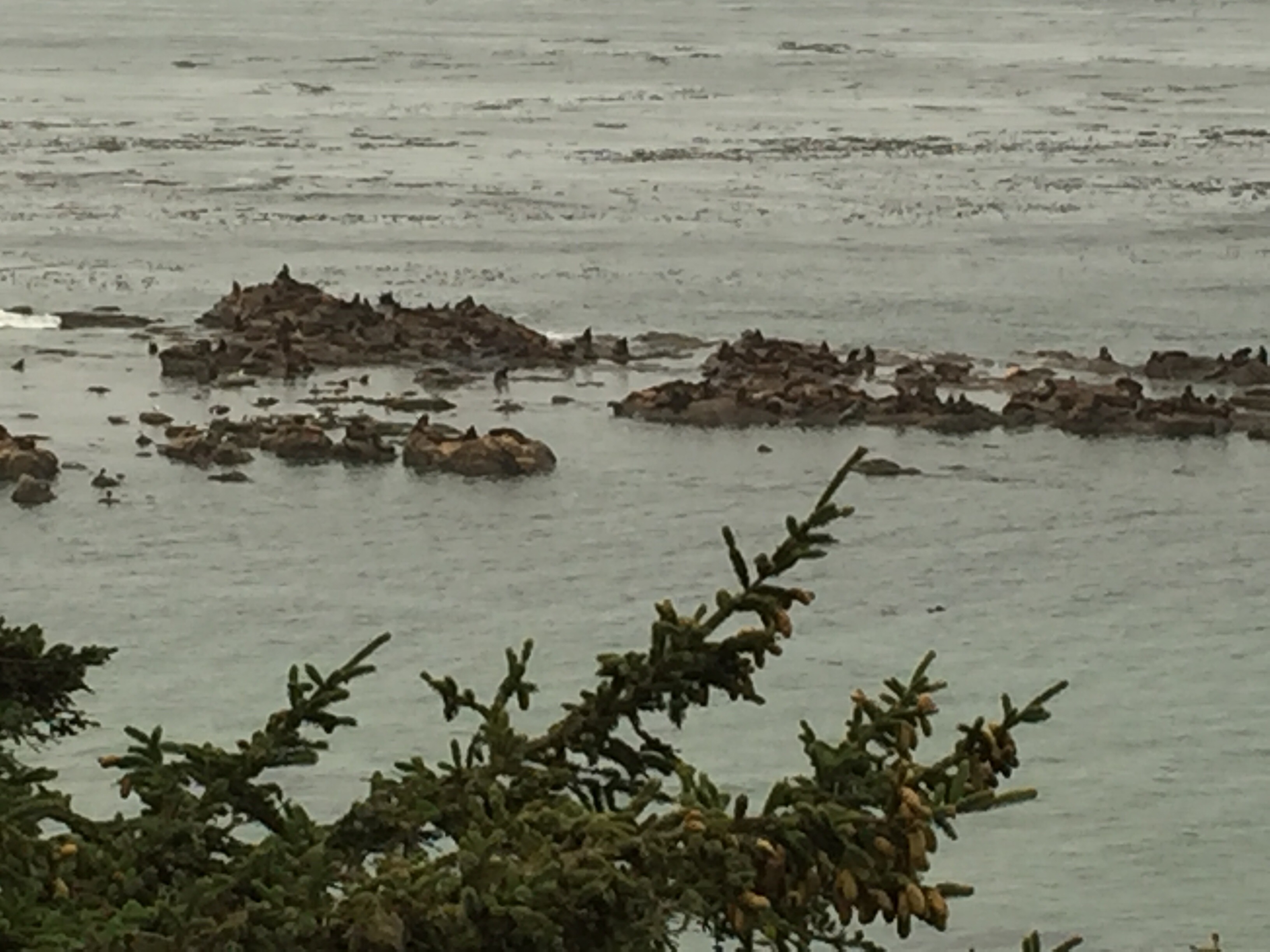
Something else was making noise too. We followed the road further on out to Cape Arago. High on a bluff overlooking a reef the sound of hundreds and hundreds of sea lions and seals barking … ark ark ark … it never ended. I made a short video and sound recording of the racket but I can’t post them here.

There were signs at one overlook with pictures of all the different seals and sea lions so you could figure out who was who. They all just seemed to make continuous noise.

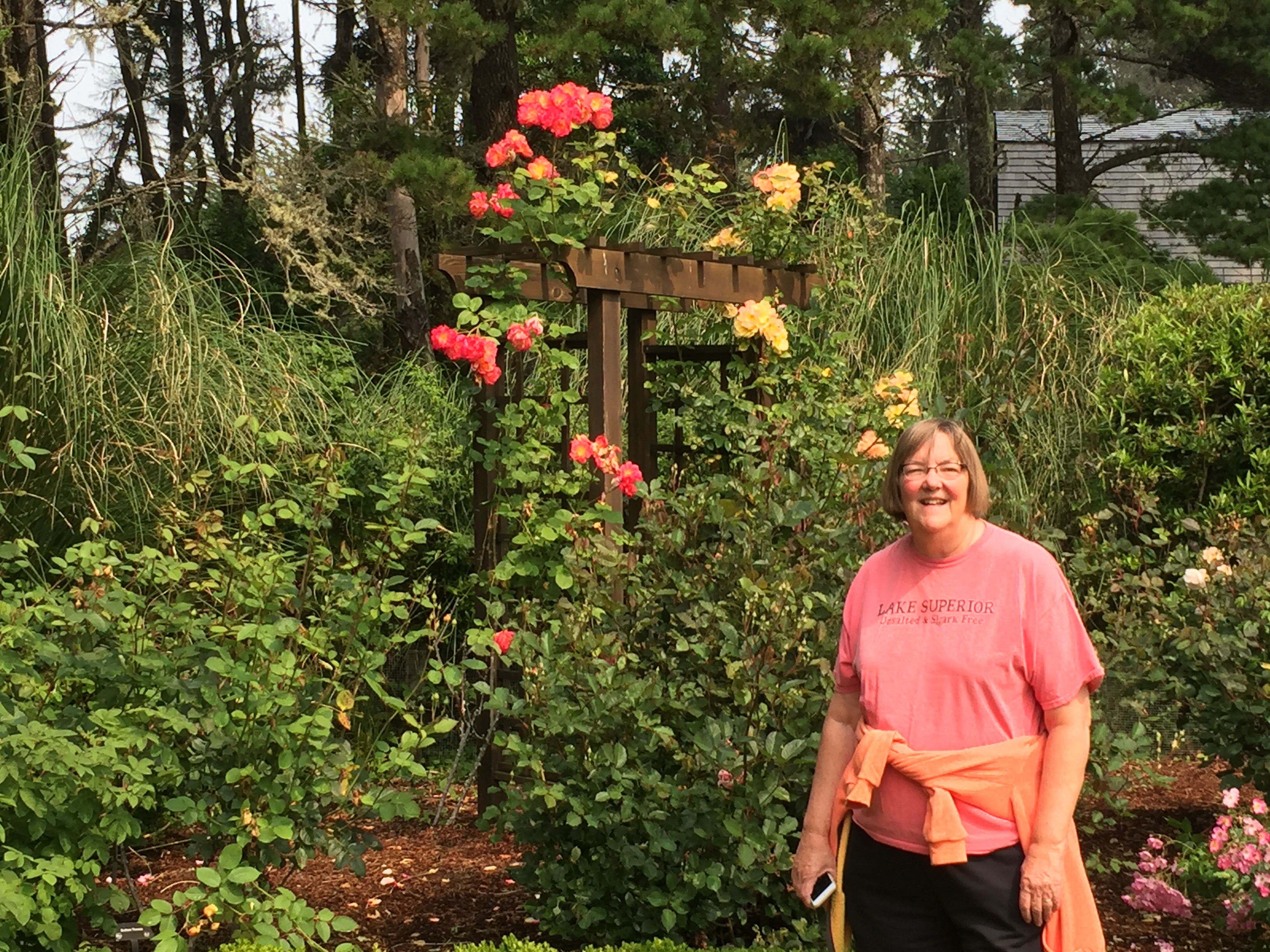
And just down the road back towards Sunset Bay was Shore Acres State Park. This was the estate of a Coos Bay business man who was successful in the lumber business and in promoting Coos Bay. He built a substantial mansion on a bluff overlooking the Pacific and had a formal English garden built as well. His family called it Shore Acres. The original house burned down and he set out to build a bigger, grander home. Before it was finished he died. The depression set in, business wasn’t so good. And the property slipped into disrepair. The family donated it to the state of Oregon in the 1940’s. The house was demolished but the gardens and gardener’s cottage remained. The Shore Acres Garden volunteer organization is quite large and has restored the gardens, the cottage and built (you guessed right) a gift shop.

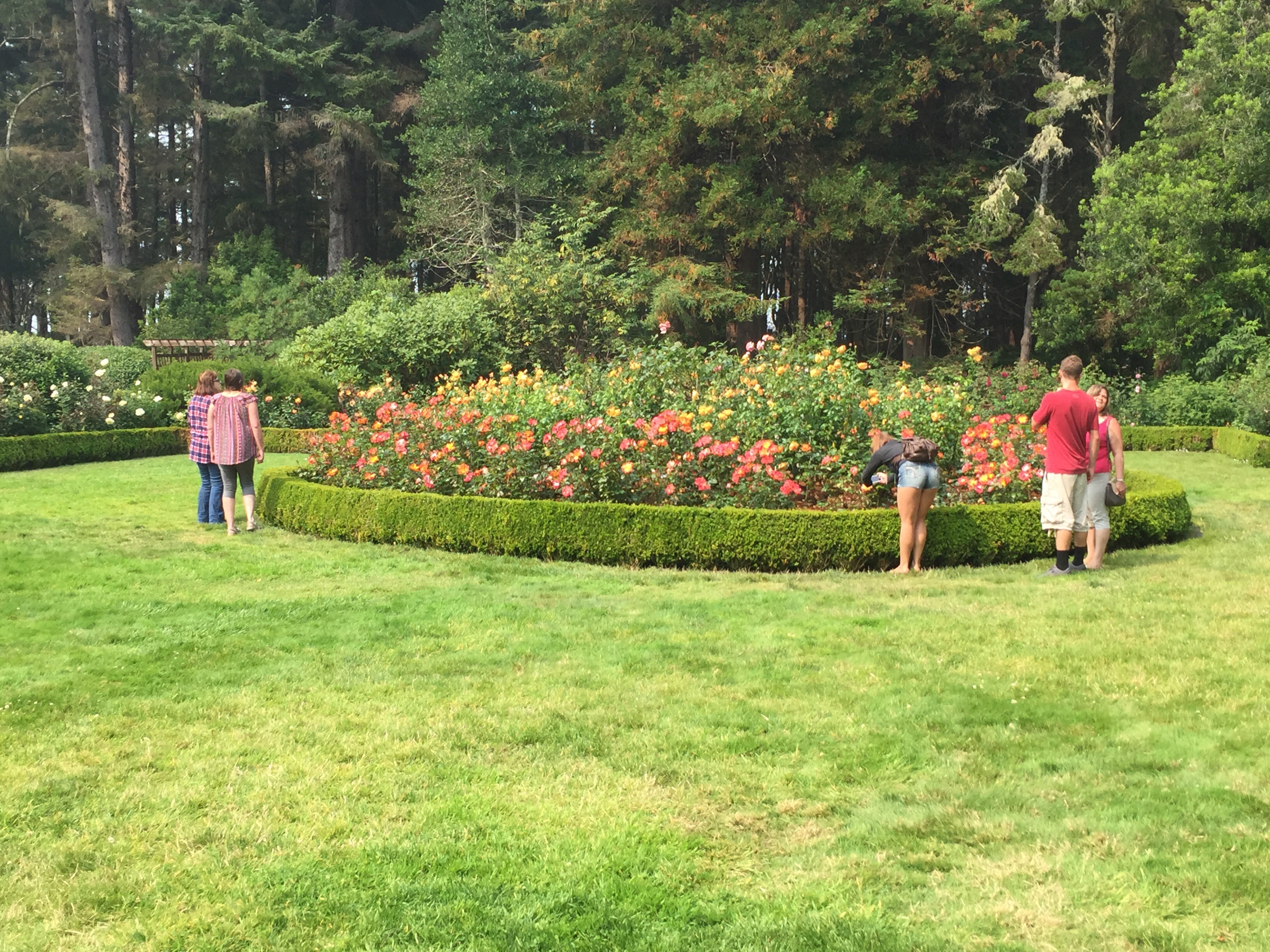
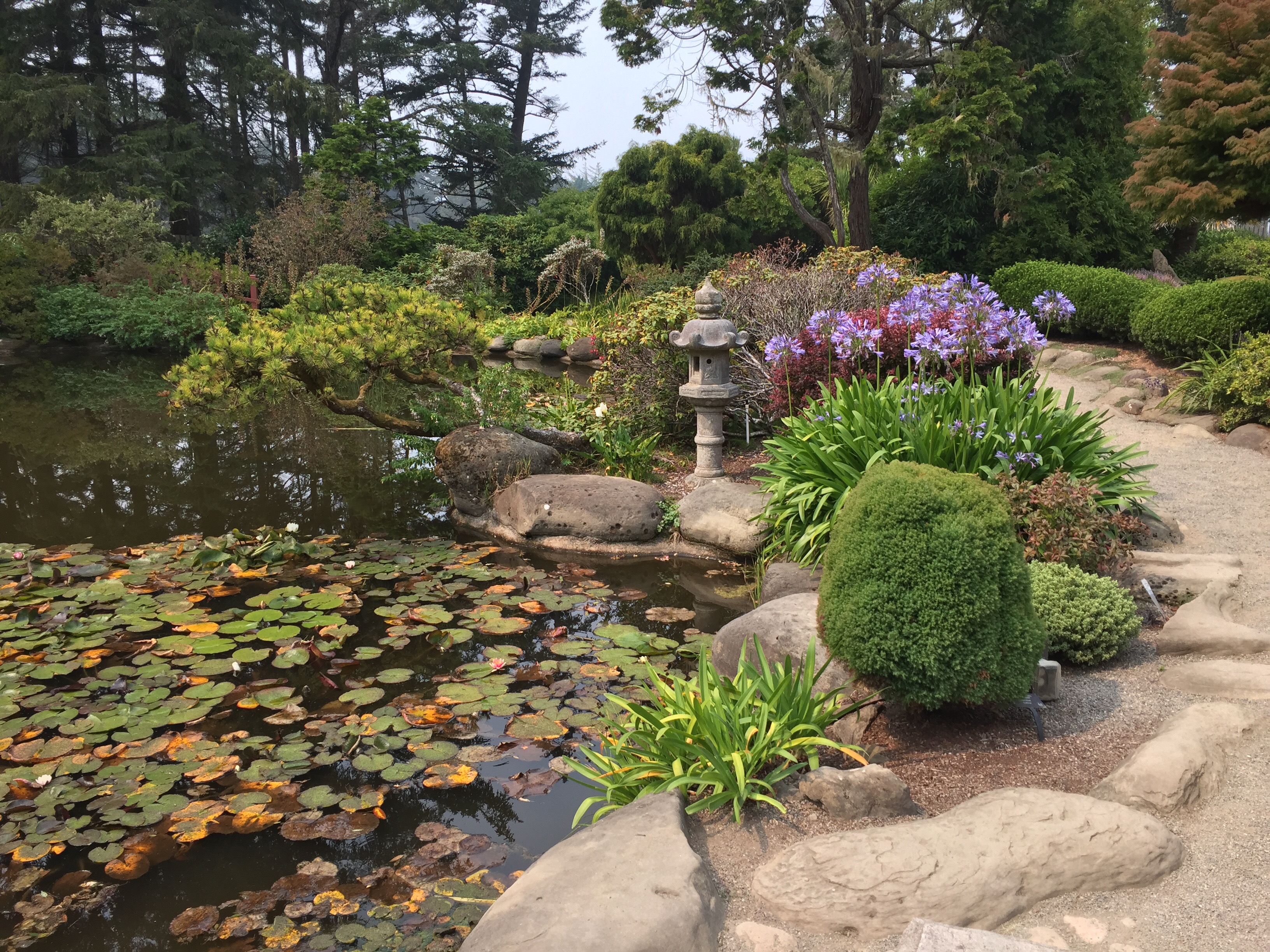
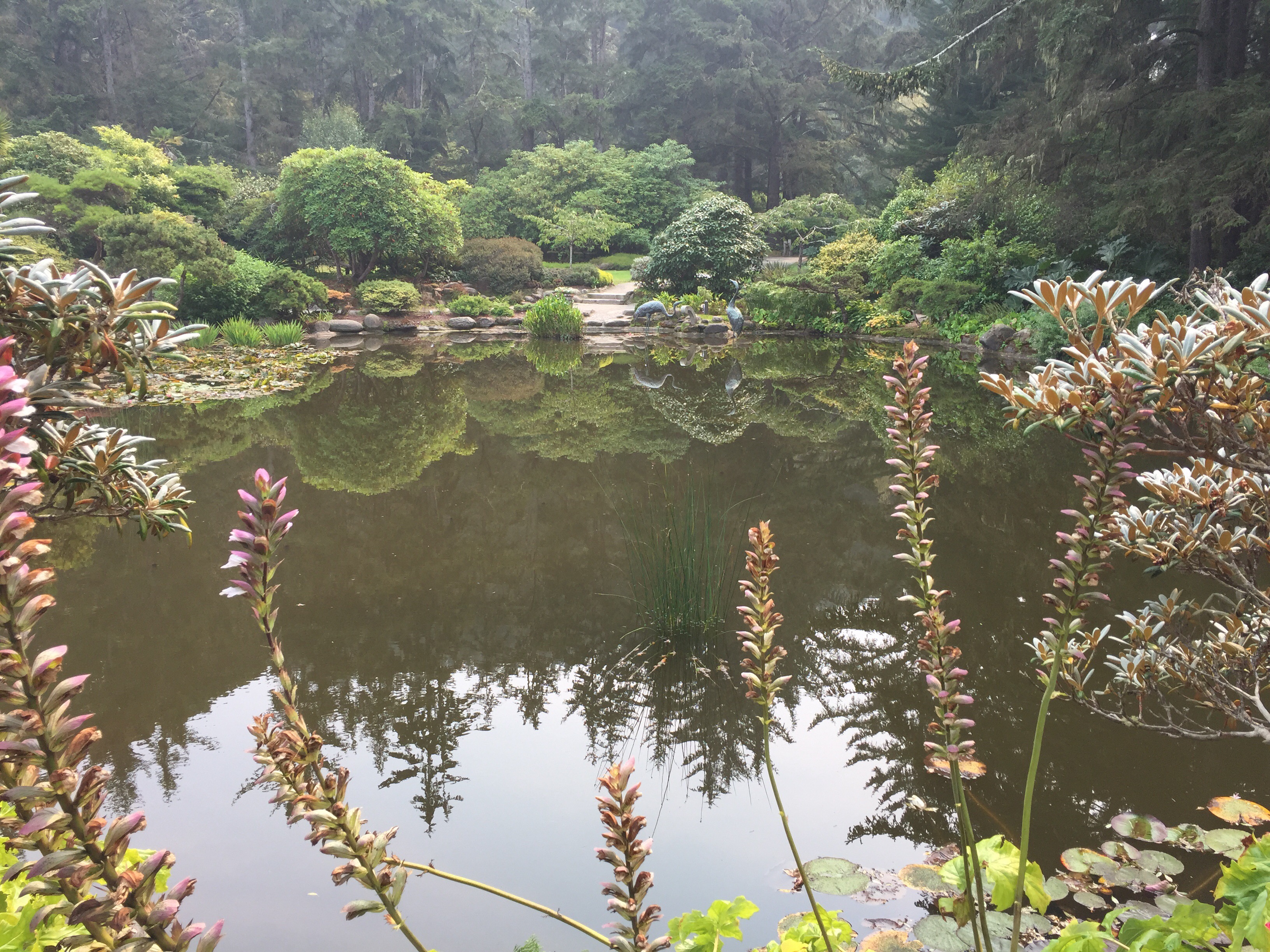
There were lots of roses and structured beds and a very nice pond. There were trails from the gardens down to the beach and along towards Cape Arago and back to Sunset Bay.

We both like gardens and appreciate the hard work that goes into them. We bought a couple wooden Christmas decorations for my sister and a Raku sea turtle to join the other turtle on the dash of the coach. They represent our “herd of turtles” pace as we travel.

One more day after the church families left at Sunset Bay. Quiet. Nice. But we could still hear the sea lions almost three miles away!

Next we head to Cape Lookout State Park.

More later, trying to catch up…

Roger and Susan