The rye grass we planted in June as a cover crop came up nicely in the “back 40”. It is an annual grass that won’t come back in the next spring.
Our goal was to plant a turf grass that would grow in the mix of sunny and shady areas, be somewhat tolerant of not being watered, and be tolerant of less frequent mowing.
The fellow at the Vermillion Elevator where I have been buying grass seed and fertilizer from in the past suggested three different grass seed mixes which got blended to make the 400 lbs of seed we needed for the “back 40”.
I contacted a fellow with a seeding implement for his tractor and made arrangements with him to come and plant the seed as late as possible before we left for Alabama.
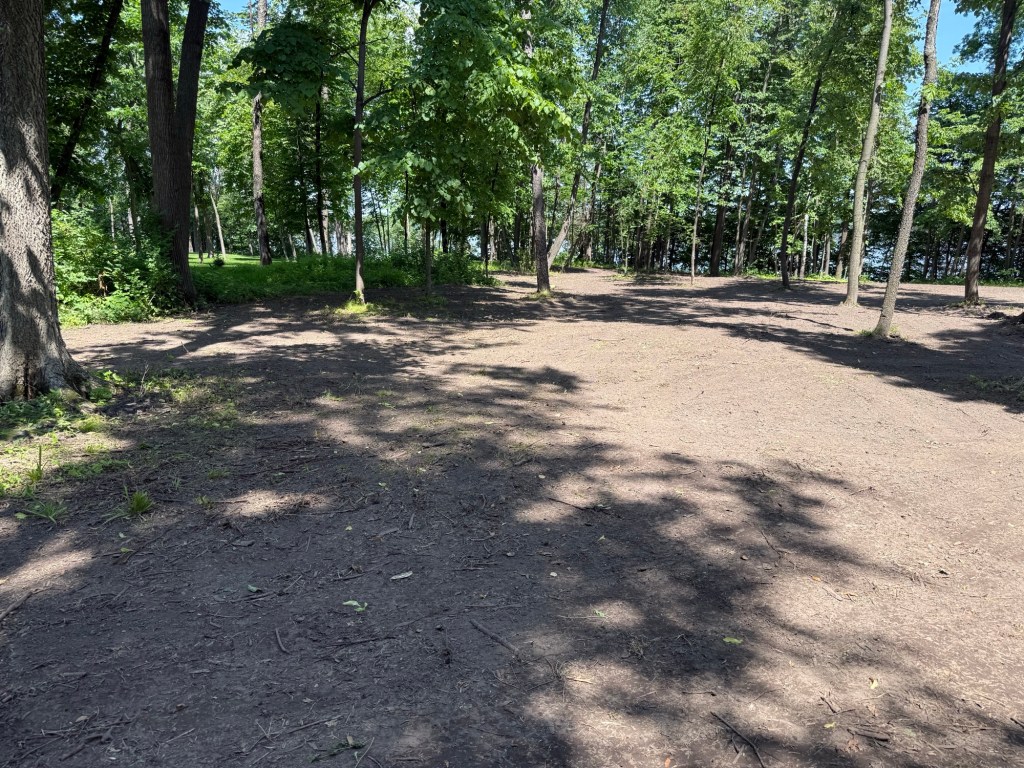
After the rye grass was removed it looked like this.
I spent about three weeks raking up the remains of the rye grass and then loosening up and smoothing the top layer of dirt to get ready to plant the grass seed. After many more passes raking and smoothing, and picking up endless sticks and rocks it was ready.
In early November it was planting day.
We started by spreading a starter fertilizer over approximately 1 acre we were going to seed.
Jeff got his tractor off his trailer and loaded up the grass seed. It held about 100 lbs at a time.
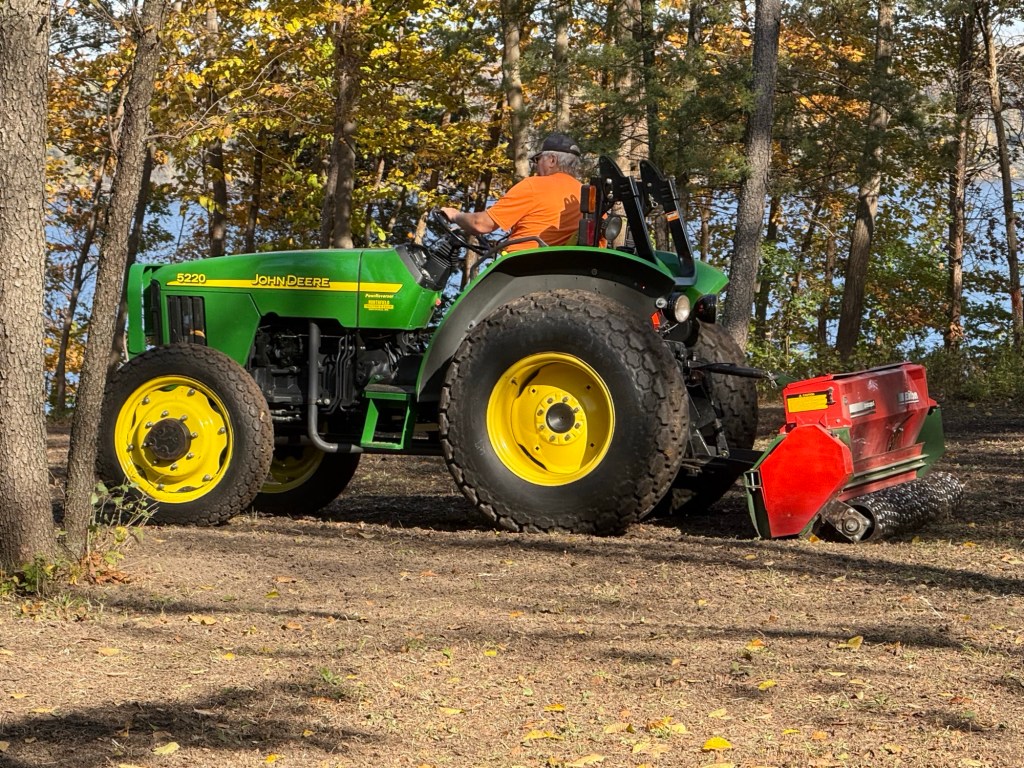
The seeder has a front roller with bumps on it. The pattern it makes looks just like a waffle. The seed is in a container behind the front roller and the rear roller. As he drives forward the seed drops into the waffle pockets. And the rear roller with the same pattern of bumps on it but shifted a bit to the right rolls offer the pockets with seeds. It makes a new pattern of pockets that fills in the seed pockets from the first roller, presses the ground down, and leaves a waffle pattern to catch water.
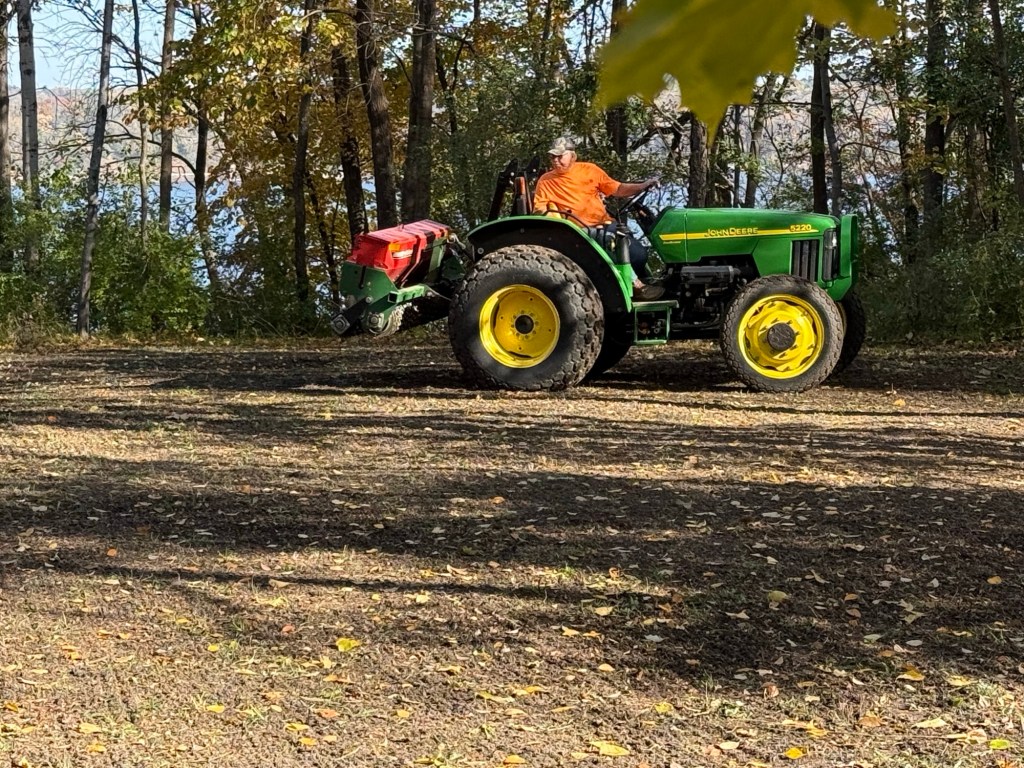
Jeff went back and forth East and West and then North and South. On the hill behind the barn, we spread a layer of straw to help prevent erosion.
This is called dormant seeding. The fertilizer and seed are put in place just before winter sets in. The ground is too cold for the seeds to germinate. Winter comes, the ground freezes, and it snows. And when spring comes, the snow melts and moistens the ground. The ground gets warm and the seeds germinate. Grass grows.
My neighbor, Dan, sent a picture of the “back 40” in early April.
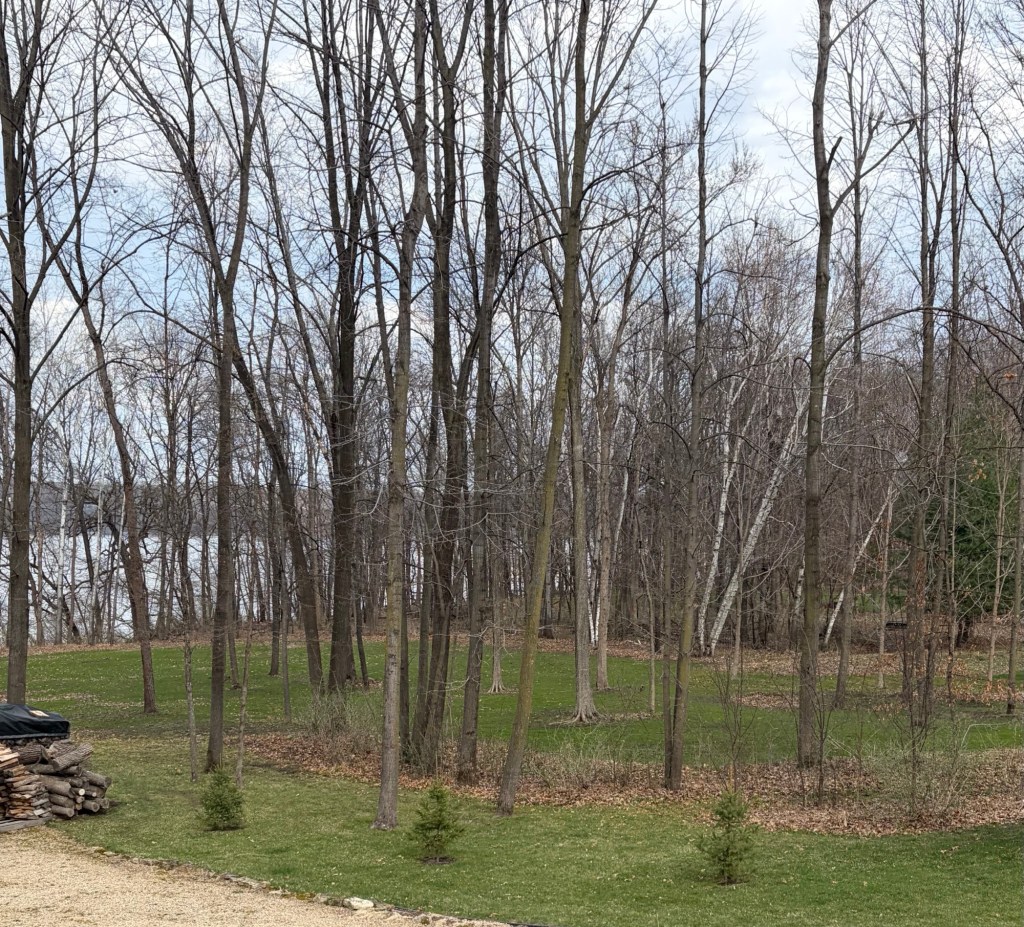
Our new grass is beyond the trees with leaves around their bases. It is green!
So after all of the tree removal and months of work out in the “back 40,” it will look pretty nice. There is just more to mow. And room for Maggie to explore.
More Later, Much Love.
Susan, Roger, and Maggie.

