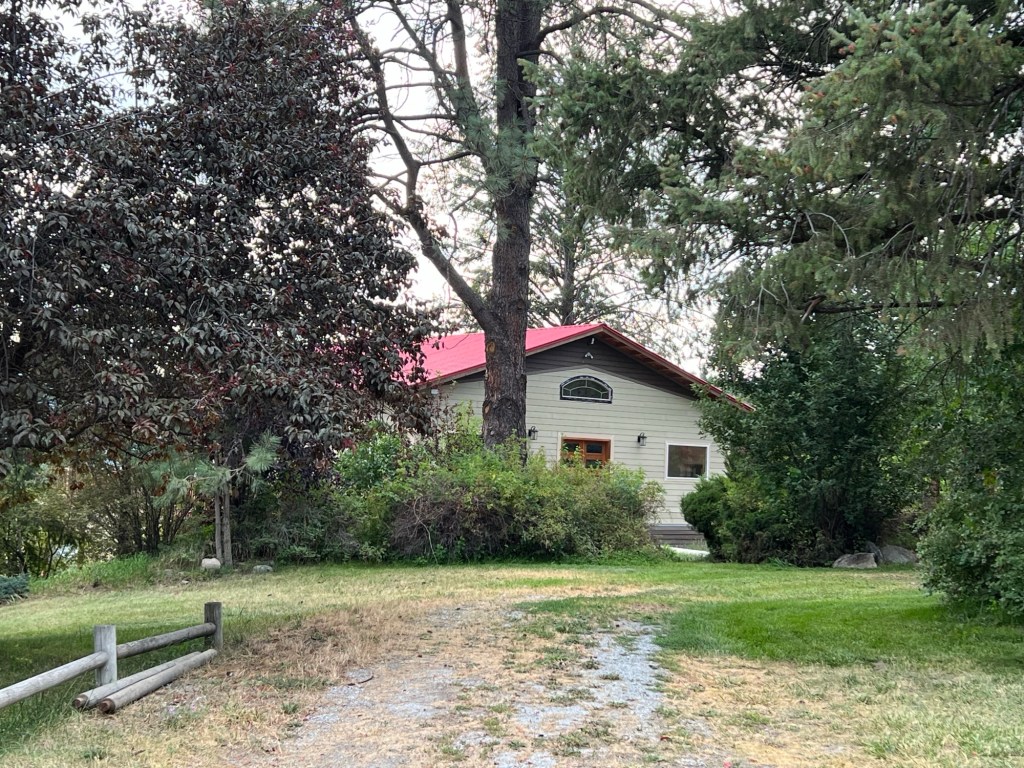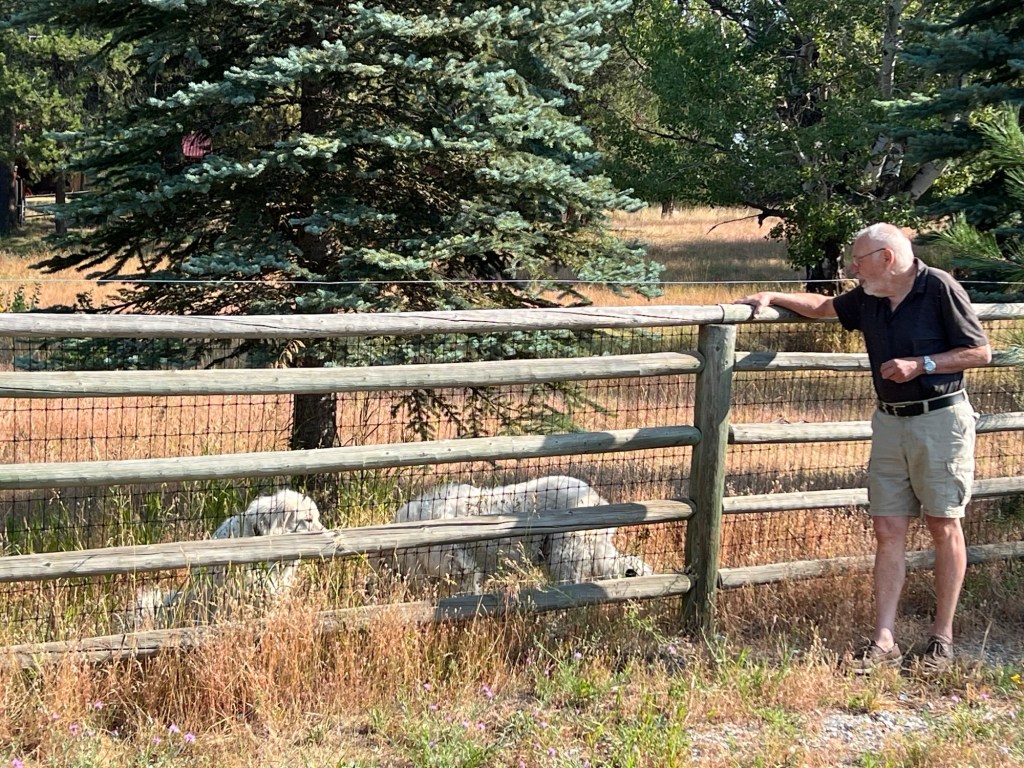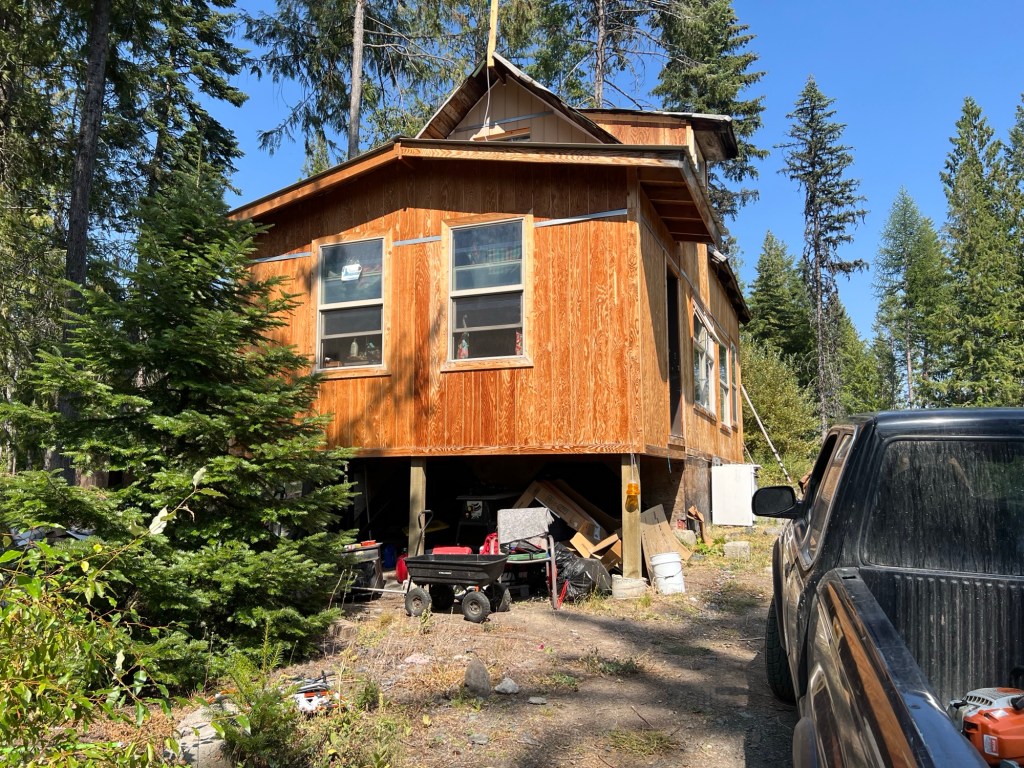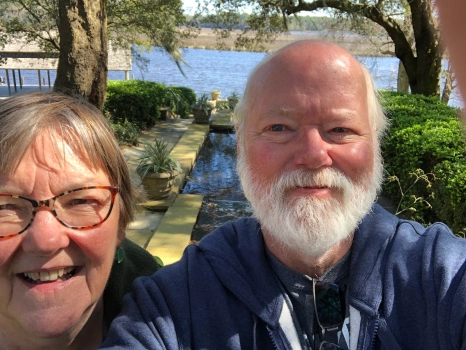
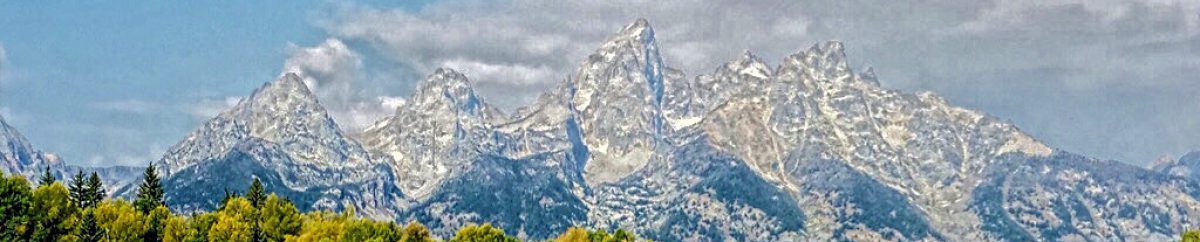
Heading South, November 2024

February, 2025

We got home safely from our trip to the West Coast and points in between. I had just a couple of days before the Carter Work Project began. After that, I spent a few days sleeping late and recovering. It was an exhausting week but very rewarding.

I wrote in an earlier blog about finishing up all of the backfilling and grading along the driveway. That consumed a lot of time in the five weeks between the CWP and our planned departure date for the winter of November 11. But it got done, even if it was only a few days before we left.

I had to get another oil change on the coach before we left, they are at 5-6,000 mile intervals and we were almost due.

We rented a carpet cleaning machine and cleaned the carpet in the coach. It didn’t seem that dirty until you cleaned it and got buckets of pretty dirty water coming out. We watched for a few days when the weather was going to be nice and the days warm so we could get the carpet cleaned and dried out.

We had a supermoon during this time, these are never easy to take pictures of at night but in between the trees at the end of the driveway, the bright moon was impressive.

By October we are usually much further along in the leaf-falling process. This year all of the trees seemed to be 3 to 4 weeks late.

We have a big Basswood tree in the back that starts dropping leaves in August. They were just starting to fall when we got home at the end of September.
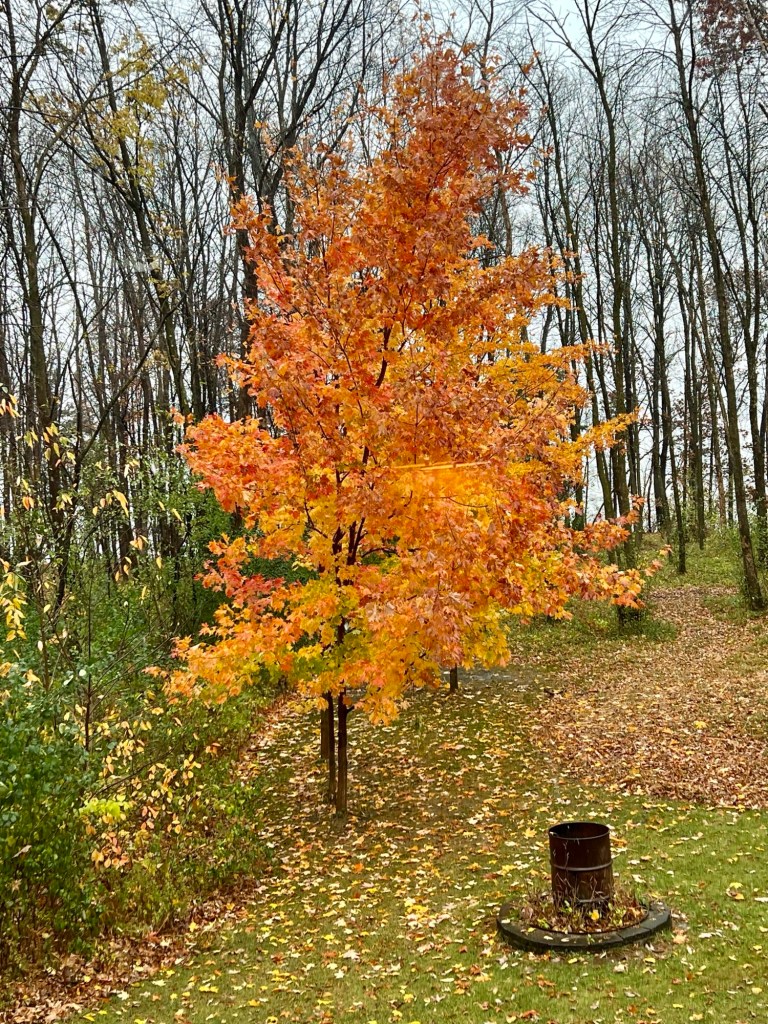
The Sugar Maples were among the last of the trees to drop leaves this year.

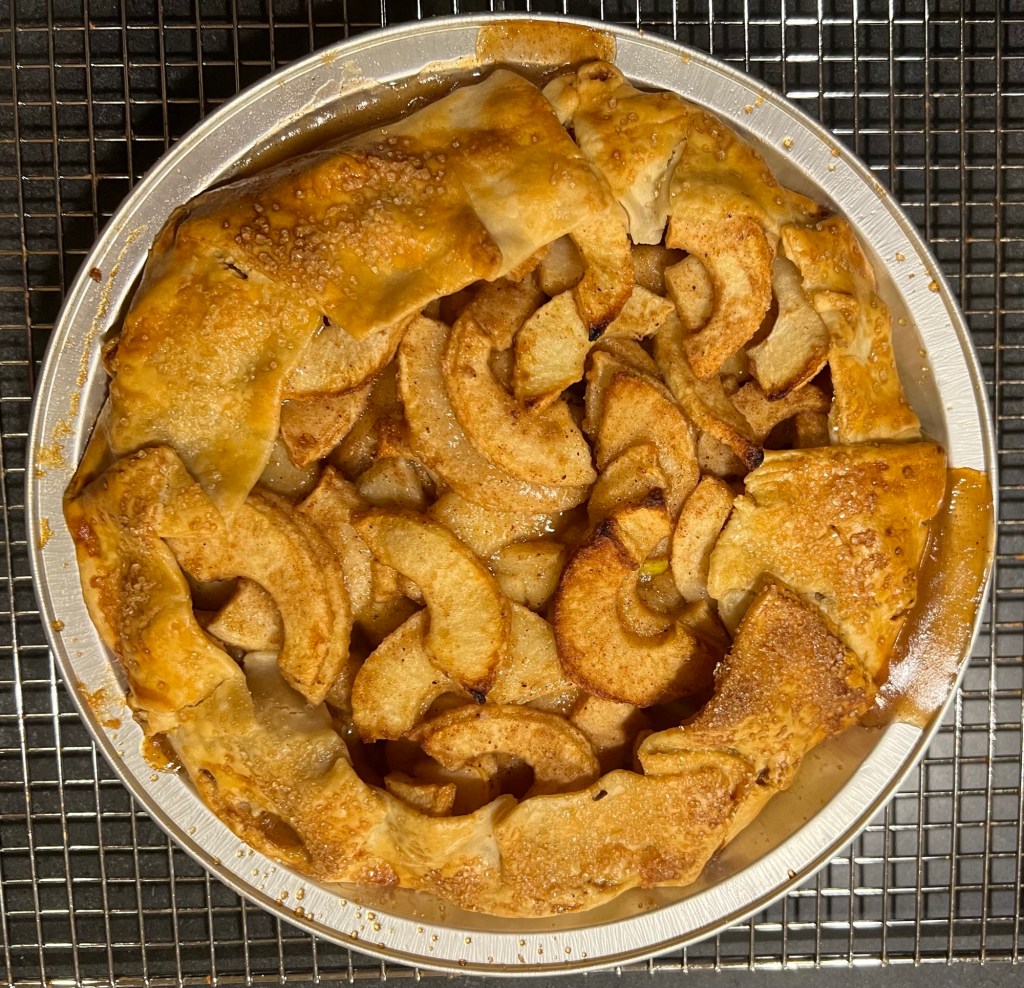
We harvested apples from our Honeycrisp and Haralson trees. There were not many Honeycrisps, they are good for eating. But we got many Haralson apples, these are good for pies. We cleaned, peeled, and cored all of them and made about a dozen pies plus bags of sliced apples that got frozen for later Apple crisps. Most of the pies got assembled and frozen without cooking. We cook them later right out of the freezer. We baked several, ate some, and gave the rest away.
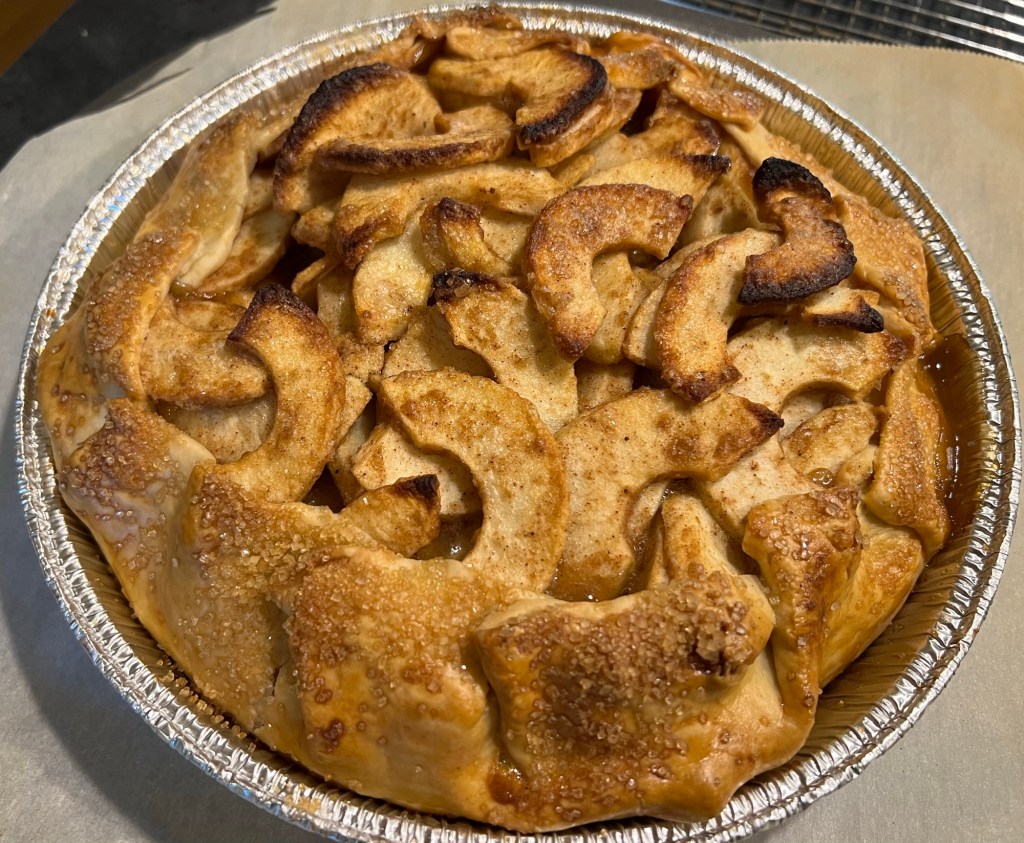
We make a rustic pie with an oversized crust that gets folded over, egg-washed, and sprinkled with raw sugar. They are very tasty.

I was hoping to trim the apple trees before we left but ran out of time. We are trying to keep them shorter than they will get if you don’t keep them trimmed. Our neighbor up the street with nice apple trees says it is almost impossible to over-trim an apple tree. She said to cut off every branch that is pointing up. Easy to plan on doing, harder to get done.
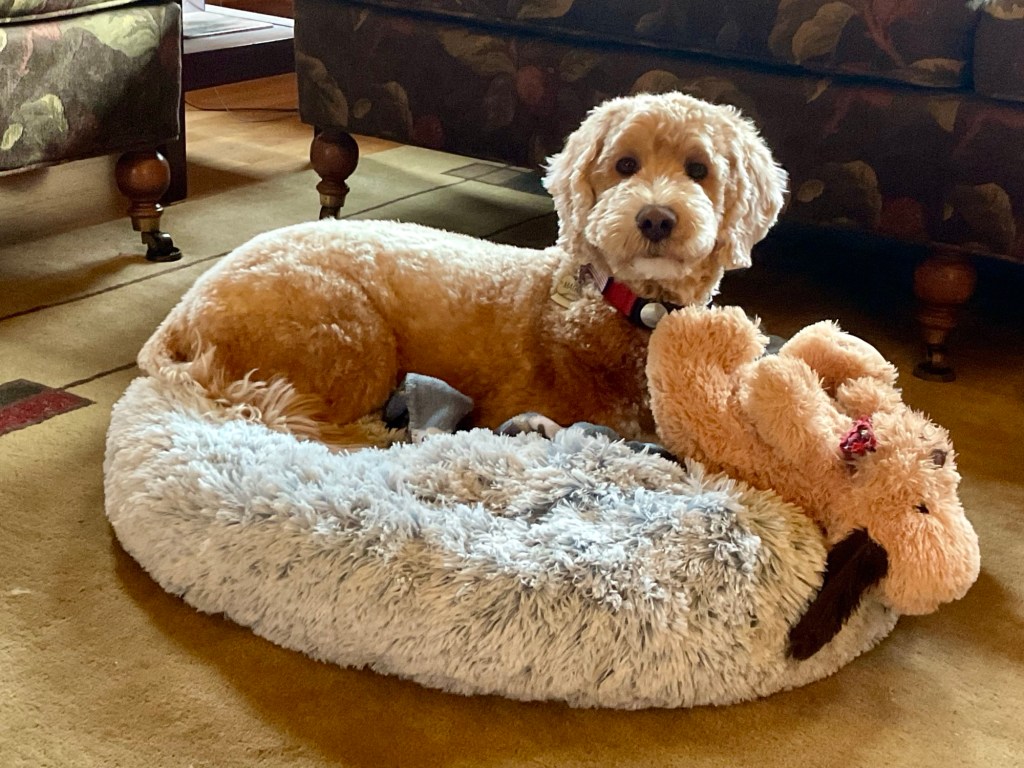
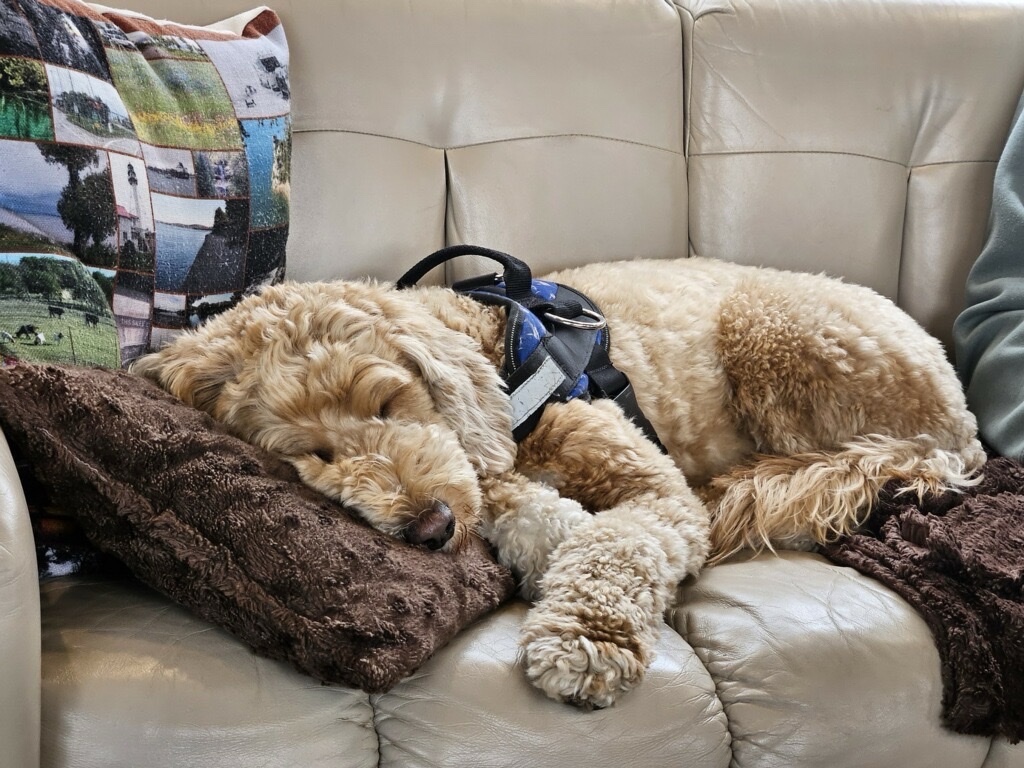
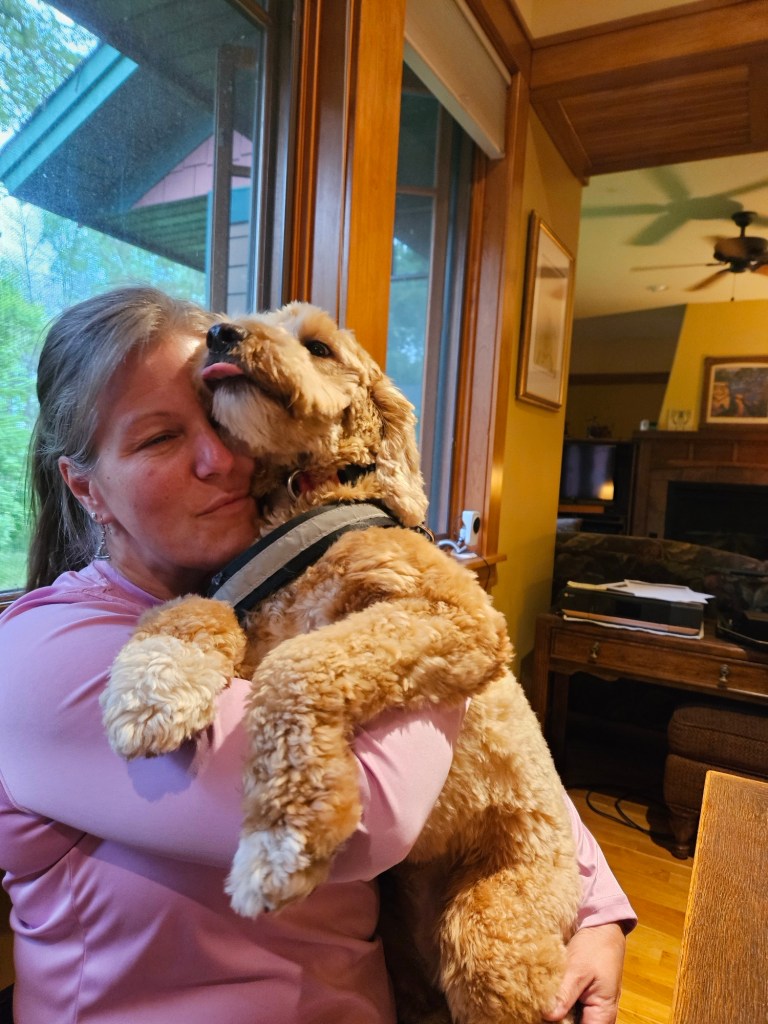
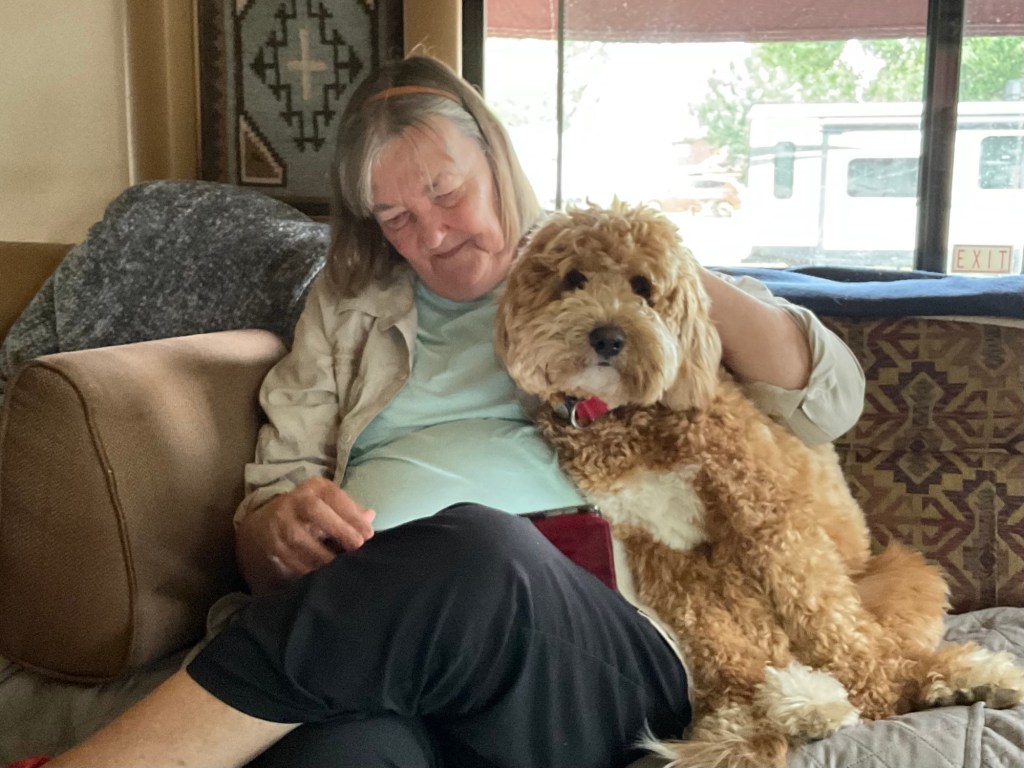
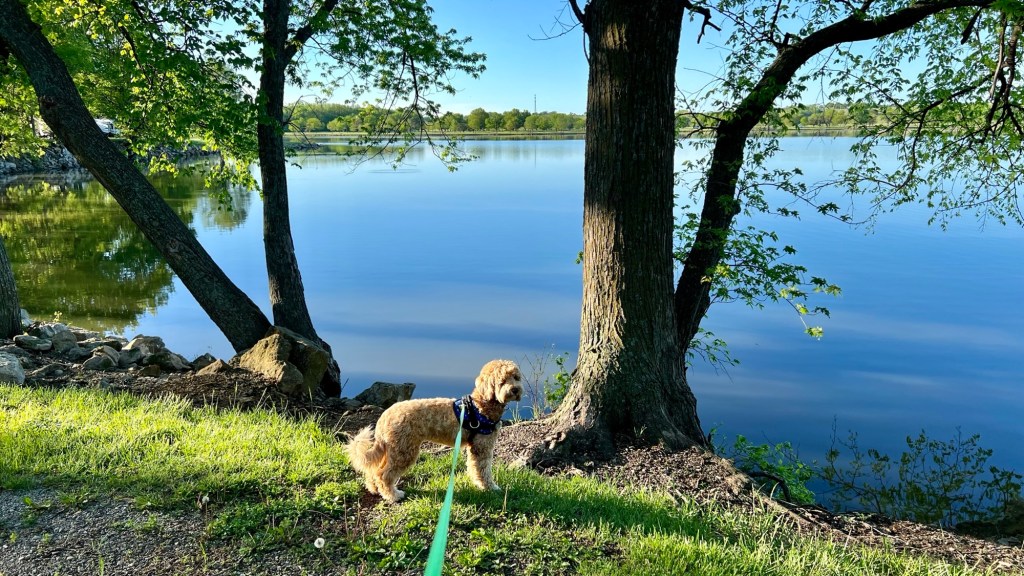
We got Maggie in for a trim a week or so before we left. She is just over two years old here and moving from being a puppy to a young lady. She always looks good and here she was on a new soft bed that Susan got her playing with one of her sleep buddy dogs that we got her when he first came home to us. She chews up soft toys pretty fast, some in just minutes, but seems to leave these alone. Maybe she remembers them as littermate substitutes.

Load and Go

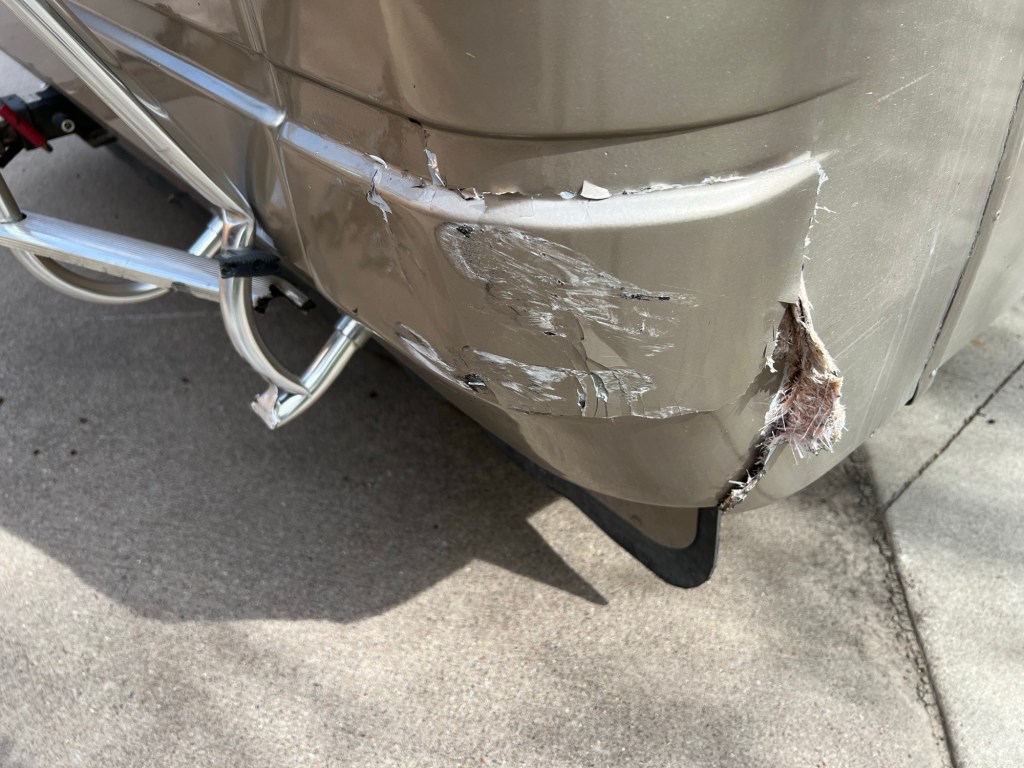
We are stopping in Nacogdoches, TX to have Xtreme Paint and Graphics do some repair work on the coach from our tow bar mishap last spring.
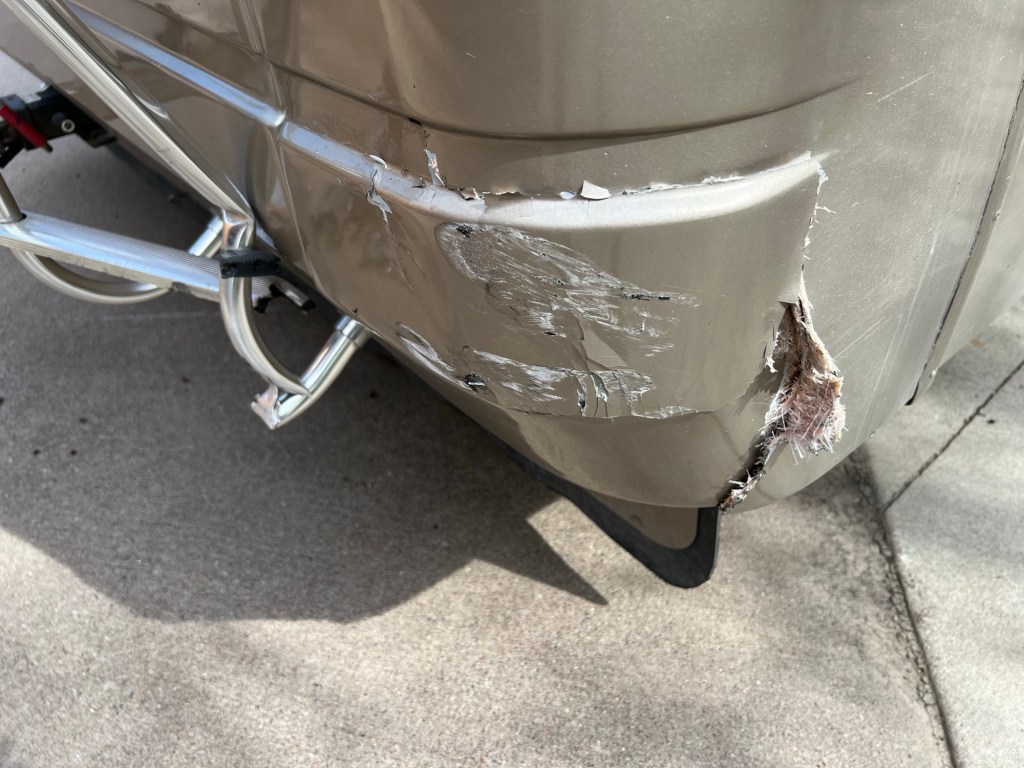
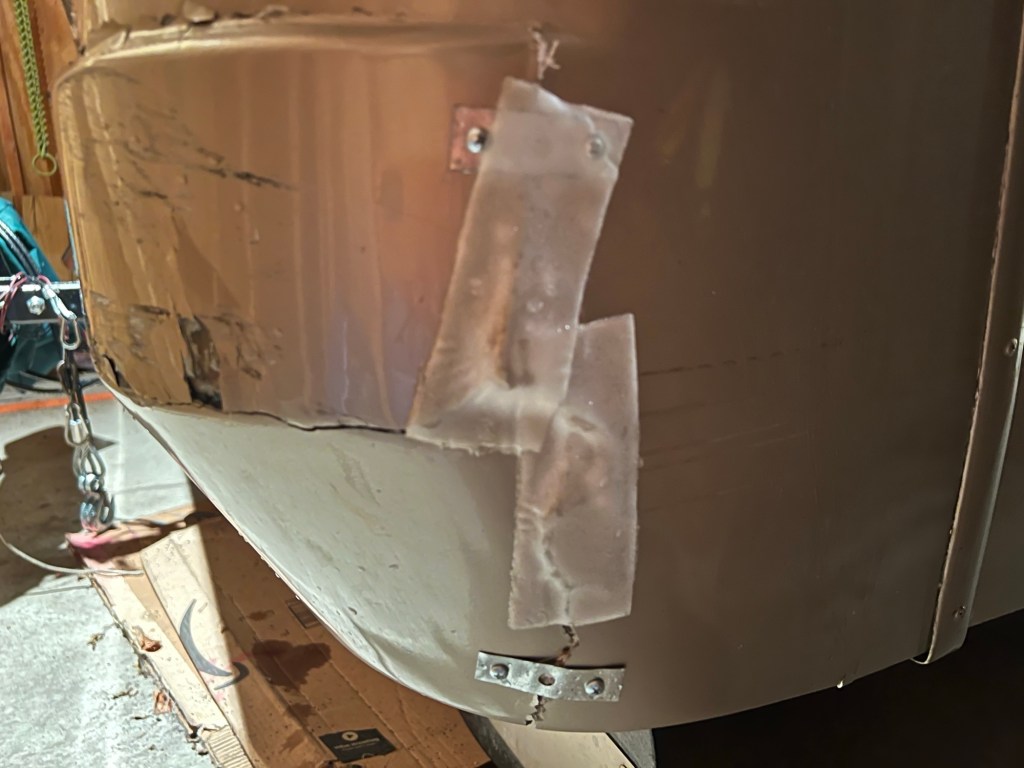
The right rear corner was busted up and the ladder was crunched. The rear quarter panel on this side over the radiator and the battery bay door needed some work as well.
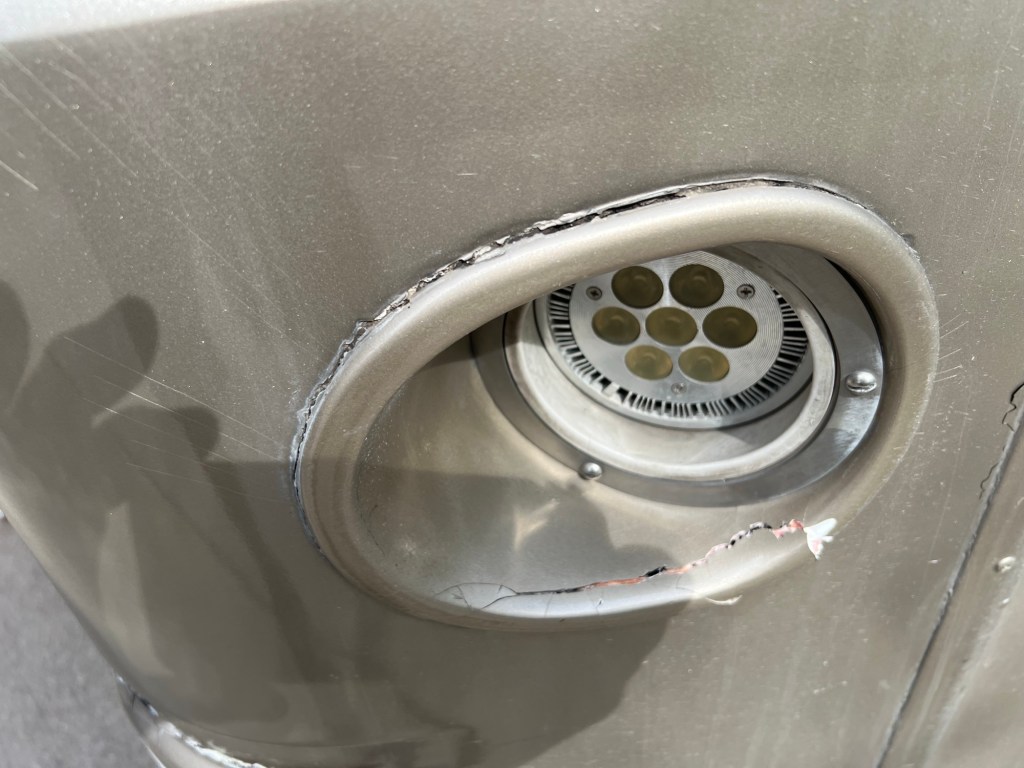
The rear docking light housing was banged up too.

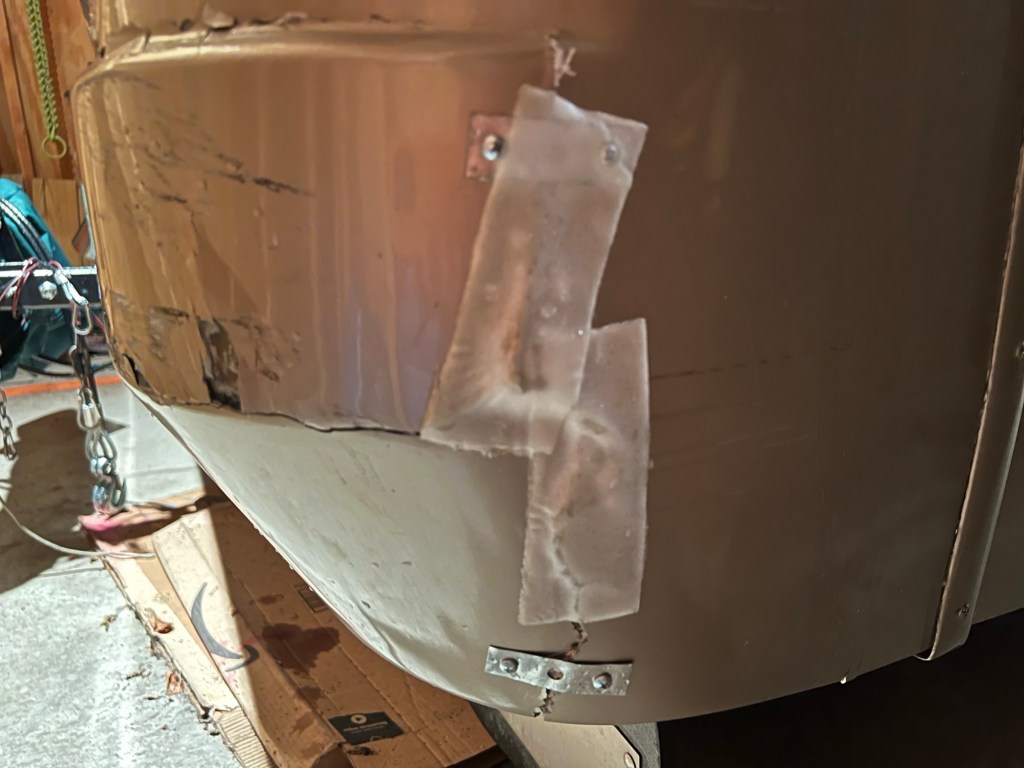
I removed the ladder before we went out west and used some metal straps and sealing tape as a bandage to hold things together.

We had plenty of time to load up the coach. We worked on those items that we knew we were going to take but didn’t need in the house. We loaded all of the staple food items, some of these are things we cannot find anywhere on the road. We like Westen brand salad dressing but never find it anywhere out west or down south. Go figure. We loaded the refrigerator freezer with everything we wanted to bring like pies ready to cook and a lot of homemade soups, red and white chili. The freezer was stuffed.

We had more frozen stuff that we wanted to bring so we packed it into a cooler with ice and some dry ice thinking (hoping) it would keep it cold enough.

Everything else got loaded up. We checked and double-checked all of our lists. We finished up the closing of the house and shop checklists and checked them again.

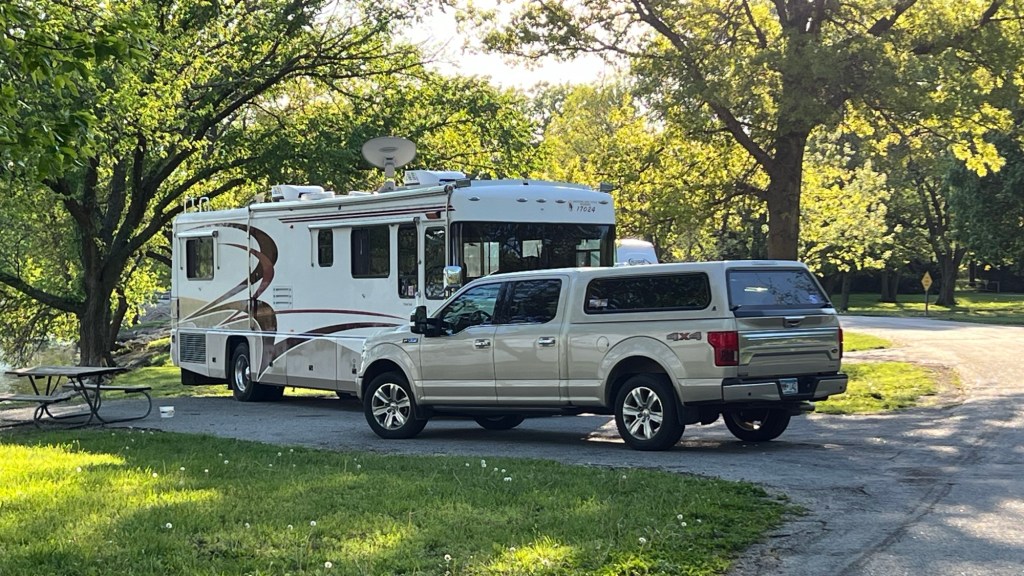
We hooked up the pickup to the coach and checked all of the lights the afternoon before we were going to leave. We were ready.

In the morning there was not much to do. A last pot of coffee, most of it into the thermos in the coach and our travel mugs. Turn off the water pump in the house and close the incoming water valve, double-check thermostats, one last walk around, lock the doors, get ourselves and the dog into the coach, pull the pickup out of the barn, lock up the barn, and then count to 10. Did we get everything? Yes, off we went.

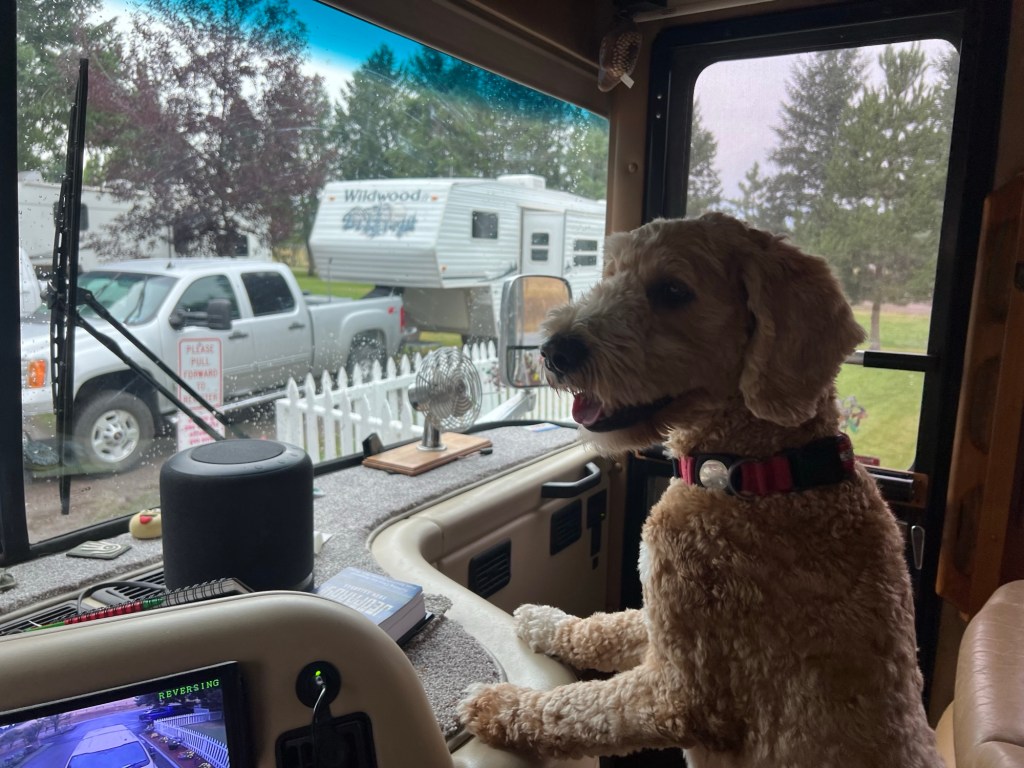
Maggie seemed more nervous riding in the coach this trip. We think she got a little spooked riding in the mountains with all of the ups and downs, starting and stopping, and twisty windy roads. The vet gave us some calming pills. They seemed to help but at the end of each day, she just wanted to be very close to us.

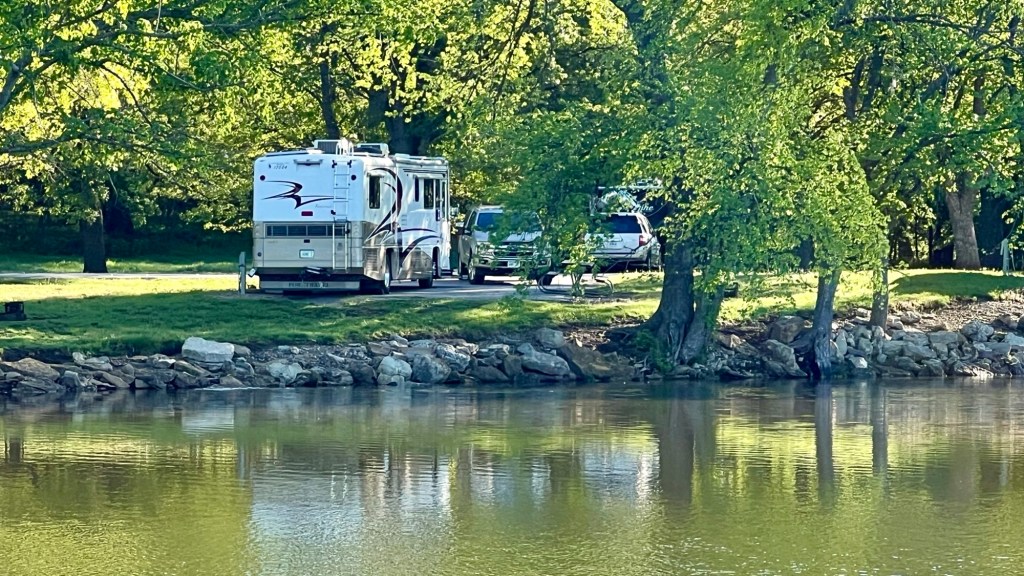
We stopped overnight at a Camp Walmart (parking lot) just into Missouri our first night. It sure looked familiar. We looked back in our log book and sure enough, we had stayed there several years earlier heading North.

In the very late Fall and early winter, there are not many overnight options. Very few heading south on I94 through Wisconsin into Illinois. More options going south on I35, mostly small casinos and a couple of RV parks once you get into Missouri.

A Walmart overnight works fine for us, we have plenty of water and waste space, and plenty of battery capacity to get through much more than one night. The parking lots are well lit and we can run in if we need something. RVs staying overnight are usually in the same area where overnight semi-trucks will park. And occasionally these will be the refrigerated or freezer trucks with somewhat noisy cooling units. Somehow the noise just fades into the background, we go to sleep, and in the morning almost all of the big trucks are gone
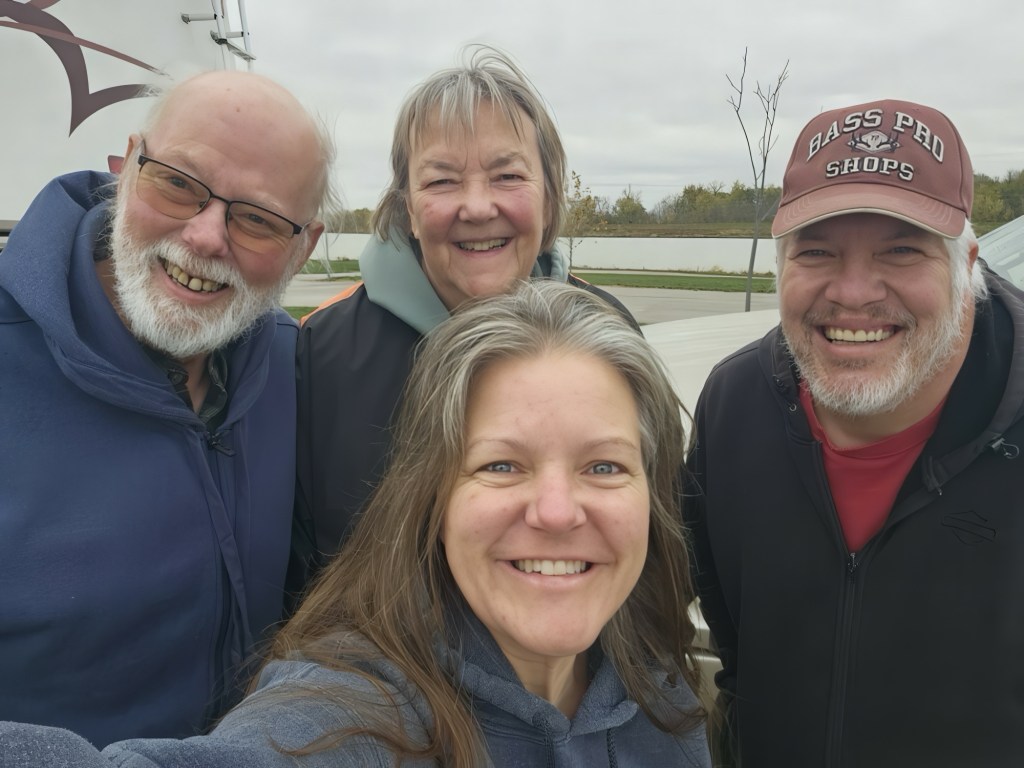
We stopped in St Charles Missouri on the north side of St Louis for two nights to visit our friends Amanda and Douglas. They spend November and December there. Amanda grew up in this area and her mom lives nearby. So this is their holiday stop. We always enjoy this stop, time for a couple of meals, some game time, and lots of coach talk. We have known them since shortly after we got our coach, they are young enough to be our kids and make us older people feel younger. And they are moving from 40s to 50s and doing much more long-term forward-looking planning and saving. The kindly uncle in me likes that.
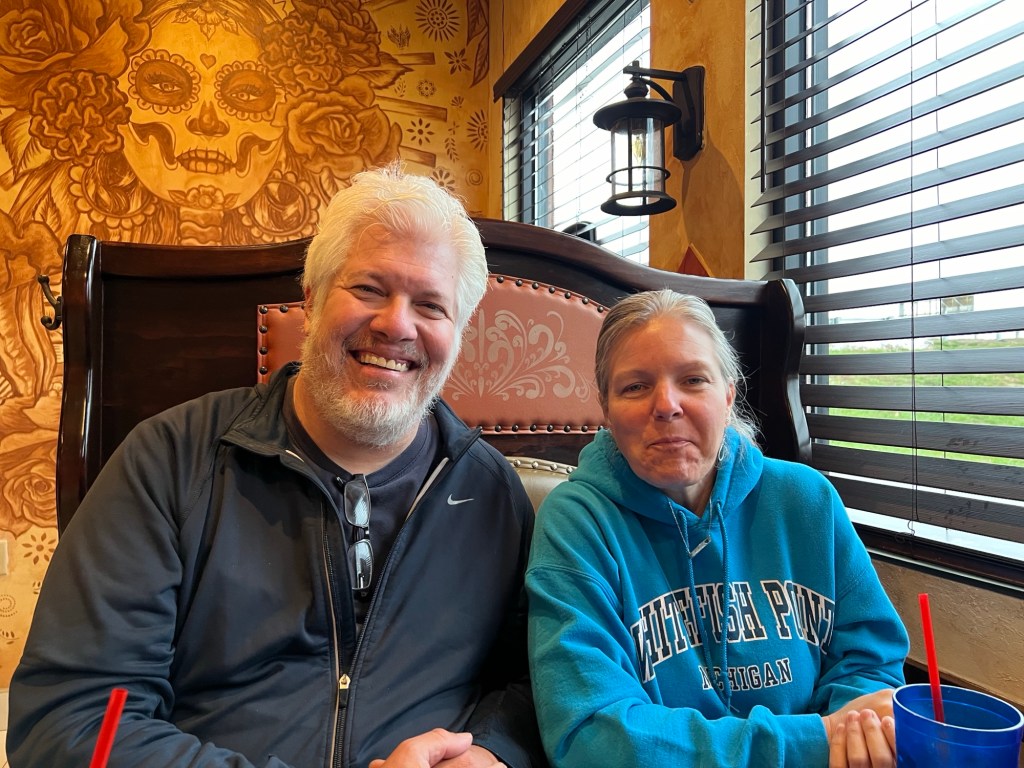
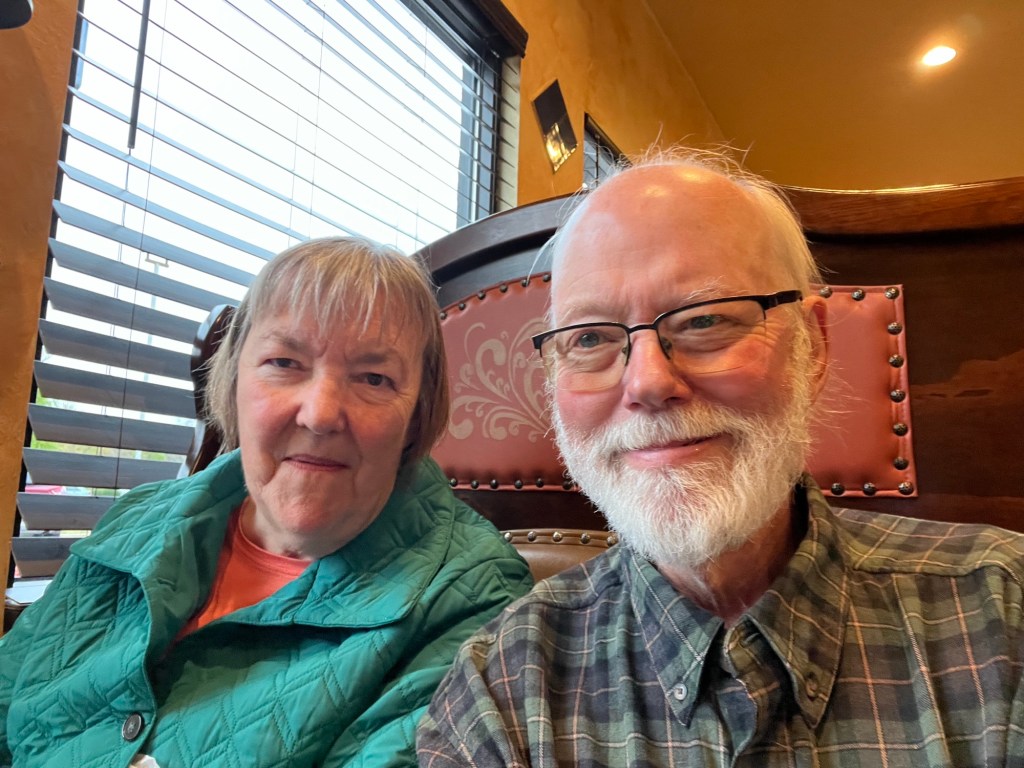
Maggie moves right in anywhere we go and after the excitement dies down, takes a nap.

Our refrigerator freezer section was stuffed. We had filled our cooler with overflow and added some dry ice. Everything was frozen solid but the dry ice only lasted a couple of days. When we were in St Louis with Douglas and Amanda we had a lasagna and apple pie from the cooler and rearranged as much as we could so that what was left in the cooler could start to thaw without much risk.

Douglas and Amanda had a small portable freezer that ran on 120v AC or 12v DC. It was small but nice. I looked it up on Amazon and it was pretty expensive. I wondered if the same brand had bigger models and they did, one at 42 quarts, about twice the size. I did some measuring and we decided it would fit in the basement. I looked the next day and it was on sale at Amazon, a flash 5 hr sale, more than $100 off plus it included an insulated cover which was $79. We didn’t debate for too long. I ordered it for delivery in Nacogdoches.

More on this later.

We left the St Louis area and headed south to West Memphis which is in Arkansas to stay overnight at the Tom Sawyer RV Park on the Mississippi River.
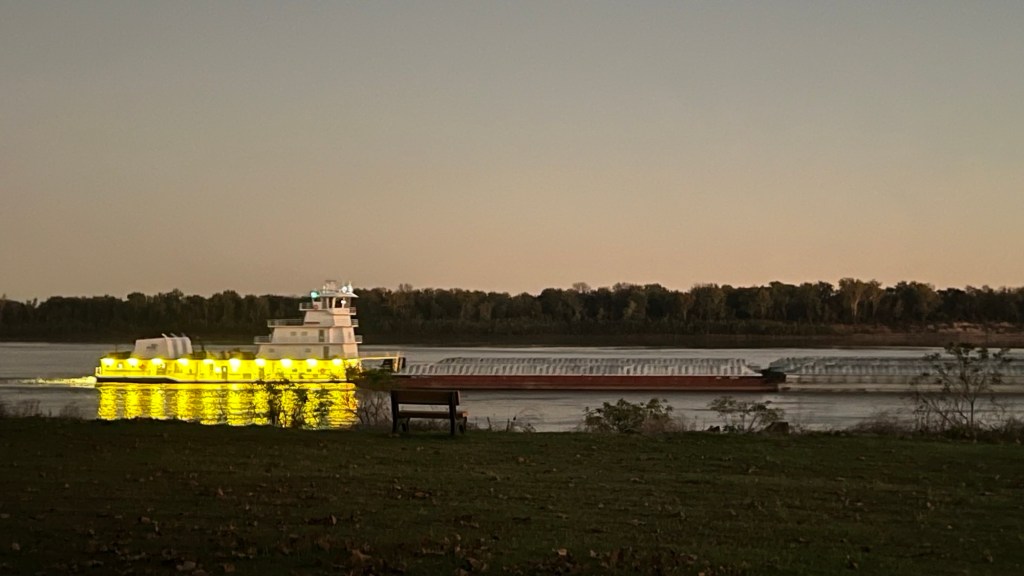
The park is just above river level so you get a close-up view of the river traffic. And there is quite a bit of it. Some of the tow boats and the number of barges they are pushing are much bigger than they are at home. Where we are in Minnesota, 15 barges are the biggest they push with big twin-engine tow boats. Here they use three-engine tow boats and push as many as 30 barges. Of course, down here there are no locks and dams to contend with.

The next day we drove to the Corp of Engineers Rocky Point Campground just south of Texarkana.
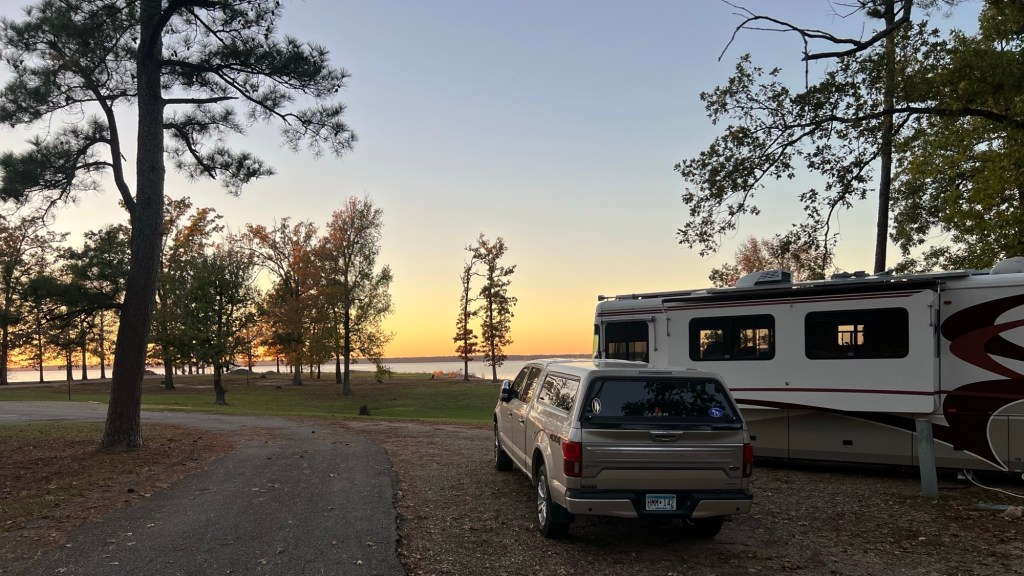
It was a nice campground, all of the familiar parts of a COE park. Water and electric hookups and a lake view.

In the morning it had a sulfur smell in the air. There was a Sulpher Creek nearby, maybe that was a warning. As soon as a breeze came up the smell dissipated.

We left there and headed for Nacogdoches, TX. We spent a couple of nights at the Foretravel Factory Campground. We filled our freshwater tanks, emptied the waste tanks, and did some laundry in preparation for a few weeks at Xtreme Paint and Graphics to get repairs done.
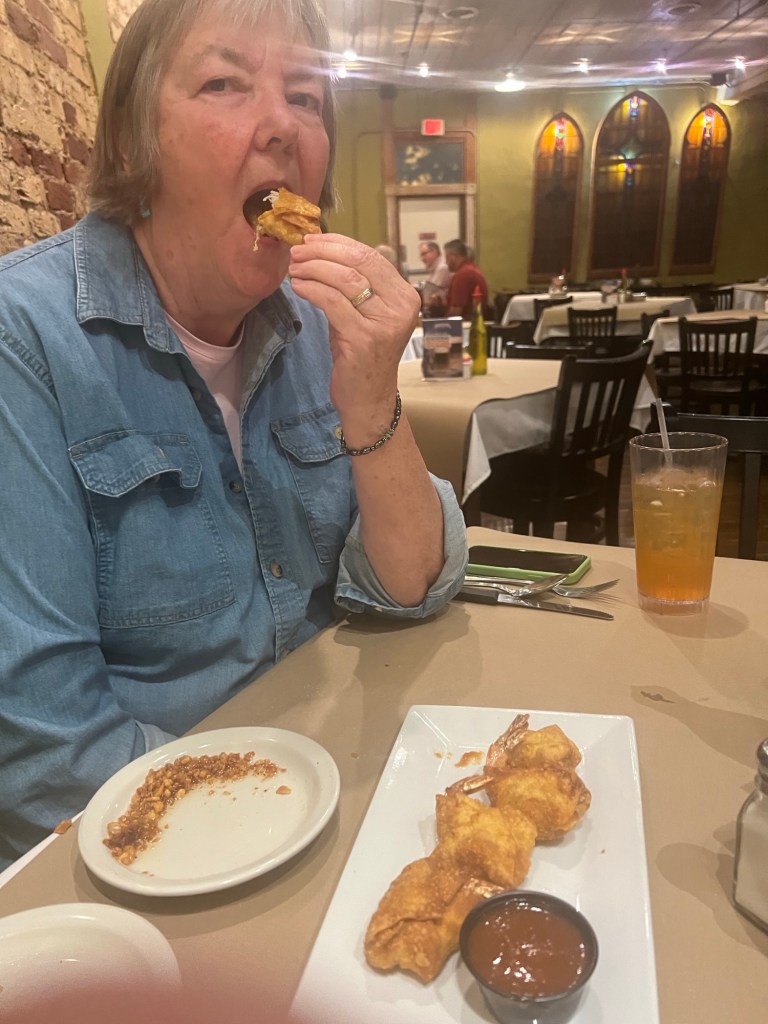
We managed to get over to Auntie Pastas for Shrimp Wontons and dinner. This is one of our favorite spots to have a meal out.

Next up, repair time at Xtreme. Four weeks are set aside in the schedule, we are hoping for less.

More Later, Much Love,

Roger, Susan and Maggie

Carter Work Project, St. Paul, MN, 2024

Each year, usually in the fall, somewhere in the world, The Jimmy and Rosalyn Work Project with Habitat for Humanity happens. Volunteers from the local area and around the world converge for a week-long push to get started on as many homes as possible.

Here is a summary from the news…


The 2024 Jimmy & Rosalynn Carter Work Project, took place in St. Paul, Minnesota during the first week of October.

The Carter Work Project is a remarkable initiative by Habitat for Humanity, and this year’s event was particularly special—it marked the project’s 40th anniversary! Back in 1984, former President Jimmy Carter and First Lady Rosalynn Carter rolled up their sleeves and got to work alongside homeowners and volunteers for the very first Carter Work Project in New York City. Their hands-on involvement ignited an incredible legacy of advocating for affordable housing.

Now, fast-forward to 2024: Habitat Humanitarians and country music superstars Garth Brooks and Trisha Yearwood hosted the event in St. Paul from September 29 to October 1. They were joined by fellow Habitat Humanitarian Jonathan Scott of the Scott Brothers, who lent his time and hands to the project. 

President Carter himself celebrated his 100th birthday during this momentous week. His decades of work continue to inspire millions around the world. 

This year’s project was at The Heights, a new development in NE St Paul on the site of a historic golf course. It is being redeveloped to bring new housing, business opportunities, and jobs to this area of East St Paul.

What Went Down at The Heights:

  • The Carter Work Project brought together about 1,000 volunteers each days (all donning hard hats, of course!) to start building 30 new homes during the week.
  • The project supported Twin Cities Habitat for Humanity’s long-term efforts to construct 130-150 affordable housing units in a neighborhood called The Heights. The name was chosen by St. Paul East Side residents.
  • What’s cool about The Heights? It’s designed to be a walkable community with nearby trails, parks, public art installations, and community-gathering spaces.
  • Sustainability is the name of the game: The Heights aims to be an all-electric community, working toward LEED Platinum Certification (which is like the gold star for super-efficient and cost-saving green buildings). The Habitat homes feature solar panels or shingles, air source heat pumps, water conservation measures, and more.

Local Heroes:

  • GAF employees also rolled up their sleeves to help build these affordable and sustainable homes at The Heights during the Carter Work Project. Kudos to them! 
  • And let’s not forget Andersen Corporation employees, who volunteered to advance affordable housing in their local community as part of this fantastic project. 

So, in a nutshell, the Carter Work Project isn’t just about hammers and nails—it’s about building hope, community, and a brighter future for families.


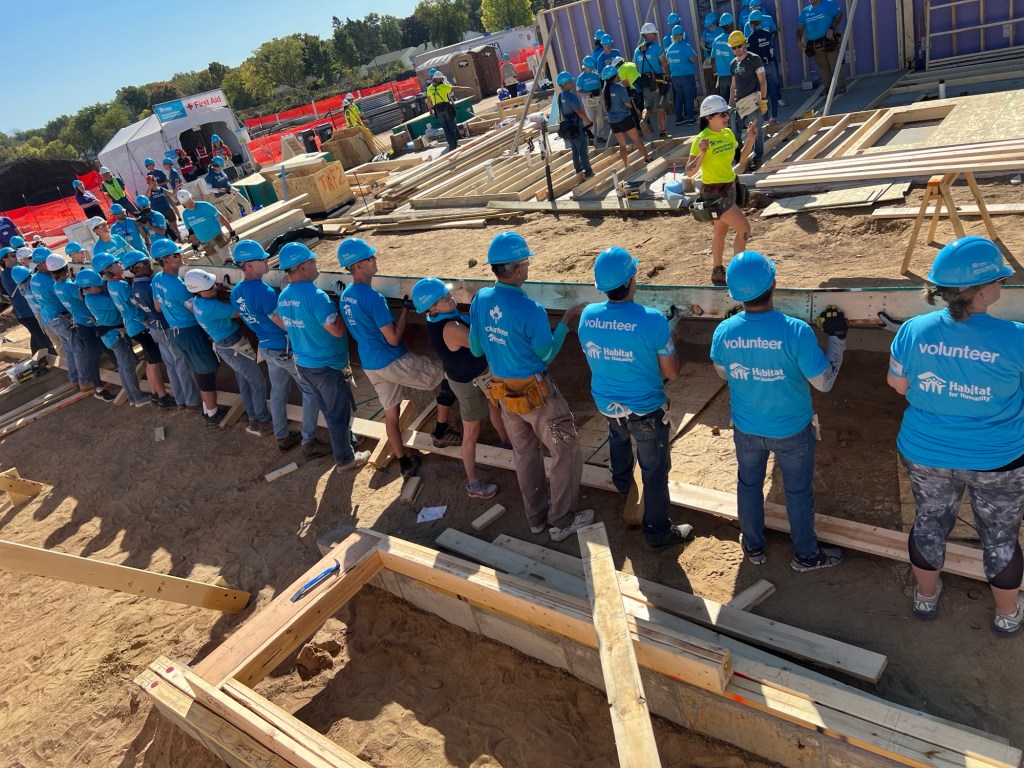
Our 3M crew had many of our volunteers involved. Several of us (like me) were Crew Leaders and worked every day. We worked with the House Leader to coordinate with the volunteers at our house each day. I worked a day before the CWP got underway and then all five days. Up before 5, get ready, drive about 45 minutes, catch a ride to the building site and be there by 6:30.

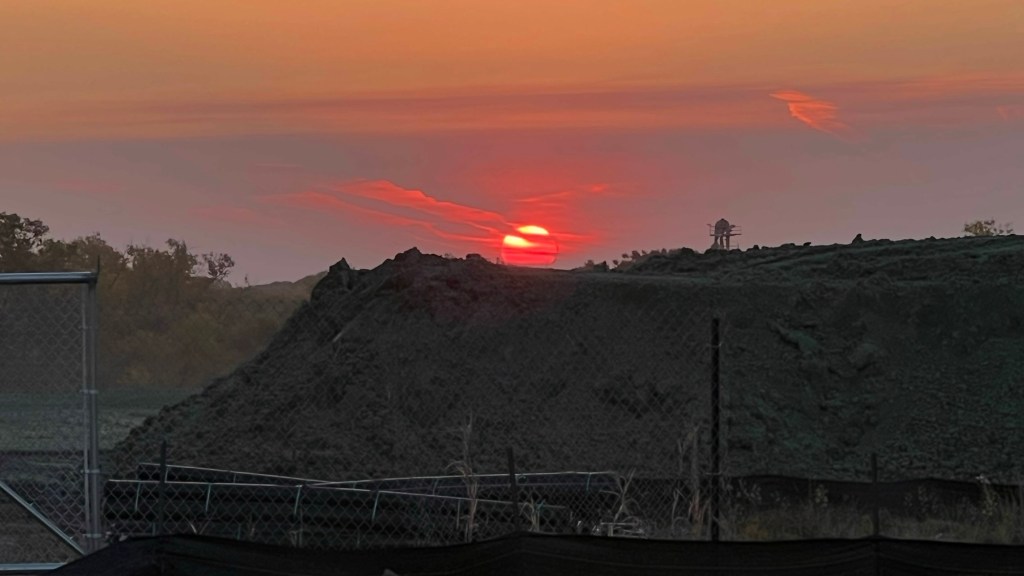
We saw the dawn every day.

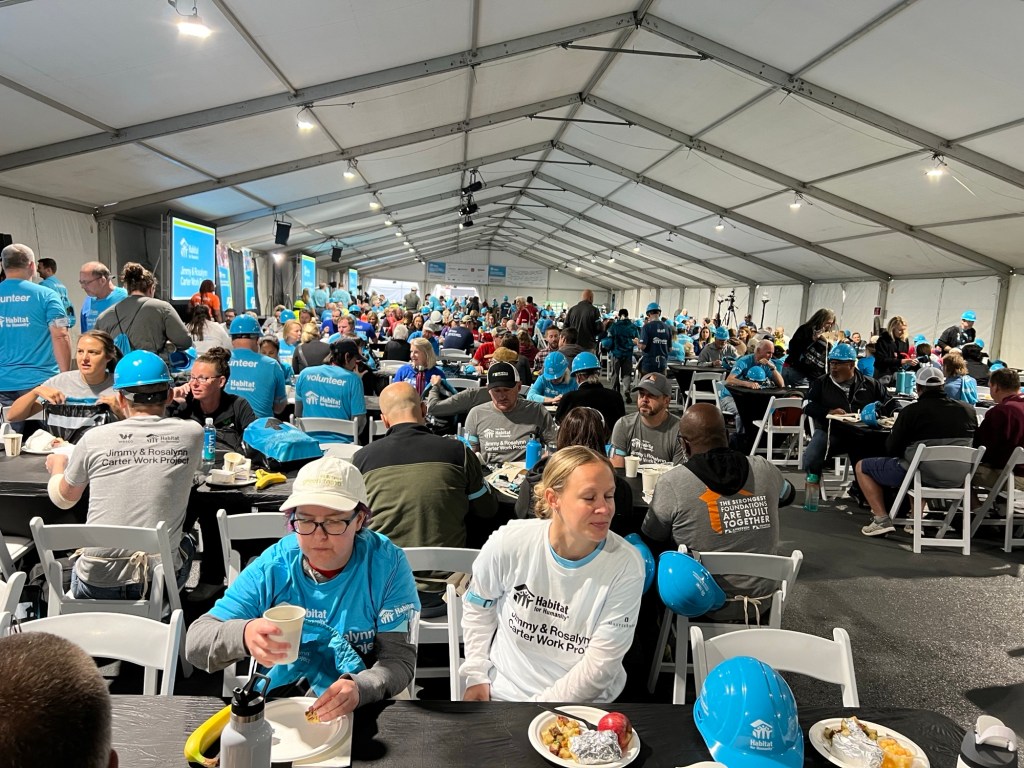
Every morning started with at least 1000 volunteers and more than 200 support staff in a big tent for breakfast, a message from the Twin Cities Habitat Leadership, a short devotional from a faith leader from our local community, usually some inspirational message from a Habitat Home Buyer, the Safety Talk, and then as Jimmy Carter would say, “Let’s get building.”

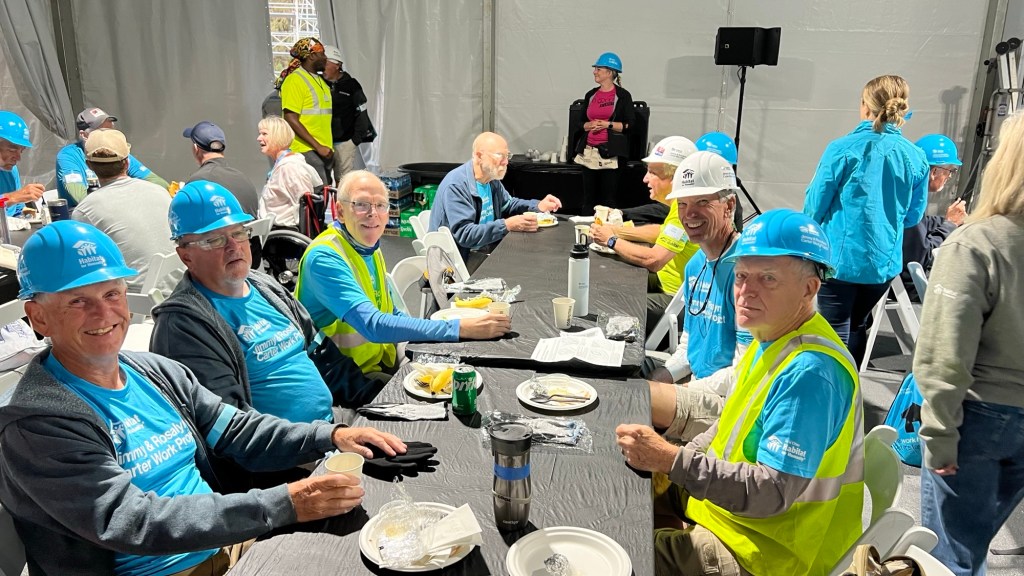
Here are some of the 3M crew.

Our House Leader in the yellow shirt was from South Carolina. The Crew leads wore white hard hats, and the blue hard hats were all volunteers. Many in my crew were from New Jersey. We had a fellow from France working with us one day.

Each house project usually starts with some confusion as we get organized and proceeds in cooperation as we get walls assembled, and everyone lends a hand to lift.

One side and then the other, then the ends and the stairway going up to the second floor.

With 30 homes getting built simultaneously it was a very busy work site.

We were at the far end of the site, a long walk for lunch and even longer at the end of the day when we were worn out.

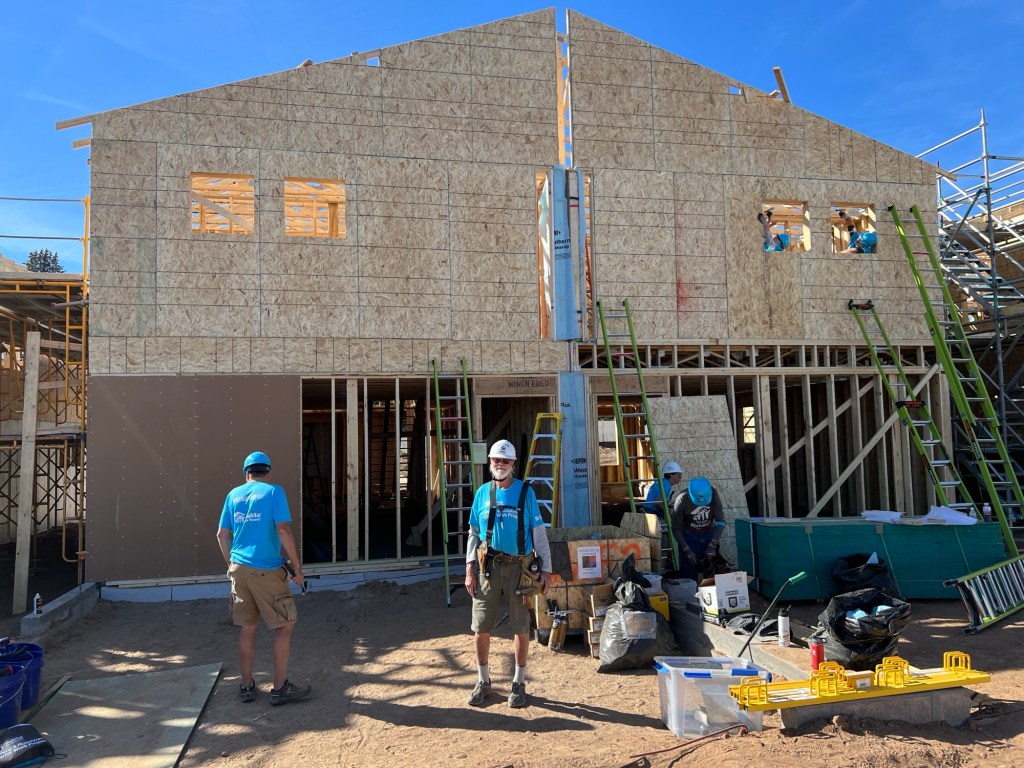
The second-floor trusses went up at the end of the second day. Floor decking went on, second-floor walls went up on Wednesday and Thursday, Roof trusses went up Thursday afternoon and evening, and Friday was finishing up all of the exterior wall sheathing.

We were closing in on the end of Friday and the end of a busy and rewarding week. Obviously, we did not finish building 30 homes but got a good start on them. Work will continue on them over the winter and with many more Twin Cities Habitat crews getting busy over the summer.

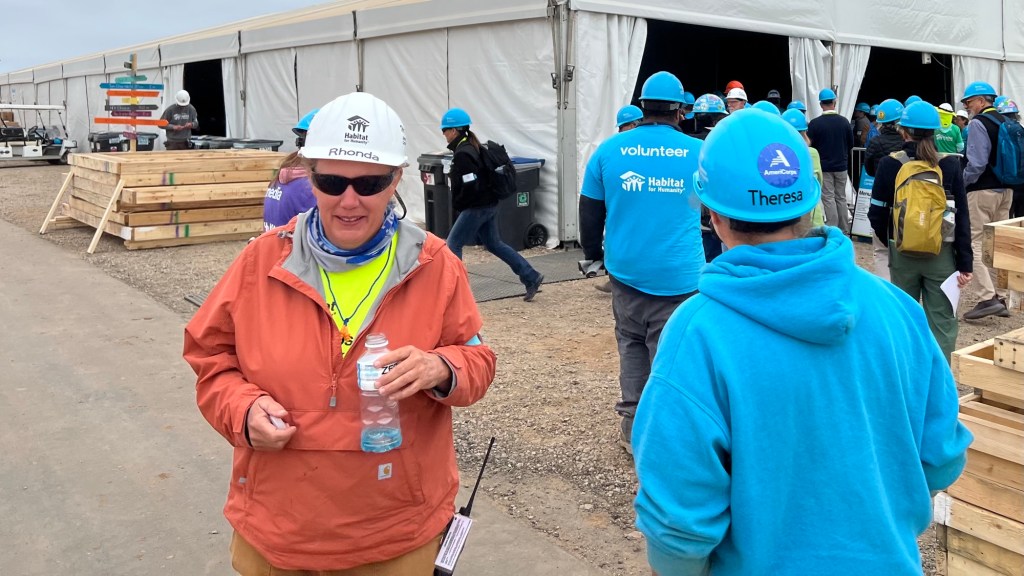
Rhonda is a Senior Project Manager at TCHFH that I have worked with for more than 20 years. She was driving a high lift fork truck almost all the time moving lumber, building materials, walls, and trusses.

And another good friend, Jake. He stated at TCHFH as an Americorp volunteer, became a Site supervisor, and is now the Vice President of Field Operations. He had overall construction and logistics responsibility for the CWP 2024.

The efforts of Jake and Rhonda and all of the Twin Cities Habitat for Humanity staff were huge and made the week move along so well. Thanks to all of them.

We also had Medical support from all over the country and a big Emergency Medical Team from the University of Minnesota including a mobile Emergency Room. I think they had a fairly uneventful week.


This was the second time I had worked on a Carter Work Project. The first was in 2010 also in St Paul. I was working with St Andrews, a church group building a single-family home. President Carter stopped by our house twice that week. I met him both times.

Jimmy Carter recently died. He was honored for all that he was and what he had done. He had worldwide acclaim for his efforts to promote democracy and healthcare initiatives. Most of us Habitat folks remember him for his efforts to build affordable homes all around the world, more than 4000 by some accounts.

This is how I will remember him. He was kind and gracious with his time, genuinely interested in what we were doing, willing to lend a hand, and always with a smile and warm handshake.

He led a purposeful and meaningful life and lived one day and each day at a time. And always for the betterment of us all, all of us, everyone.

With a hammer in his tool belt, love in his heart, and always ready to do the work that needs to be done, he goes home to God.

Jimmy Carter, Bless his heart and soul.


We ended our week, especially those who worked every day, tired, very tired, sporting a few scrapes and a bruise here or there, nothing major, knowing we had participated in another special event. More than just honoring Jimmy and Rosalyn Carter, we worked to build homes, better lives, family legacies, and generational wealth. I have worked on Habitat homes for 31 years. Some early years may have only been a few days to as many as 75 days or more. We are gone half the year now so it is fewer days but every day helps a family towards a better future, better health, better schools, and better jobs.

We have often had the chance to meet the families moving into the homes we have worked on and to work with them. It is very rewarding to see the opportunities owning a home brings to each of them.

Working with the 3M Retirees Regular Crew has made it special too. It is always more than just the work, it is the friendships we make with the people who are all working together towards the same goal. People leave the crew and new people join. Our average age is more than 70. In 2024 our crew volunteered 1883 days of work. It is more than Senior Day Care as it is often called, it is Seniors caring for our community and for each other.

More Later, Much Love,

Roger, Susan, and Maggie

Out West, Summer, 2024, Part 2

December, 2024.

A Clarification

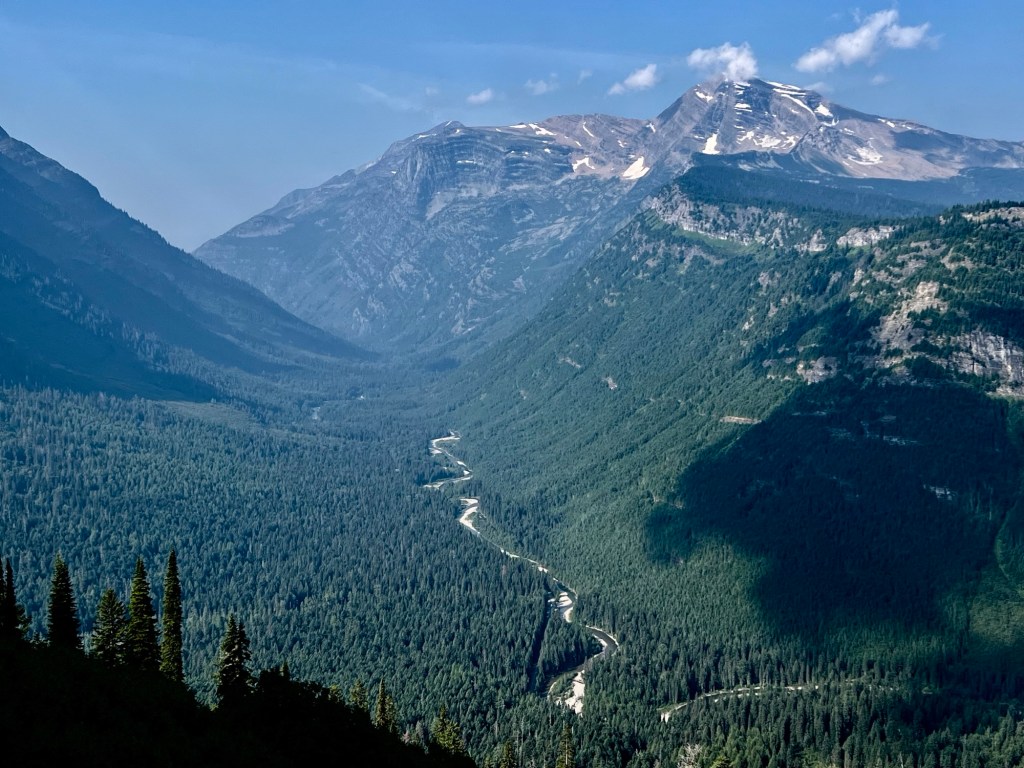
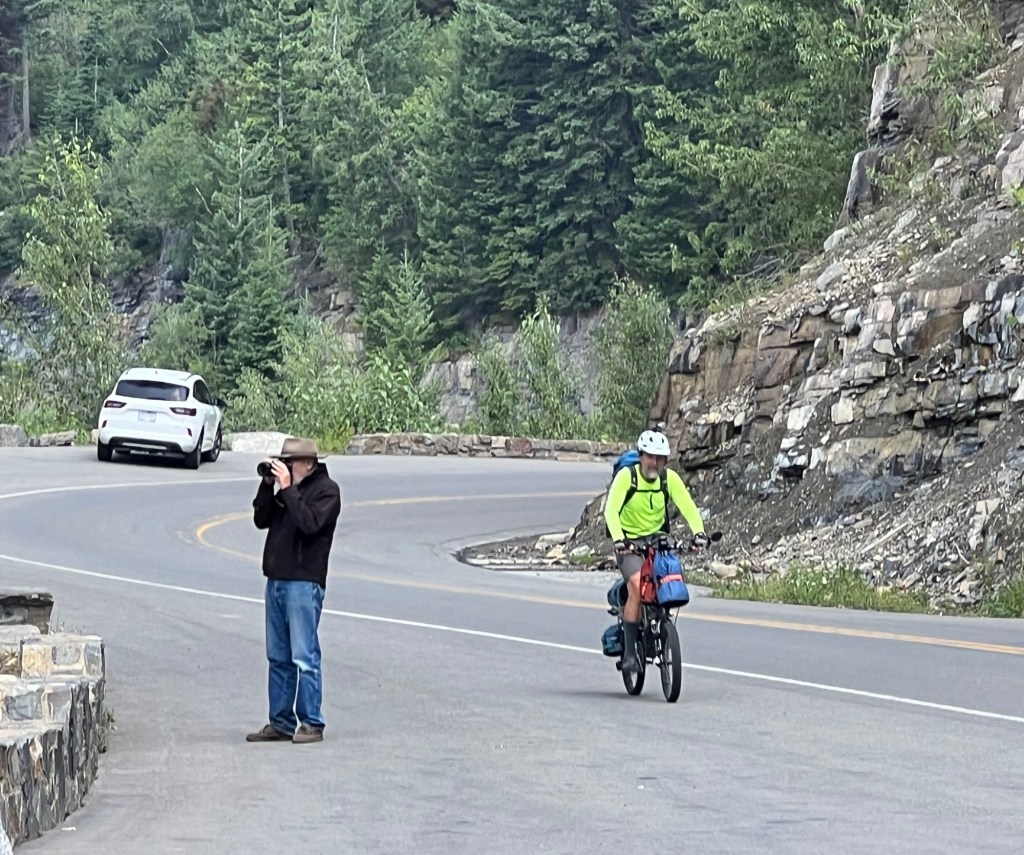
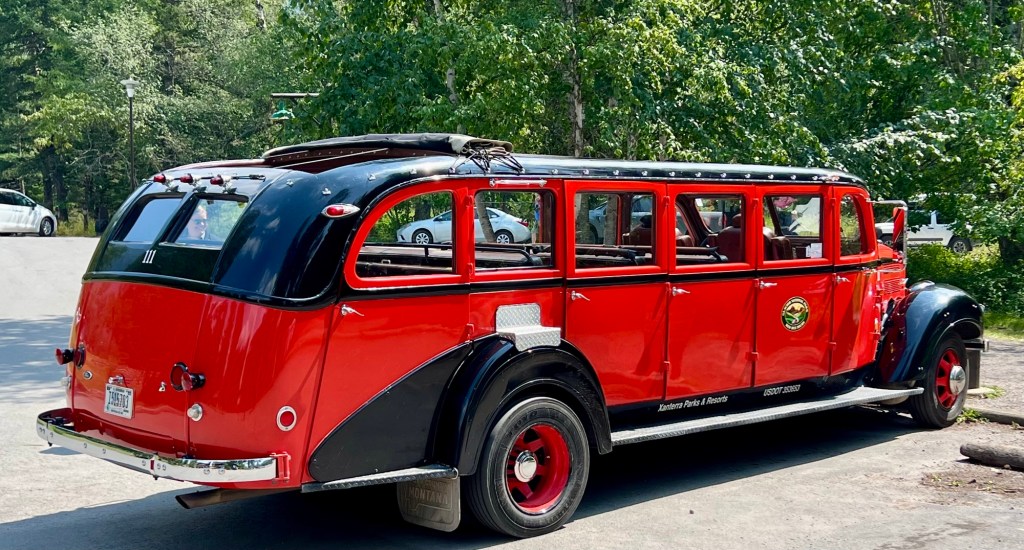
A friend sent me an e-mail saying he was amazed we drove our motorhome across the Going to the Sun Road. We did not, we drove the pickup. And even that seemed almost too big on some sections of the road. We should have taken the Red Bus.

We did see a long 5th wheel on a narrow road going towards Many Glacier where he should not have been. He was trying to turn around. No shoulders. He had the 5th wheel perpendicular to the road hanging way over not much of anything and the pickup truck aimed the wrong way. We took an alternate route.

Fort Stevens State Park

We have been to Fort Stevens State Park in Oregon before. It is a large park, with several hundred campsites. It is west of Astoria, south of the mouth of the Columbia River, and near the Pacific Coast. Surprisingly, maybe not, it has no laundry. But there is a KOA across the street from the entrance that has a laundry open to all.

There are historic forts here from as far back as the Civil War and up to World War II. Fort Stevens was shelled by a Japanese submarine in the only attack of its kind on mainland USA.

There is a rusting shipwreck on the beach. And there is access to the beach where you can drive down to the beach and drive along the coast on the sand.

And there are pretty good trails for hiking and biking too.

Check out our Blog from the last time we were here.

https://home2rv.com/2017/10/18/fort-stevens-state-park-oregon-summer-2017/

The State Park is just a couple of miles from Warrenton where there is a Costco, a Home Depot, lots of fast food places and other dining choices, and other shopping opportunities.

Not far away is Astoria where there is a very nice Coast Guard museum. The Coast Guard here is famous for saving people who get trapped in the currents and storms at the mouth of the Columbia River.

There is a Canning Factory Museum to celebrate and remember the fishing industry on the Oregon Coast and the Columbia River. It is worth a visit.

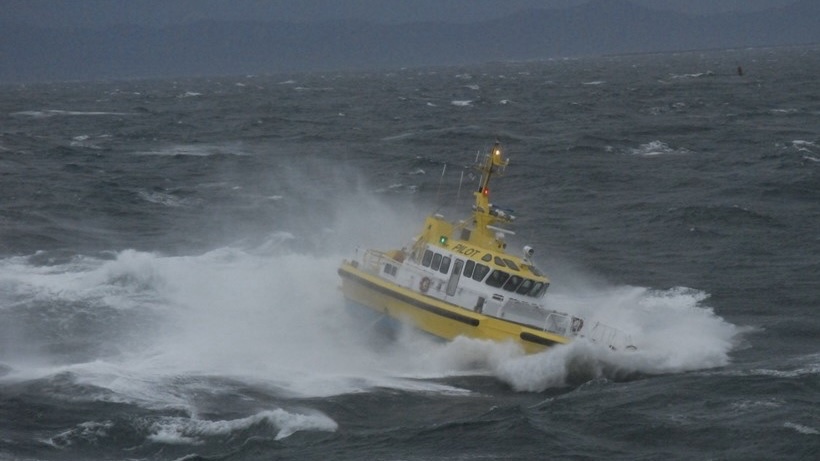
The River and Bar Pilots are stationed here too. All ships coming into the Columbia River from the Pacific Ocean, crossing the bar, they call it, and exiting from the Columbia to the Pacific are guided by Pilots who have to transfer from small Pilot Guide boats to the ships, sometimes in terrible weather and sea conditions. All of the ships heading upriver have to have a River Pilot as well.

The Bar Pilots are ferried to and from the ships in small boats from which the pilots transfer to the ship.

When the seas are too rough to transfer by boat they will use a helicopter. Either way, it is a tough, important job.

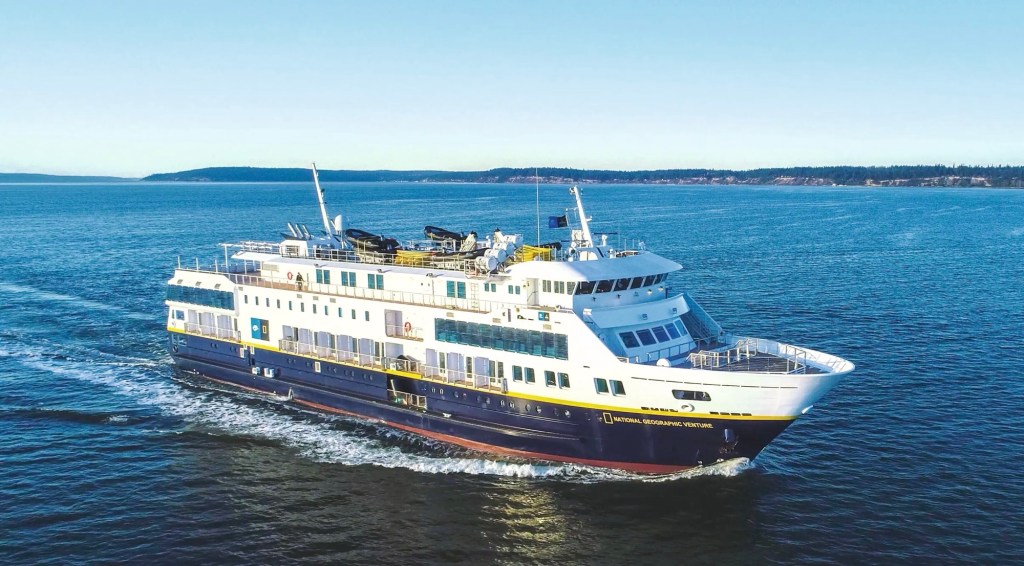
Big cruise ships have a port in Astoria. There are much smaller cruise ships like National Geographic Venture that go to Alaska with only 100 passengers or so. Maybe more my style./

There are also river cruise boats that head upriver towards Umatilla and beyond and bus people to Pendleton.

And of course, there are dozens of really great spots for lunch or dinner and maybe even for that shopping experience you have been craving.

We enjoyed our short but busy time at Ft Stevens. It is a nice stop, the beaches are nice, Astoria is interesting, and there is plenty of Lewis and Clark history in the area as well as the historical aspect of Ft Stevens. If you are going this way the State Park is a good choice.

Our friends from San Diego, Richard, and Betty were delayed a couple of days so rather than meeting them at Ft Stevens as planned we met them at out next stop, Nehalem Bay State Park.

Nehalem Bay State Park

We arrived at Nehalem Bay State Park after an hour’s drive down a twisty, windy 101 from Ft Stevens.

We like Nehalem Bay State Park. It has a couple of hundred campsites with water and 50 amp electric. You have to drive up to the entrance area to dump your waste tanks. There are maybe two dozen Yurts (tent cabins). And like Ft Stevens, no laundry and no store.

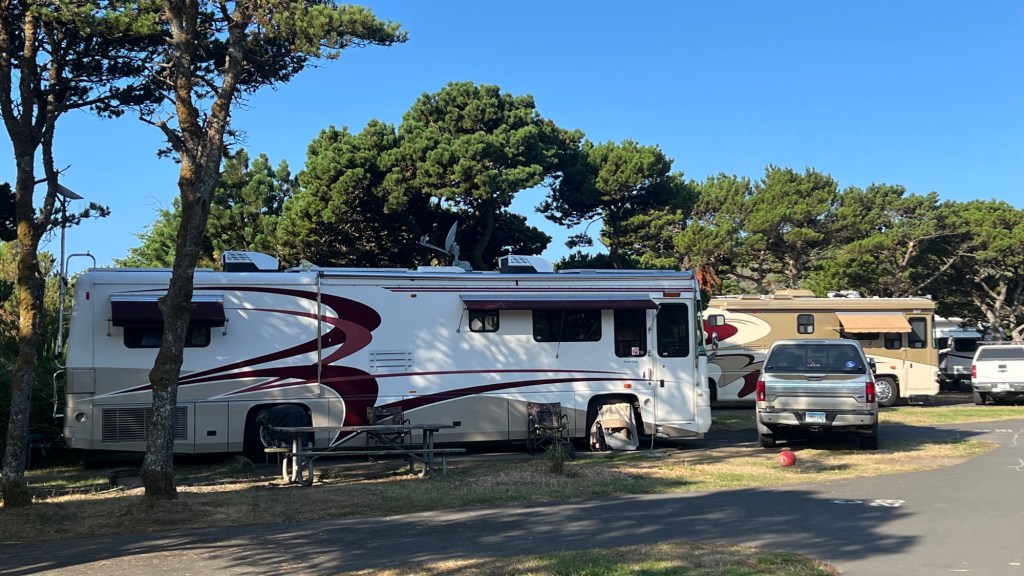
That is us in the foreground and Richard and Betty in the tan coach in the next site. Our DirecTV dish worked where we were. In Richard and Betty’s site the trees were in the way. But our StarLink was working well so we shared our WiFi with them while we were there and they learned the basics of streaming.

The State Park is just south of the small town of Manzanita, OR whose permanent population of about 600 swells to a few thousand with summer visitors. It is close enough that you can walk or bike into town. They have a nice Farmer’s Market, a couple of grocery stores, hardware stores, a lumber yard, and lots of touristy-type stores. Quite a bit for a small town.

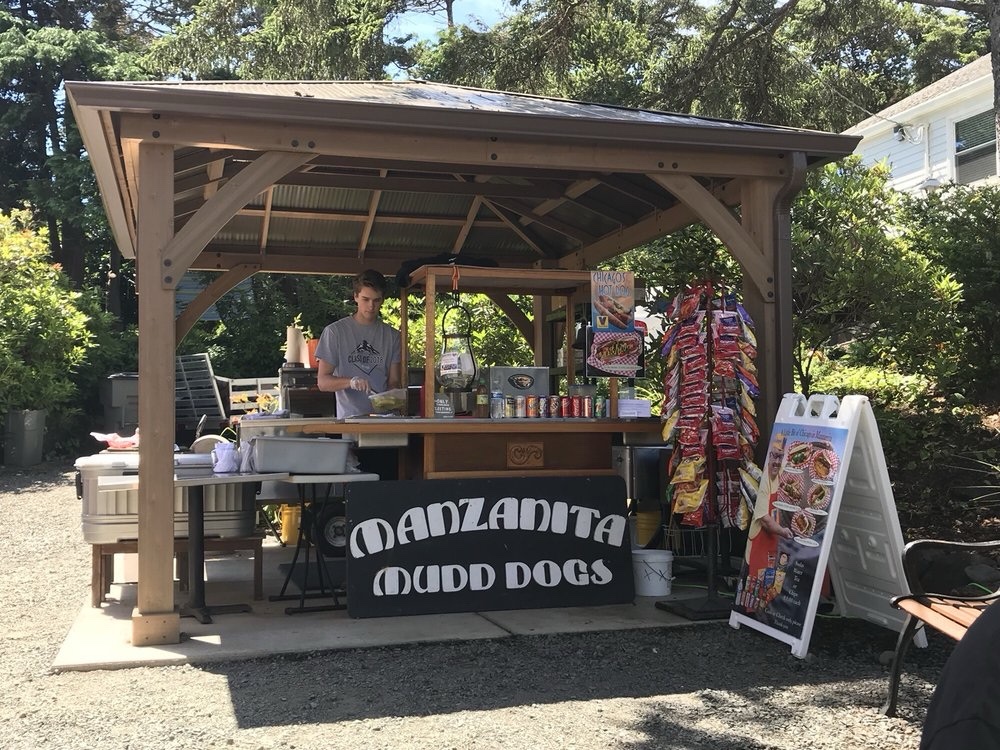
There is a Hot Dog stand that has been there for a long time. It started very simply as a way to earn money for a local charity. It is now a big deal, open most of the year, most days of the year. Mostly hot dogs but other lunch stuff too.

Mudd Dogs is a food experience.

Plain or all gussied up, your choice.

Betty Richard and I (Susan too) ate a dog. Don’t tell Maggie.

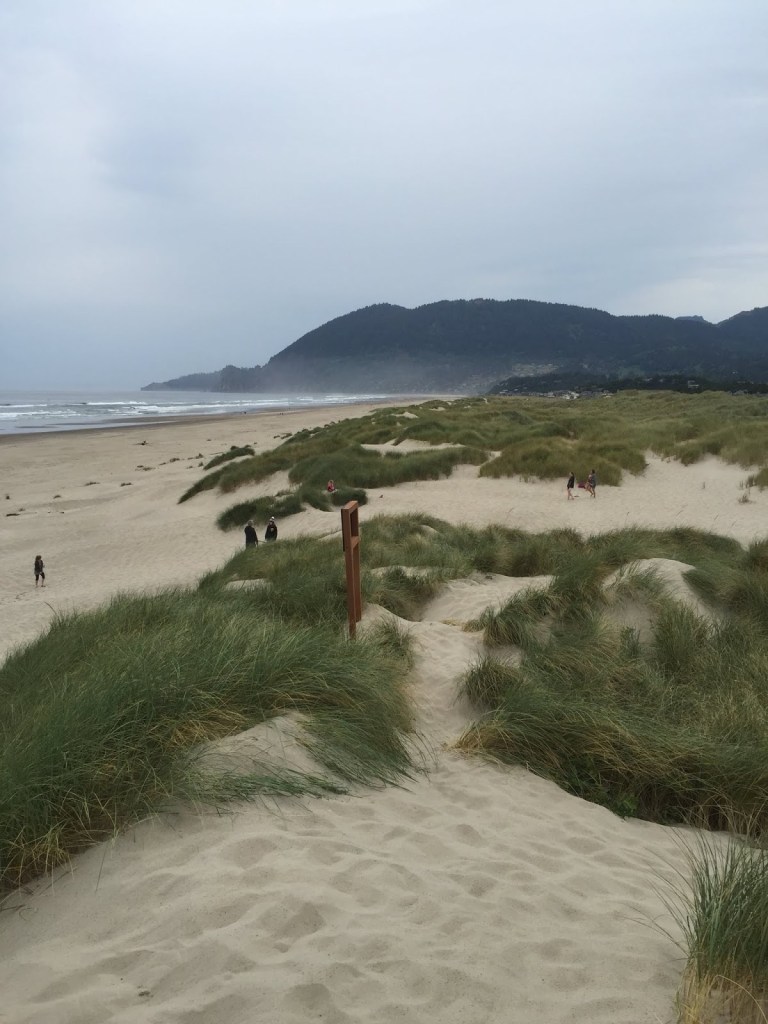
The Campground is along side of the beach separated by a long, narrow sand dune. So usually it is up and over the dune to the beach, there are a few places where the dune is very low or not there and you can just walk out to the beach.

Lots of trails up and over the dunes.

And more along the tops of the dunes. There were signs along the beach side with big numbers so you could find your way home.

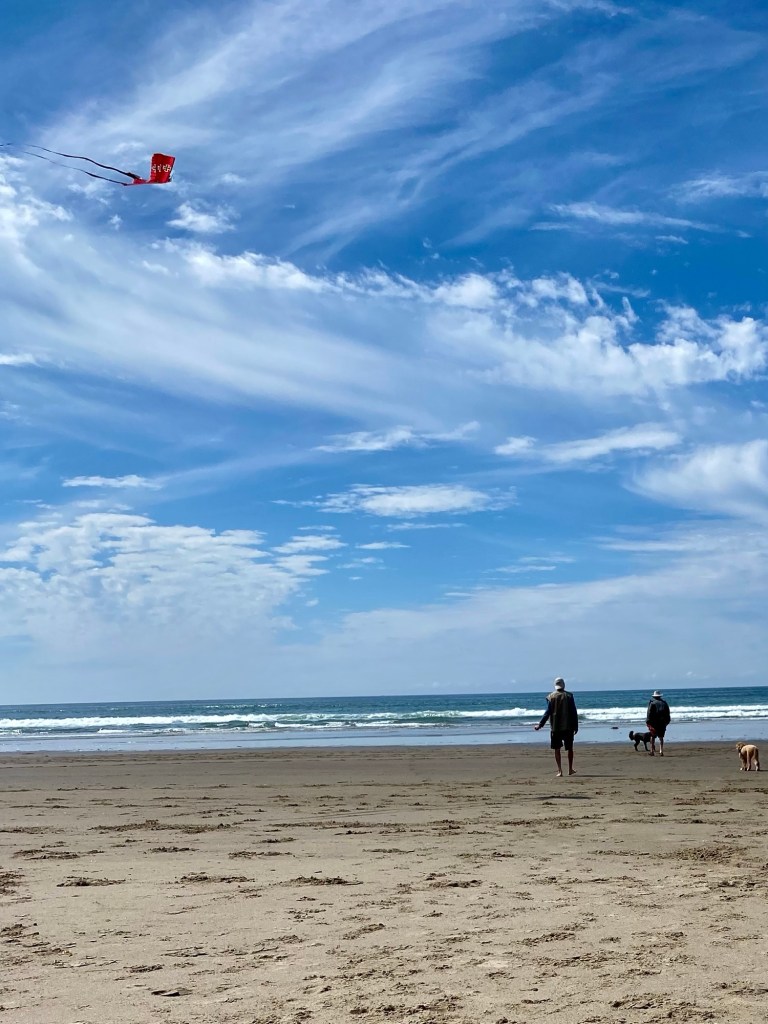
The beach is several miles long from Manzanita south to the opening of Nehalem Bay. People ride horses on the beach, fly kites, kite surf and the hearty go swimming, play with the dogs, or just walk. Cars are not allowed on this stretch of beach. We mostly walked and played with the dogs.

You can go on a horse ride for hire. No takers in our group. It might have been fun.

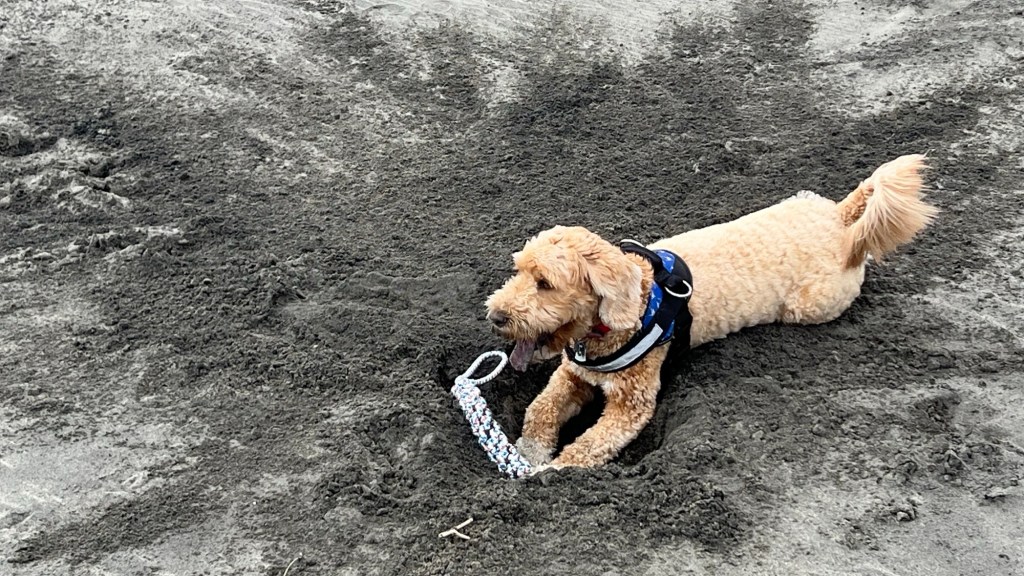
The beach always seems windy. Maggie knows exactly what to do.

Dig holes, try to hide her toys, and snuggle in for a cool sand nap.

Keiko, Richard, and Betty’s Golden Doodle (they come in all colors and sizes) liked to explore more than dig.

Richard and Betty found a piece of driftwood, take it home maybe? Maybe not.

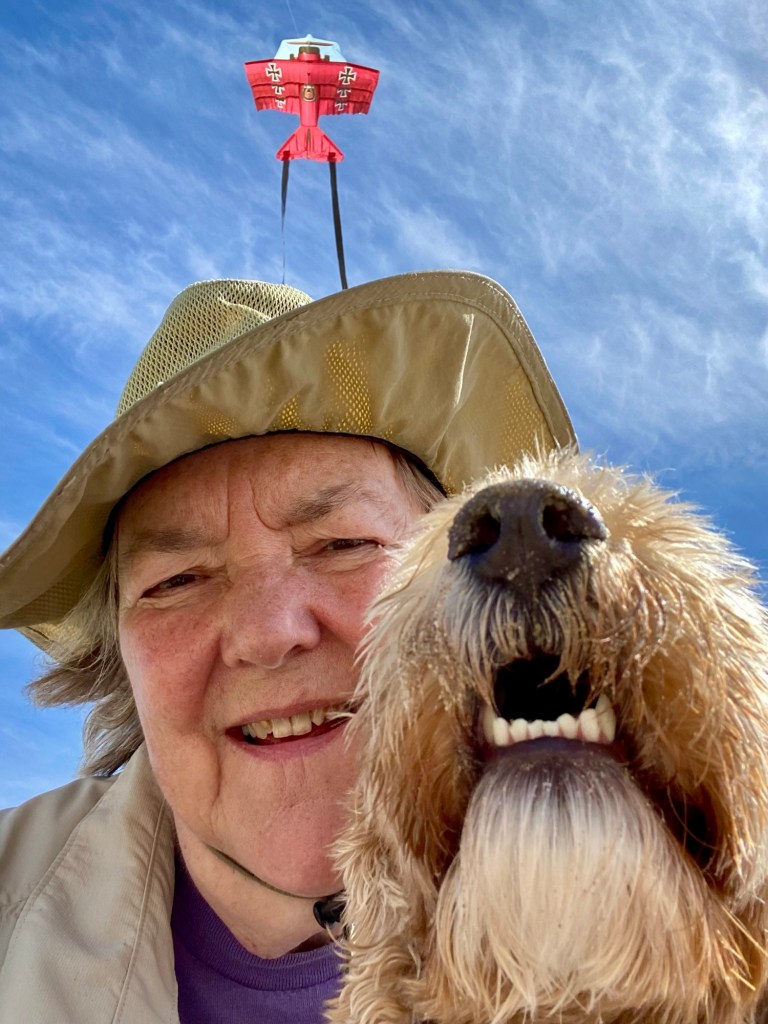
I tried some kite flying, plenty of wind.

Maggie and Susan kept a close watch.

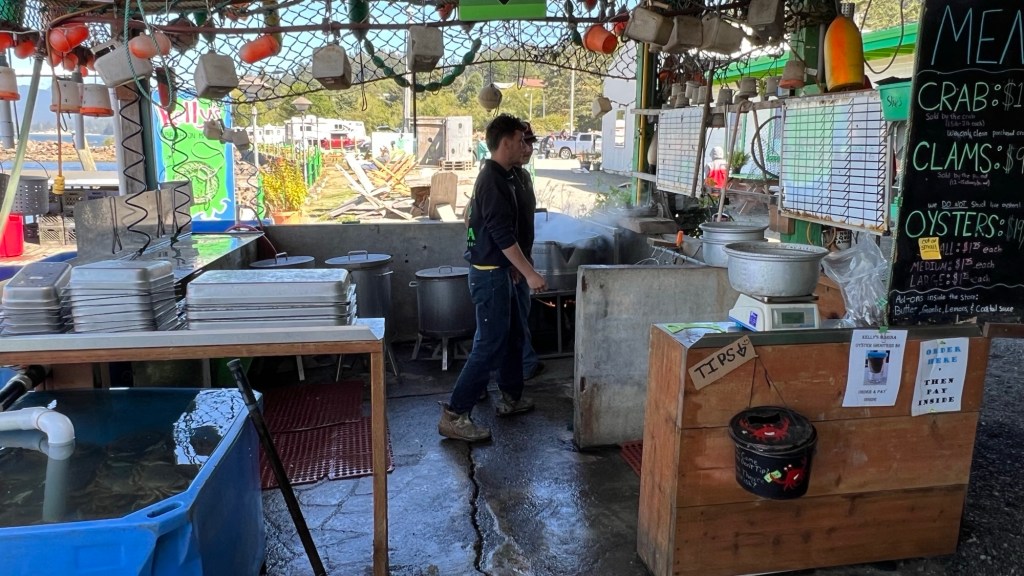
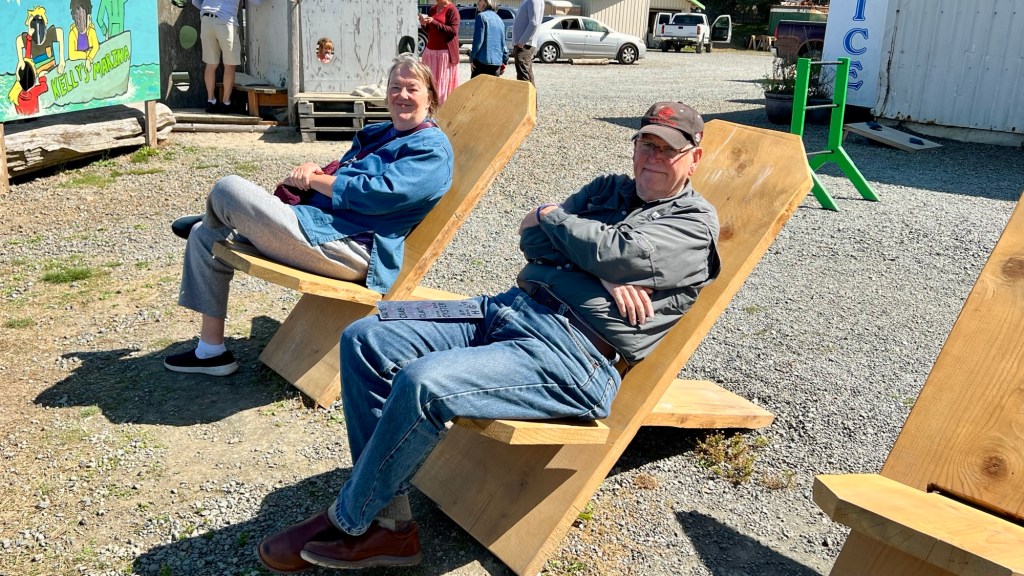
When you’re on the Oregon coast, Dungeness Crab should be on the menu. Down near the mouth of Nehalem Bay, there is a crab fishery, marina, and campground called Kelly’s. We headed down there with my brother-in-law, Bruce, to buy a bucket of crab so Susan and I and Richard and Betty could go to my sister, Judy, and Bruce’s house for a crab dinner.

There are big tanks with live crabs of different sizes. We chose 4 1-1/2 to 1-3/4 pound crabs for the six of us. They cook them right at the marina and then put them in ice water for a couple of minutes and then clean them. It takes about twenty minutes.

Susan and Bruce waited patiently in the sun.

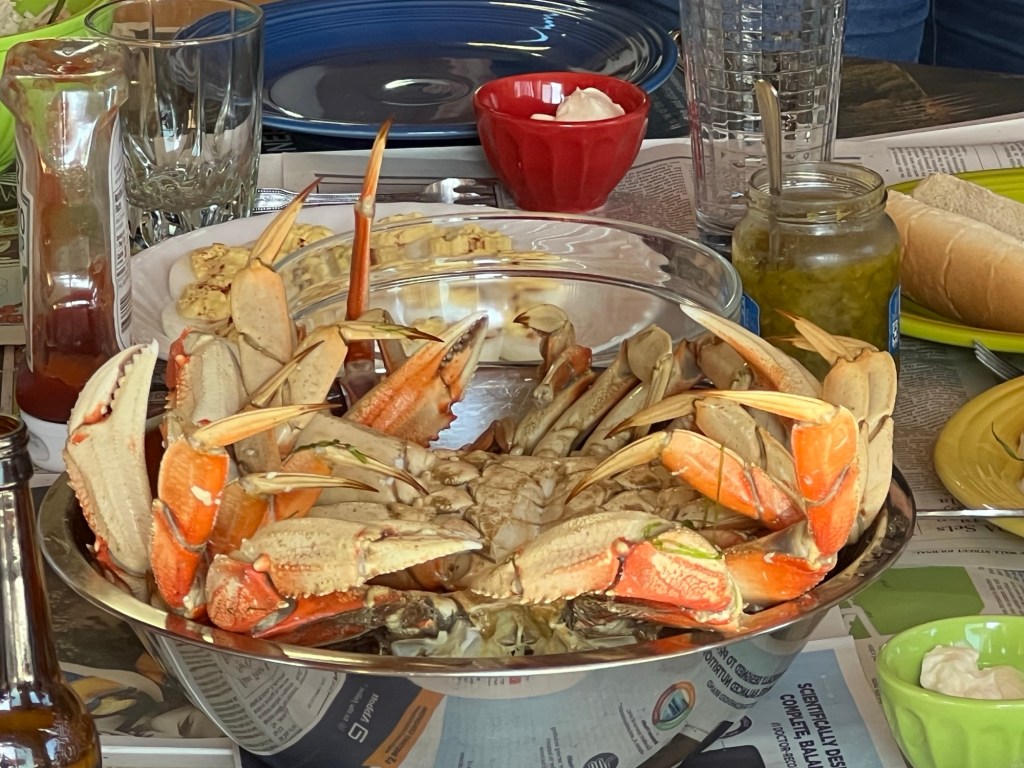
The ready-to-eat crabs are packed in ice for the short trip to my sister’s for dinner. Everybody brought something so there was plenty to eat. Oh Yum

Judy and Bruce’s grand daughter, Victoria, and her son, Ryan joined us. Bowls full of food, empty bowls for the crab shells, and we were ready to eat. So we did.


We had a really nice time with Richard and Betty, it took a while to make it happen and we will try to do it again. One of the best parts of the RV lifestyle is the people you meet, the friends you make, and the memories you make together.

And it was nice to see Judy and Bruce again. It was quite a while since we were last out that way. We had planned on a trip the summer of Covid but that didn’t happen. And we were glad to help them sell their RV. They had fun with it while they had it and it went to a good new home,

So now we start heading to the East and home but all paths between here and home seem to lead to The Grand Teton National Park. At least for us.

Grand Teton National Park

This is a frequent stop for us. We really like a few days at the southern end of the Park at Gros Ventre Campground to get into the town of Jackson and some of the activities at that end of the park. The best place for us is at Colter Bay about 1/2 way from south to north along the east side of Jackson Lake.

There is a National Park campground, an RV campground, a tent cabin campground, and about a hundred log cabins for visitors to stay at. No lodge. We stayed in the RV campground.

The Colter Bay Village has a grocery store, a coffee shop, an ice cream place, a laundry, a pay shower facility, a post office, horseback riding stables, a gift shop, two restaurants, a Park Visitor’s Center with another nice Gift Shop, and a big marina.

Something for everyone. There are canoes, kayaks, and motorboats for rent at the marina as well as guided fishing trips and boat trips out to Elk Island and the far side of Jackson Lake.

And three very nice day hike trails that start and return you right back to the village.

And just 3 miles up the lake, Leek’s Marina is another smaller marina that is popular for its pizza, and rightly so. You could probably walk up there for a pie to go but walking back with one might attract a hungry bear.

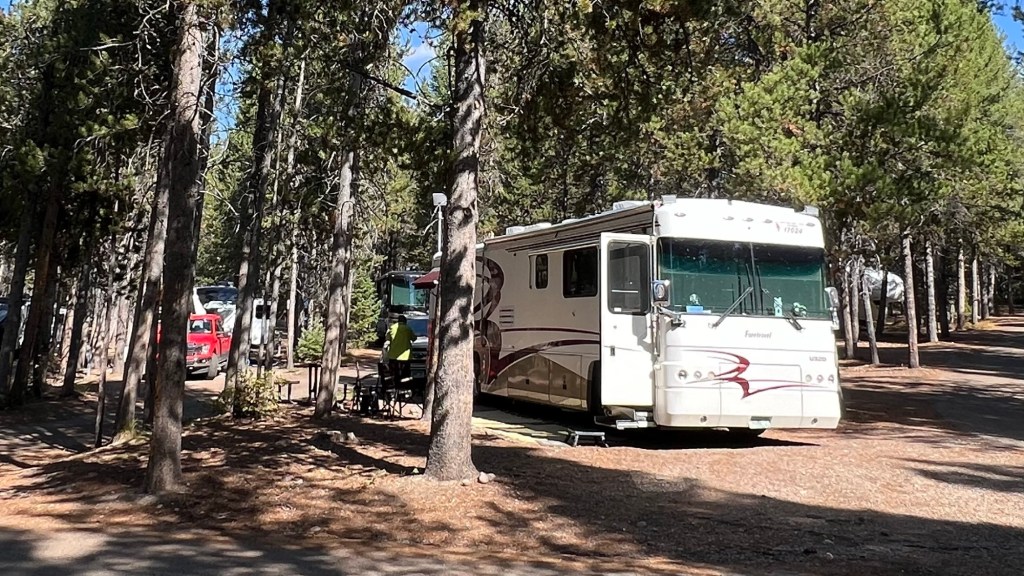
We had a very nice spot in the RV Park. It is generally shady among the tall pine trees. The tall trees limit the use of a TV satellite dish. Our Starlink dish worked pretty well. We were pleased to see very good cell phone coverage here too. With that, we were also able to get internet access using our cellular hotspot.

The last time we were here workers were busy burying fiber optic cable from one end of the park to the other. We didn’t see any signs of cell phone towers so we figured it was just for the Park facilities. A Ranger told me there was a multi-vendor cell tower on a hill to the east of the RV Park. I looked hard and never found it but the cell coverage was very good.

We missed Ralph and Dorris Trotter from Illinois by one day. But we crossed paths with Rich and Peggy Bowman from Ohio while we were there. It was nice to see them again.

Maggie was staying at her first National Park here. While there are many places she can go with us on a leash there are maybe more where she could not. The park rules about pets have changed since we were here with our first dog, Xenia, in 1980. Now she couldn’t go on any trails or the beach. That disappointed us, we were hoping she could go for a swim. But is makes sense, one afternoon on the beach part of it was closed while Park Rangers and Wildlife experts were “hazing” a bear to move north (towards Leek’s Marina!) This was probably the same bear that had walked though the campground right in front of our coach just the day before.

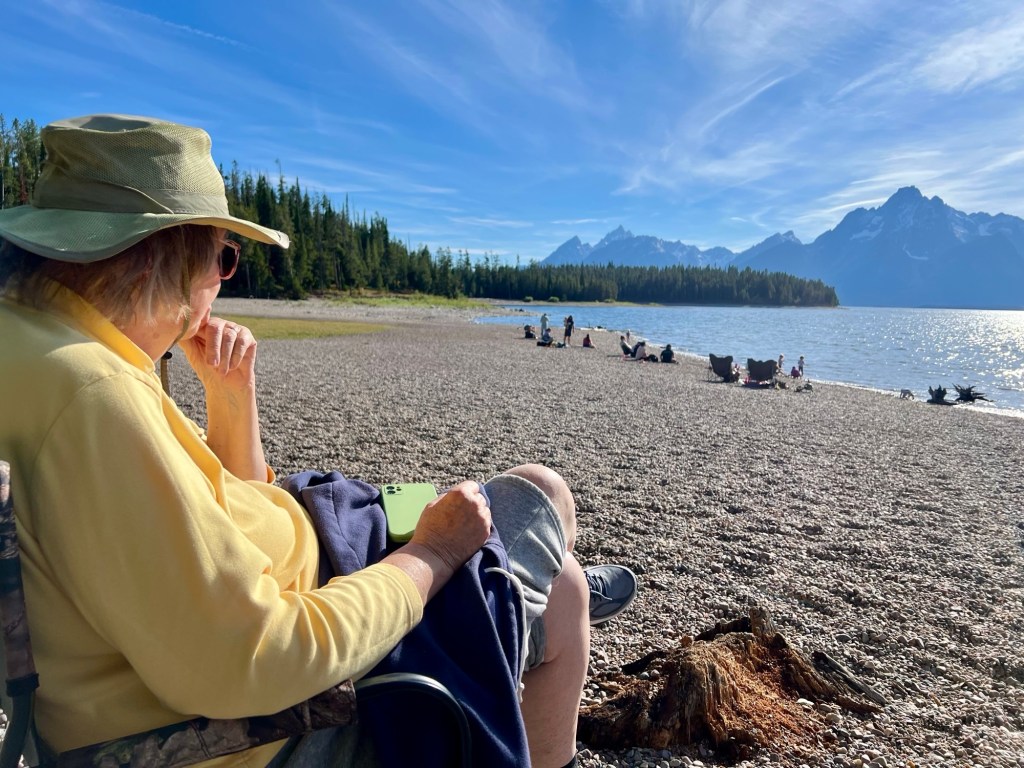
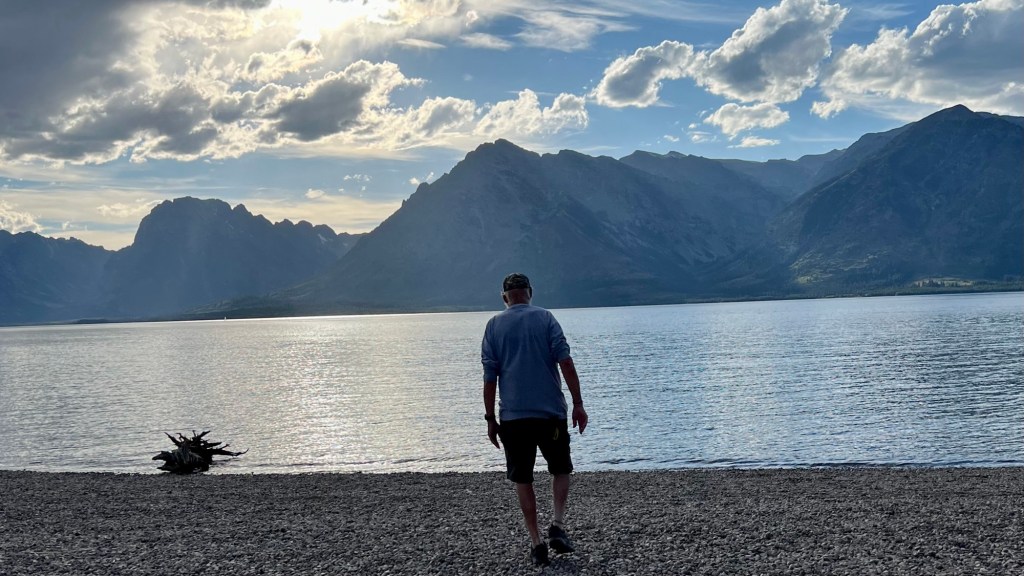
Lake Jackson is a stunning place to spend a later part of the afternoon. The lake is usually calm, people come and go swimming (it is quite cold), and just sit and watch the light on the mountains change in the late day.

On the far side of the lake, there is very little land, the face of the mountains just comes right down into the lake. The mountains and the valley were formed along a fault line, the mountains rose and the valley floor sunk. Jackson Lake is right over the fault line. It is 15 miles long, 7 miles wide, and almost 500 ft deep.

The beach is not sand, it is gravel, about 1 inch in size. But just fine to plant our chairs and watch whatever happens.

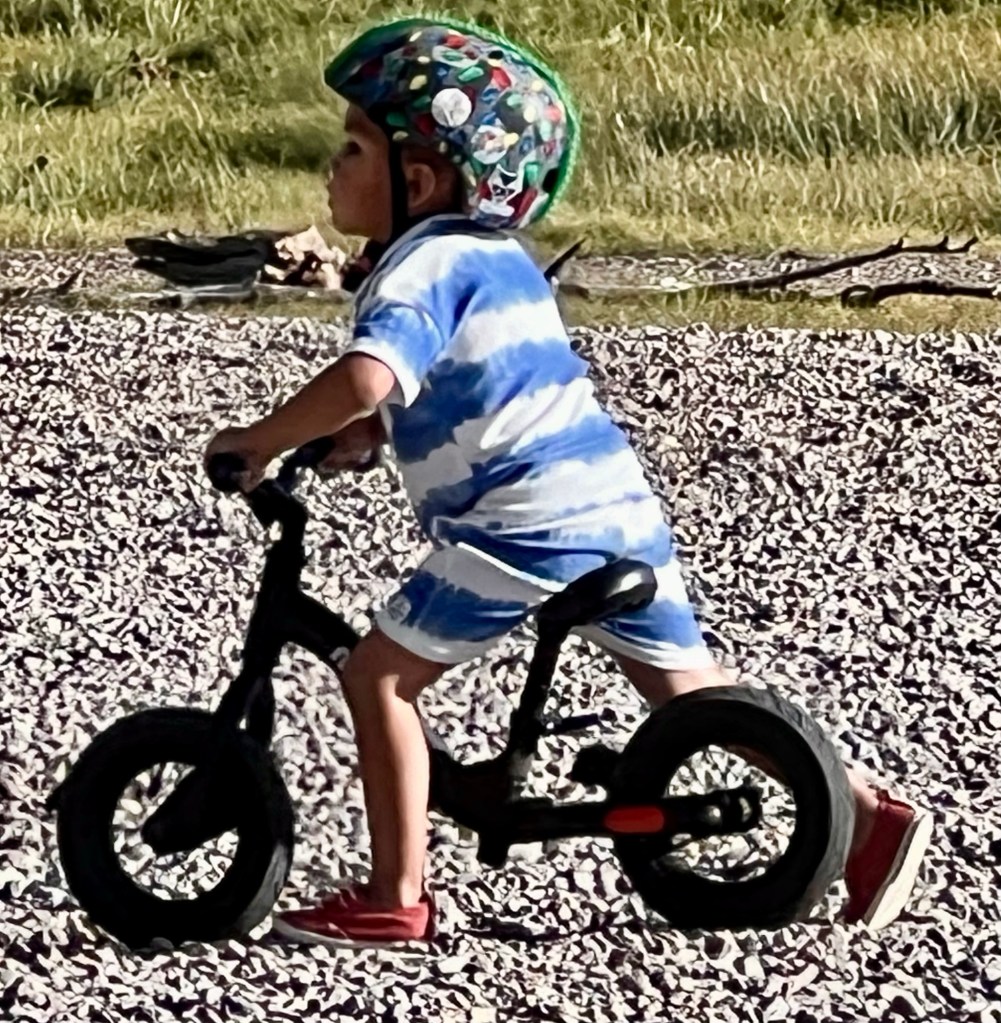
Not everyone got the “No Bikes on the Beach” message. Maybe since this fellow’s two-wheeled machine had no pedals he got some dispensation. He was having a lot of fun going as fast as his little feet would go.

The lake beckons, you just have to go test the temperature, take off your shoes and socks, and get wet. It was surprisingly not as cold as I expected.

The weird thing is that once you walk in you would think it would be pretty solid. But like when you walk in on a sandy beach the sand gives way and your feet sink in, this almost seemed more of that. The gravel moved, and my footing seemed unstable, the more I moved the more the gravel gave way. I wasn’t going swimming so I didn’t wait very long to see the final result of the unsteady footing. But I did get into the water at Jackson Lake.

It snowed while we were there in the higher elevations. The Grand Teton at more than 13,000 ft is south and across the lake from Colter Bay had a light coating of now.

The snow filled in an area on the north face of Mount Moran that looked very much like Minnesota.

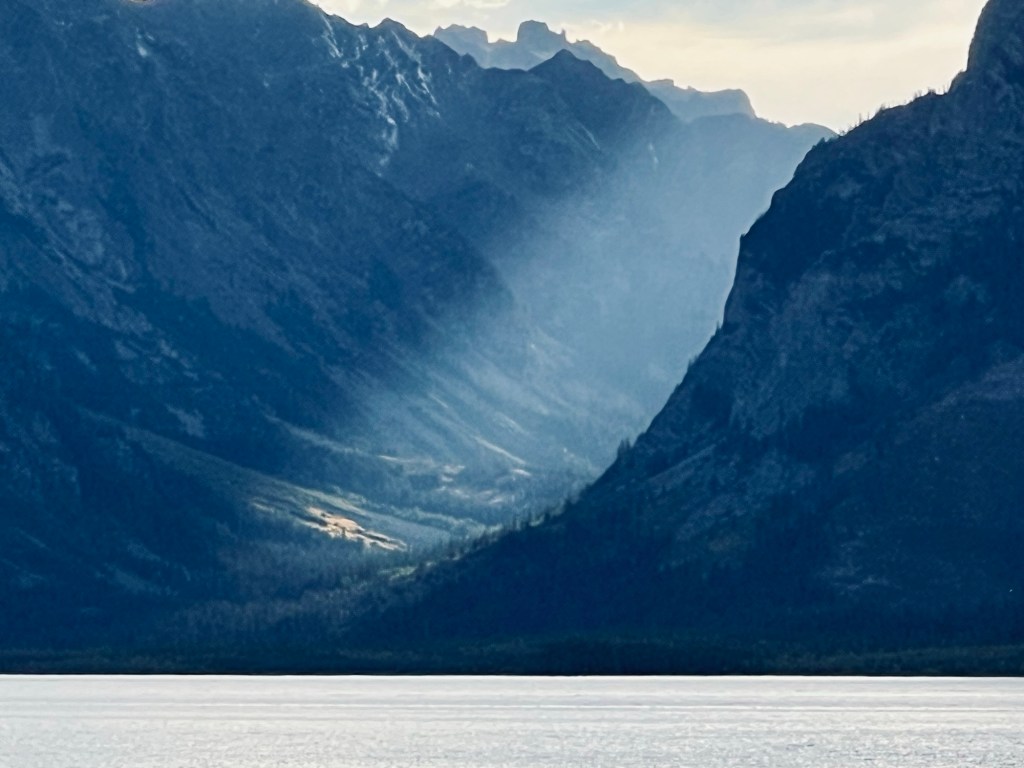
And on those special days when the cloud layers are just right and you happen to be looking, the late afternoon western sunlight floods down the glacier cut valleys on the far side of the lake. It is pretty spectacular to see.

We have been to the Tetons many times over the past 50 years of RV travel. We have been on grueling horseback rides up and down the mountains in the rain, on backcountry trails where the bear stories from the previous night’s Ranger talk make you pretty wary, and on boat rides on Jenny Lake and Jackson Lake. We have seen some pretty amazing scenery and wildlife.

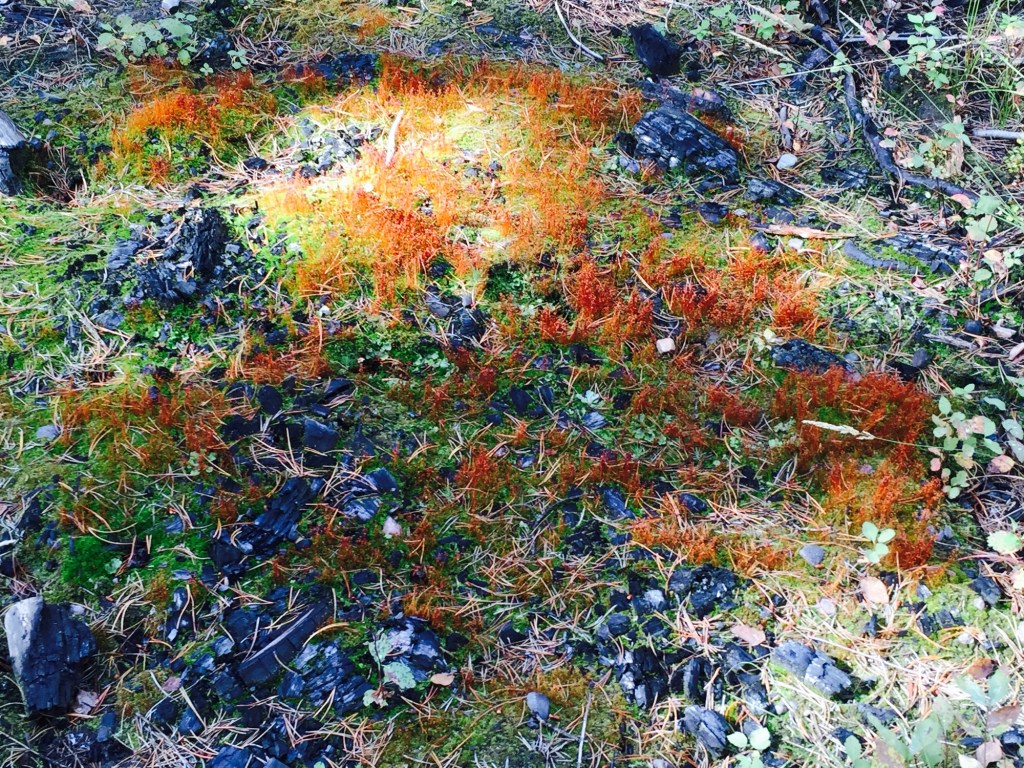
Lichens and Mosses on an Old Stump
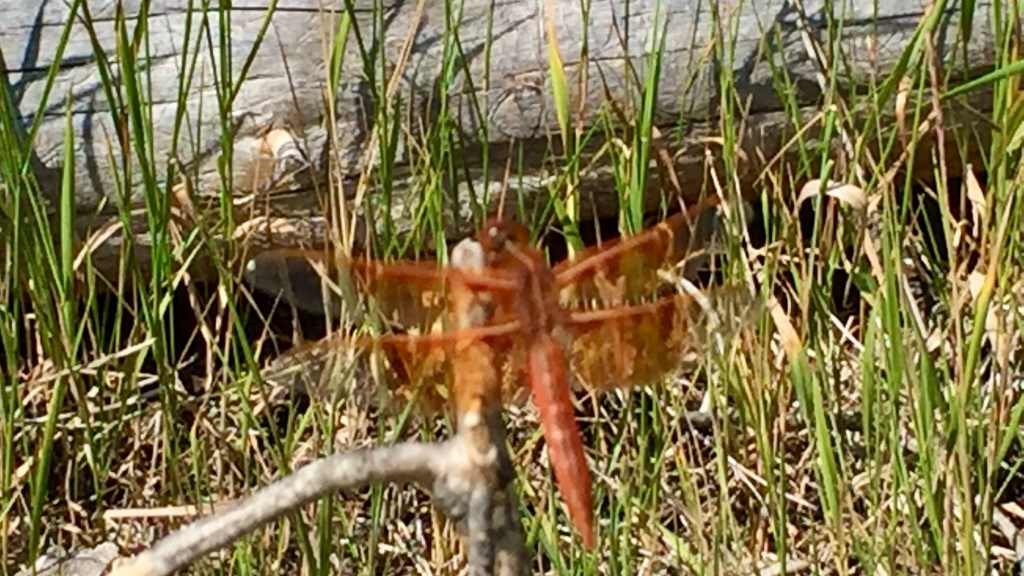
Giant Red/Orange Translucent Dragonflies

We have been closer to bears than we should have been. We have enjoyed the quiet times just seeing the mountains and the lakes, the families on the beach and in the picnic areas, and the walks through the campgrounds at the end of the day. We keep coming back to refresh, reinforce, and make new memories. The way we enjoy the Tetons has changed over time as have we and the Tetons. We have been to a great many National Parks. This is where we return.

More Later, Much Love,

Roger, Susan, and Maggie

The Boeing Museum and Everett Plant Tour

December, 2024.

My bucket list is short but the Everett Plant Tour is one place I always wanted to see. I was hoping to do it while they were still building 747s but that ended sooner than we got there.

We drove down to the Boeing Museum one morning from Anacortes for an early afternoon tour. This time the one-hour trip took only an hour and a half, it was a Saturday.

The Boeing Museum was interesting. I thought we would see more historic Boeing planes, I guess there is another museum for that. This one was more about evolving technologies – aerospace, space, and manufacturing. No pictures allowed.

The Everett Plant Tour started in an auditorium with some discussion of what we would see and the rules: no pictures and no specific questions requiring proprietary answers.

The original plant was built to assemble 747 aircraft. We got on a bus for a short ride over to the assembly building where there are now 8 immense assembly bays. They are building 767 and 777 aircraft here now. The bus took us to the 7th assembly bay. We walked down a set of stairs, through an underground passageway, and up in elevators to an observation platform overlooking the assembly areas in bays 7 and 8.

In bay 8 they were working on the 777X, a new 777 with more new composite wings with folding wingtips so that it fits in existing airports and more efficient, bigger GE engines. With lighter-weight wings and more efficient engines, aircraft fuel consumption will go down by about 15%. This aircraft is going through the final certification process. Deliveries are scheduled for 2026. More than 500 have been sold.

In bay 7 they were assembling 767s. There were 6 aircraft in the bay at various stages. As I recall each aircraft spent 5 days being assembled.

The two ends of the aircraft started side by side with the nose and tail facing the same way at the near side of the bay at the left end. The cockpit in the front end and the equipment in the aft end started to get installed.

These move to the middle of the near side of the bay for more work.

Then these two sections move to the right end of the near side where the aft end is turned around so that the front and aft sections are lined up as one might expect. From somewhere else the horizontal and vertical tail surfaces are ferried in by overhead cranes which move from building to building. All of these tail parts are attached while the aircraft is in this section of the assembly bay.

They move those sections to the other side of the bay and a giant overhead crane brings in the center section from another building. Two big saddle frames hold the three sections together in alignment and robotic machines put in 8 rivets in a line across each joint about every two inches around the entire fuselage.

Then this assembled fuselage moves down to the middle of the opposite side. More big cranes bring in the wings (built-in another building where they just make wings). The wings are attached to each side of the fuselage. No one asked how many bolts. This is where the rest of the interior of the plane is installed.

And finally, the nearly complete aircraft moves to the left end of the opposite side of the bay where the fuselage and wings are lifted so that the landing gear and the engines can be installed. The landing gear goes up and down several times, all of the aircraft systems are tested. After five days a 767 is towed out of the assembly bay.

Think about it, there are 6 767 aircraft in this assembly bay (one of 8). These assembly bays are in one building that covers 5.5 million square feet, almost 100 acres. The building is 120 feet tall and encloses about 500 million cubic feet. These assembly bays could hold 75 NFL football fields. Big is the word and the plant continues to expand.

Once the plane is towed out of the assembly building it goes across a very heavy-duty bridge crossing Interstate 5 to one of three paint buildings and then on to a final assembly and testing facility where it gets more tests and final finishing touches.

Finally, Boeing test pilots fly each plane two or three times. The buyer’s test pilots fly it a couple of times and then when everyone is happy and the aircraft has been fueled, they have a delivery party, hand over the keys, and presumably some money, and the plane departs flown by the buyer’s flight crew.

Someone asked how much an airplane costs. The tour guide wouldn’t say exactly but said they cost about $1 million per seat. A common configuration for a 767 is 400 seats so about $400 million. But wait, that doesn’t include engines or seats. The 2 engines cost $42 million each and they usually buy 3, sometimes 4. Cheap seats are $5,000. The fancy seats that sell more tickets are closer to $10,000. So add in another $4 million for seats and $130 to $170 million for engines and spares and each plane is $530 to $570 million and change. It is like buying a car, everyone wants a deal. And deals get made so what the planes actually cost is anyone’s guess.

It was interesting to see the assembly line, hear the facts and details as far as they would tell us and just see the scale of it all. I wanted and hoped for more. What do you expect for a discounted senior ticket? ($33 each)

At the end of the tour like with all good museums, you are routed through the gift shop. We bought a few memorabilia things.

More Later, Much Love

Susan, Maggie, and Roger

Out West, Summer, 2024, Part 1

December, 2024.

We met Richard and Betty Bark from San Diego, CA at a Foretravel Grandvention in Columbus, Indiana, ten years ago. We have stayed in touch and met for a week one year in the Black Hills of South Dakota and a few days at Quartzsite in Arizona. And a couple of times for just a day or two at a time as well.

We have been trying to find a place and time where we could get together for a couple of weeks. This year we decided to make it happen on the Oregon Coast. It is one of our favorite places to go and gave us a chance to see Glacier NP again, our friends Klaus and Jean Peters in NE Washington, and my sister, Judy and her husband, Bruce on the Oregon coast. And as long as we were going, we added a (my) bucket list stop at the Boeing Museum and Everett Plant Tour. On the way home we planned a stop in the Tetons, another favorite place to visit.

All of this started with planning up front, the when and where sort of thing. To get reservations where, when, and in which sites we had to get online exactly six months to the day ahead of time and make reservations. We do this all the time these days, even as much as a year or more in advance. Richard and Betty had never made reservations that far in advance or for that long. But they were up for it. The Oregon State Parks reservations meant for them getting up before 6 AM and getting online and ready to click on the button to make our selections. We had been checking each day for several days in advance to make our best guesses as to which sites would be available. We made reservations at Ft Stevens State Park near Astoria. And then a few days later for a longer stay at Nehalem Bay State Park near Manzanita, Oregon. They overlapped by one day to get the sites we wanted at Nehalem Bay. There were a few anxious moments hoping for the days and sites we wanted but it worked. We were all ready and got what we hoped for.

Ditch Digging

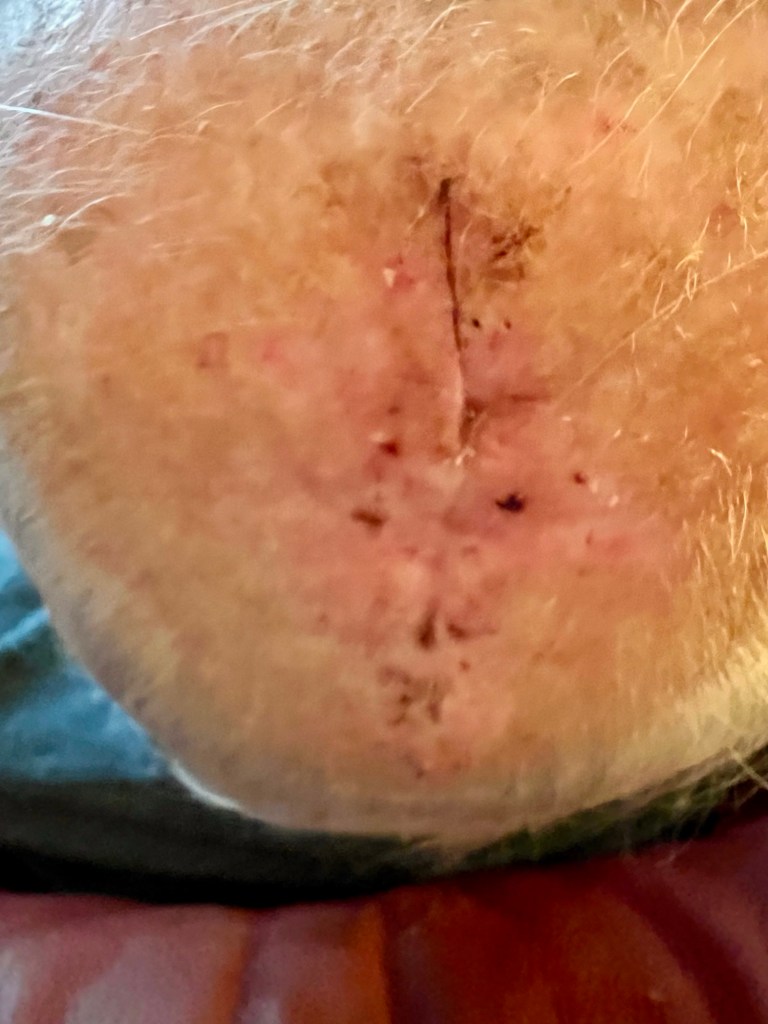
Between getting the driveway paved and our pickup fixed and all of our other summer projects, my dermatologist was concerned about a spot on my head, so she took a sample. They said it was squamous cell carcinoma and it needed to get removed with a Mohs procedure. So that got squeezed in. Removing a small 1/2” thing left quite a hole. When the football shaped excavation was all stitched up I felt like my ears were raised.

All of my hair covers up the hardly visible scar now.

Load ‘em Up, Roll ‘em Out

After the broken tow bar incident in April, the coach got patched up well enough for travel. The pickup truck was finished just a week before we were scheduled to leave. A new tow bar had arrived and got installed and there was some last-minute wiring and connections left to get done on the pickup. It all got done in time.

We loaded up the coach and made ready for the trip west. It was more like a road trip than we have done for some time. We needed a wide range of clothes for different weather. Food choices for sharing. We were ready and we left.

Glacier NP

We headed off across North Dakota.

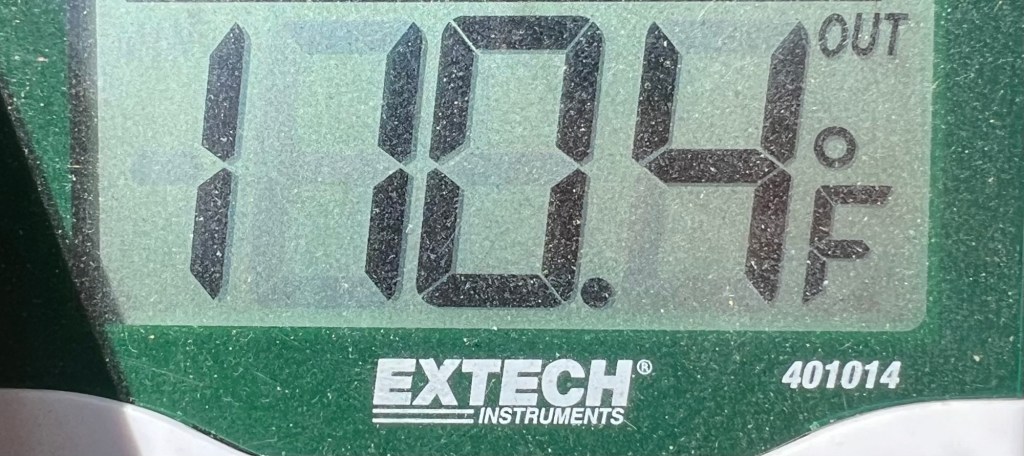
Good grief, it was hot. The last time we crossed ND it was 116°. North Dakota is almost as far North as you can get in the continental US, how come it is so hot? We ran the generator and all of the air conditioning. We stopped in a tiny city park in Buffalo in far eastern North Dakota and then in Medora, just about as far west as you can get in North Dakota. We have driven across South Dakota too at other times. Somehow crossing North Dakota seems to be a more interesting drive. And if it is hot in North Dakota, it is hot in South Dakota.

One more stop in Columbus, MT, and then to Wye, MT just south of Flathead Lake. The Eastern half of Montana was hot too.

Maggie helped with navigation. Jim and Mary’s RV Park was quite nice with lots of flowers, trees, and green grass.

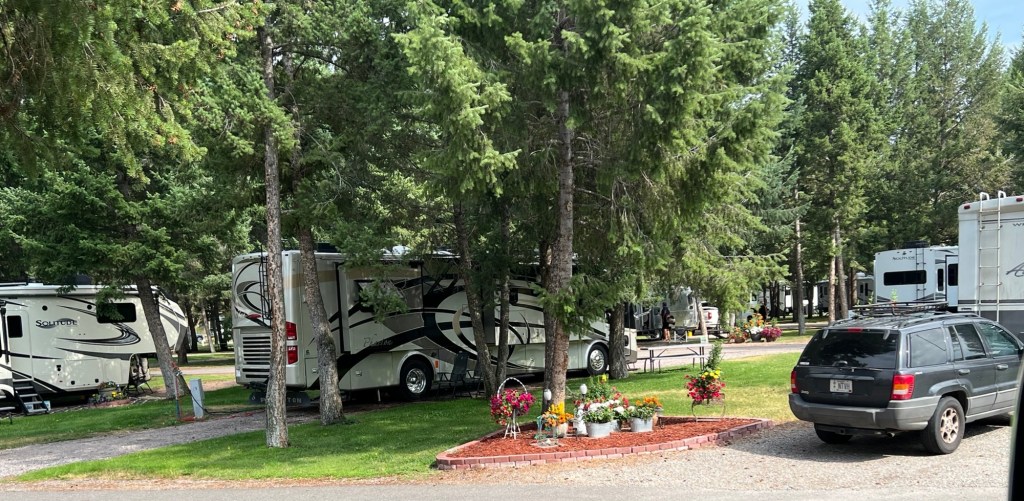
Then North along Flathead Lake to the west side of Glacier NP to Mountain Meadow RV Park, about 8 miles west of Glacier NP. We were looking for a spot in the park but sites to fit even our smaller 36 ft motorhome were limited. And our friend Klaus Peters was driving over to meet us for a couple of days so we stayed just outside of the park.

We were surprised to find out that to get into Glacier NP you needed a daily pass for your car and everyone in it. These passes were only available on the night before you wanted to get in after 7 PM and only online and only good for one day. The last time we were in Glacier (1980) there was no such thing as “online” just “in-line”.

We wanted to drive the Going to the Sun Road, have lunch at McDonald Lodge, and visit the Many Glacier area.

We got a pass and drove over the Going to the Sun Road. It was crowded. That is why the daily passes. We stopped at a couple of turn outs for a look.

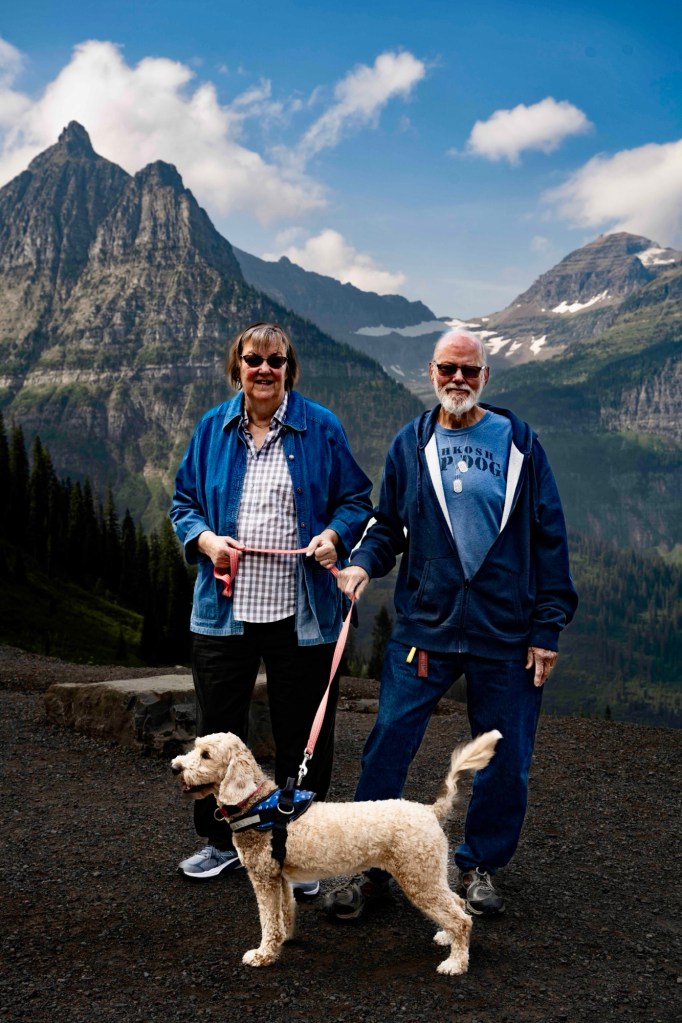
Klaus took a classy family portrait.

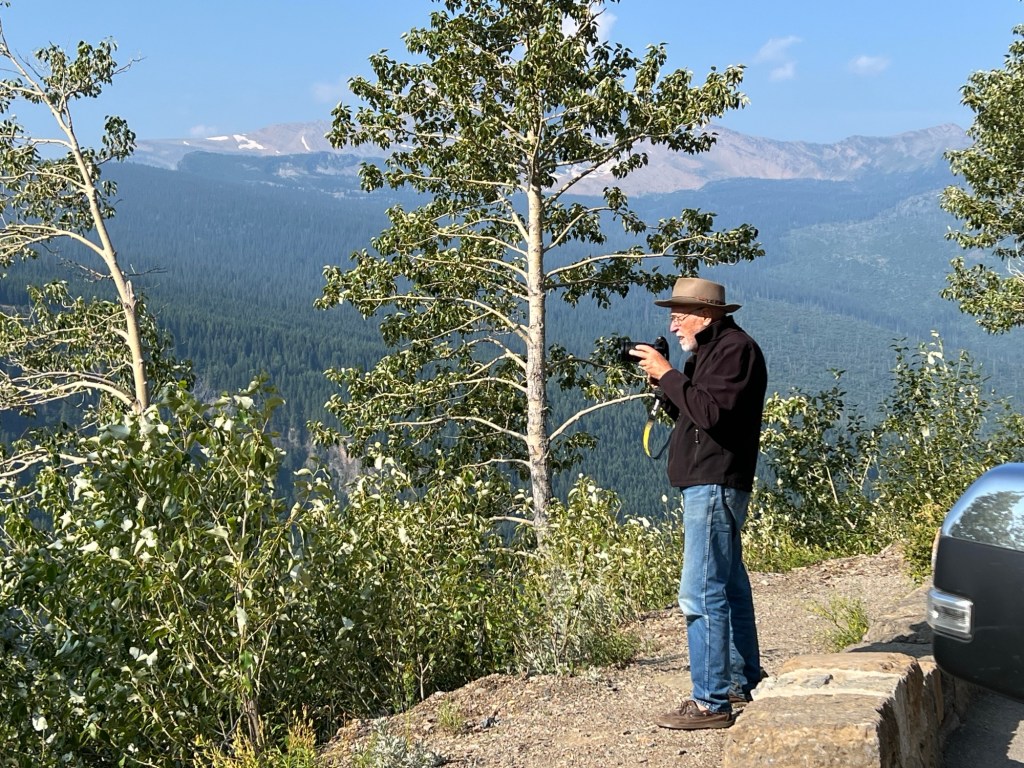
He took many, the scenery was spectacular.

The U-shaped valleys were carved by glaciers. When we were here in 1980 there were many more glaciers than there are today. And those left are much, much smaller.

Some people crossed the Road to the Sun the hard way. Whew!

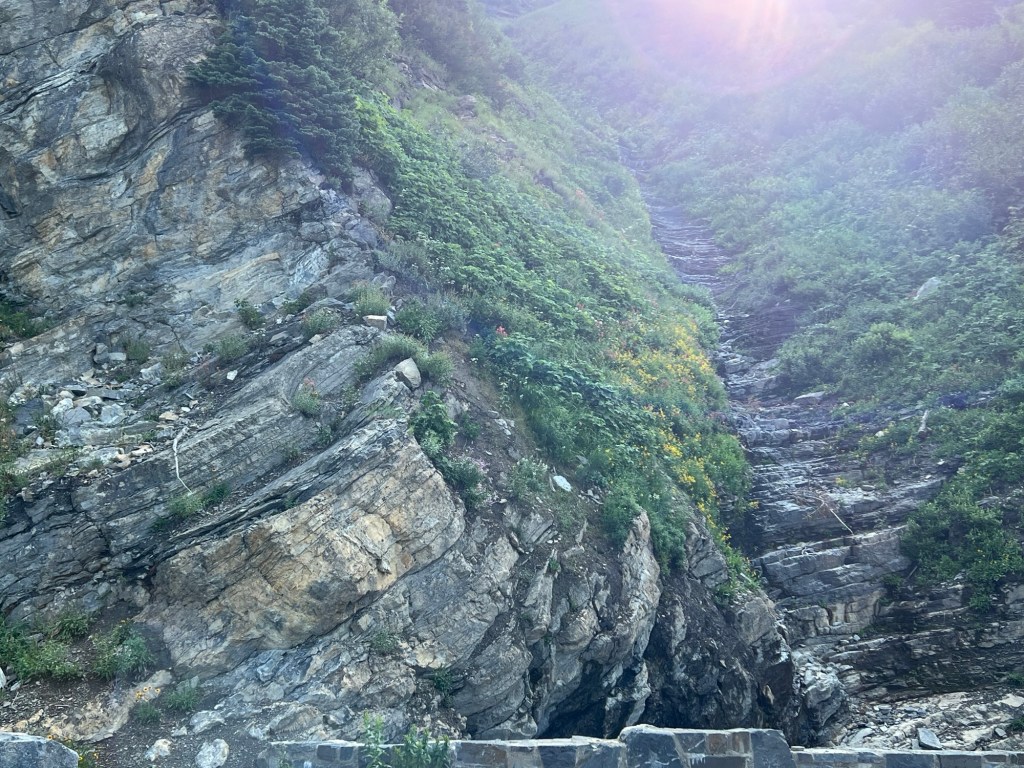
Pretty interesting things to see in every direction.

We were going to stop at Logan Pass, the high point of the Road to the Sun but the parking lot was full and there was a long line of cars waiting to get in. We continued to East Glacier for a bathroom break and a cup of coffee. We wanted to go back into the park at Many Glacier but we were unable to get a one-day pass for that entrance. So we reversed course and went East to West on the Road to the Sun.

On the way back we stopped at Lake McDonald Lodge for a late lunch. It was closed for a special event. Best laid plans you know. We never did get there for lunch.

The fleet of rebuilt red touring busses is still running and for many would be a better way to drive, just ride and look.

So we had a long day of driving and sightseeing. That evening we got a pass for the Many Glacier entrance and had a nice dinner with Klaus.

The next day we gathered up Maggie and drove around the bottom of the park and up to Many Glacier. The road to the Many Glacier Entrance was almost all torn up. We drove over softball-sized rocks on the way in. No need for a speed limit here, no one went more than 5 mph. The Park Ranger at the entrance station said that the entire mountainside was slowly sliding downhill, there was no stopping it. The fix was going to be a very long elevated roadway above the moving rock. Someday.

We got to Many Glacier Lodge, did some exploring and had a nice lunch.

We drove down to the campground where we stayed in 1980. It was a nice campground, we chatted with the campground host who was from Wisconsin. It didn’t look like what we remembered. Actually, we didn’t remember much at all.

We could see remnants of the Angel Glacier. I hiked up there in 1980. Not much left now. But we did remember the scenery and mountains in the Many Glacier area are some of the best in the park.

By the time we got home it was well over a 100 mile day. But a good one.

We were glad to go back to Glacier NP if for no other reason than to see what was left. It was surprising how crowded it was, how they had to limit the number of incoming vehicles each day, and how that changed the experience of the visit. We have heard that other very popular parks are on the verge of implementing similar plans to protect the parks from overuse. If you have been to Yellowstone in the summer recently you can see the overcrowding, too much traffic, and the impact on the park itself.

NE Washington

We headed west into Idaho and then towards the most NE corner of Washington. Right near where the Columbia River comes into Washington from Canada to visit Klaus and Jean Peters.

They have been to many corners of the world with Klaus’ Mobil Oil career. They could have ended up anywhere after they retired but chose this corner of Washington.

Their property was just land when they bought it 30 years or so ago. Since then they have built several houses, barns, and sheds. Their main house burned down and is being rebuilt. The house near the entrance to the property got sold with some land to now good neighbors. Two other houses get used to live in and for guests.

One of the houses in use today.

The new main house being rebuilt.

Three Great Pyreneese dogs and a German Shepherd. And three horses in the barn.

Jean takes care of the horses.

And they have a mountain top cabin.

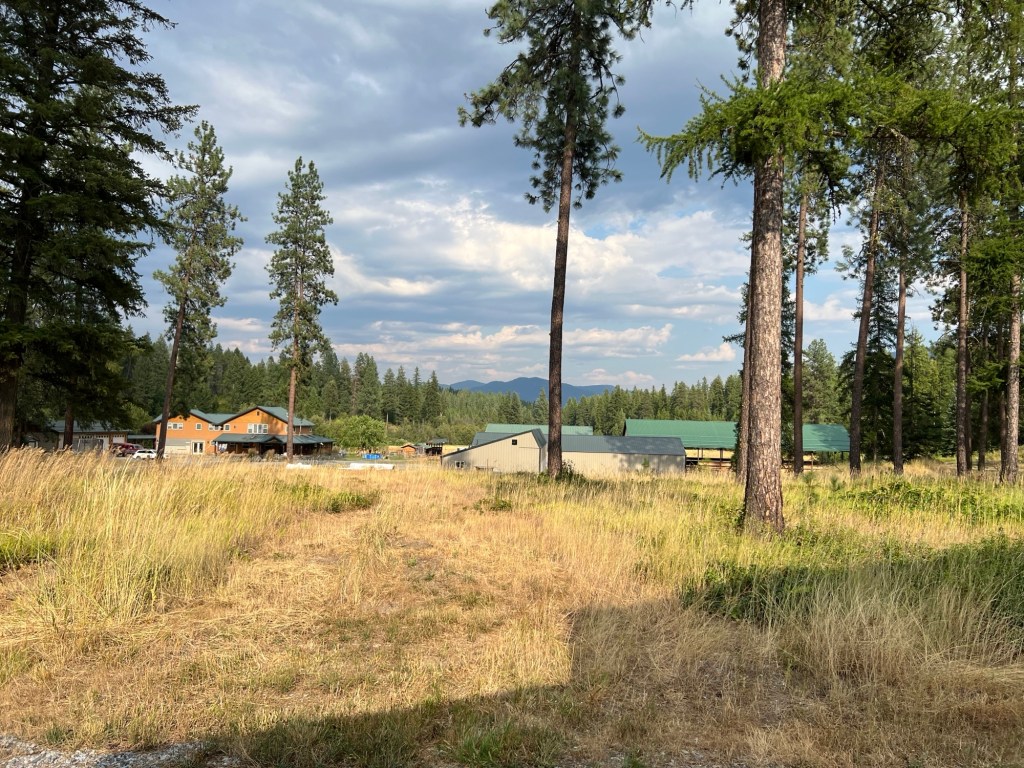
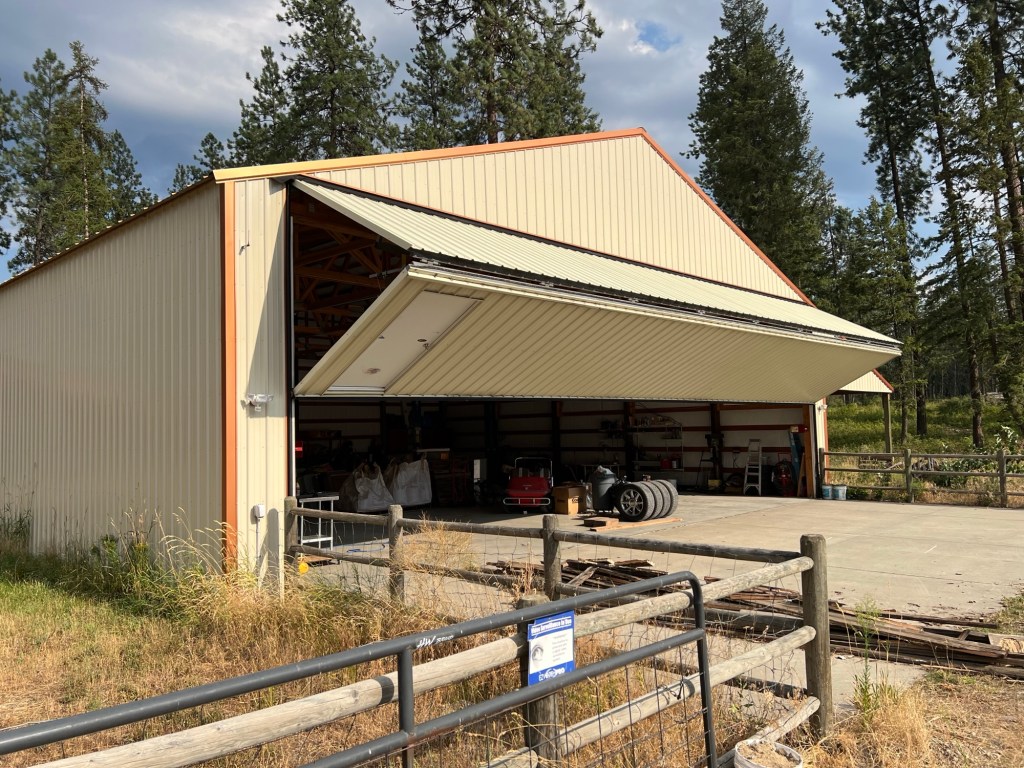
And some more property with a horse ranch, a runway, and a hanger.

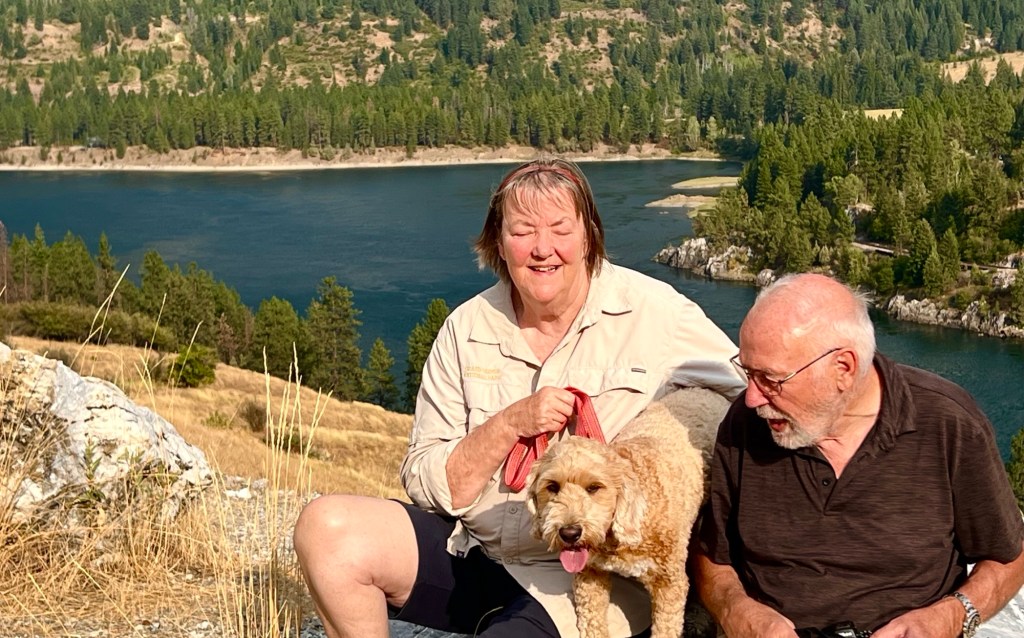
Klaus took us for a drive to an overlook of the Columbia River.

It was fun to visit for a few days. They seem to have lots going on all the time. We appreciate the hospitality.

North Cascades NP

Our next stop was going to be at North Cascades National Park. There was no way to get there. All possible roads were closed by wildfires. So on to Anacortes, WA on the north end of Puget Sound.

Anacortes, WA

The traffic in the Seattle area is crazy. We got to I5 near Everett and spent 3 hours on a 1-hour trip to Anacortes.

We stayed 3 nights in 2 spots in the county campground. Both sites were in the woods, very close quarters, winding, hilly roads, and tight turns.

We know several folks who have spent the summer in Anacortes. It is a nice place but I don’t think they were staying in the county park. There are a few private RV parks nearby and a new one just opening up on the edge of town on the water. It would be nice to go back, maybe explore the area more, maybe stay on the other side of Puget Sound on the south end. That’s a whole other trip.

Southbound

Our next stop was Fort Stevens State Park in Oregon near Astoria. Apple Maps suggested it would take about 4 hours and 30 minutes. It did not figure in Seattle traffic. It was almost 8 hours.

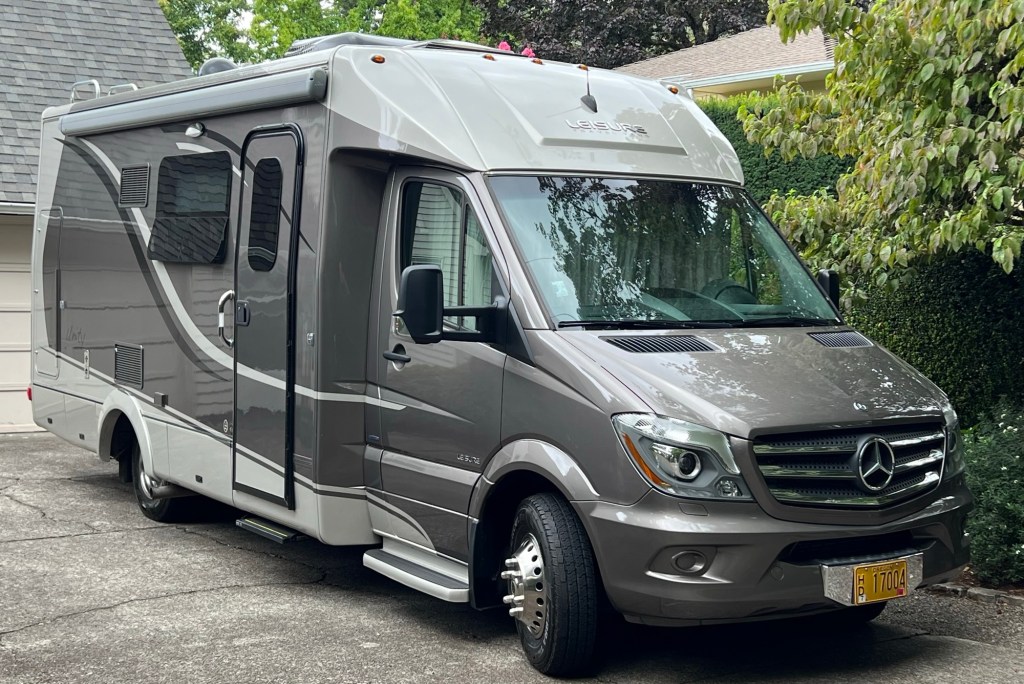
Richard and Betty were delayed for a few days so we had to entertain ourselves. That didn’t take long. Klaus had mentioned he was looking for a Mercedes Benz-based camper. My sister and her husband had a Leisure Travel Van that they wanted to sell. I gave them phone numbers to let them talk directly. My sister and her husband were at their beach house near Nehalem Bay an hour south of Ft Stevens. The camper was in Portland 2 1/2 hours from Ft Stevens.

The talking was done, a deal was close, and Klaus wanted me to look at the camper and report.

My sister’s husband Bruce picked me up in Ft Stevens and we drove to Portland. I did an amateur-level inspection, best I could do, took it for a test drive, took pictures, and thought it looked pretty good.

I reported to Klaus what I had seen. There were a couple of things to fix which Bruce arranged to get done. Klaus drove to Portland the next week in his Jeep and completed the deal. He hooked up his Jeep and towed it home behind the Leisure Travel Van the next day. Everyone was happy.

This is getting long, I will finish the Out West Trip in the next post.

More Later, Much Love

Susan, Maggie, and Roger

Summer Projects, 2024

Work Camp is over, now it is down to our projects. Our list was made before we left Fredericksburg and we added to it on the way home. Many more items have been added since. As we saw with the Work Camp, project creep happens all the time to almost everything.

The projects were broken up into groups; House, Coach, Maggie, and Shop, pretty much the priority as well. Here are some highlights.

And while all of this was happening I was back to work at Habitat for Humanity, usually two days a week.

House Projects

Trim work

The highest priority house project was to install a door between the work/storage room and the room where the water heater, water softener, and water pump are located. For some reason, we call it the water room. And then finish up the woodwork trim in two closets downstairs and the newly installed door. Upstairs there was some trim left to do in the hallway between our bedroom and the bathroom and in the closet. Everything downstairs is done except painting the new door. The upstairs closet is done and almost everything in the hallway is done. What is left there is the threshold between the hall and the bathroom and the trim pieces at either end. All of the parts are made I just ran out of time to finish installing them. The threshold and the trim pieces at each end have 35 individual pieces, some very small. They require great care to cut safely. I will finish them soon. Or maybe not. Priorities shift.

Flag Pole

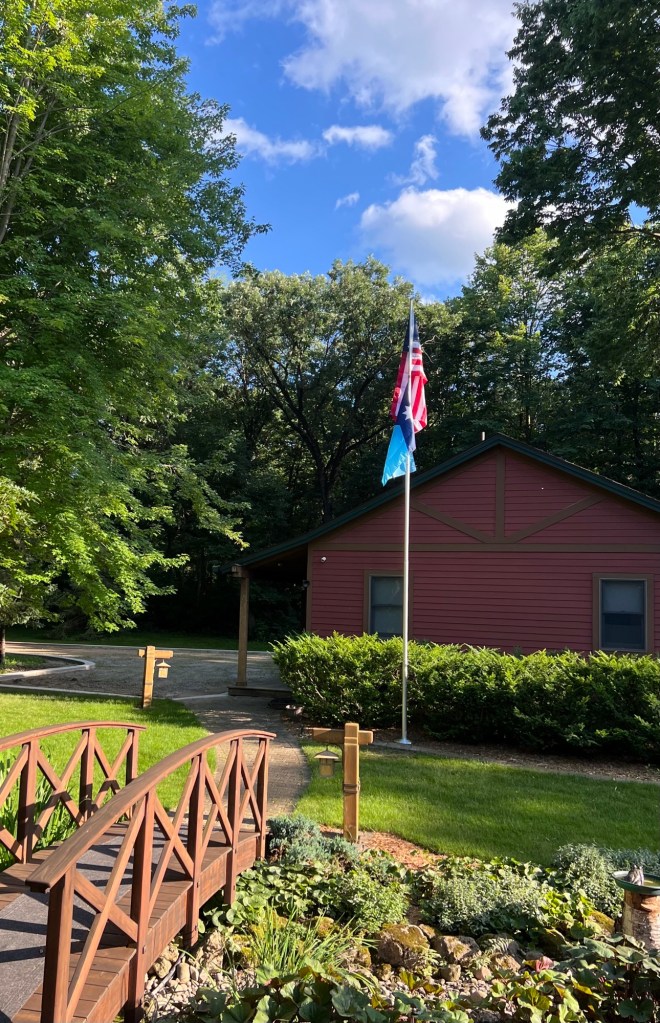
We got a Flag Pole kit last summer and debated for months about where it should go. Susan read that it should be visible from the street. We live in the woods, no matter where we put it, seeing it from the street was going to be challenging with the leaves on the trees. I wanted to be able to see the flags from the house. Our compromise location was towards the NE corner of the shop, between the House and the shop

This involved digging a hole 18” in diameter by 24” deep. The first 8” or so were not hard, a shovel worked OK. And then much harder dirt mixed with rocks, big rocks. The next foot and a half was done with a post-hole digger. Each jab with the 30 lb post-hole digger yielded 2 or 3 cups of dirt. I pried out some good-sized rocks and fished them out by hand. This was exhausting and hard work.

This digging came after going to pick up 6-60 lb bags of concrete mix. I lifted them off the pile and onto a cart and then lifted them again into the back of the pickup. I lifted them again from the pickup and stacked them on the deck of the shop. This move really strained my hips and butt. I had to lift the bag and then step up onto the shop deck.

Once the hole was ready I put in a 16” concrete form tube and centered the sleeve that the flag pole sits in. Then moved (again) the bags of concrete to where we were mixing the concrete, lifting them one more time and dumping them into the mixing bucket (a 5-gallon plastic pail) and mixing with my 1/2 drill with a mixing attachment. Susan says it is like a giant immersion blender. So much easier said than done. And then picked up the bucket with 60 lbs of concrete mix and water to dump into the form.

I finally figured out that the water goes into the bucket first, then 1/3 of the mix, blend, more mix, more blending, and finally the rest of the mix and blend more adding water as needed for a pourable consistency. And then move the bucket and dump it in.

After some back-breaking digging, moving bags of concrete mix, and equally difficult mixing the form was full, the pole was set in the sleeve and braced to be as vertical as we could make it. We left it cure for a couple of days.

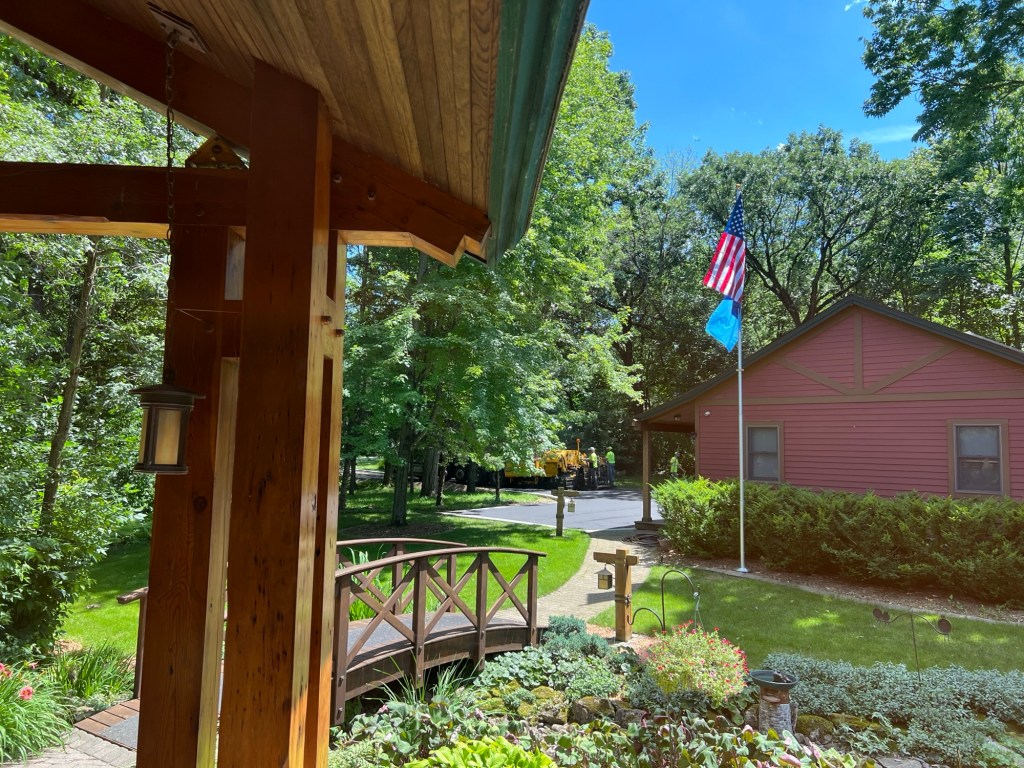
Looks pretty good. We even have a newly redesigned Minnesota State Flag. I added lights that come on at dusk and off at dawn to light up the flags. The pole is tall enough that the flag is just visible from the street. As Fall approached it was even more visible.

Driveway

We have had a gravel driveway since we built the house in 2000. We always figured someday we would pave the driveway with asphalt. It would be cleaner and easier to shovel in the winter. This year was going to be the year.

In the RV park in Alabama where we stay for the winter the asphalt roads are bordered by flat concrete curbs. This protects the edges of the asphalt from heavy RV tires and separates the driveway from the grass. And it looks nice.

I checked with the asphalt folks and they gave me a price that was more than the asphalt paving was going to be. I checked with the concrete guy in Hastings who has done most of our concrete work before and his price price was less than 1/4 that of the asphalt folks. We decided to go for it.

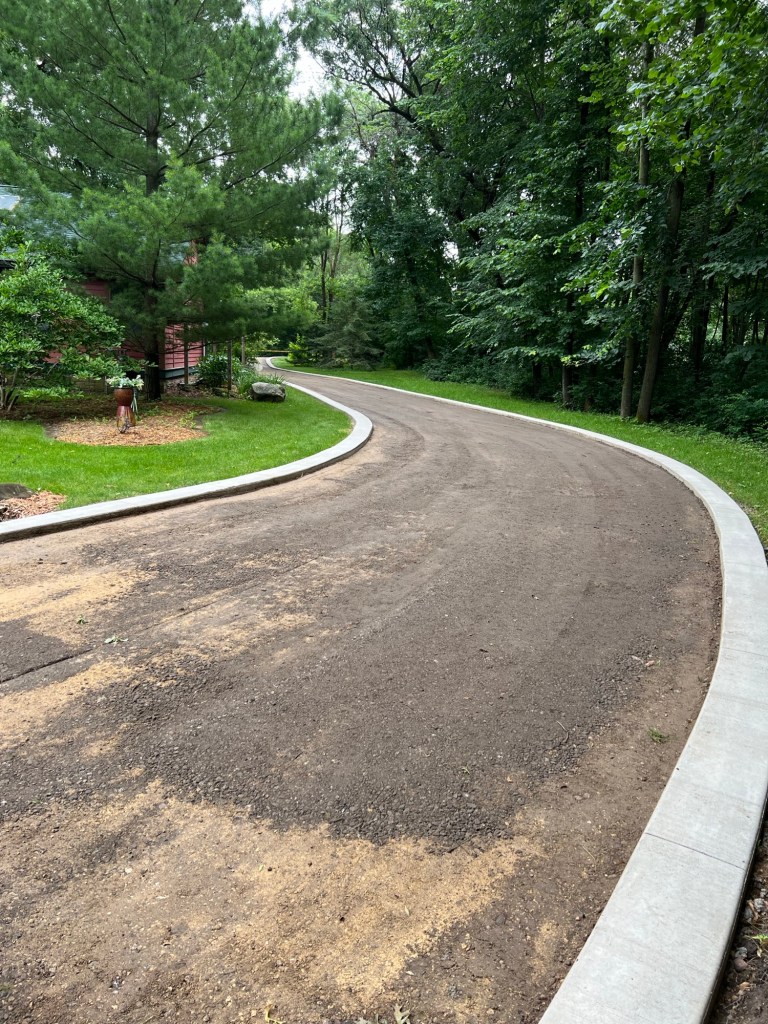
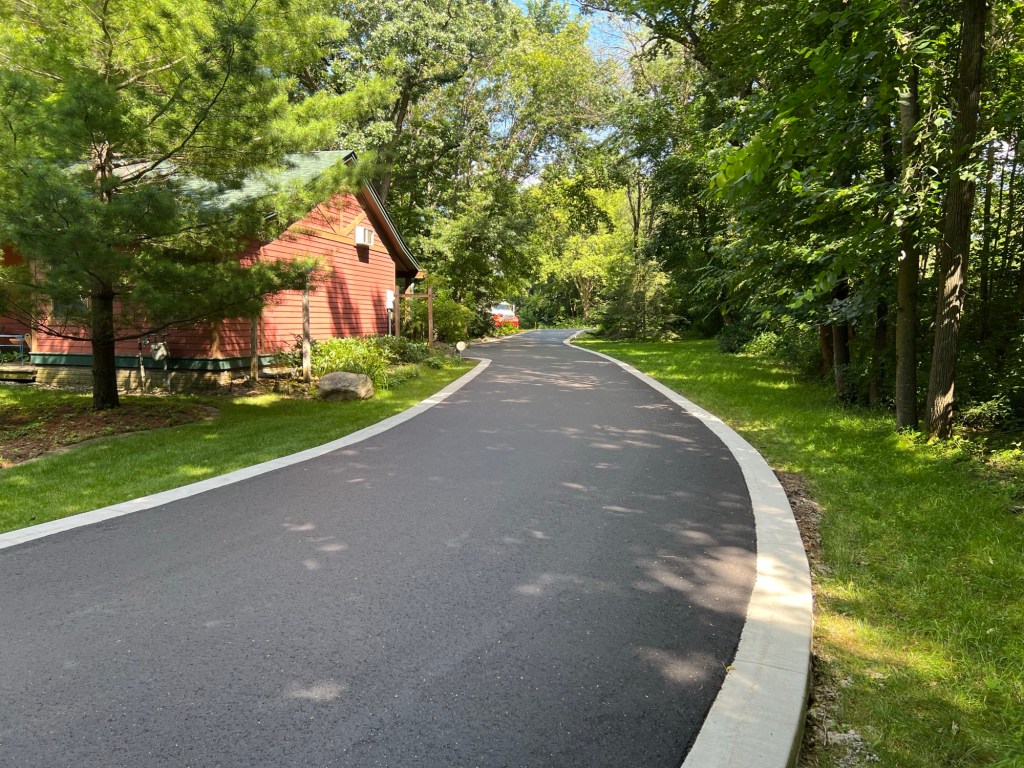
After some digging and scraping the forms for the curbs were placed. The height from side to side was set to allow for good drainage. The width between the curbs was at least the width of the paving machine. The rebar was placed and concrete was poured.

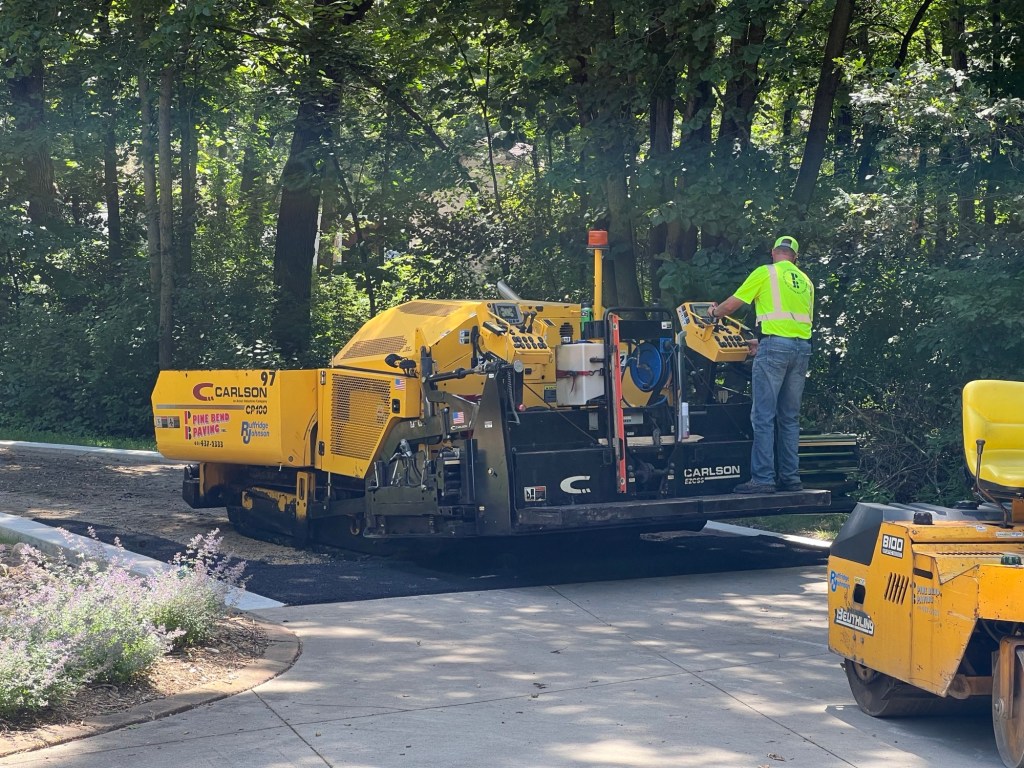
A week and a half later the asphalt crew showed up.

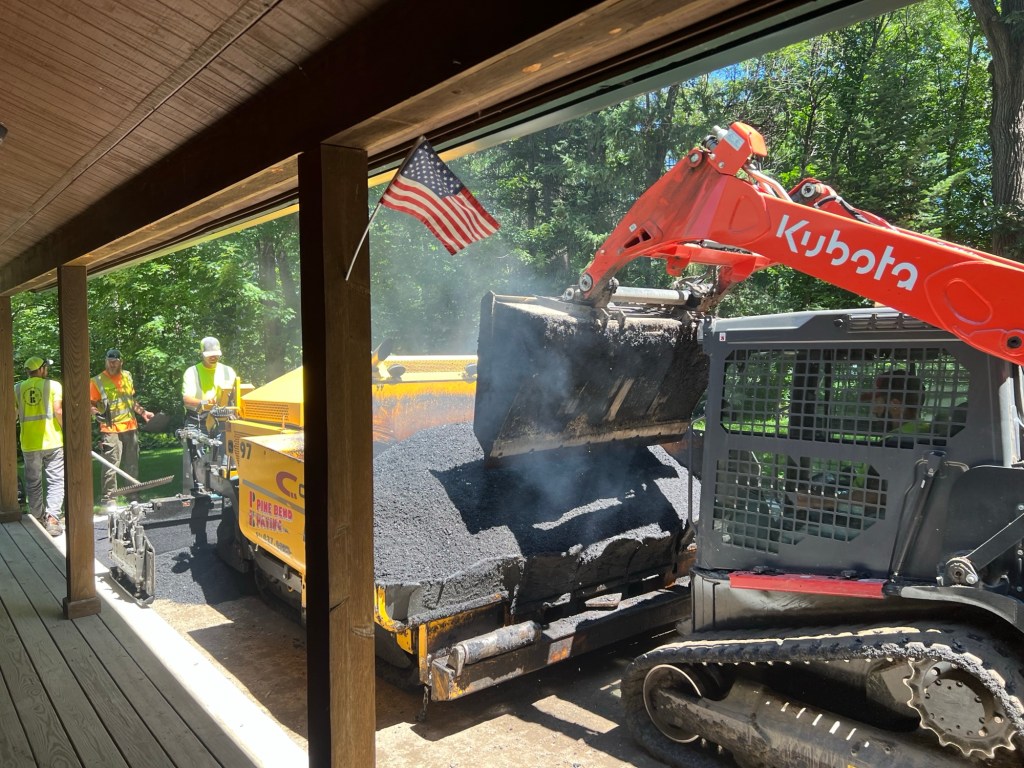
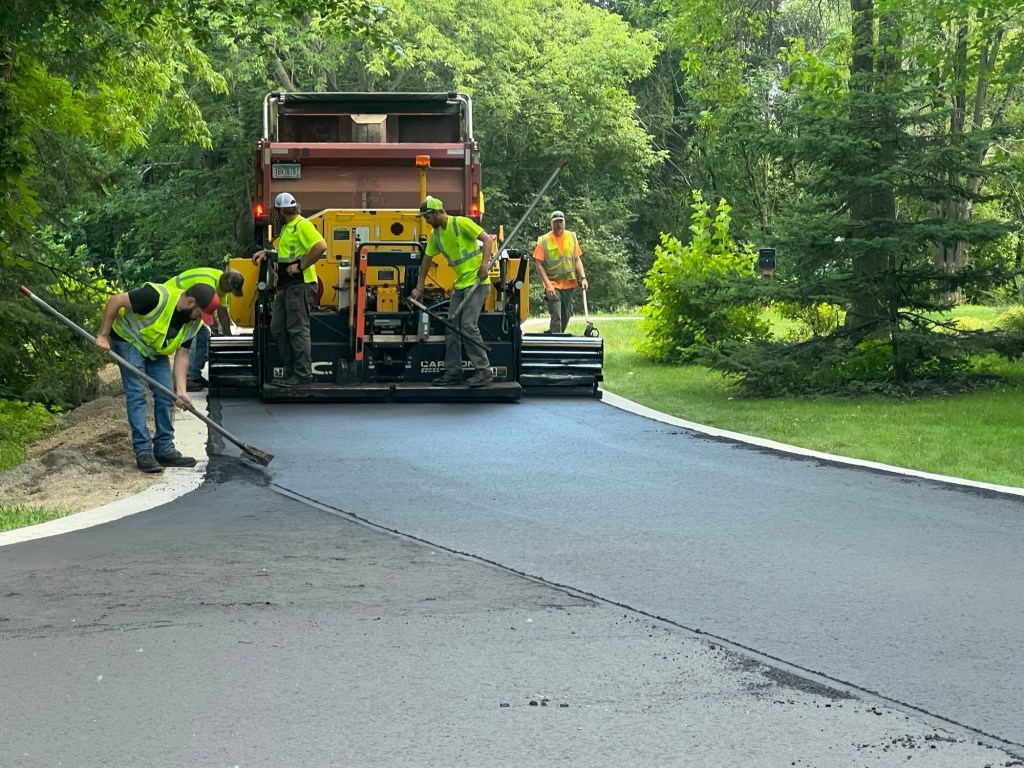
They did the final grading, added some fill where needed, dug some out where it was not, and rolled it all out.

The asphalt laying machine puts down just the right amount and does the first of the compaction. They used highway-grade asphalt and a thicker layer than is normally used for driveways. They started with the area in front of the shop.

And then moved to the end of the existing driveway.

Past the shop.

All the way to the street.

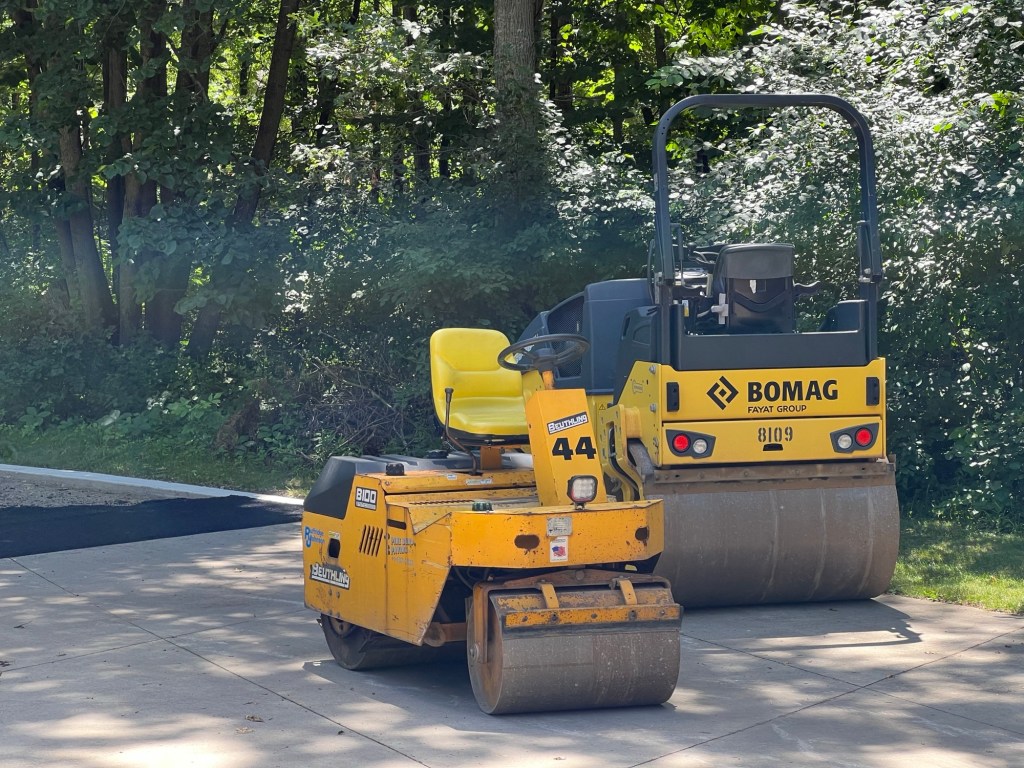
The rollers were at the ready.

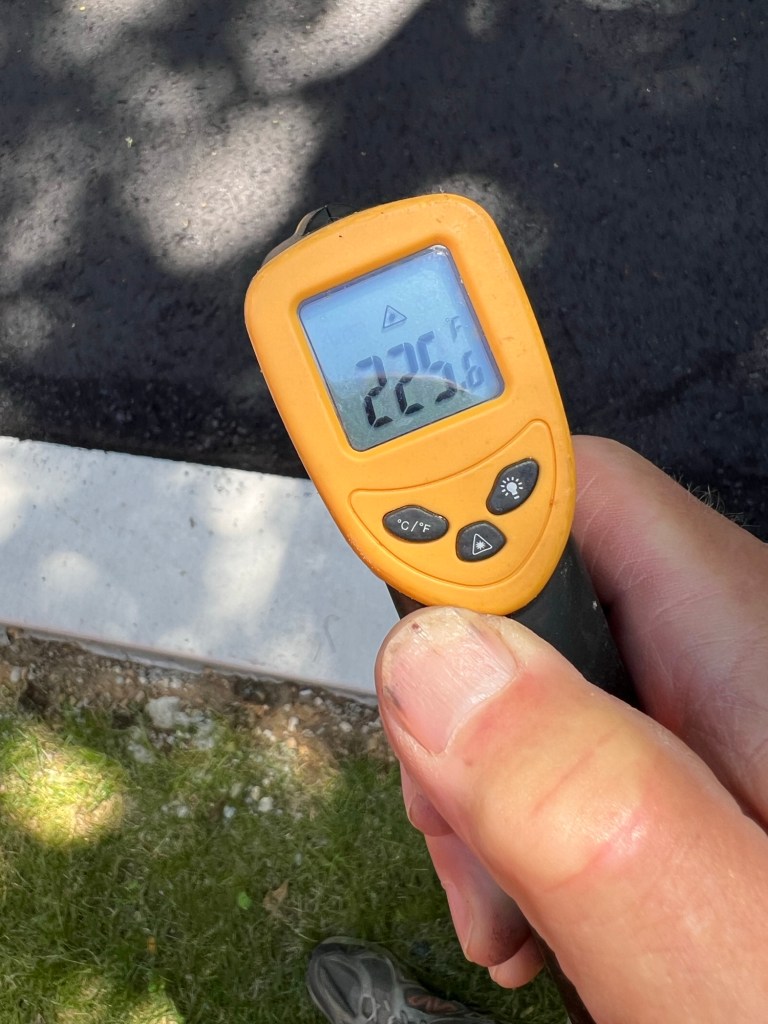
It was hot stuff! It is about 300 degrees as it is laid down, after rolling it was still hot enough to boil water.

They were all done in just half a day. 87 tons of asphalt, nearly 800 ft of curb.

We stayed off the driveway for a week with the cars and a month with the coach. It takes some time for it to cool and set.

There is more to do. Much more. I have been adding fill along the outside edges of the curbs and once that is done and it is compacted then we will add topsoil from the curbs blending it back into the existing lawn. Starter fertilizer and grass seed, before we leave in November, will have us seeing new grass in April.

It took most of the summer to fill in along the curbs with a compactable gravel mix, 5 cubic yards of it, and then 10 cubic yards of sifted topsoil to smooth out the transition from the curbs to the existing yard. Our garden cart holds about 1/4 of a yard of dirt or less at a time, at least that is as much as I could put in it and still move it. So three or four carts filled with dirt in each morning session and after many days the dirt pile slowly disappeared.

Maggie was out there with me most of the time off-leash. She got very good at staying nearby. When I couldn’t see her I would call and she would come running.

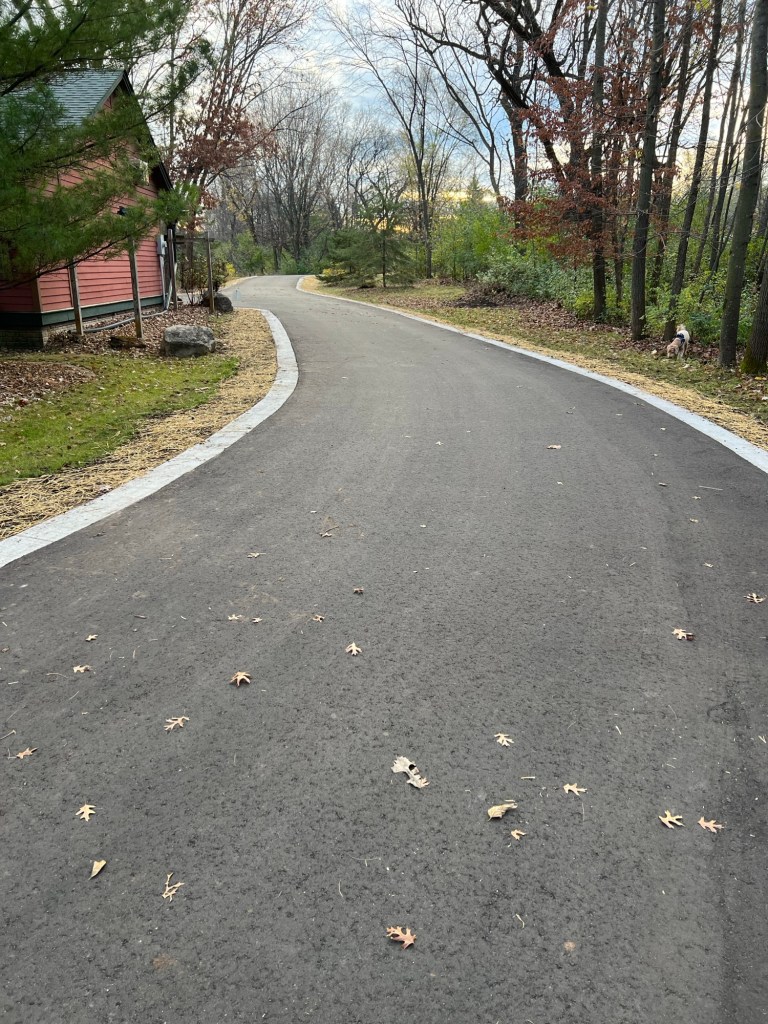
The dirt was raked smooth, fertilizer spread and raked in, 25 lbs of grass seed spread and raked in, and a thin layer of straw was applied to help hold it in place. The next day it rained, perfect. Three days later we left for the winter.

Tree Removal

When we bought this property and built our house we thought great, we have less lawn here than we did in St Paul, and it will be easy to take care of. Well, the lawn is but there are two acres of woods to take care of as well. And it is continuous work. You have to keep up with it. And it is trees.

We had many ash trees die over the last year. The Emerald Ash Borers finally got to our area and every ash tree is now dead. The bugs kill one tree and move on to the next. On our property, there are at least 60 dead ash trees, more likely closer to 80. My neighbor counted almost 100 on his property. It sounds like a lot and it is, but our 2.5 acres are mostly woods. Removing all of these trees will just open up the woods a bit.

And there is a very large, very old Oak tree next to the deck on the back side of the house. It has some disease. We cut down one major part of it last summer and had the tree treated hoping to save it. It didn’t work. So that tree needed to come down as well.

We hired a tree removal company to cut down about 22 Ash trees that were near the house, one Elm, and the dead Oak. I will tackle the remaining Ash trees next summer.

The three-person crew showed up first thing one morning and had at it. The trees came down, the branches were cut off, and the trunks were cut into manageable sizes. They had a tractor-like machine with pinchers on the front that moved all of the branches into piles and the logs onto a trailer. The logs went up the street to a neighbor who cuts them into firewood to heat his house. They made quick progress.

The Oak tree was challenging, much of it was close to the deck and house.

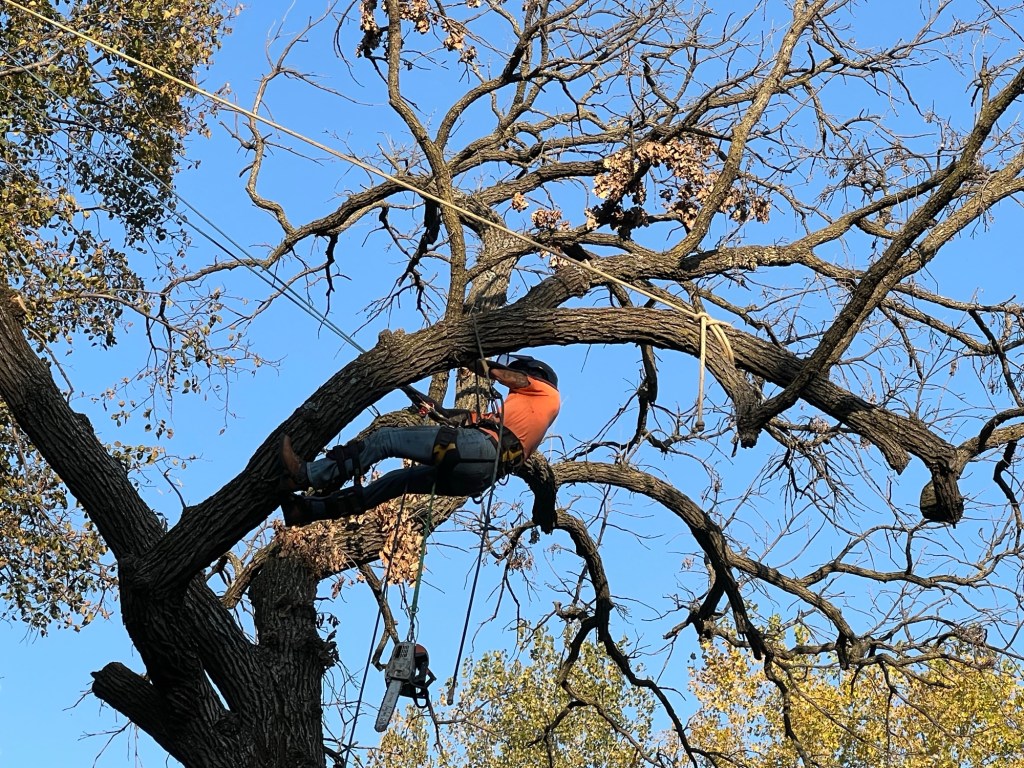
The lead cutter harnessed up and scampered up the tree like a monkey. He was probably 50, maybe more. Up he went. He hooked up lines to secure himself and his tool and to tie off chunks of the tree that he was cutting off to control where they fell. The two fellows on the ground helped with the ropes and used the tractor machine to anchor the ropes to the parts being cut off.

Yikes! The whole tree came down in pieces like this.

They were there for two days and cut all of the trees down, moved all of the logs, removed the brush and branches, and cleaned up. I would have been doing well to cut down a couple of Ash trees from the ground and clean up at the same time.

Coach Projects

I took the coach over to the fellow who does service for me. He changed the oil and oil filter and lubricated the chassis. Lots of crawling around underneath. He also checked all of the connections between moving parts of the suspension. The coach is 24 years old. He said they were all good, that in trucks these parts last hundreds of thousands of miles. We are at about 120,000 miles.

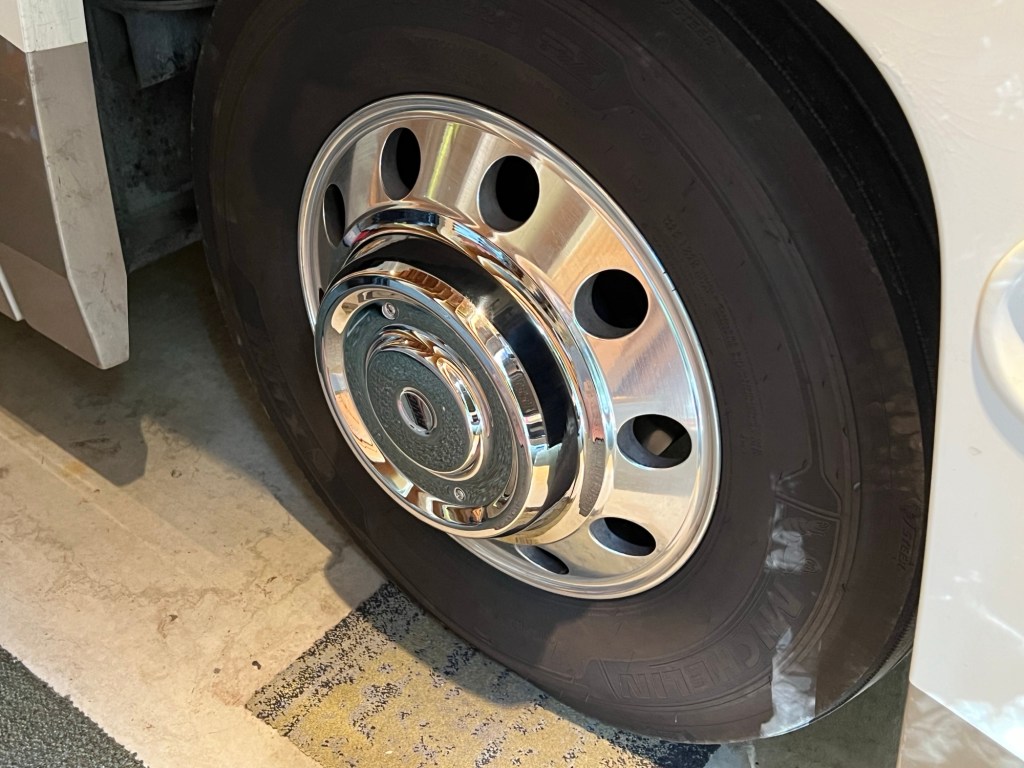
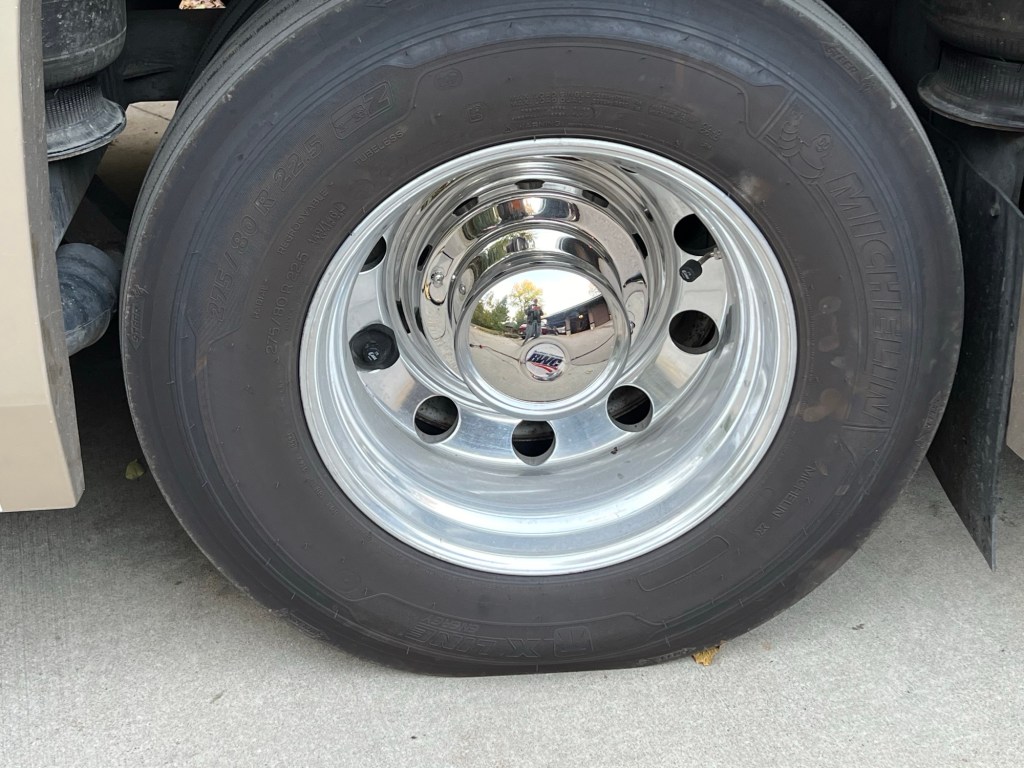
We managed to lose 9 more shiny plastic lug nut covers and the plastic cap that goes over the rear axle hub somewhere this summer. I have replaced at least a dozen or more of these lug nut covers over the years, they just come off and are lost. They are about $7 each so after 9 more were gone and a hub cover went away I decided to get stainless steel covers that will not come off.

The new covers cover both the hub and the lug nuts. Pretty nice looking I think.

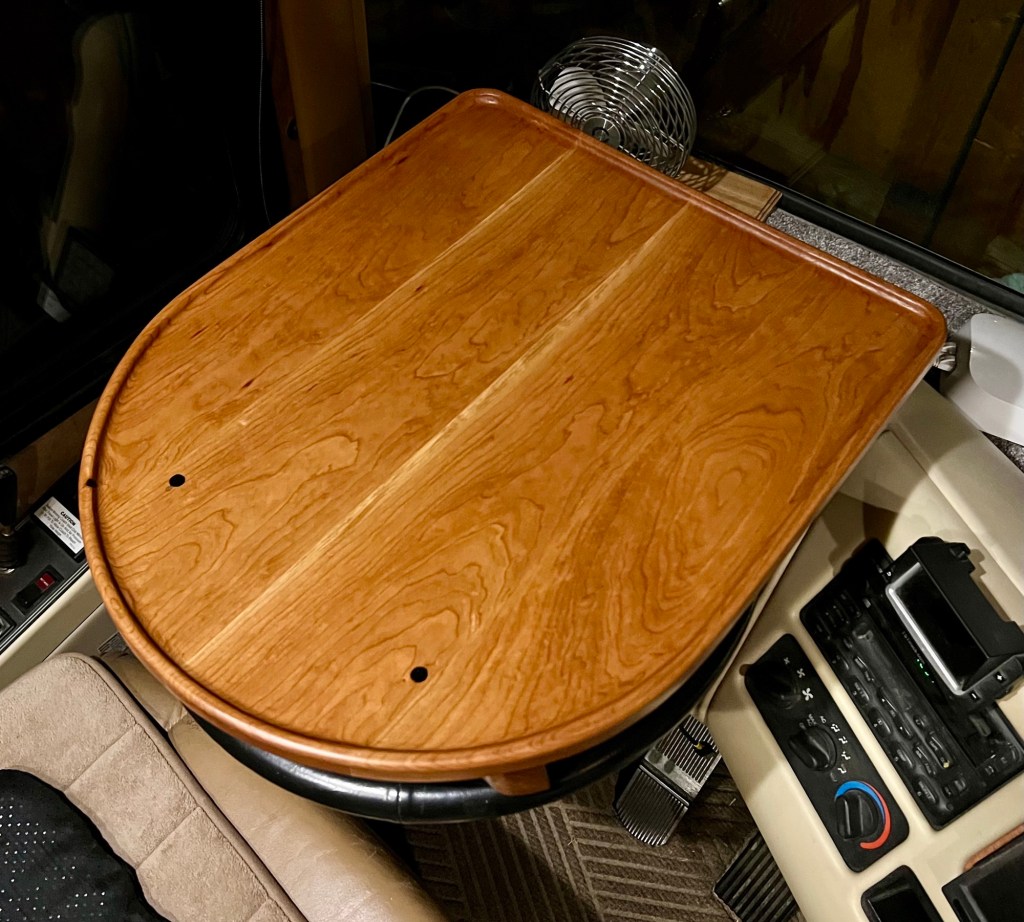
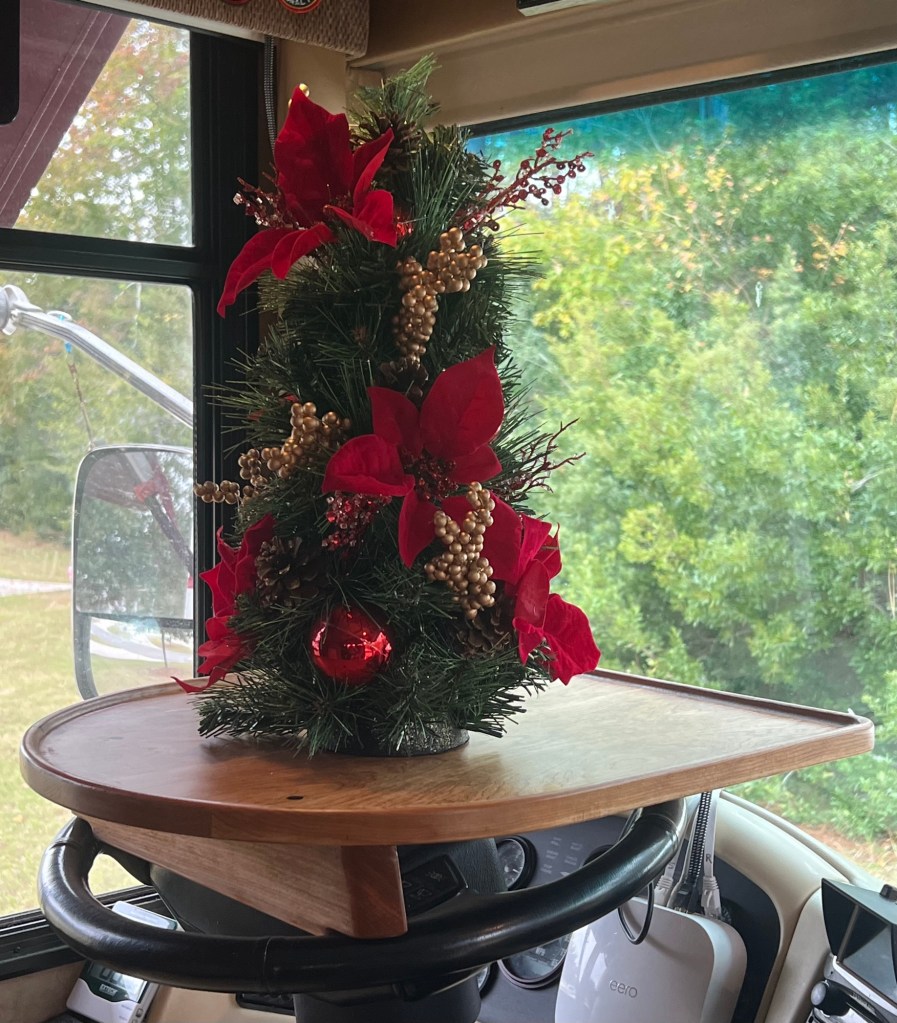
When we are parked for a while and the steering wheel is tilted up it seems like a good place to put things. I have seen that other folks make some sort of a tray that sits up there. So I made one for us.

I made the front end squared off and a bit longer. Cherry wood to match the coach. It fits well and stores easily when we travel. And perfect for our small Christmas tree in December.

I also serviced the generator – changed the oil, and replaced the oil filter, two fuel filters and the air filter.

I replaced the coach air filter, added two new water filters for the coach water, cleaned the basement, and sorted all of the basement storage tubs.

Pretty much normal maintenance stuff. I do as much of it as I can myself.

Pickup Truck Repairs

After the tow bar broke the front of the pickup needed to be repaired. It took a month to finally get all of the insurance stuff straightened out, they had a hard time visualizing how the truck ran into the back of the coach with no one driving it. Finally, the repair shop and a local adjuster got it worked out and the truck went into the shop for repairs. It took a month to complete While it was in the shop I had an odd Nissan rental SUV.

The vast majority of the work was replacing plastic parts on the front end. You can’t really repair them. And for some reason, they are slow in coming.

But when it was all done the truck looked like new. A very nice job by Kiss’s Auto Body in Newport, MN.

So all of this consumed most of our summer at home. We did manage to spend 2 months on the road. That is the next story.

More Later, Much Love

Maggie, Susan, and Roger

Work Camp, May, 2024

May 26, 2024

Our good friends Amanda and Douglas asked if they could come and visit us in Hastings and help them install a new residential refrigerator in their Foretravel. Of course, we said. We did the residential refrigerator in our coach in 2014 so we knew (we thought we knew) what we were signing up for.

A Camp Hastings Work Camp

They arrived in the afternoon on Monday, May 6th. They parked, plugged in and we went to the American Legion in Hastings for burgers.

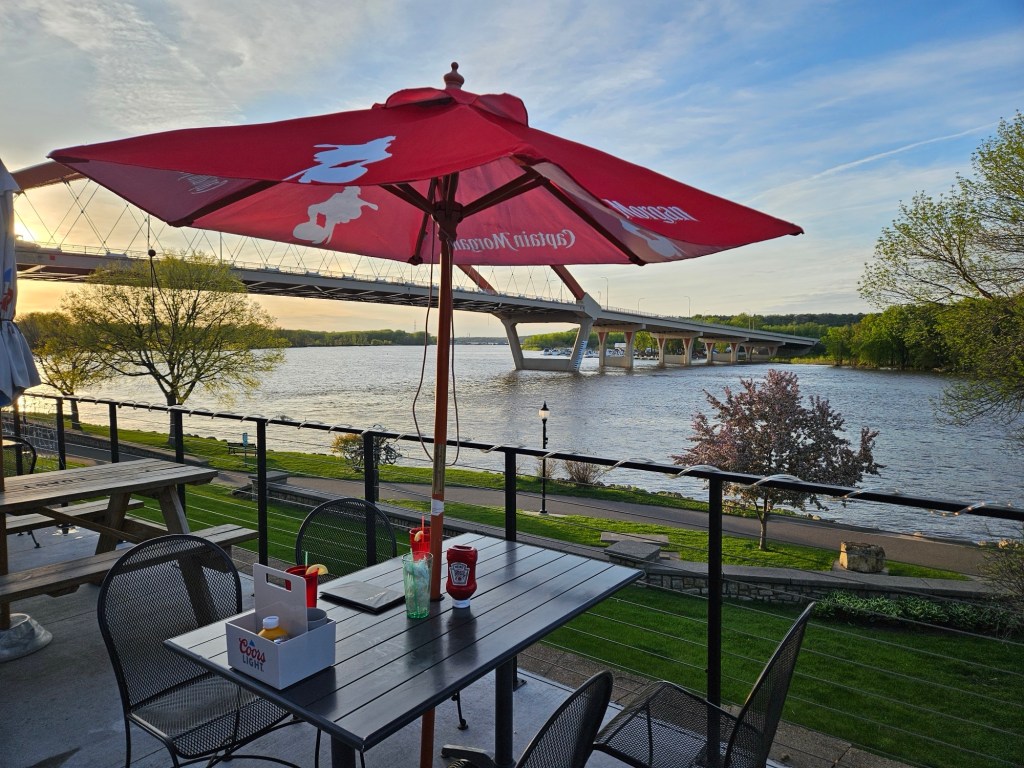
The Legion has a nice patio overlooking the Mississippi River and the Hastings Bridge.

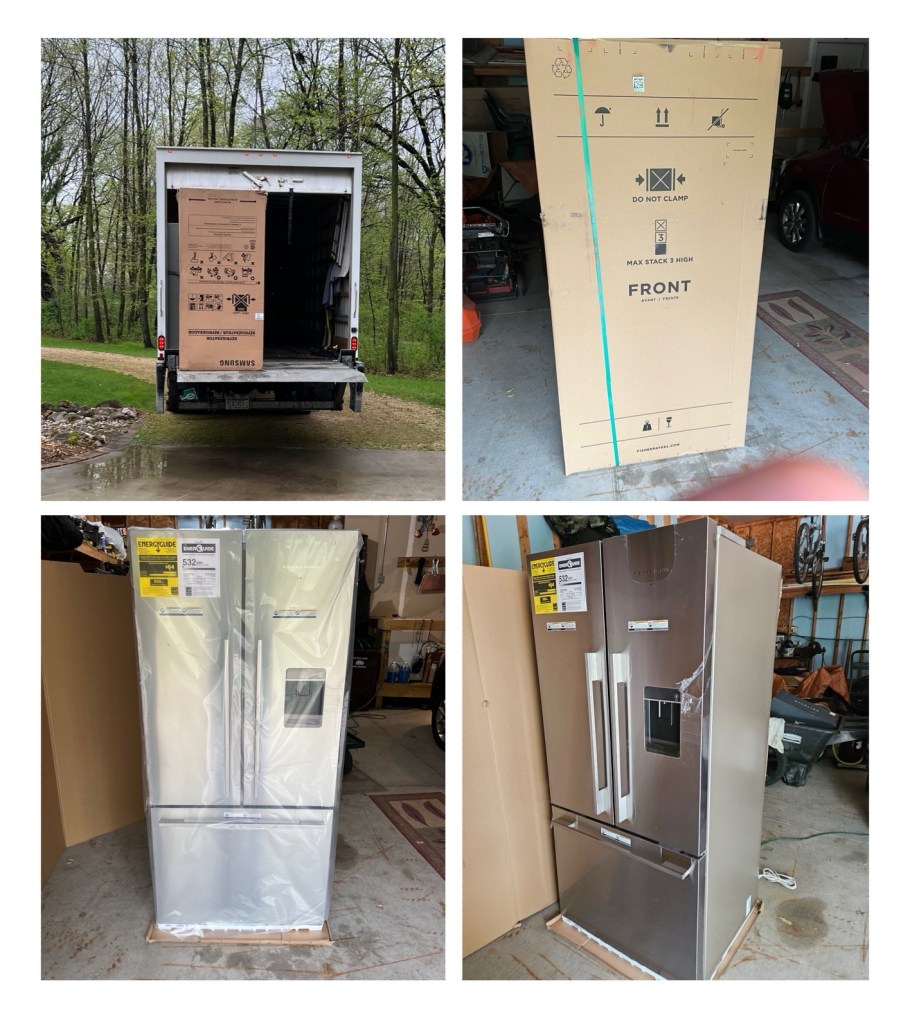
It was a rainy day when their refrigerator arrived a few days earlier.

My first thought was that it was upside down, but that box was not theirs. Lots of nice cardboard, a big plastic bag, and there it was. I plugged it in to make sure it worked and let it run until the day before we moved it into the coach.

Remove and Replace

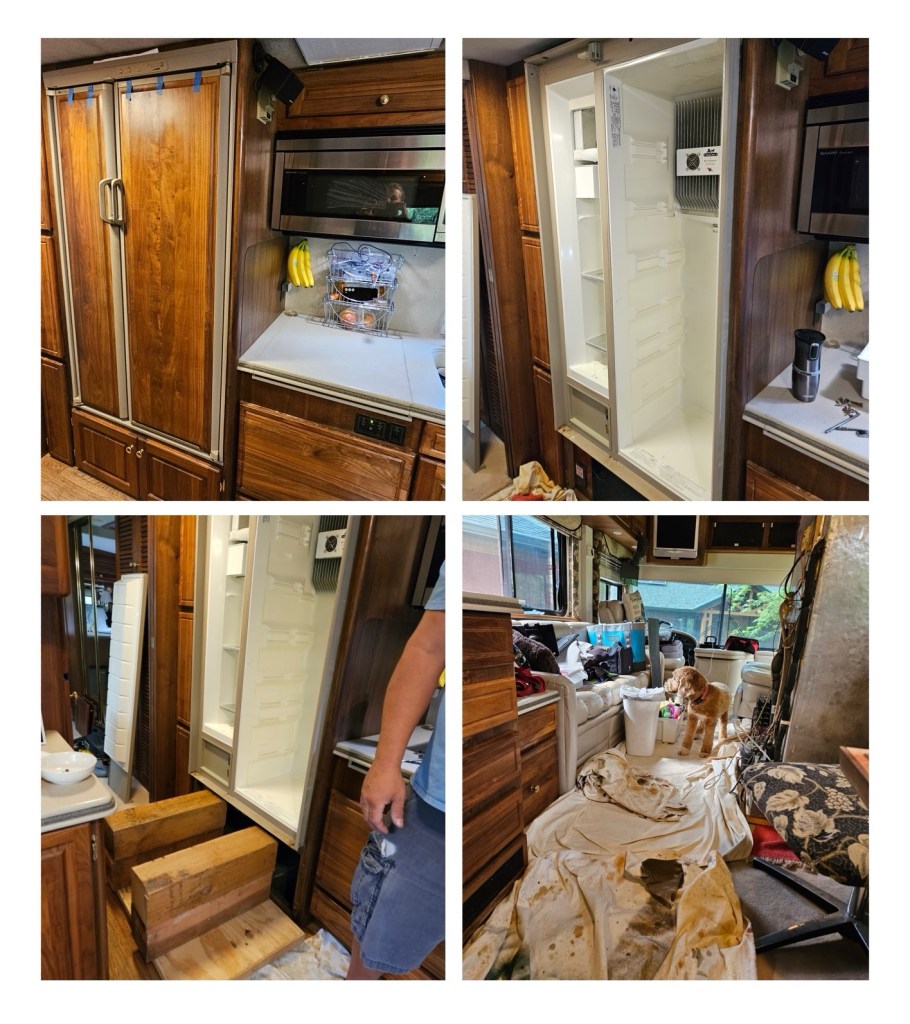
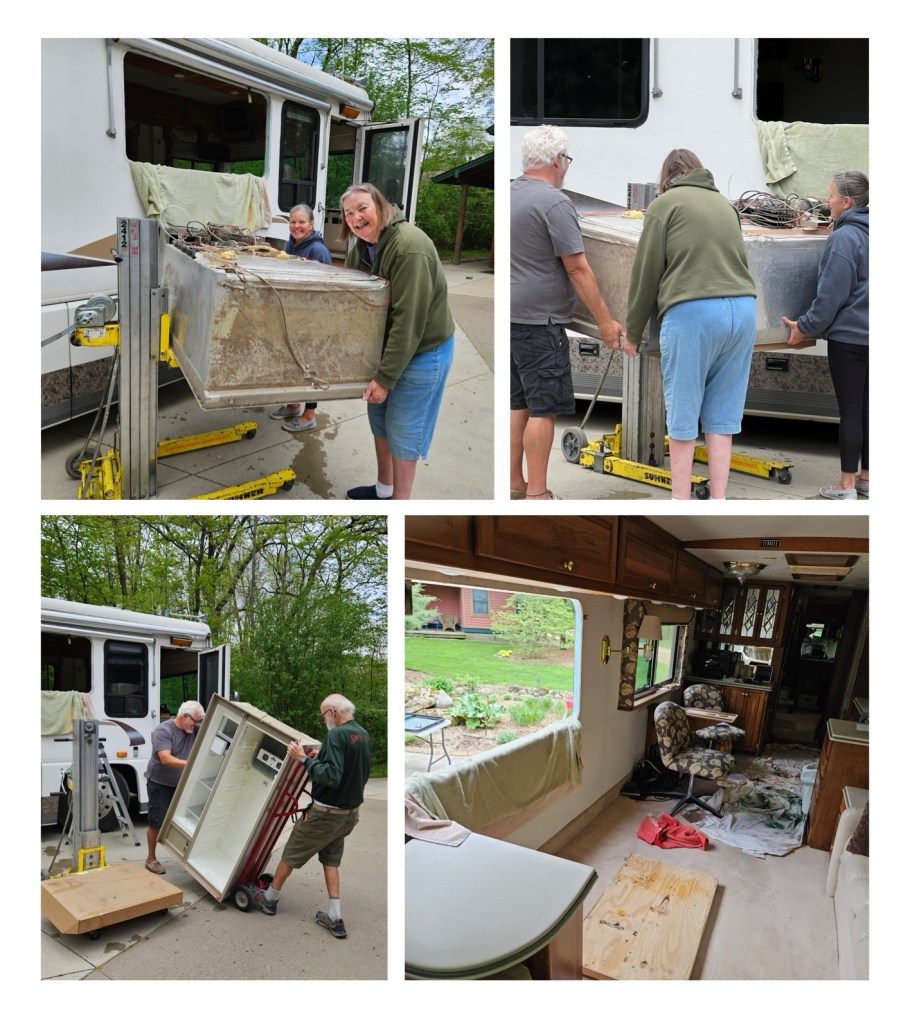
The contents, doors, and all of the interior parts were removed from the old refrigerator. It was detached from the cabinet and slid out onto a roller platform with some riser blocks to match the bottom of the shelf where the refrigerator was installed. We took the riser blocks out to lower it down, removed the kitchen table and the cabinet in front of the living room window, and rolled it up next to a window in the side of the coach.

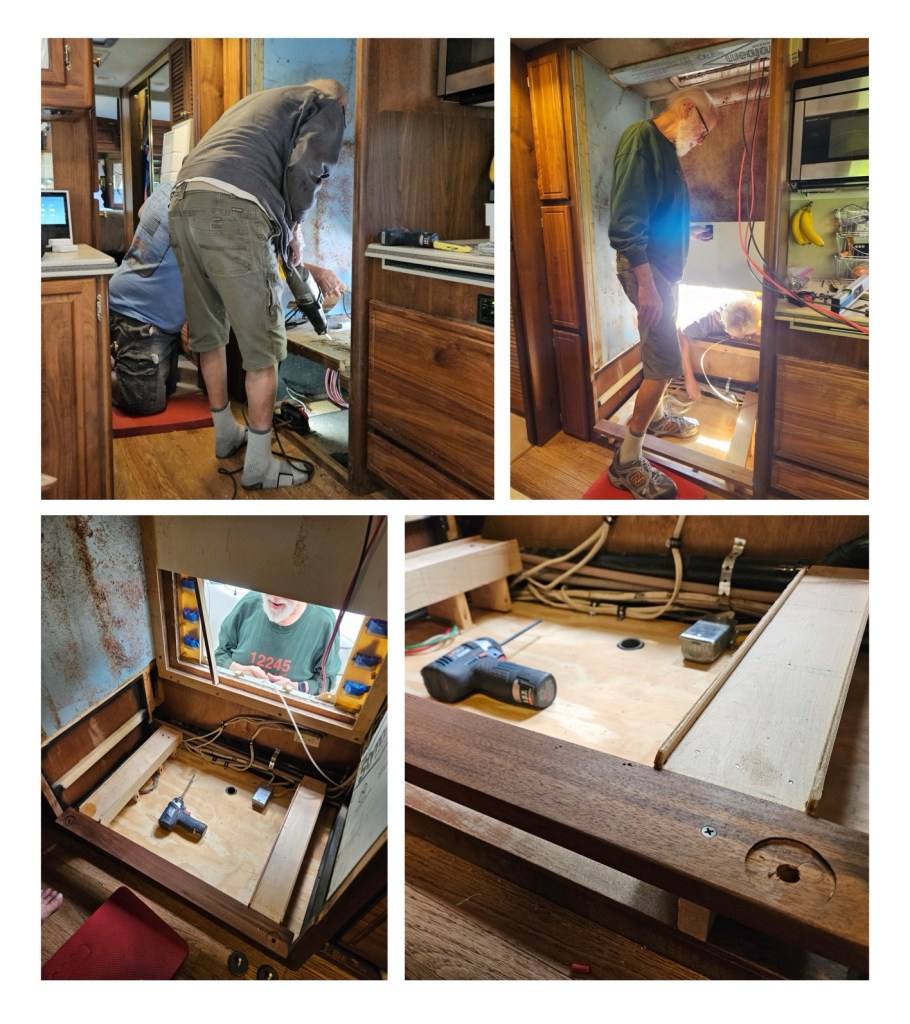
The old refrigerator sat on a shelf that was removed. Douglas spent a few hours rearranging cables and pipes at the back of the cabinet. I made and installed a new side vent cover and a platform for the new refrigerator to sit on. We added a hole in the floor for the existing solar panel wiring to go into the basement.

The new base has recesses where the refrigerator feet go as well as holes to replace the feet with a bolted, leveling option which was used in the final installation.

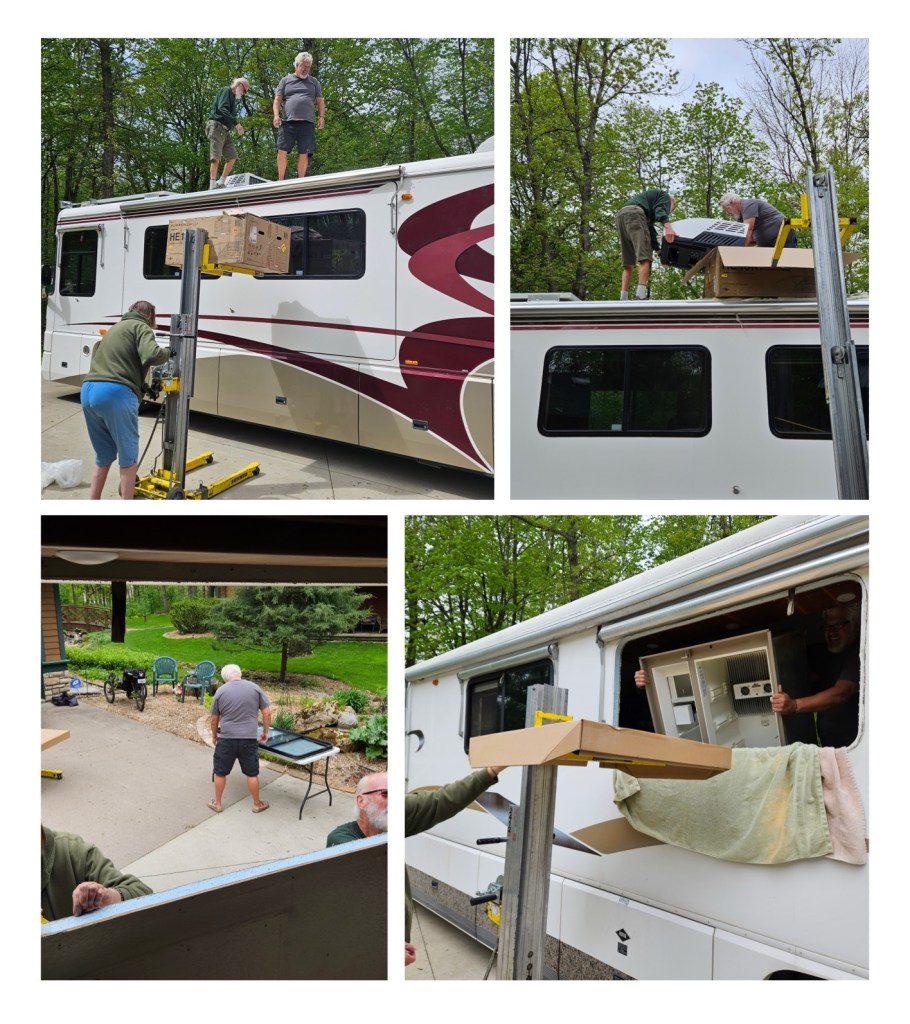
We rented a material lift, sort of a manual-powered fork lift to help remove the old refrigerator and get the new refrigerator into the coach. I also needed it to hoist a new AC to the roof of my coach.

The AC went up in its box. Susan did a good job of cranking. The old and new ACs were swapped and the box was lowered.

Amanda and Douglas’s coach window was removed, the lift was raised to the appropriate height, and the old refrigerator tipped into the window opening, lifted, and moved out onto the lift. Out it went, lowered down, off the lift, and dollied out of the way leaving plenty of room for the new refrigerator. I hauled the old refrigerator to the recycler’s place. $15 fee. Not bad.

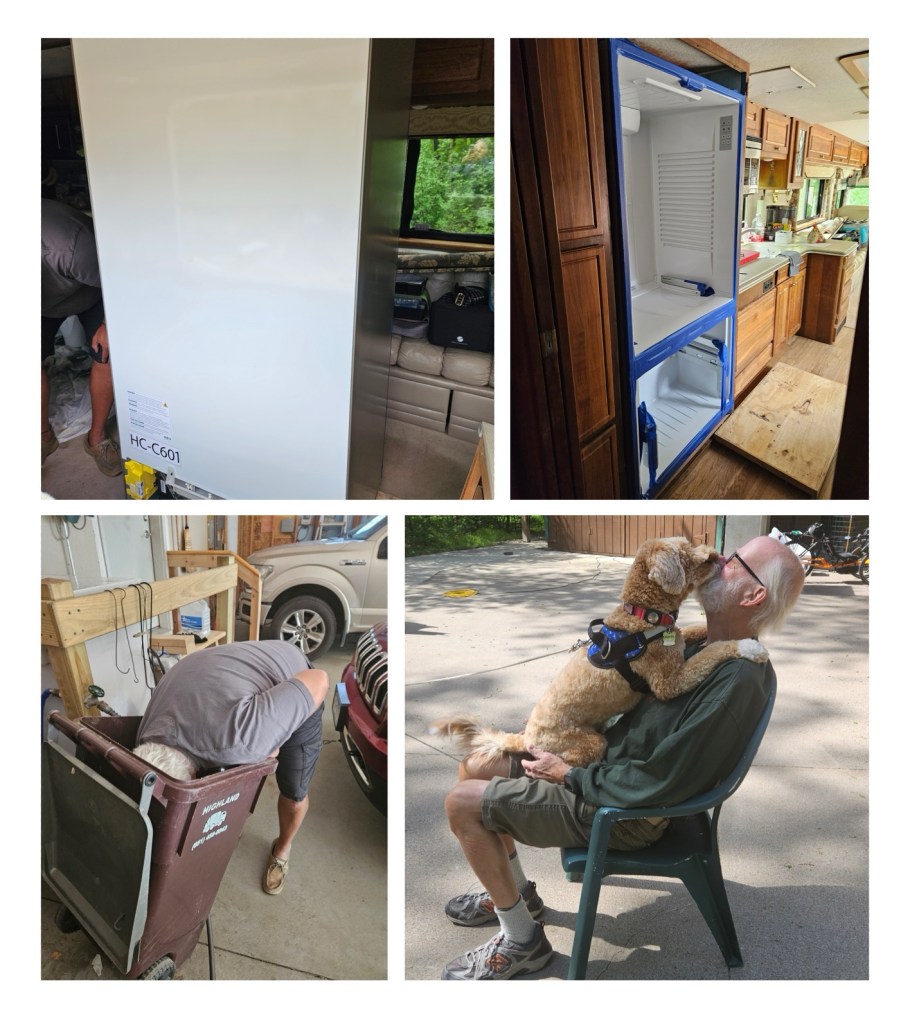
Quite a bit of time went into removing the shelves, drawers, and doors of the new refrigerator and a couple of rolls of blue tape were applied just in case. We moved it into place, onto the lift, and up it went, and right into the coach.

It was a close fit but just big enough. It landed on the rolling platform, we rolled it over to the opening, and “Bob’s your Uncle” it was in place.

Douglas was intently looking for something and Maggie was happy to see me sit down for a minute. She likes to lick my nose.

The window was replaced using a foam gasket, a bit harder to compress than the original caulking tape.

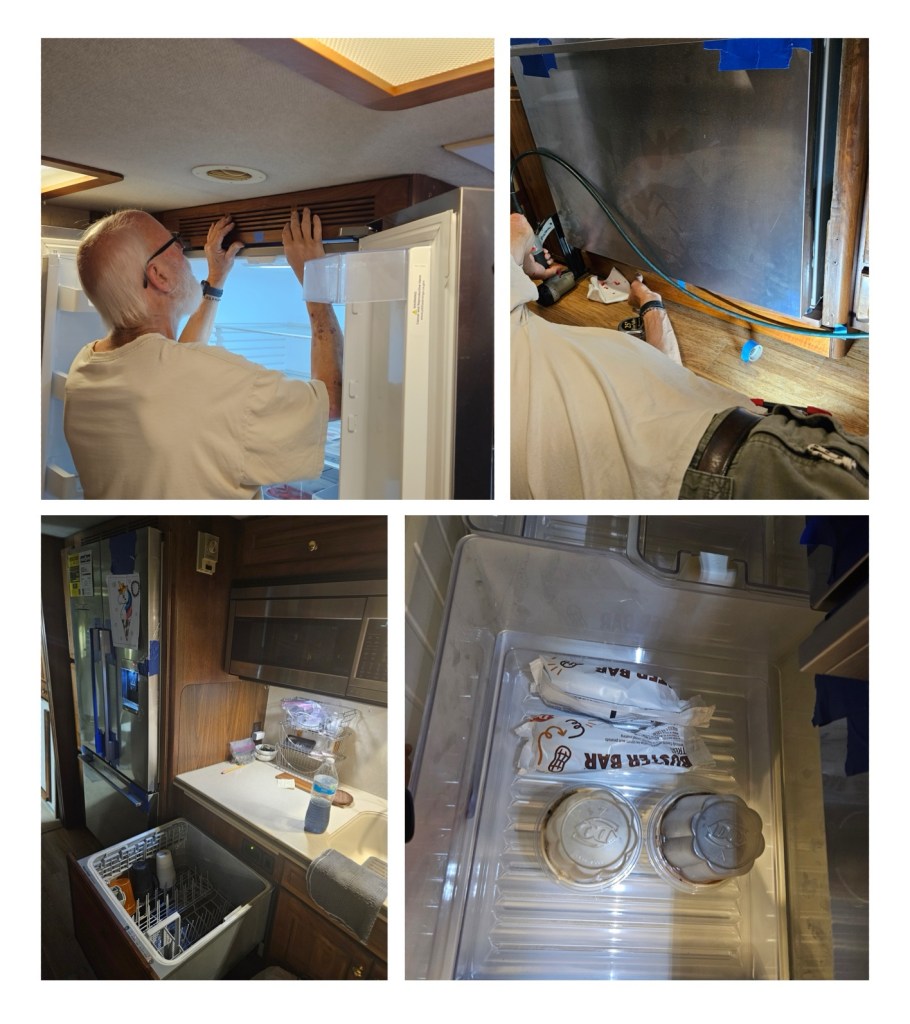
At the end of the third day, the refrigerator was in place, the doors could have gone back on so that the trim could get made but they weren’t. The refrigerator was in and out of the hole many times while details were tweaked. Eventually, Douglas hooked up the water supply and did the front anchor bolts. After another 10 days, it was finally in place with the doors on and the trim was finalized. We used the front panels from the old refrigerator to make the trim.

It seems like the trim would be easy but the cabinet opening was wider at the top than at the bottom and neither side was parallel to the refrigerator. I did my best to make it fit and look right. The top panel has vent slots. The trim edges matched the kitchen drawers. Finally, the important stuff went into the refrigerator freezer section, DQ treats.

A Side Trip

While we were working on all of this, a good friend of Amanda and Douglas passed away in Michigan. They rented a car and took a three-day trip to attend his services.

Project Creep

Every project starts with a goal. Almost always something new comes up and gets added into the mix. In this case, the idea of connecting the two existing solar panels on the D&As coach morphed into removing the existing panels, buying 4 new higher-wattage panels, putting them on their coach, connecting all the wiring, running it down through the roof behind the new refrigerator and hooking all of those up. 1680 watts in 4 new JA Solar 420-watt panels that Amanda found less than 20 miles away for $150 each. We scheduled those to be picked up when they got back. Douglas ordered more solar cables and another solar charge controller, fuse block, and disconnect switch.

While they were gone I removed the two 300-watt panels that were on their roof and with Susan’s help lowered them to the ground. I washed them and tested them and they were good as new.

I got our coach out of the barn, finished the AC install, and put a soft-start module in each one. These reduce the power required to start the AC compressor and make it possible to run both ACs on a 30 amp connection.

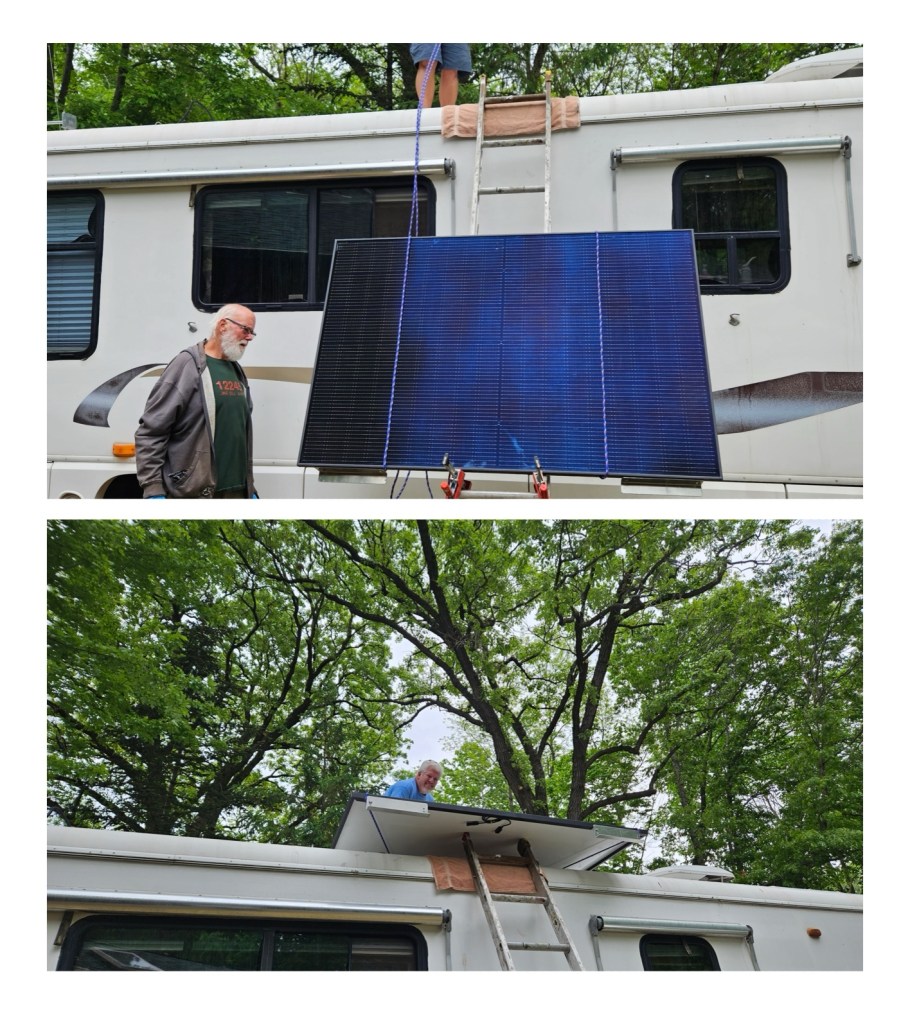
Susan helped me hoist the panels up onto the roof of our coach. I carefully marked the locations of the mounting brackets, sanded each spot down to the gel coat layer, cleaned the area well, and wiped the area and the mounting brackets with a 3M prep and adhesion promoter. Then I applied a 3M VHB tape to the target area on the roof where the mounting brackets would sit. The hard part is getting the plastic tape off the back side of the VHB tape. Once that was done I positioned the panels over the targets and lowered the panel mounting brackets down onto the VHB tape. I pressed the brackets down onto the VHB tape. And then caulked around each bracket. That is all you have to do.

VHB tape is a very high-strength double-sided tape. The brackets are 12” long and 1.5” wide. With that much VHB tape in each corner, it would take more than 5,000 lbs to pull the panel from the roof. The roof itself or the panel will fail before the tape lets loose.

I ran the panel cables down behind my refrigerator to a new solar charger and then to the batteries. We now have 1800 watts of solar on the roof of our coach.

1800 watts.

Before A&D returned I got started on the wood trim for their refrigerator. Some final trimming would be needed for a perfect fit in an imperfect world.

Solar Panels

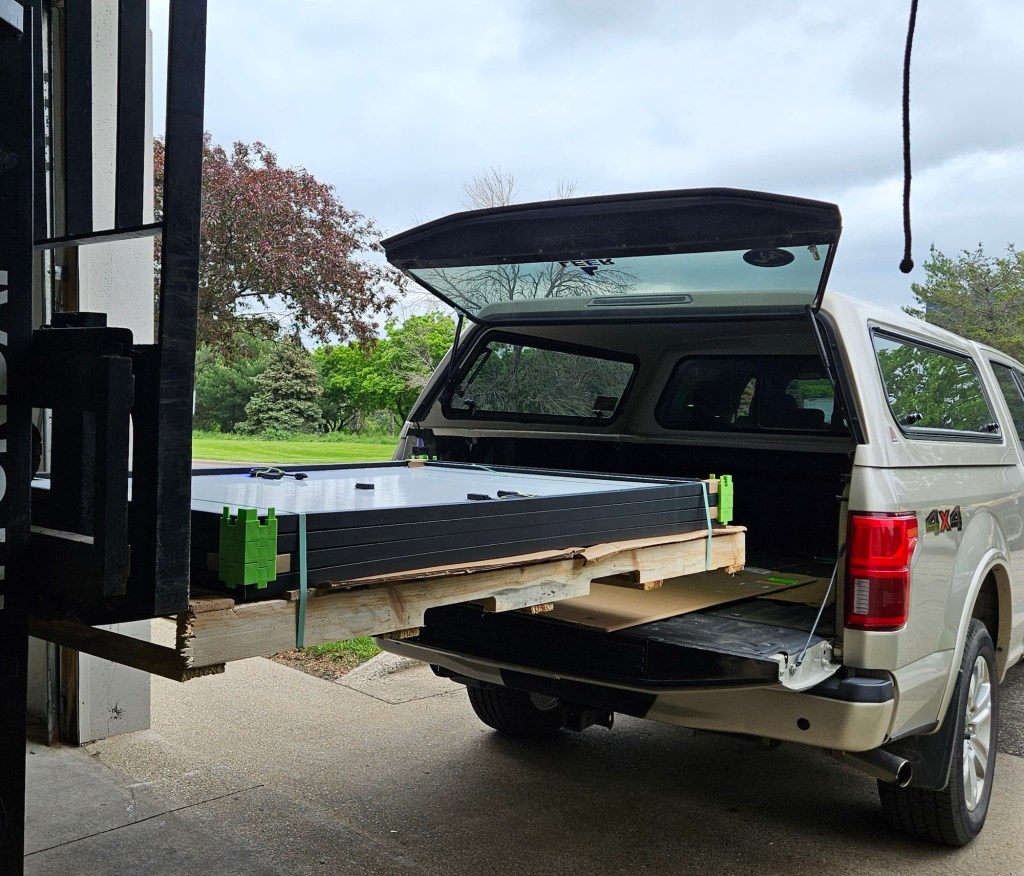
Once Amanda and Douglas returned we went to pick up the solar panels. They were loaded into my pickup truck, pallet and all.

We got back to Camp Hastings, unloaded the panels, and while Douglas finished removing the last of the remaining roof-top items, Amanda and I installed the panel brackets to each panel.

The panels went up one at a time and were positioned about where they would end up.

Target areas were marked, sanded, cleaned, and prepped. VHB tape was applied and the red backing was removed. Each panel was set onto the VHB tape, pressed down, and caulked. The panels were arranged to provide good access to the roof-top equipment.

The panels were secure. The cables were carefully strung so they would be secure and as hidden as possible. They run under a new cover plate that replaced the old refrigerator roof-top vent, down behind the refrigerator, and through a hole in the floor to the basement bay just below.

Not All Work and No Play

One evening we had lasagna and freshly baked buttermilk biscuits.

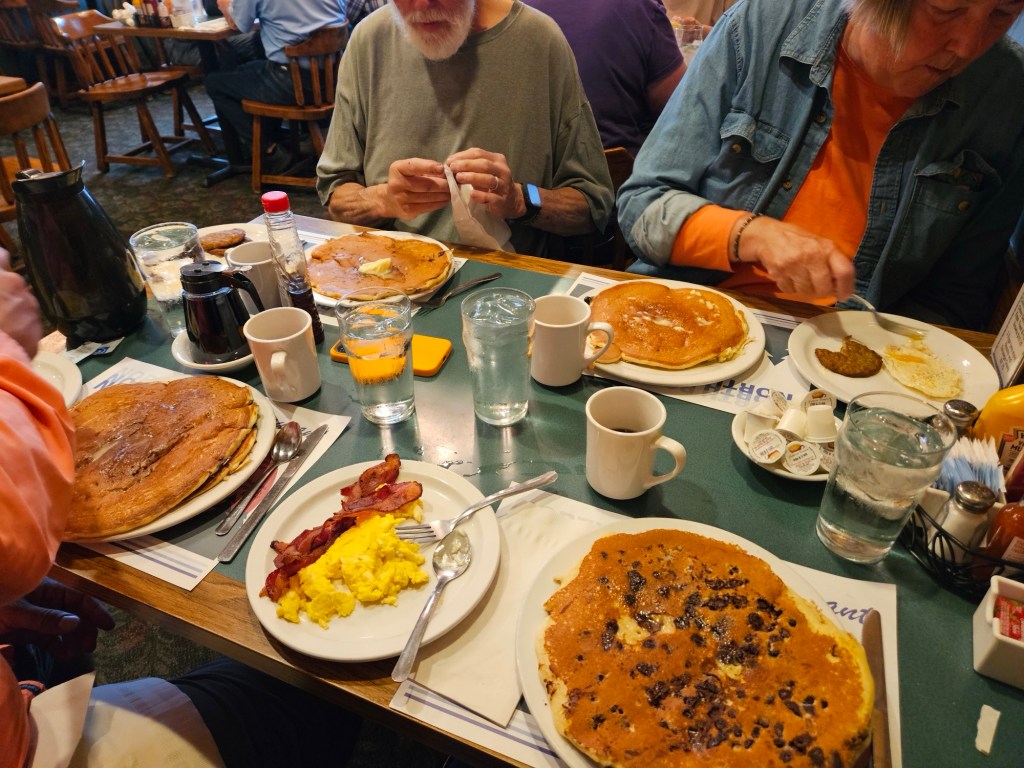
Amanda and Douglas have heard us talk about a local breakfast place near here, the North Pole Restaurant. We like the blueberry pancakes. We order one pancake or the smaller senior version

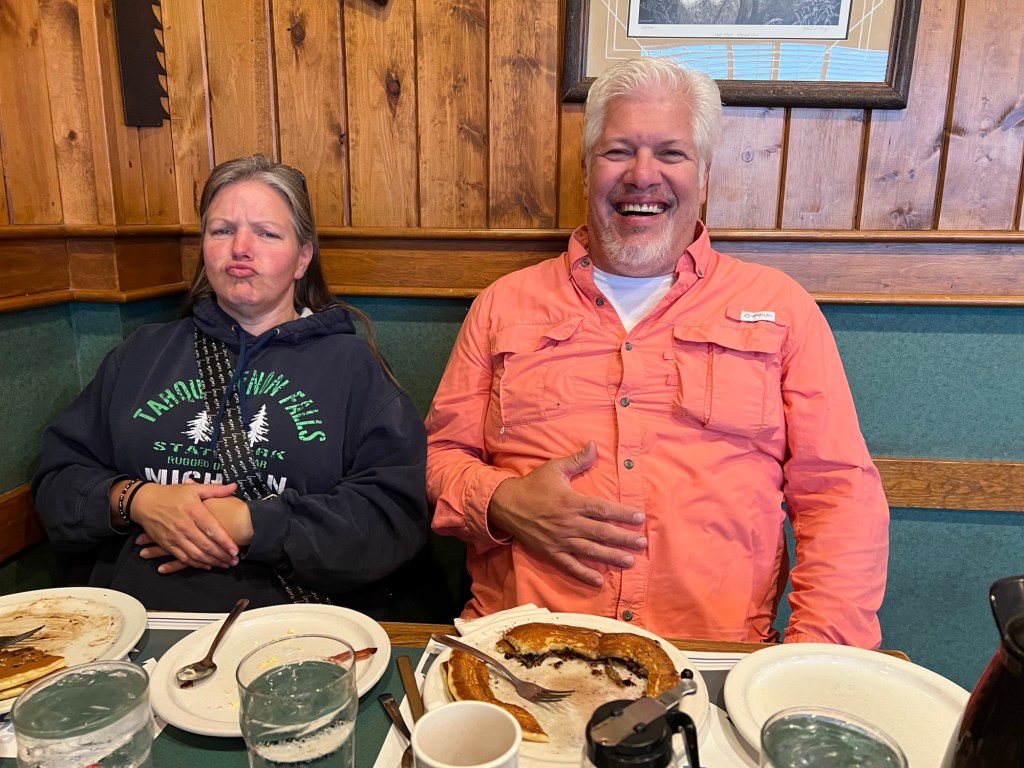
Our cautions went unheeded, we recommended a single pancake. They ordered two, the waitress also asked if they were sure, they were. Douglas ordered blueberry cakes, Amanda, had chocolate chip cakes. And they both had eggs and sausage too.

I ordered one blueberry pancake, and Susan ordered the smaller senior blueberry version with a single egg, and one piece of sausage.

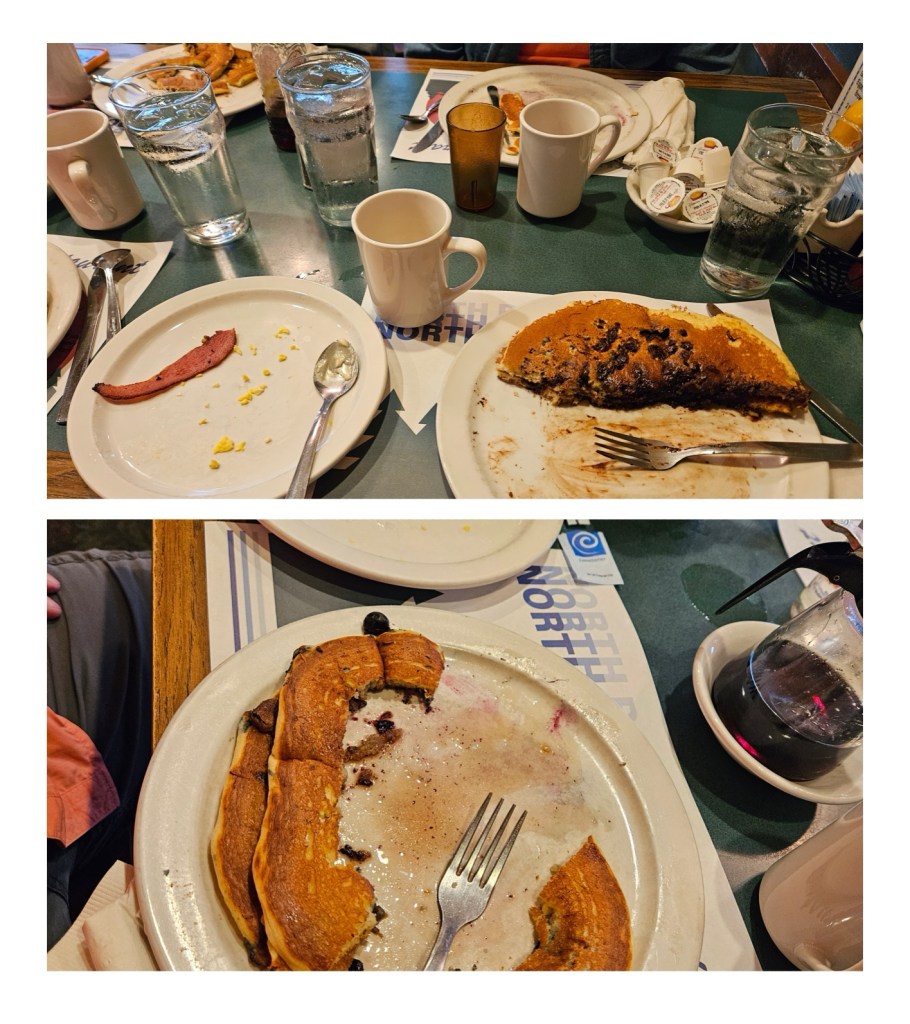
Of course, they were surprised at the dinner plate-sized pancakes but were up for the challenge. They finally gave up and brought home a second breakfast’s worth of pancake remains.

Douglas started in the middle and ate towards the edges as we suggested to get most of the berries. Amanda plowed through the huge quantity of chocolate chips from the bottom up. Both did an admirable job.

It should be noted here that a single giant blueberry pancake, two eggs, and two pieces of sausage or bacon is just $10.99. Adding a second blueberry pancake is only $2.00 more. The senior version with egg and sausage or bacon is just $7.85. My kind of place.

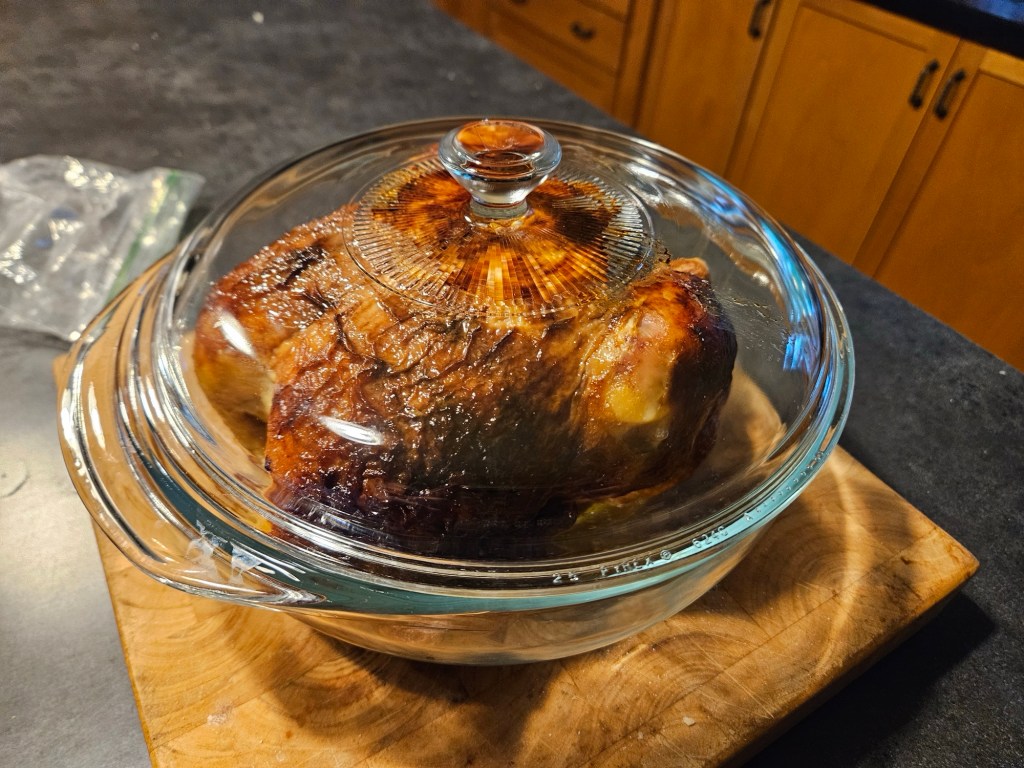
And while Amanda and Douglas were in Michigan I stopped at Costco for a few of our normal things and a couple of fresh hot $4.99 rotisserie chickens. We saved one for their return dinner.

Reheated and delicious.

We went to the Dairy Queen twice for treats and the local Bierstube for dinner.

It’s a German restaurant with great Reuben sandwiches.

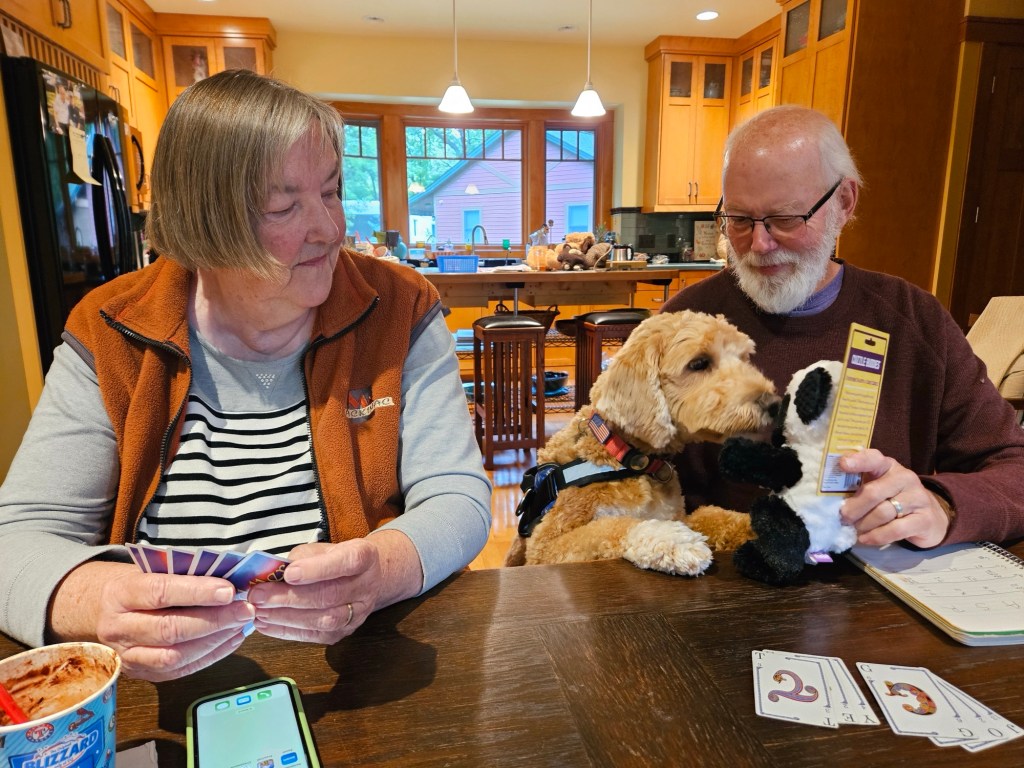
And we managed to get in a Quiddler game.

Maggie wants to play too, or maybe just wanted a treat.

We gave her a new stuffed toy to keep her busy.

These stuffed, soft toys have a very short life expectancy. We always wish them well.

The Short Life of a Stuffed Toy

The stuffing was flying. The squeaker and most of the white fuzzy stuff was out in under 15 minutes.

Amanda got some Maggie love too.


And then we were done, as far as we were going to get anyway. A couple of things did not get finished. I loaned Douglas some tools to help finish his solar panel connections. He has new Lithium batteries to hook up as well. He should get it done this summer.

Amanda and Douglas are special friends. We are always willing to lend a hand when we can. It was a treat for them to be here for almost two weeks and for us to help them with projects that make life in their coach better in the way they use it.

We met them in Nacogdoches, TX one winter more than 10 years ago over cookies and milk. We see them whenever we can, a couple of times a year when we can. The next time should be this coming November.

Pictures in this post are mostly from Amanda, thanks! Between the two of us, there are more than 300 photos and videos.


What’s up next for us? A summer trip to the Oregon Coast with a stop in Glacier National Park. We will spend a couple of weeks on the coast with our friends Richard and Betty from San Diego and my sister and her husband. And then a late season two-week visit to Grand Teton National Park. This is one of our favorite places to visit. It will be a new experience with Maggie.

More Later, Much Love,

Roger and Susan and Maggie

Homeward Bound, April, 2024

Maggie Knows Something Is Up

Maggie is pretty tuned into the normal things of every day life and seems to quickly notice when something changes. Our last few days have been a slow-motion packing up and getting ready to go dance. It is easier for us to do it that way. The steps get prioritized by what’s on the critical path to depart. So for example, tire pressures got checked on the coach and pickup several days before we were going to leave. Better to have time to do something than to find out on the morning we are leaving that we have a low tire.

Maggie knows all of this is not part of the everyday routine. She followed me around to every tire on the coach to see what I was doing.

And we think she is eating differently. Her morning breakfast is getting ignored. By dinner time she eats right away. It might be that we have been going out shopping or for coffee or lunch almost every morning, more often than usual. So we think she might just get fed once a day on the way home.

She is more snuggly than normal. We are not complaining.

If Flowers Aren’t Enough

The local newspaper this week summarized the “entertainment” venues in the region within 75 minutes, a short drive in Texas.

125 wineries, 45 breweries, 21 distilleries, and 7 multi-beverage stops

Just 10 years ago there were maybe 10 smaller wineries, only a few breweries, a couple of distilleries, and a multi-beverage stop was a convenience store at the gas station.

These are big businesses, lots of outside investment, a big influence on land and home prices, a big demand for workers, and a big affordable housing crunch. Short-term rentals (AirBnB sorts-of-things) have increased rapidly as have local controls, licensing, and taxes. Fredericksburg and the local area are much more than the small town that it was when we first came. Good or not, things change. But we like it and if all the tourists in town count, so do they.

Our RV park in the middle of town has changed owners three times since we have been coming here, and prices have gone up (they have everywhere to be fair). But it is still a comfortable RV Park, right in the middle of what we want to do.

Last Suppers

Many of our friends in Fredericksburg belong to the “Lunch-a-Lots” crew. They go out to lunch often. We go too.

We went to Woerner’s with Molly and Maureen and Mike and Jackie.

And we took Peggy to Mamacita’s, a nice Mexican place the next day. She likes the food there and they have tamales every day. I like those and they are not commonly on the menus of many Mexican restaurants. Mike and Jackie joined us at the last minute. It wasn’t busy so we had a nice unhurried time to chat.

It is a good way to say goodbye and spend some last time together. We always expect we will see everyone again but you never know.

In a recent article about Tom Sellick, I was reminded of a line from his 1990 western “Quigley Down Under” character who said, “Don’t know where I’m goin’, but there’s no use bein’ late.”

None of us really know where we are going, we can try to keep a hand on the rudder for the journey but the currents take us mostly where they want. There is life to be lived, get busy.

The Brown

Moving North is a time trip, each day moves us backward in the spring season. The landscape gets Browner each day. This year was not much different.

Our first night was in Thackerville, OK. We stayed in an old dreary Mom and Pop RV Park. It was 1/2 the price of the fancy WindStar Casino RV Park but fine for overnight.

And then came the black clouds, lightning, and thunder from every direction. We rolled up and latched the awnings, pulled in the slide, and battened down the hatches. It rained for a while, everything seemed to be some distance away, so we went to bed.

At 11 PM the phones started squawking tornado warnings in the area. A closer read said it was about 10 miles north. The warning expired at 11:45.

We sort of went to sleep again, we had the better part of 8 hrs to drive the next day. At about 2 AM the lightning and thunder were right on top of us, flash – boom. One after another. The thunder sounded almost continuous and the rain was very heavy. All of that was over by about 5 AM. We got some sleep and got up later than we were planning.

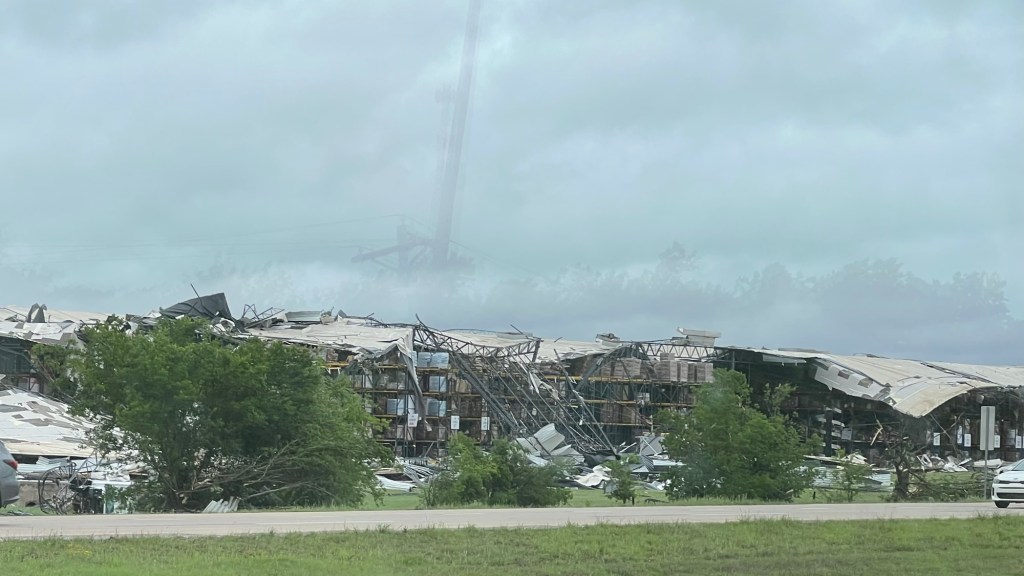
We had some breakfast and headed north about 1/4 mile on I35 and traffic came to a dead stop. It took more than 2 hours to go the next 6 miles. They were clearing debris from the interstate.

Most of this warehouse was scattered everywhere
This semi was no match for the tornado.
These cars fared no better.
This yellow semi and trailer were tossed on top of parked trailers just east of the interstate,

We were grateful that the tornados missed us. News reports said there were more than a dozen of them in Oklahoma that night. We are sorry for the loss these people and this small town have suffered.

Not much further north and the gray clouds turned to mostly blue skies, at least for us. We still had 8 hrs to go.

By staying on the toll way instead of the freeway we saved an hour and arrived at Lake Melvern Corp of Engineers (COE) Park SW of Kansas City at about 5:30 PM.

Full Hookups, $14/night.
Maggie was ready to get out for a walk.We were too.
A calm morning.

We slept well, very quiet here. This is a park we have stayed at before and will again when we come this way again. We should stay for several days, it is that nice. Fishing for seniors is free and the fellow I talked to in the morning already had 4 nice crappies in his creel.

It was surprisingly green in this area, much greener than last year.

We set out in the morning for Saylorville COE Park, just north of Des Moines.

It is an older but nice COE park. We have stayed here before.

The trees are leafing out, many still in the bud stage. Further along it seems than last year.

Driving towards the Minnesota border with Iowa, the trees were less leafed out, the fields definitely brown but many had been tilled and planted. Sooner than last year.

Towbar

We had a mishap just as we were getting to Minnesota. Our towbar connecting the coach to the F150 suddenly broke. The safety cables did their job keeping the pickup from careening across the highway. The brakes on the pickup did an amazing job of slowing the coach down. We were able to pull off the interstate at an exit and come to a stop.

The tow bar just broke off.
From the part attached to the coach.

With no rigid attachment, the pickup bumped into the right rear corner of the coach as we came to a stop.

And some scrapes and dents to the pickup.

Unfortunate, stuff happens. We disconnected the pickup and Susan drove it home following along behind me. We stopped once to double-check, and all seemed OK. Susan got some gas and away we went.

All is repairable, just more things on our summer to-do list.

We got home in the mid-afternoon.

Much greener than last year, maybe three weeks earlier.

Home Feels Good

We started up the house, the heat was turned up, the water pump turned on, and the water heater on. All three of us are wandering around in a much bigger space.

The moving from the coach to the house happens over several days. The medical appointments start in just a day or two, the list of summer projects is long and will keep us busy. Yes, home feels good.

We leave in just three months for the Oregon coast and the Tetons for August and September. And then in November, off again for the winter.

More Later, Much Love,

Maggie, Susan, and Roger

Fredericksburg, TX, Late April, 2024

Wildflowers

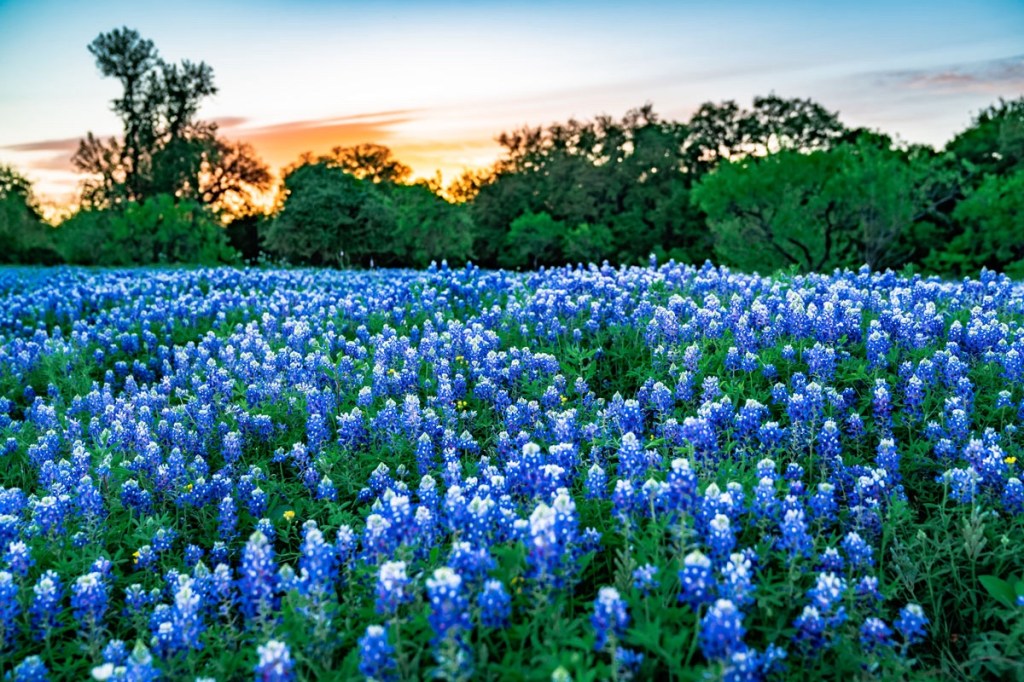
Springtime in the Hill Country is famous for its great weather and wildflowers. This year was a bumper crop for the wildflowers with a dry and cooler early season which made the wildflower’s competition do poorly and then timely rain and warm sun got the season off to an early start.

Here are some pictures of some of the flowers I found on the internet which are in approximate order of their bloom sequence. It is only a small sample of the wildflowers found in the Hill Country.

Bluebonnets
Indian Paintbrush
Indian Blanket
Pink Evening Primrose
Purple Cone Flower

And there are several white flower varieties sprinkled through the bloom as well. The wildflower season is late March into May, April mostly. I think I got this pretty close to right. Some Texas folk might think otherwise but it is close enough to appreciate. Come and see them for yourself and enjoy the Hill Country Spring.

Chicken Fried Steak

As long as we have been coming to Texas, the topic of Chicken Fried Steak (CFS) keeps coming up. Mostly about eating it. For some of our friends down here this is a staple food, it is what they eat when they go out. It is the measure of a restaurant – how good is the Chicken Fried Steak?

Now I think it is probably pretty subjective, sort of like where is the best Bar B Que. It depends. The best places have what you like. And since we have never had CFS, what do we know?

And just what is it? I was imagining it like a rib eye steak dipped in whatever they coat extra crispy KFC chicken with and chucked into a deep fryer. Maybe in some places, it is. You can get CFS at the local DQ. This is not quite fine dining, most likely something that comes out of the freezer and cooks in a deep fryer for 6 minutes.

Well, my local knowledgeable friends say it is a tenderized beef cutlet, dipped in all manner of coatings equal to the number of grandmothers wherever these are served, and maybe twice dipped or three times (ask grandma) and fried in a cast iron skillet. In lard for those who remember back far enough or something healthier more recently.

And served covered in a white gravy so that all that is apparent is a bit of the fried-up crusty edge sticking out here and there.

The meat, the varieties of spiced-up breaded coatings, the method of frying, the oil or lard used, and of course the gravy make up the almost limitless varieties of the best CFS ever.

So we gathered the CFS experts along with the never-had-CFS victims (Susan and me) and went to the Backwoods BBQ for Thursday night only Chicken Fried Steak. The owner cooks these up one at a time to order and brings them to the table herself. The mystery meat (not identified) was coated lightly much as we might do walleye at home, and fried one at a time in cast iron skillets for the appropriate time.

Our CFS was plated (a Food Network term for putting it on a plate) with white peppery gravy, scalloped potatoes, and green beans. And of course, just in case there weren’t enough carbs, two slabs of grilled Texas Toast. As white as it was, if it had been meatballs it could have been a gourmet Swedish supper.

Fork and knife in hand I eagerly sliced off a chunk. This is when I discovered it wasn’t “steak” at all like I imagined it might be but a tenderized (by some unknown means) slab of beef about 5”x8”, maybe a half-inch thick. And then another chunk, one after another.

And it was the best Chicken Fried Steak (and the only one) I had ever had. The thick white gravy was well peppered, the coating, lightly spiced, flaked off when the CFS was sliced, and all combined with the tender meat was quite tasty.

Peggy, Jackie, Mike, Maureen, Molly, Rita, and Susan.
No CFS? No More!

So our CFS experience was pretty good. We may order it again someday depending on what else is on the menu. This is definitely not something we saw on Alabama menus or at home.

Planning The Way Home

Every trip to elsewhere finally turns towards our Minnesota home. Susan says she will miss the warmer weather, green trees, and the feel of spring. Me too, but neither of us (and Maggie) will miss the bloom of stickers and burrs that she attracts on every walk. It must be that they are in season too. They seem to be much more abundant in just the last couple of weeks compared to early March when we arrived. Maggie is getting much more tolerant of us picking them out of her hair.

The odd cactus here with no spines is in full bloom
The Park’s Pond has lilies and irises in full bloom.

Maggie looks for the bullfrogs along the pond’s edge but when they jump into the pond she always seems startled. They are very hard to see until they move.


This year we are aiming at getting home by May 1 at the latest. There are always choices for which way to go. This year will be pretty direct.

Someone in a car might do the return trip in just a couple of long days. We will do it in four days averaging about 325 miles per day. Most of the way home is on the interstate. Our second day will be a bit longer making the third and fourth days shorter.

After an overnight in Thackerville, OK, we are staying at Melvern Lake Army Corps of Engineers (COE) in Kansas and Saylorville Lake COE near Des Moines. These are nice parks, 50 amp hookups, and water. We have stayed at both of them. Corp parks are a preferred stop for us. And with our Senior Interagency Lifetime Pass (the Official Geezer Pass) they are only $12 – 14 per day.

On the last day, we will stop in Albert Lea, MN for a full tank of diesel fuel. We will get home, head for the barn, and plug the coach into power. Then we will go into the house, turn up the heat, turn on the water heater, turn on the water, and check everything out. Then back to the coach for our last night of this trip, a light supper, and early to bed. In the morning the water will be hot, the house will have warmed up to a comfortable temperature, and life will seem very busy.

Moving from one home to the other can wait until the next day. And we will spread it out over a couple of days.

Maggie is ready to head home too. Her best buddy, Scooter, has been waiting for her.

He is looking pretty dapper after a recent trim and on alert waiting for Maggie.

Scooter’s Mom, Luann, mentioned “Maggie” to Scooter and he ran to his favorite chair to see if she was coming.

We showed this picture to Maggie and said “Scooter” and she started barking.

We will get up to Scooter’s in just a day or two as soon as we get home.

In the meantime, we have a lunch scheduled with friends, some packing up to do, some last-minute shopping, and will try to get in a couple of good nights’ sleep. That never seems hard to do.

More Later, Much Love,

Roger, Susan, and Maggie.

Fredericksburg, TX, April 2024.

Eclipse

Maybe you heard about the total solar eclipse on April 8, 2024. It is hard to imagine anyone missed it. The totality of the eclipse went right over Fredericksburg. And we were there.

Fredericksburg started planning for the massive influx of people coming to see the “Big Blink” almost two years ago. There were planning committees to organize, public services to rally, special rules to make for short-term rentals, and lots of suggestions to landowners on how to protect their property against unwanted hoards. Fences, No Trespassing signage, and more. Texas is a very strong property rights state.

This seems extreme but it was not uncommon.

We made our reservations at the Fredericksburg RV Park two years ago.

Ten days or more before the day of the eclipse the local weather prognosticators from Austin started in with dire warnings for significant cloud cover. Each day closer their bets were hedged with more certainty on one hand and more wishful thinking on the other. The day before the eclipse the sky was stunningly blue, temperatures comfortable, and a light breeze blew from a westerly direction. Hope springs eternal.

The day of the eclipse dawned with high thin clouds, maybe, just maybe, we would see it. The RV park was packed with people from almost every state on either side of the path of totality, most paying twice the daily rate with a four-night minimum. They were from Alaska to California, and Nova Scotia to Florida. Many from Colorado, Utah, Oregon, and Louisiana

There were tripods, cameras, and telescopes in many sites, many with more than one. And some really big ones.

These guys seemed pretty serious the day before getting everything aligned just so.

We got out the lawn chairs and our 3 for $1 eclipse glasses from 2017 and sat with Peggy from across the lane.

We were joined by Gail, a lady from New Mexico staying in the spot next to Peggy. Maggie was more interested in each and every blade of grass or whatever was growing next to Peggie’s RV. And especially the rabbit living under Peggy’s RV. She chased it out a couple of times and tried crawling in after it. Both survived the encounter.

The eclipse started right on time. There are no countdown delays or built-in holds for celestial events. And somehow those science guys have it down to the second.

The pictures from my iPhone with the lens covered with the solar glasses didn’t really show the moon crossing the sun from right to left but the moon did what it was supposed to do. Clouds moved by, opening up to see it quite well and hiding it too, just as often.

It was daytime.

And then nighttime. The nighttime solar lights came on. Maggie behaved. Nothing odd from the birds.

The entire event was pretty fun to see again. 2017 in the Tetons seemed much more dramatic. Not much hoopla here. Some cheering. I think it was a group of several RVs from Louisiana.

The local newspaper reported later in the week that the expected crowd numbers were much overinflated. Plenty of folks did come, RV parks, hotels, and short-term rentals were full. There were no significant issues, life moved on. They compared the crowds and economic impact to any summer weekend when a festival (wine or music) event was happening. Oktober Fest has a bigger local impact.

There were theories that the potential for clouds, always a significant possibility here, made people change their plans. We had friends coming to FBG from Minnesota for the eclipse event. They were going to be here for a week or so. After two years of planning and getting halfway here, they went to Indianapolis instead because of cloud concerns. We hope they got to see what they wanted to see. We never heard.

And we got down to see our friends Keith and Jo who were in an RV park in Kerrville for the eclipse along with several other Foretravel folk.

Jo and Keith

Keith recently retired, but Jo has not yet. They are eagerly anticipating more RV time.

Shore Lunch

Susan and I brought a couple of Haralson Apple pies (frozen and uncooked) from home as well as wild line caught flash frozen walleye (Minnesota’s State Fish) to have a shore lunch with friends here in Fredericksburg. We thought we would do it here but it worked out better for Mike and Jackie to host lunch at their nearby home. He has a good gas grill, I have a cast iron griddle. Everything that we needed to cook the fish. We cooked the pie in the morning and then we all met over there.

A Rustic Haralson Apple Pie, let’s eat!
Susan, Jackie, and Roger.
The fish was cooked, and we lined up and filled our plates with fish, salads, fruit, and fresh tomatoes.
Maureen, Peggy, and Molly

I managed to not get Mike in these pictures. Another great time with friends.

Dog Wash

There is a dog wash station in town which is part of the nearby car wash. $10. 10 minutes. It is like the you-do-it car wash. Soap, rinse, conditioner, rinse, blow dry. It worked pretty well. The first time we washed Maggie we used their shampoo and conditioner. The next time we used our own. It smells better to us. No idea what Maggie thinks. She does not like the blow-dry part, it is the noise, I think.
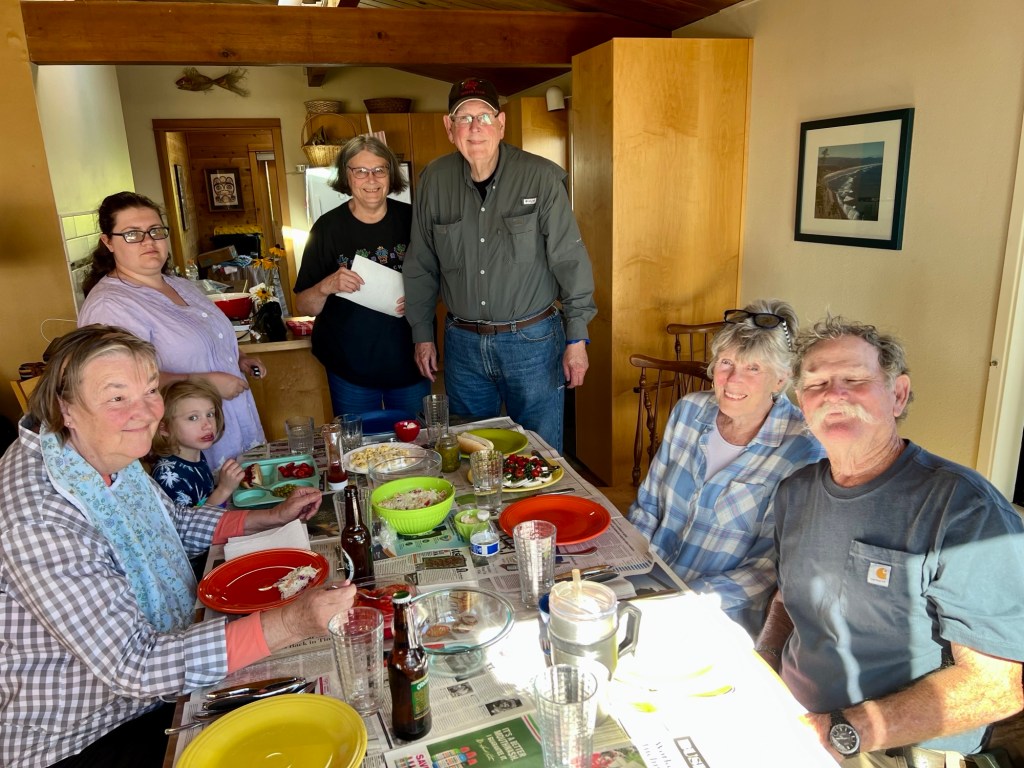
She gets mostly dried off and then some finishing up at home. A nice walk in the sun works well.

National Museum of the Pacific War

Chester Nimitz was born and raised in Fredericksburg and was a Fleet Admiral in the US Navy during World War II and was the Commander in Chief of the Pacific Fleet commanding all air, land, and sea forces. The National Museum of the Pacific War is located in Fredericksburg, TX.

https://www.pacificwarmuseum.org

While we were in Fredericksburg there was a re-enactment of a battle where a Medal of Honor was awarded for heroism. I went to see one honoring Sgt Darrell Cole.

https://www.cmohs.org/recipients/darrell-s-cole

It was a cold day, not even 40 degrees, but the amphitheater was full. I am sure on Iwo Jima it was much warmer.

The Japanese forces held the high ground.
A landing craft hit the beach and US Marines stormed out.
Tanks came, Cannons roared, aircraft dropped bombs.
Sgt Cole stormed the enemy machine guns three times. The Marines prevailed and the high ground was secured and our flag raised.

There were many veterans in the audience who stood and were recognized for their service. Most of us have no idea of the noise and ferocity of the fighting in war. We give thanks and gratitude for all they gave and for all we have.

Interesting RVs

One day this pulled in. It is a camper from Germany built on a MAN 4×4 military truck. Giant wheels and a very high cab.

There was a motorcycle rack that went up and down on the back end, not many windows, and few of the creature comforts we are used to. We have seen these before in Utah. Off-road capable but that comes with a top speed of 50 or maybe 55 MPH. This was a German couple traveling in North America. They had not been to Minnesota yet.

Birthdays

At the end of March and the beginning of April, our friend Mike and I celebrate birthdays. We have both had some health challenges in the past couple of years so we are especially grateful to be celebrating another birthday with each other.

We went to the Camp Verde General Store for lunch and the fellowship of good friends.

Debbie, Peggy, and Susan
Mike, Jackie, and Dave
Roger and Susan
Mike and Jackie
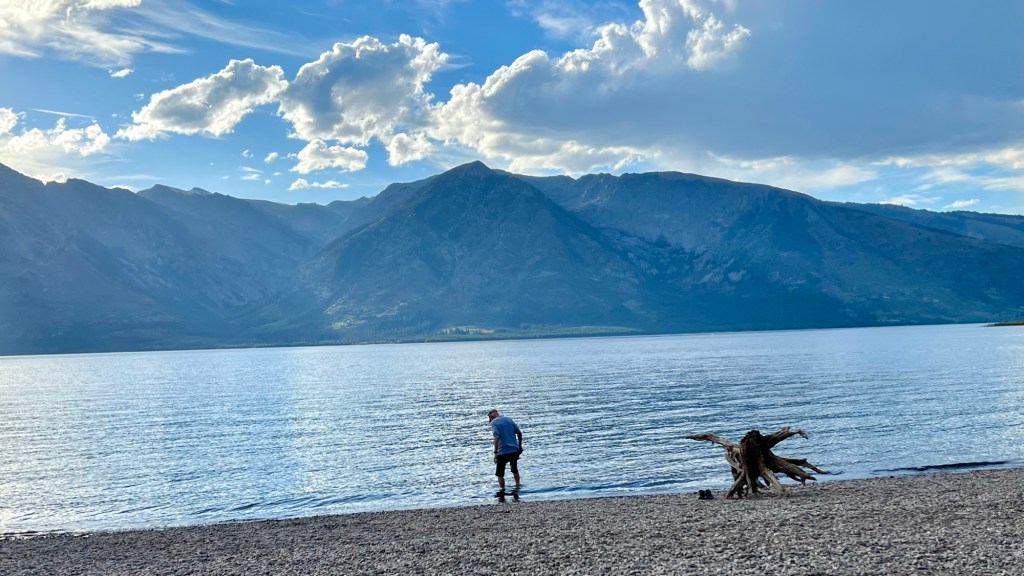
That is plenty for now and the month is only half over.

More Later, Much Love
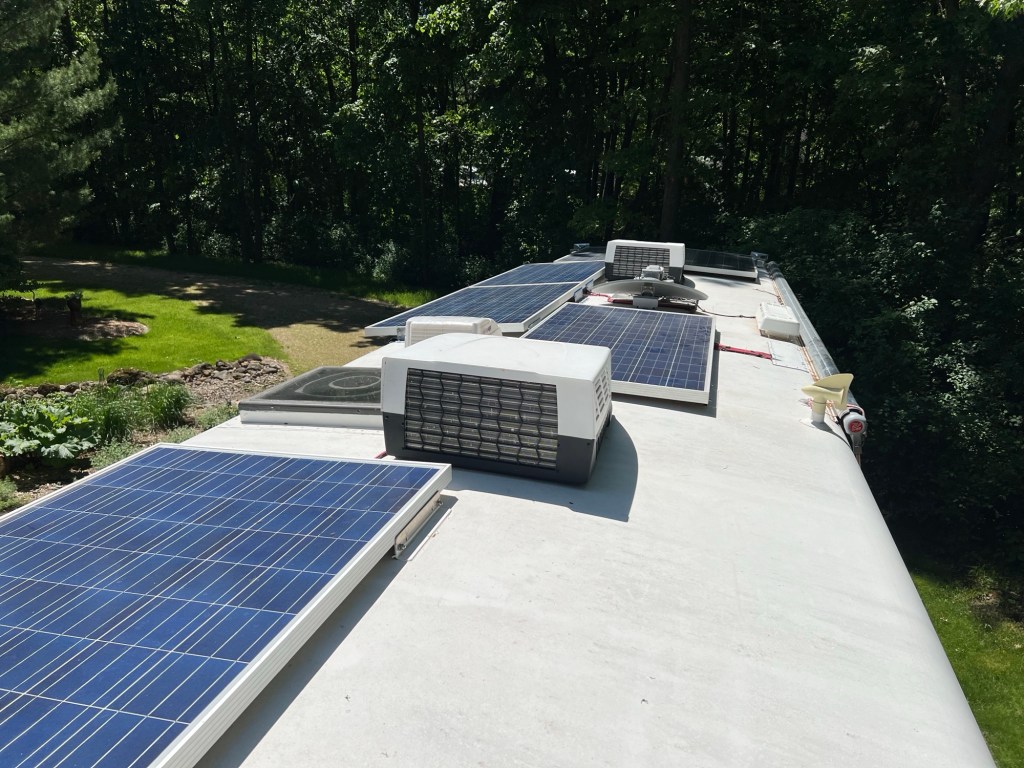
Susan, Maggie, and Roger