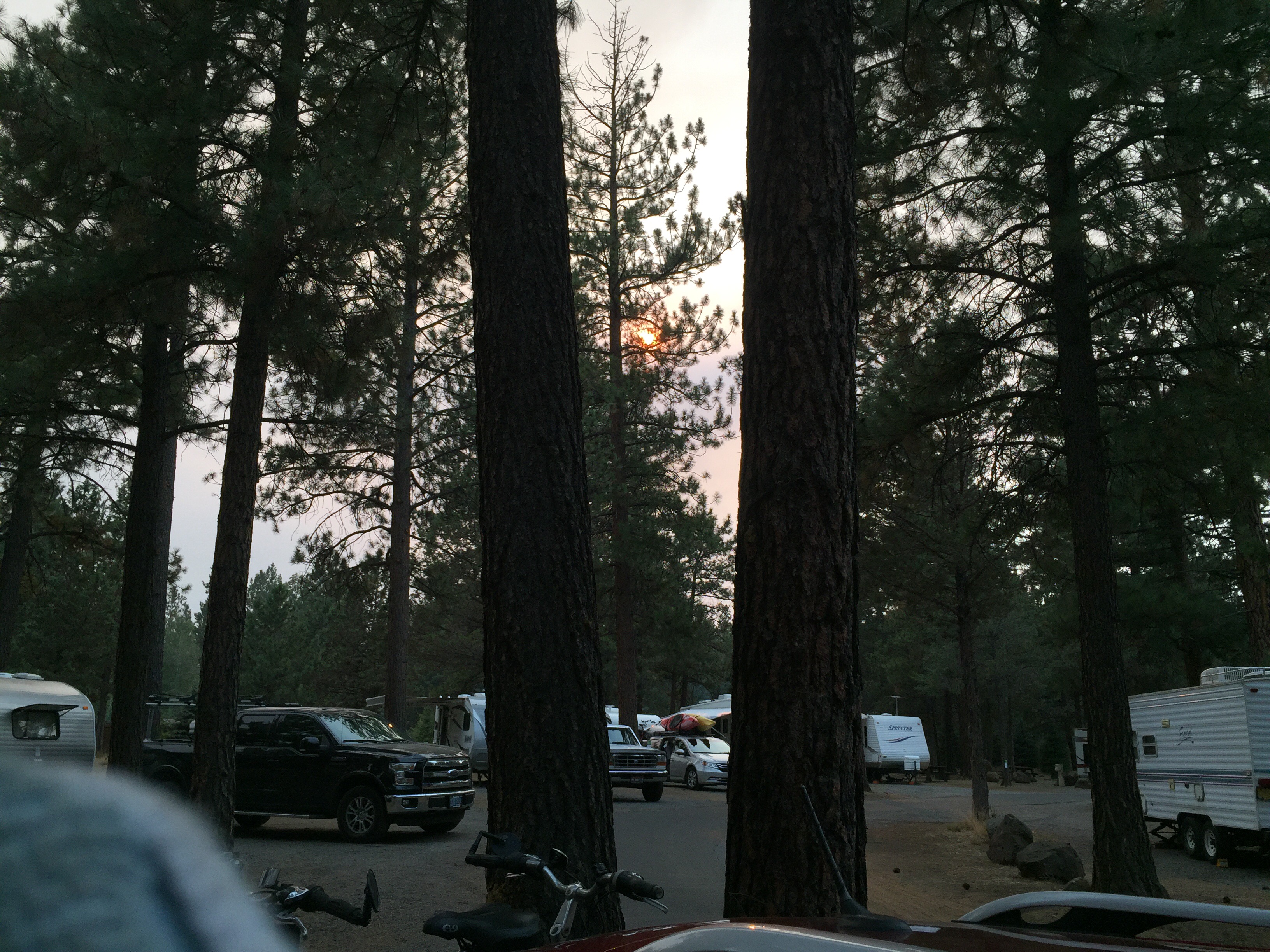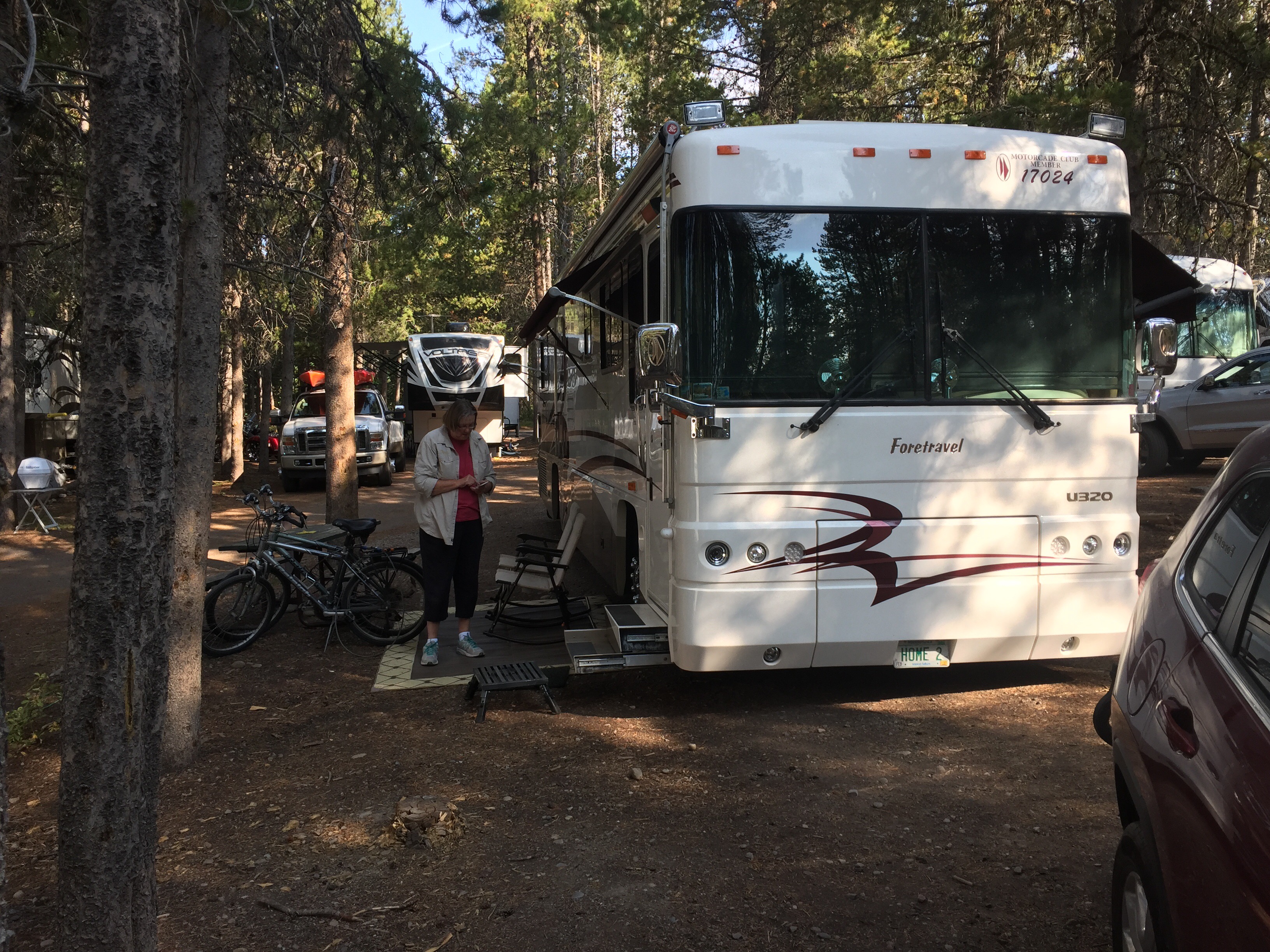
Sunset Bay State Park, Oregon, Summer 2017

On the top ten list of beach front State Parks Sunset Bay was near the top. It is near Coos Bay. There are three connected State Parks – Sunset Bay, Shore Acres and Cape Arago.

We thought Harris Beach was a tight fit for getting into the camp site but Sunset Bay was even closer. The issue was backing into the site with hedge rows along either side of the road and a narrow opening into what was actually a pretty large site. It was complicated by all of the other campers whose cars and pickup trucks were sticking halfway out into the narrow lane. It took three or four back and forths but we got in.

The campground was packed, two of the loops including the one we were in were filled with a church family camp thing. They all had their signs out in front of the campsite with mom and dads names and those of the kids, in some cases lots of kids. There was one site with 12 bicycles, half of them in the lane. The group had two adjacent sites that they used for gathering together for what ever it was they were doing. Lots of people moving back and forth, lots of joyful noise. They all seemed to be having a great time. The night before they all left they had a big barbecue. Someone from their group stopped by later in the evening with a big bag of sliced up tri-tip steak that was left over. We took that. They had potatoes too but we declined. We repackaged the steak into four bags, probably 3/4 pound each and froze them. They make great fajitas.

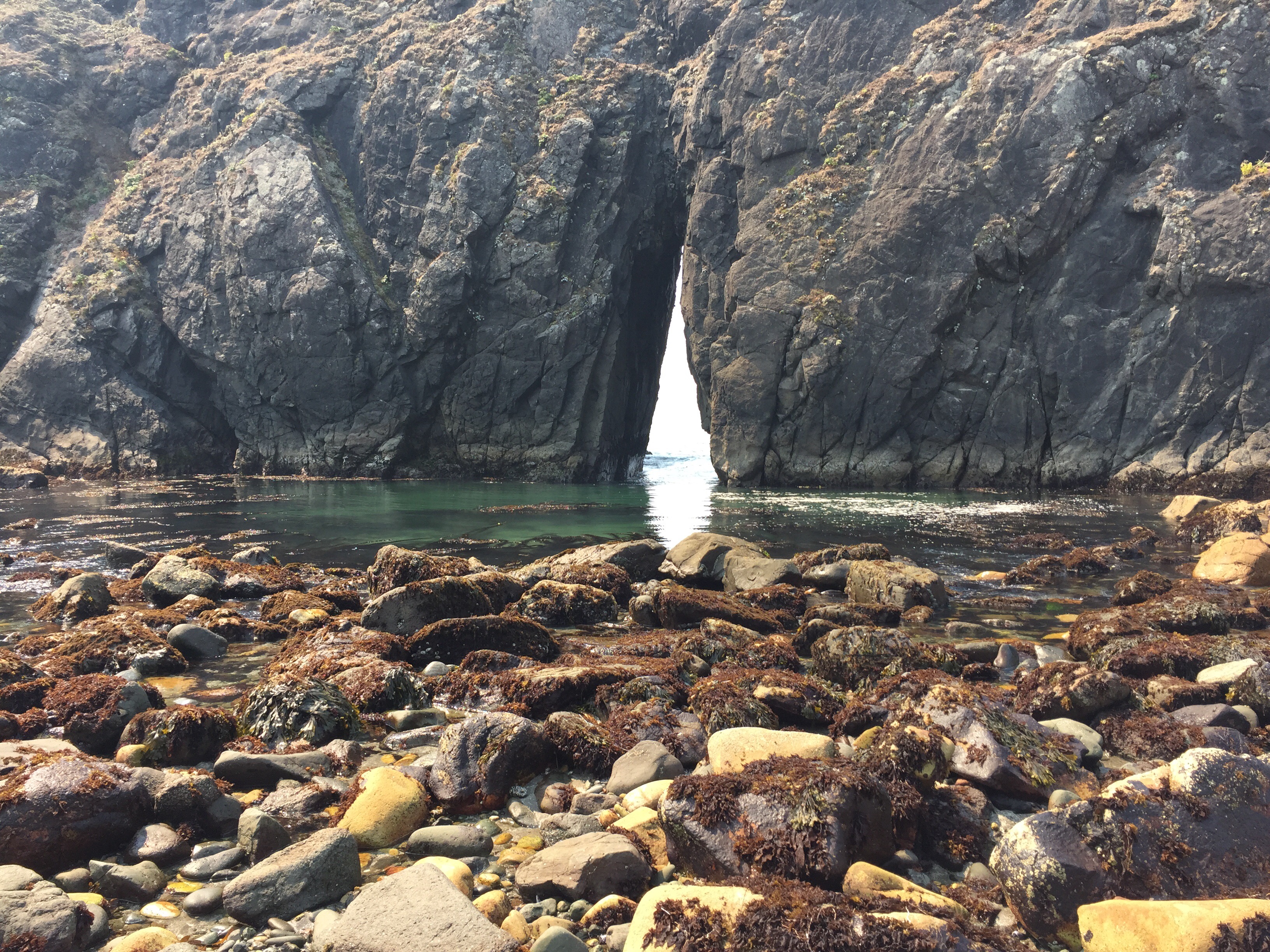
Sunset Bay is a small bay with a very small opening to the ocean. This makes it very calm and very shallow, a great beach for kids.
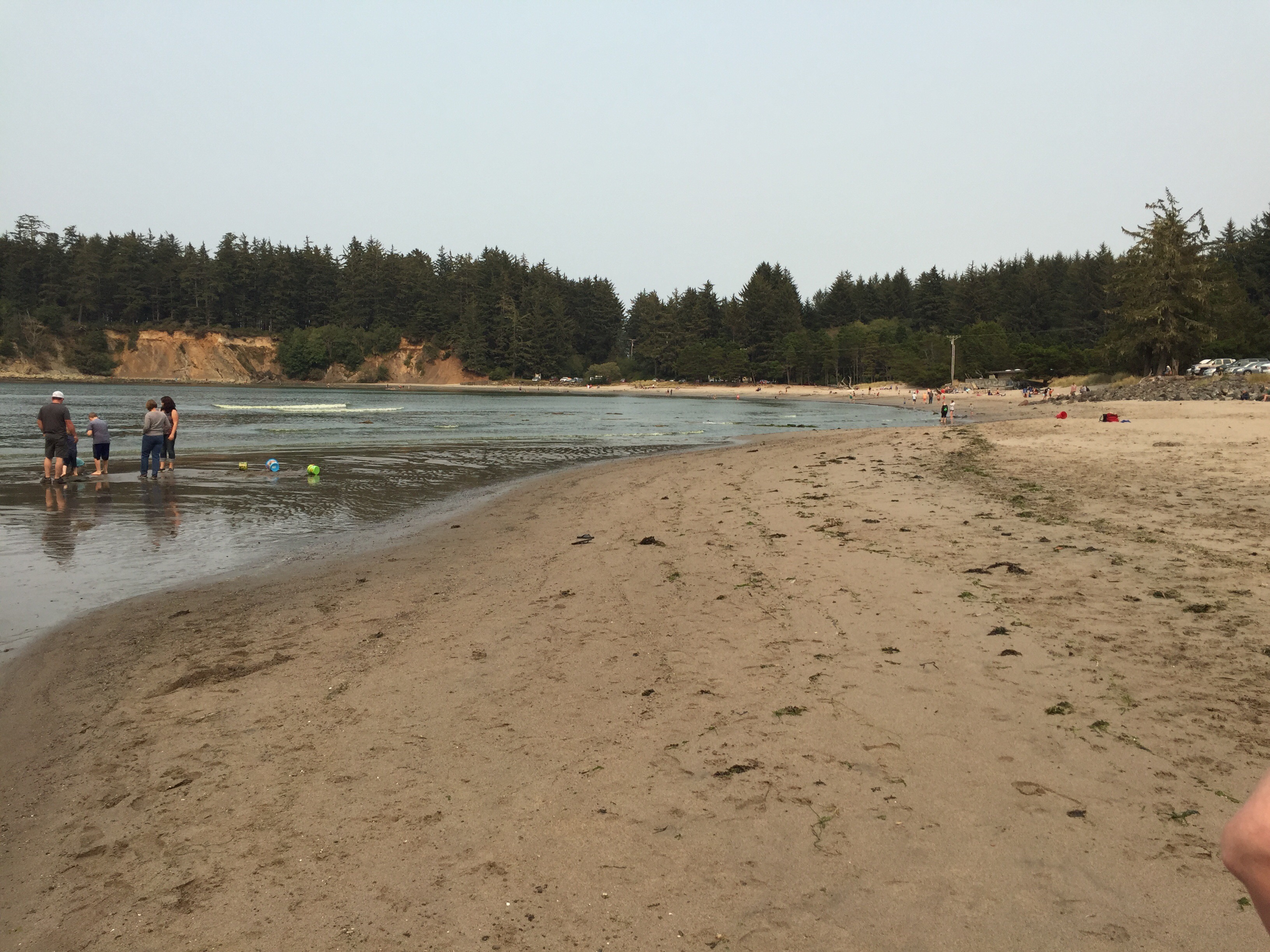
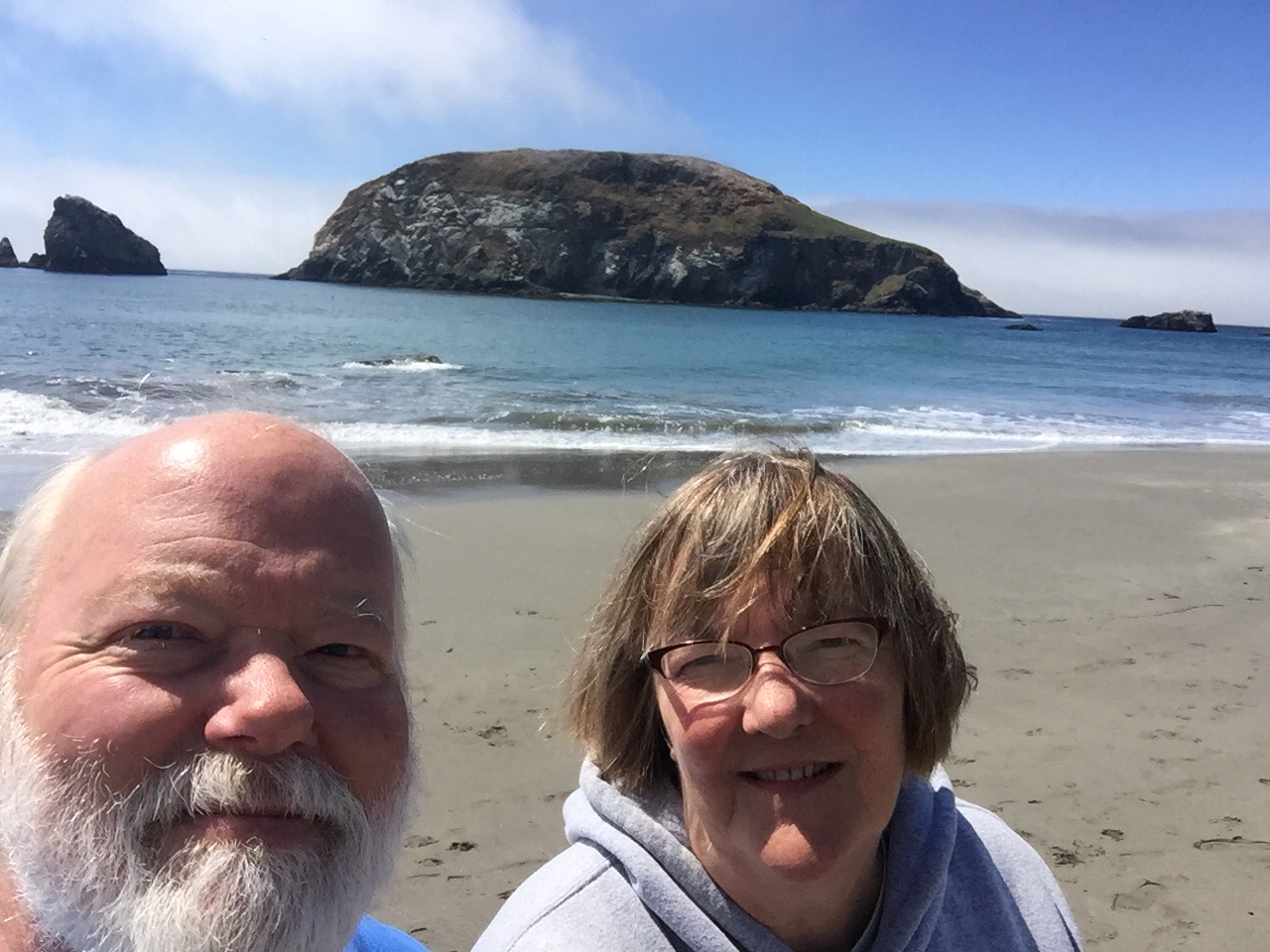
It has a nice wide sandy beach that was almost always filled with people. In spite of its name we never saw a sunset at this park. Clouds and smoke got in the way. There was an odd noise though that we could hear everywhere. Sort of a two tone wee-woo. My guess was that it was something left over from the hippies of the 60’s – most of them were still here. The park ranger told us that it was a wave actuated fog horn sort-of-thing. Wee going up the wave and woo on the way down. There were actually two of them like sentinels at the gates to Coos Bay.

Something else was making noise too. We followed the road further on out to Cape Arago. High on a bluff overlooking a reef the sound of hundreds and hundreds of sea lions and seals barking … ark ark ark … it never ended. I made a short video and sound recording of the racket but I can’t post them here.
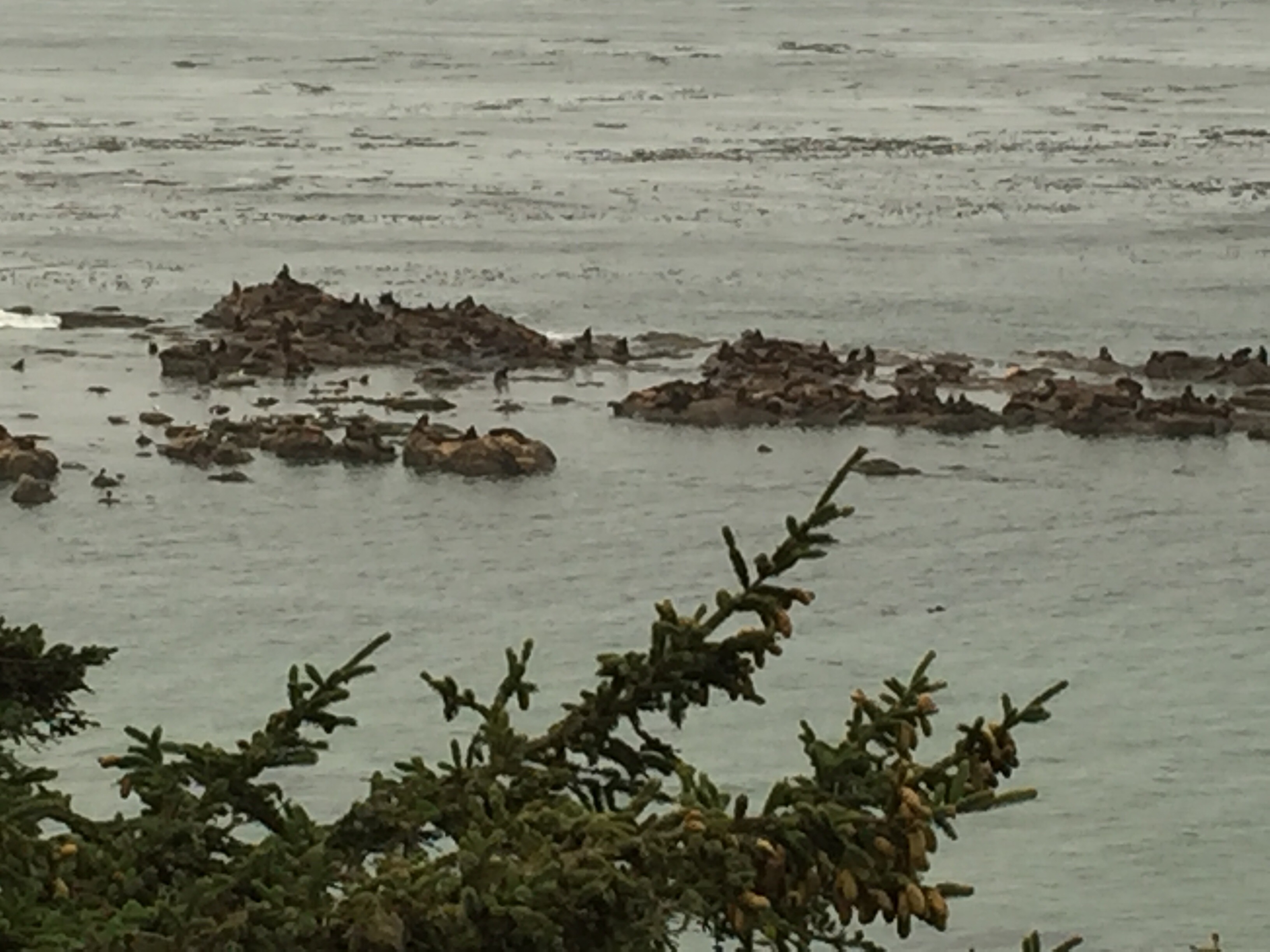
There were signs at one overlook with pictures of all the different seals and sea lions so you could figure out who was who. They all just seemed to make continuous noise.

And just down the road back towards Sunset Bay was Shore Acres State Park. This was the estate of a Coos Bay business man who was successful in the lumber business and in promoting Coos Bay. He built a substantial mansion on a bluff overlooking the Pacific and had a formal English garden built as well. His family called it Shore Acres. The original house burned down and he set out to build a bigger, grander home. Before it was finished he died. The depression set in, business wasn’t so good. And the property slipped into disrepair. The family donated it to the state of Oregon in the 1940’s. The house was demolished but the gardens and gardener’s cottage remained. The Shore Acres Garden volunteer organization is quite large and has restored the gardens, the cottage and built (you guessed right) a gift shop.
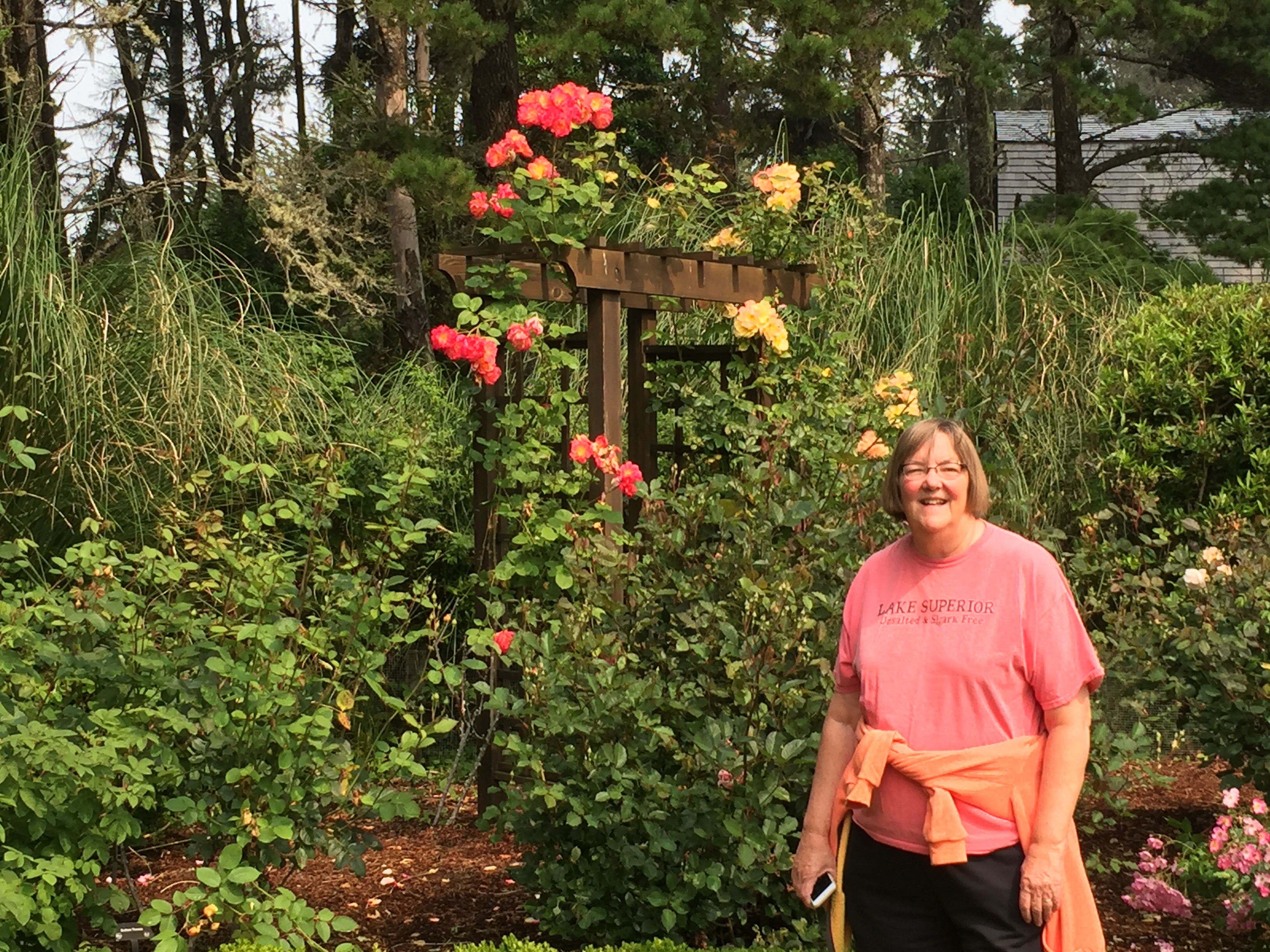
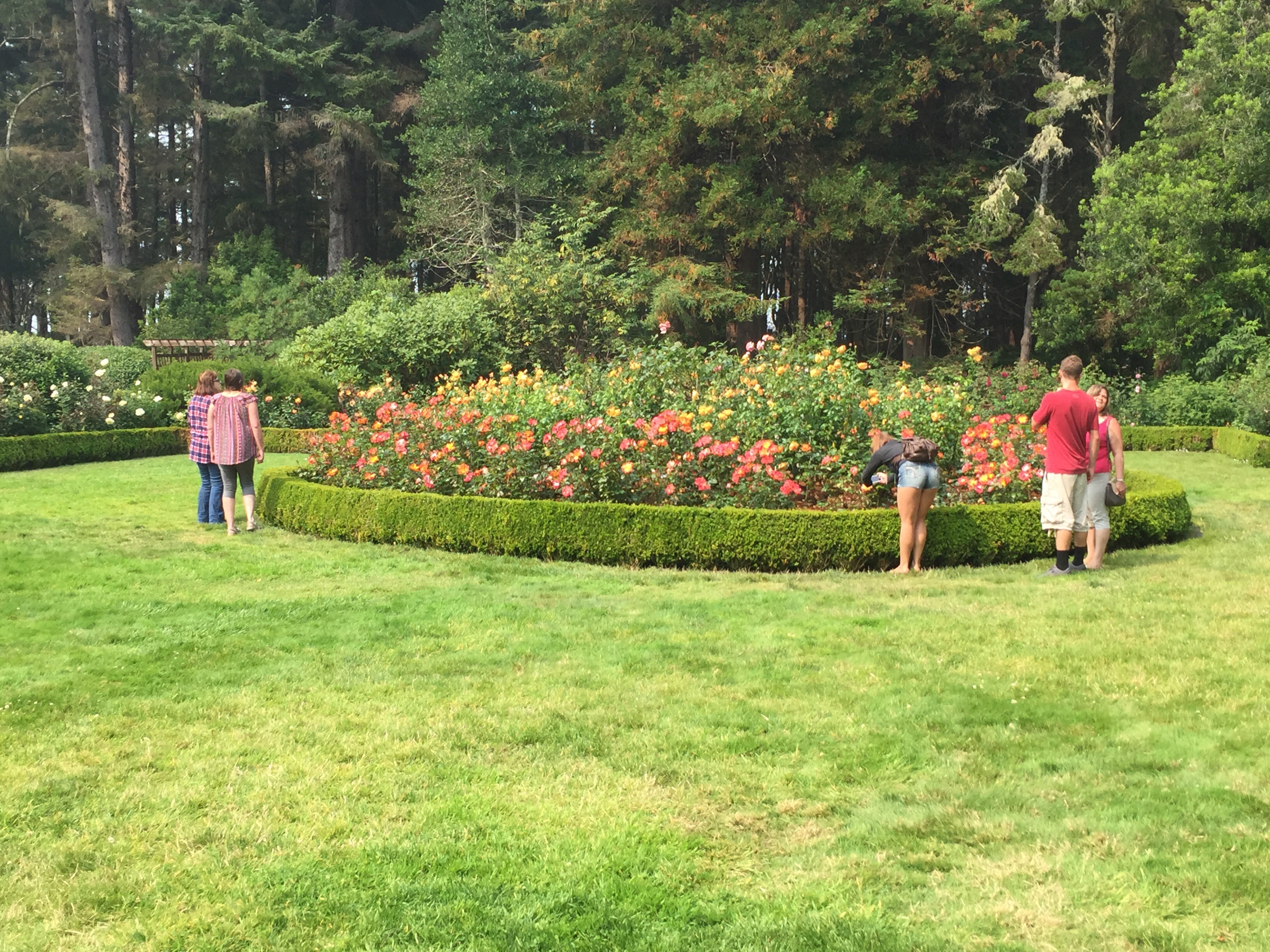
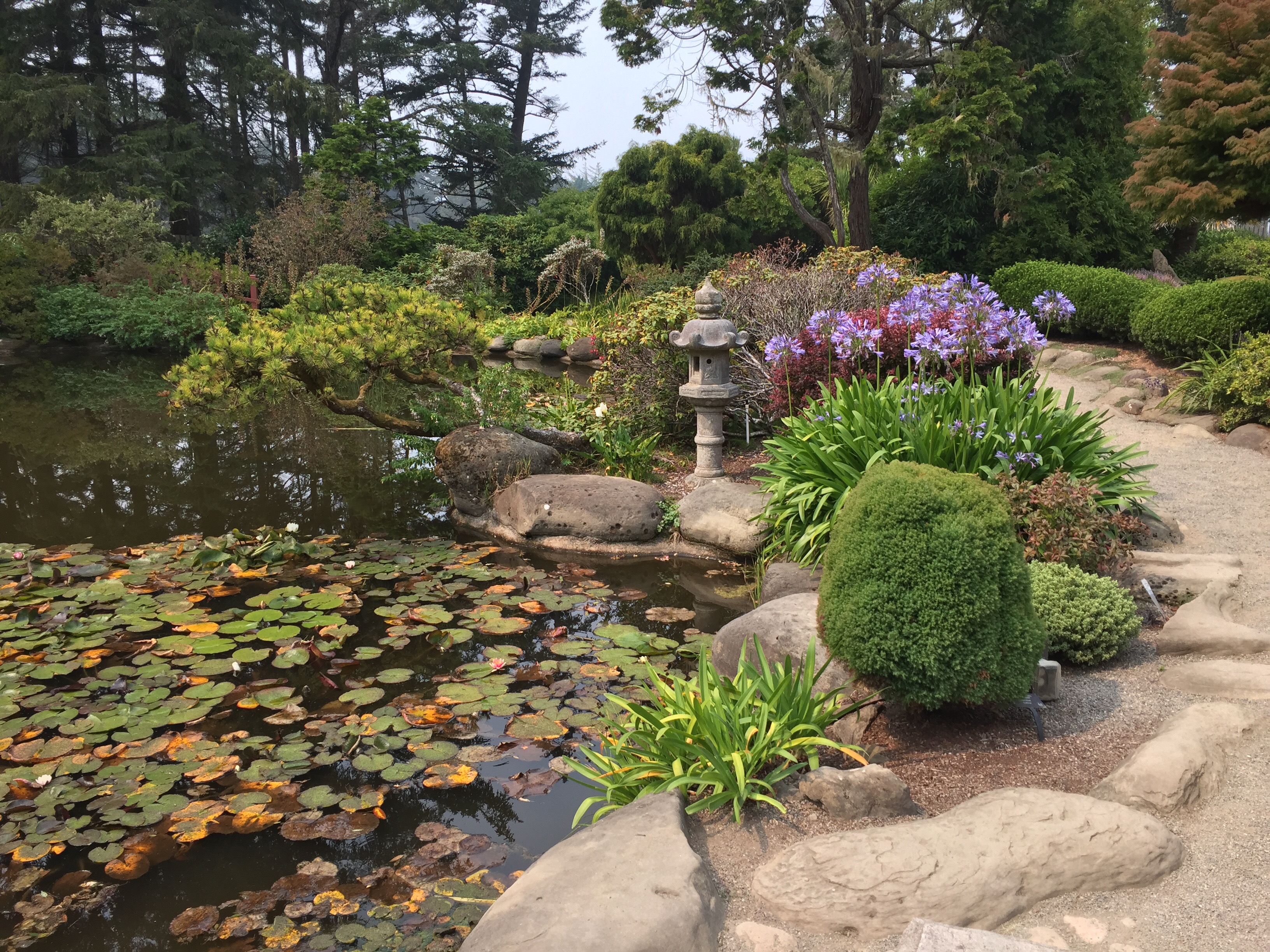
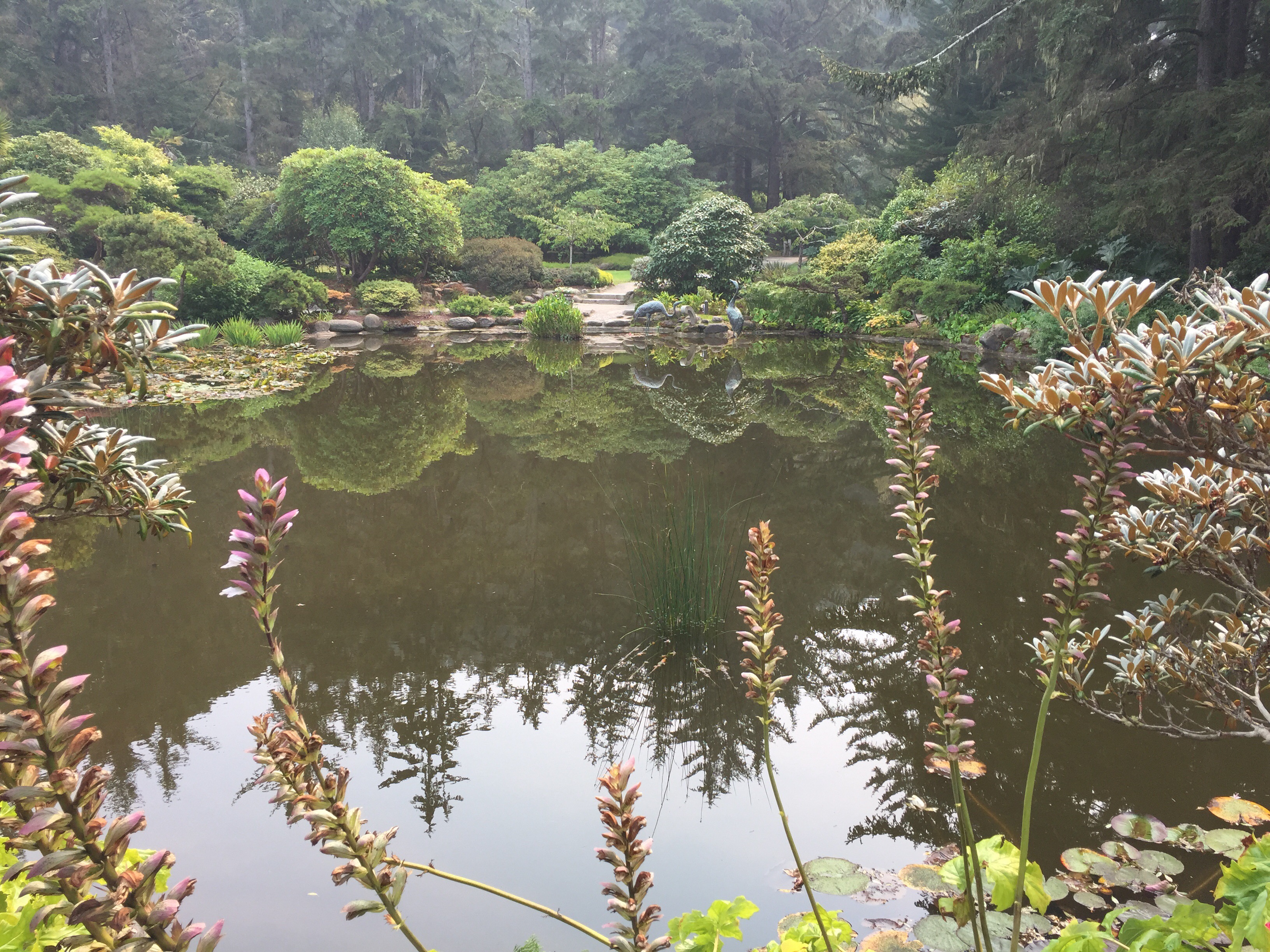
There were lots of roses and structured beds and a very nice pond. There were trails from the gardens down to the beach and along towards Cape Arago and back to Sunset Bay.

We both like gardens and appreciate the hard work that goes into them. We bought a couple wooden Christmas decorations for my sister and a Raku sea turtle to join the other turtle on the dash of the coach. They represent our “herd of turtles” pace as we travel.

One more day after the church families left at Sunset Bay. Quiet. Nice. But we could still hear the sea lions almost three miles away!

Next we head to Cape Lookout State Park.

More later, trying to catch up…

Roger and Susan

Harris Beach State Park, Oregon, Summer 2017.

Our goal was to visit five of the ten best Oregon Beach State Parks starting at the south end and working north. Harris Beach State Park near Brookings was our first stop. There was another major wild fire just a few miles inland. About 1/3 of the campground was filled with fire crews.

When we got to Harris Beach there wasn’t too much smoke. The beach was maybe 1/2 mile long with big off shore rocks. The campground was fine but our site was hard to get into but we managed.

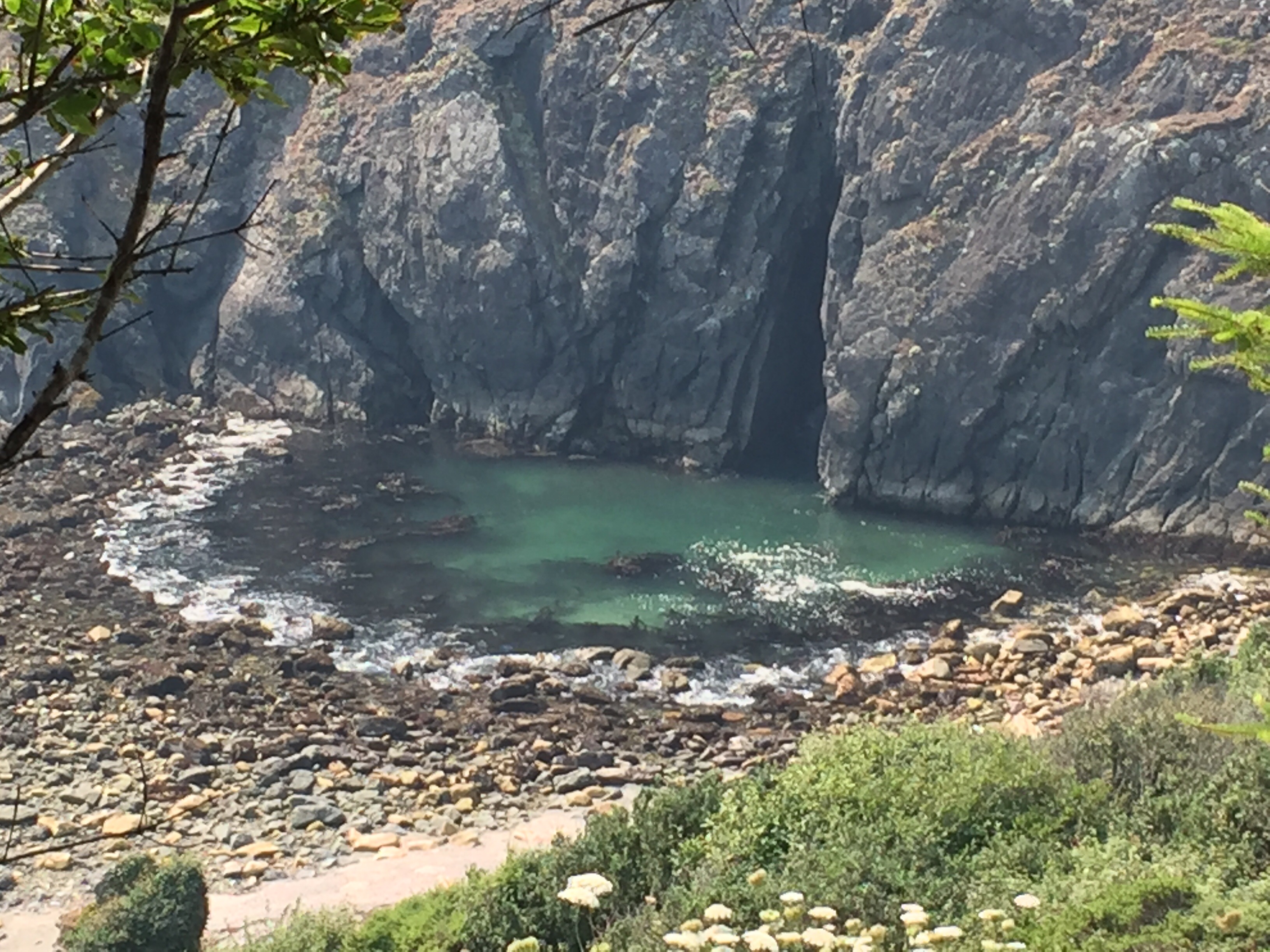
We were up on a bluff overlooking the beach. There was one way down to the beach and another way down to tide pools.

I walked down there, a pretty steep path. The waves came through an opening in the rocks into the semi-circular pool.

There were lots of small crabs, star fish and other things in the water.

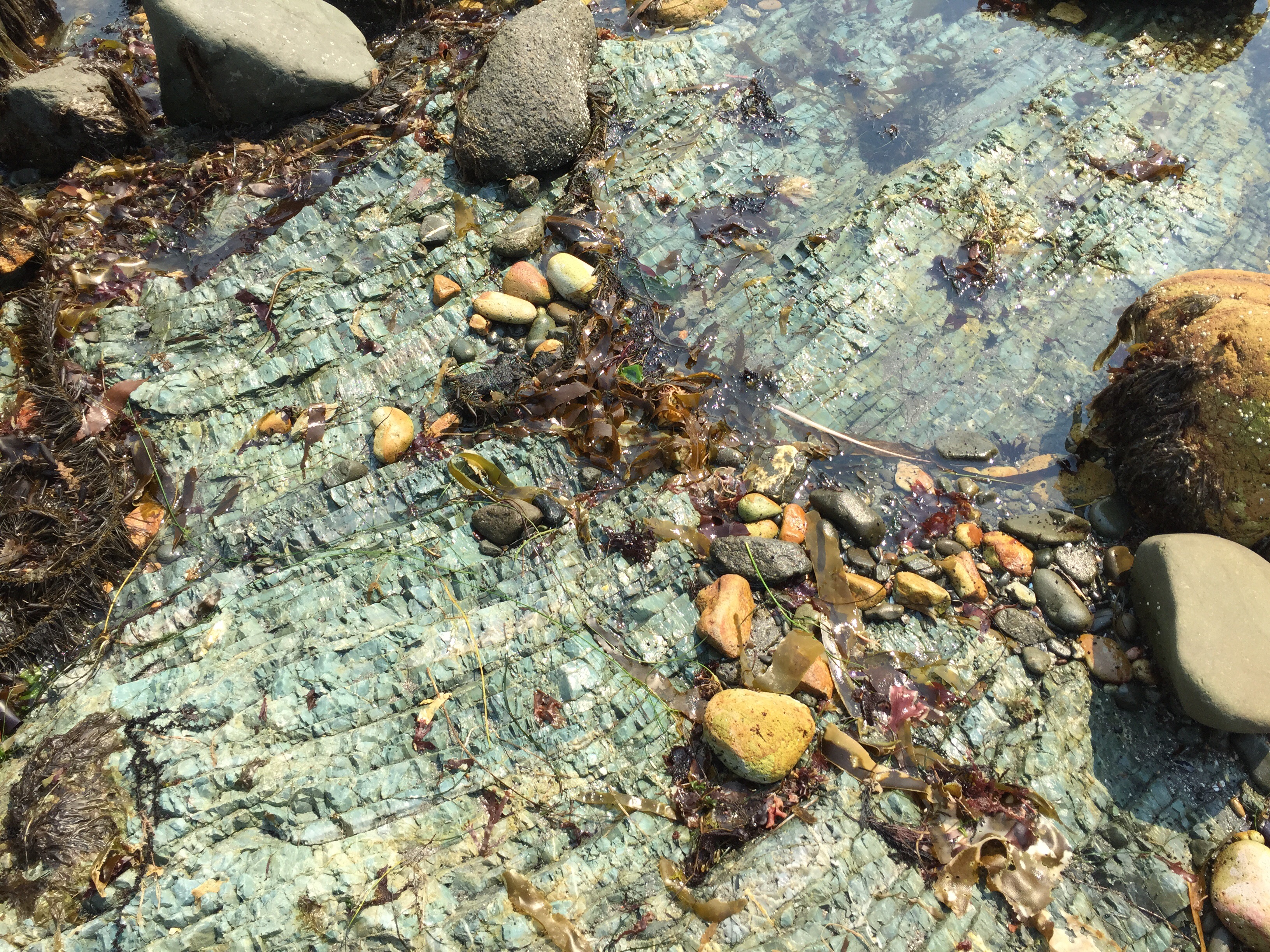
The rock layers were very interesting, greenish like they had copper in them and clearly layered.

We got to spend some time on the beach.

A nice beach park. We were there for three days. By the last day the wind had shifted and we were back in the smoke.

Next up, Sunset Bay. Sounds divine.

More later,

Roger and Susan
Crater Lake National Park, Oregon, Summer 2017.

We have had many close encounters with Crater Lake NP over the years but never quite close enough. It is out of the way no matter which way you go. So a destination it has to be as it was on this trip.

From Sisters we headed sort of SW over rivers and mountains and through woods and more and more smoke towards Crater Lake and Collier Memorial State Park. There is no camping at Crater Lake so we chose Collier for a couple nights. It is about 40 minutes from there to Crater Lake.

Collier Memorial State Park was another nice Oregon park. The sites were big and easy to get into. It was in a big tree forest with a nearby river and a logging museum.

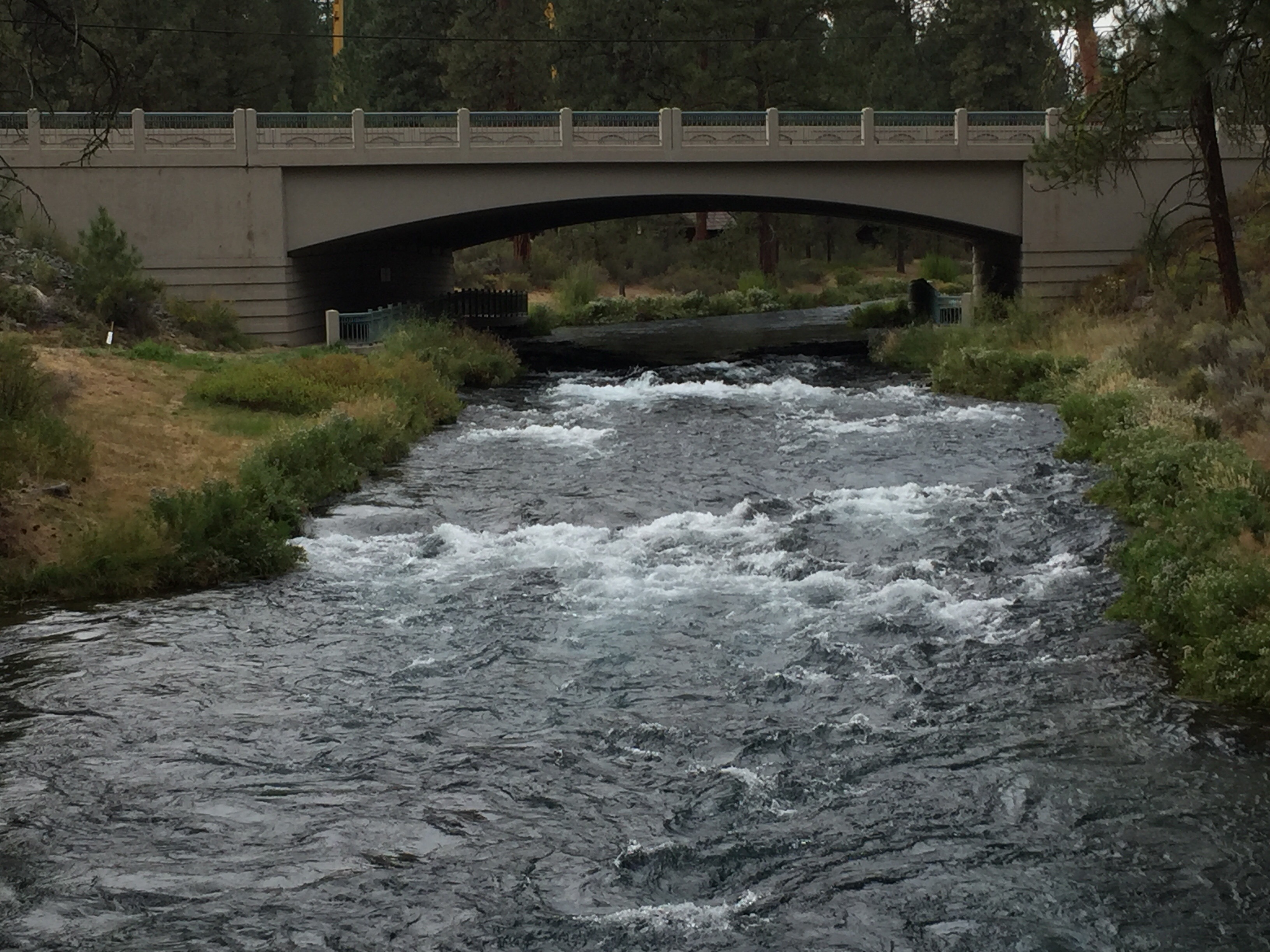
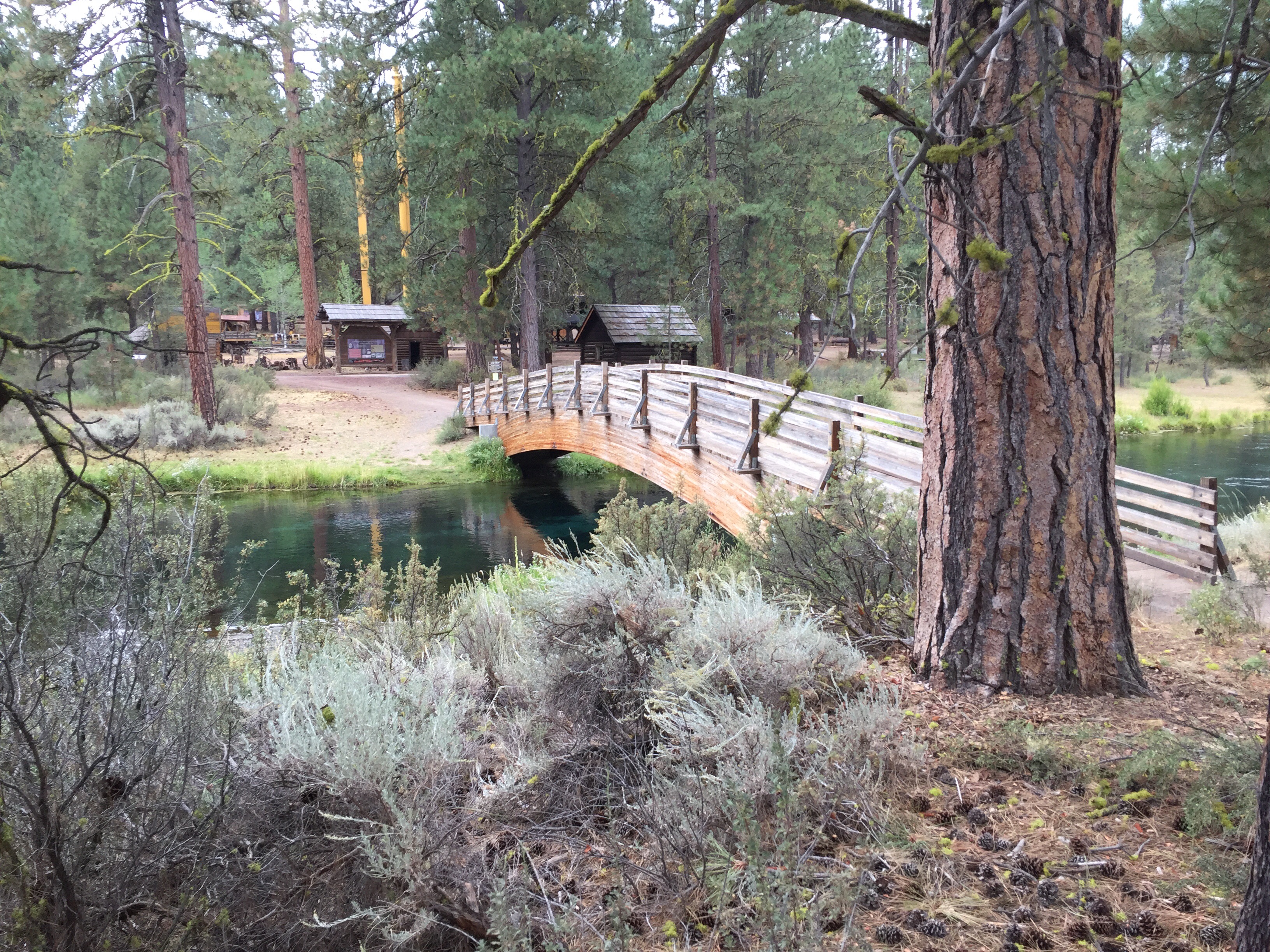
You have to walk up along side this small river and under the bridge to get the the logging museum. This bridge was recently built to modern standards but closely resembles the original bridge with the walkways underneath. The path lead to another footbridge to the museum.

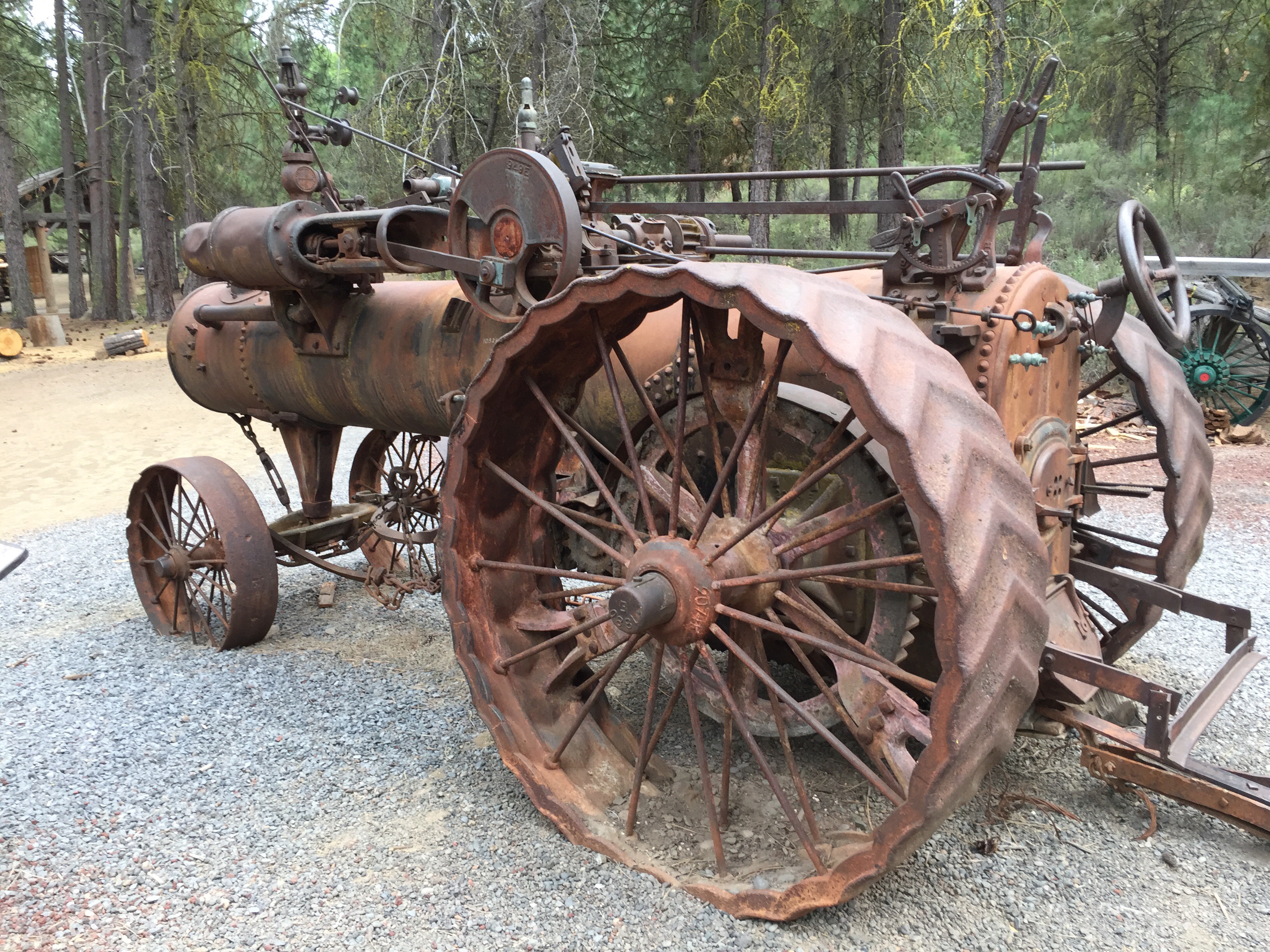
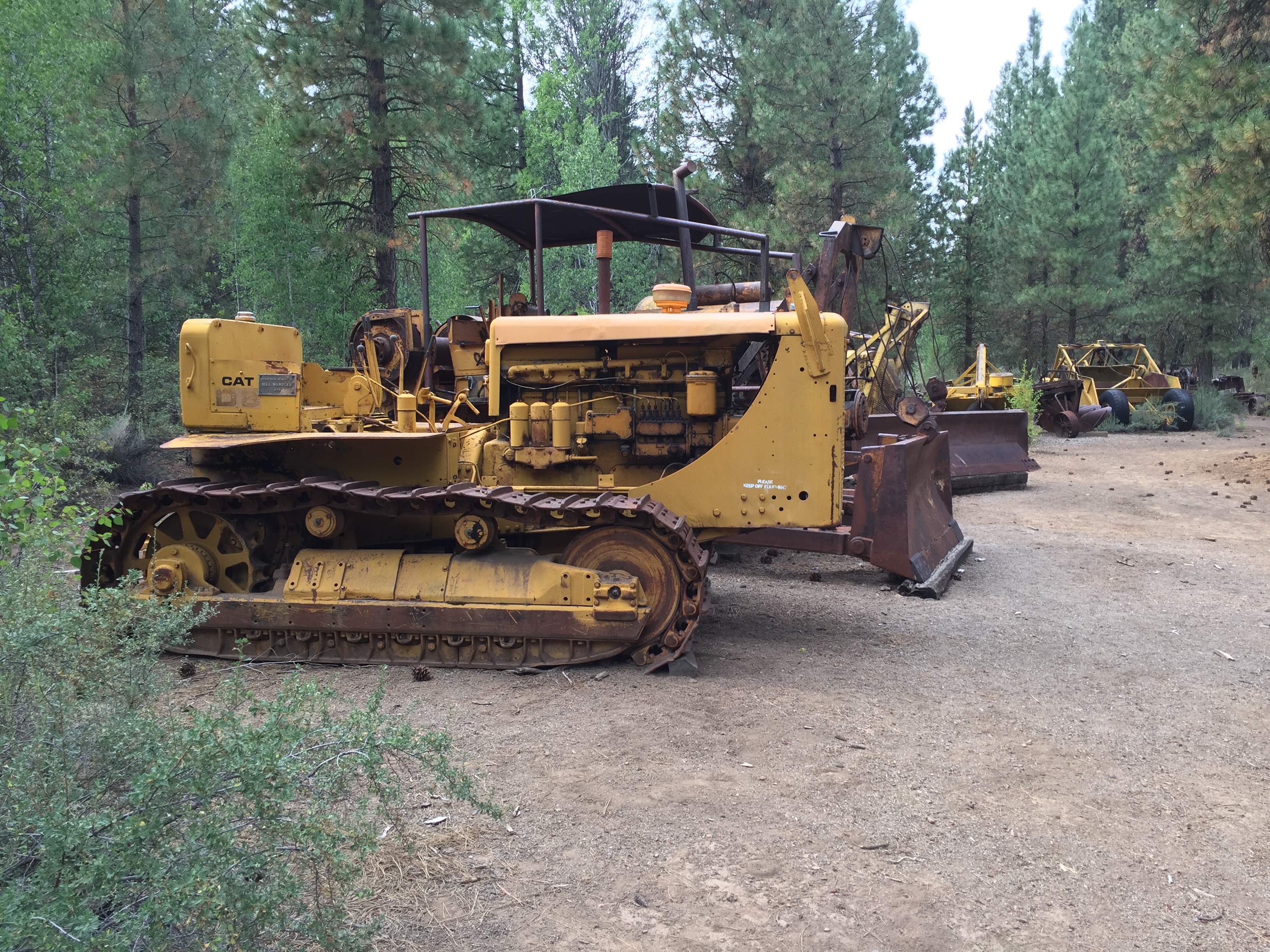
The museum is a collection of old buildings from the surrounding area moved here so that they could be saved and a large collection of old logging equipment loosely organized by time. Most of the logging equipment was derelict. There was a steam operated stationary machine that looked like it might have been for removing bark, something that handled logs sideways. No signs or anything to describe it.

Old steam tractors.

And bulldozers.

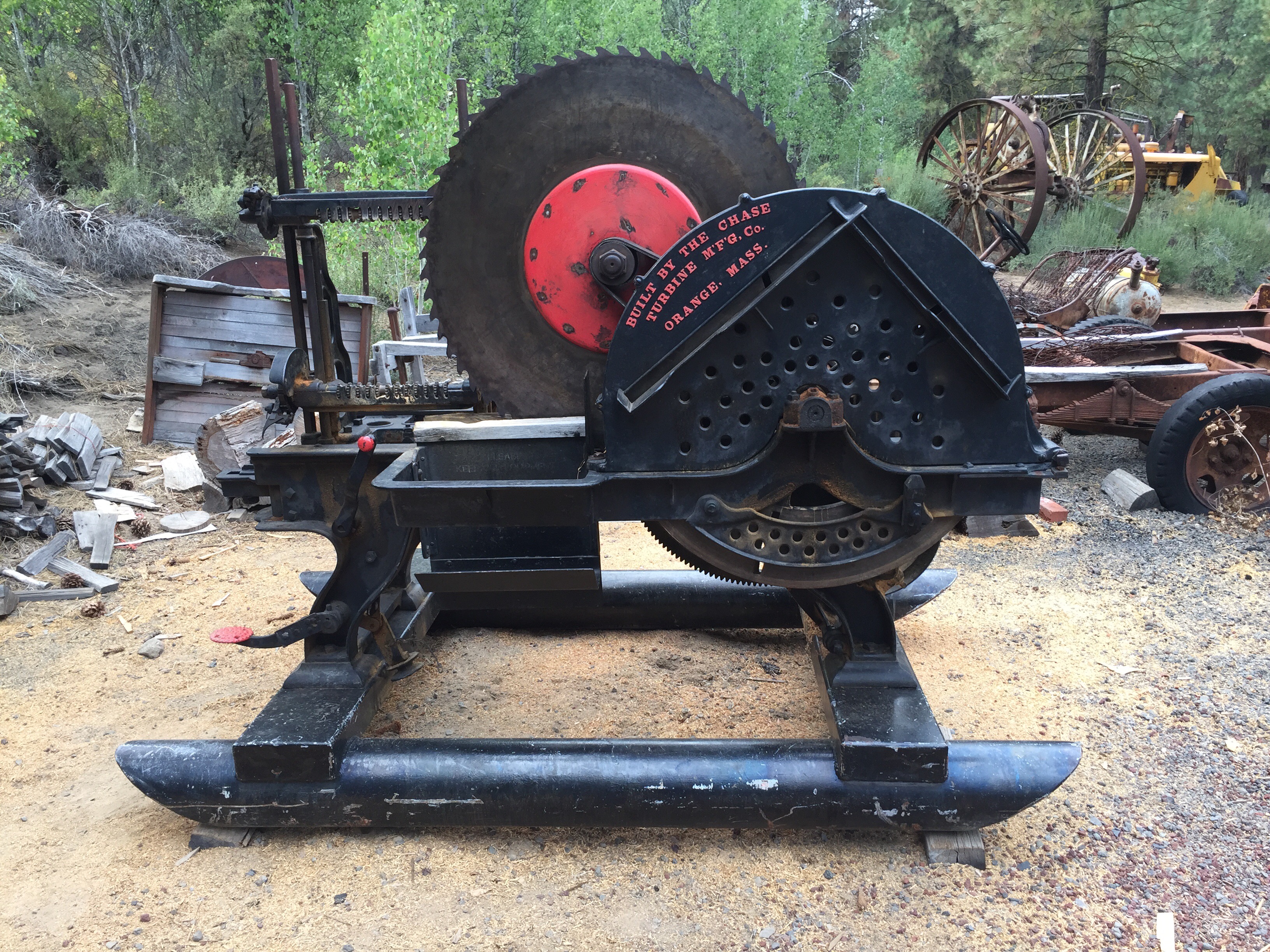
And this scary thing, a whirling arm remover I think. Almost all stuff was transportable from one site to another. Some was stationary for cutting logs into timber. The logging industry in Oregon today is mostly aimed at processing smaller logs, 16” or less into lumber. Almost anything bigger has to go to lumber mills in California or gets trucked to ports and loaded on ships for overseas markets.

Crater Lake National Park

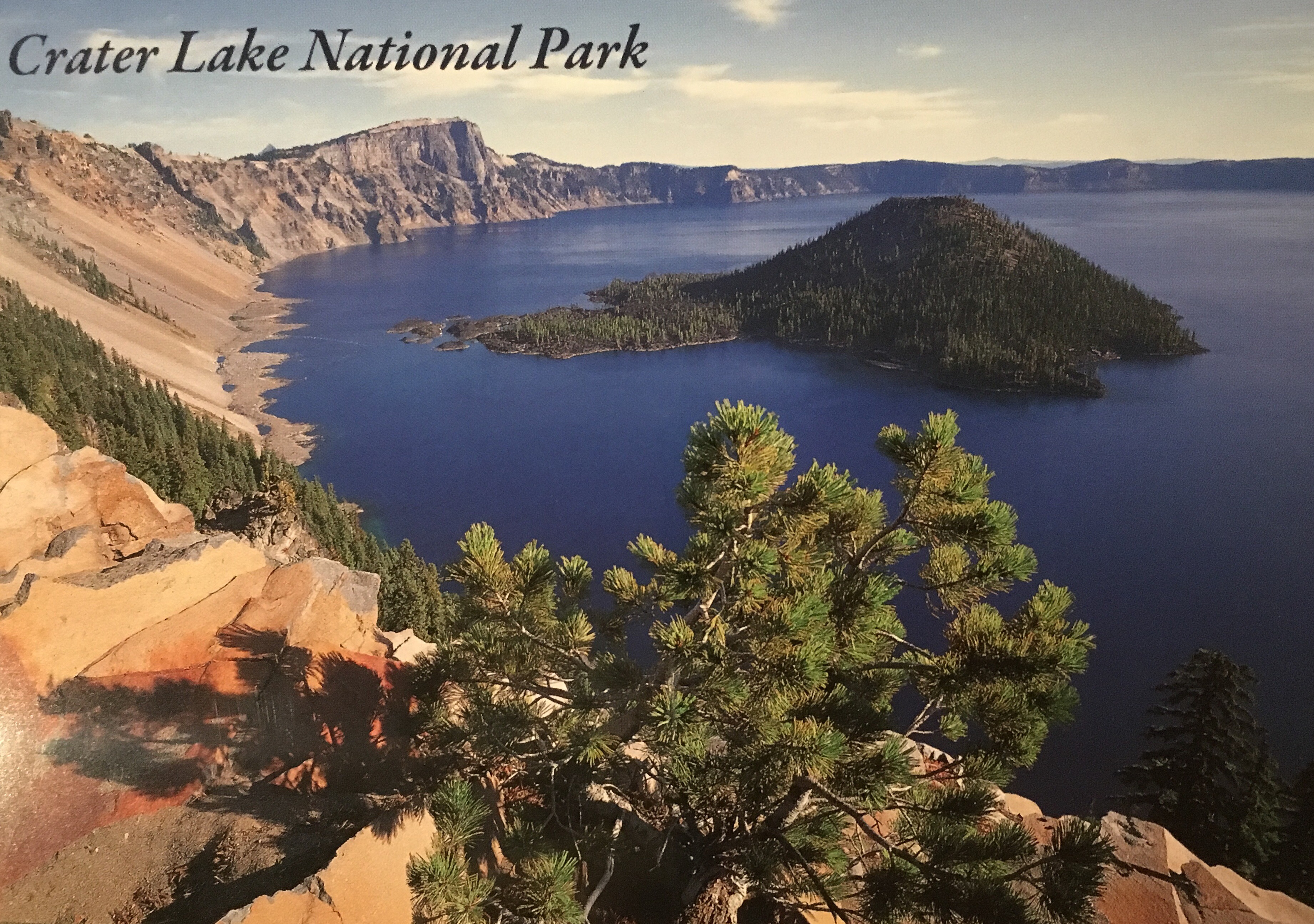
The drive to Crater Lake goes up. Only 7700 years ago this was a 12,000 ft high active volcano, Mount Mazama. For hundreds of thousands of years lava flows had built this mountain, glaciers had formed and scoured its sides and it was surrounded by vents in the sides of the mountain. Its magma chamber grew to a huge size and pressure. A massive eruption began mostly through the side vents. As the magma chamber emptied the mountain could not support its own weight and collapsed forming a deep caldera. Over time the caldera filled with water from rain and snow. Nothing flows into the caldera a only evaporation, seepage keeps the lake level where it is today, about 1000 ft below the rim of the caldera and almost 6,000 feet below the original summit of Mount Mazama. Crater Lake is the deepest lake in the US, 1943 ft deep. It averages about five miles across and holds almost five trillion gallons of water. (4.5 cubic miles of water). It is hard to imagine that much water but that is about how much water would fall if the entire state of Minnesota got a 3-4” rainfall.

Here is what Crater Lake looks like on the post card.

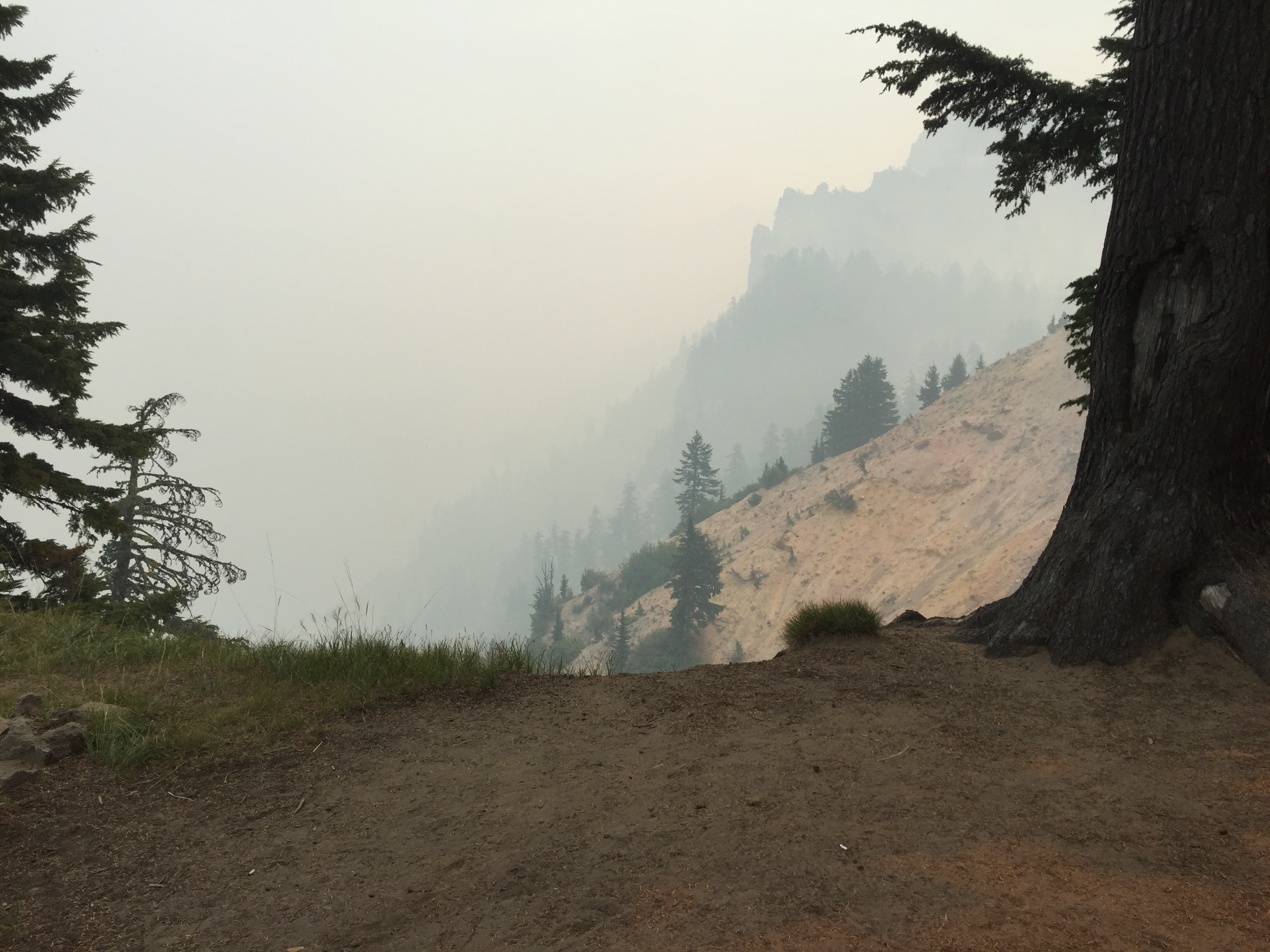
This is what we could see from the Crater’s edge.

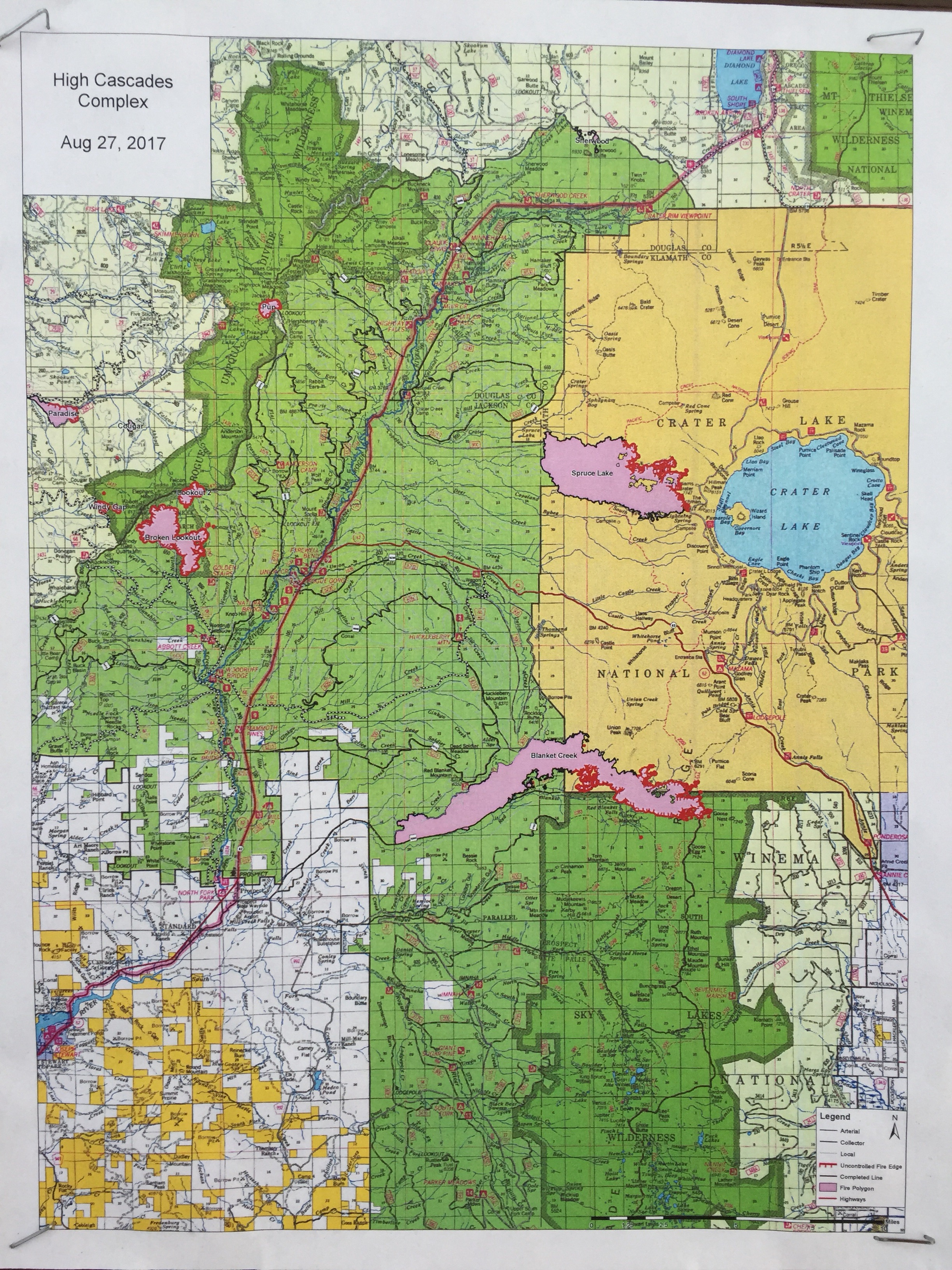
The red areas show the High Cascades Complex fire. The Spruce Lake fire was only a couple miles west of the crater. That part of the road around the crater was closed. There were lots of fire crews all over.

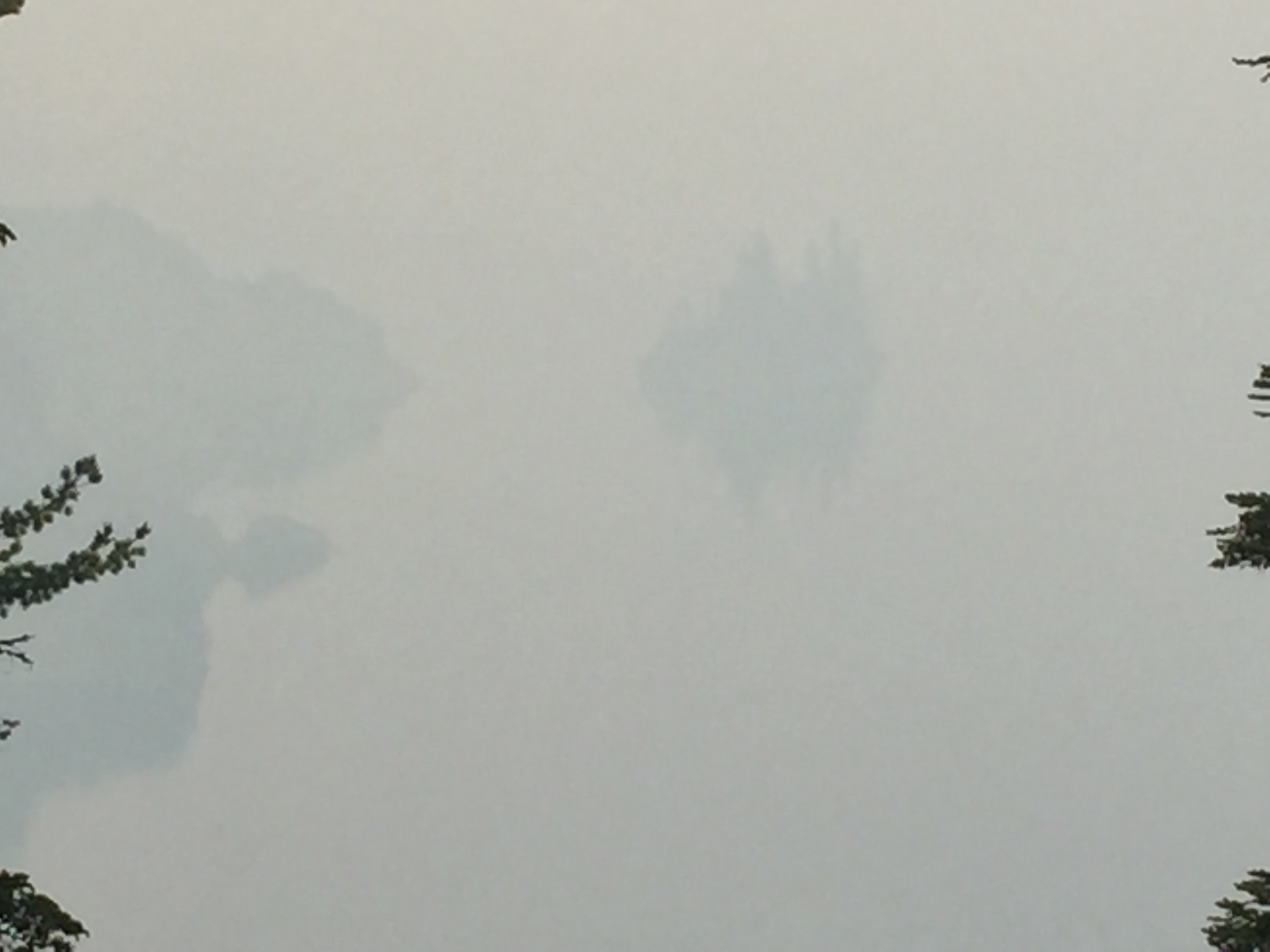
If you look closely you can see a small island named Phantom Ship that looks like a sailing ship (that is what they said anyway). It looked like a phantom alright. The smoke was really thick up there.

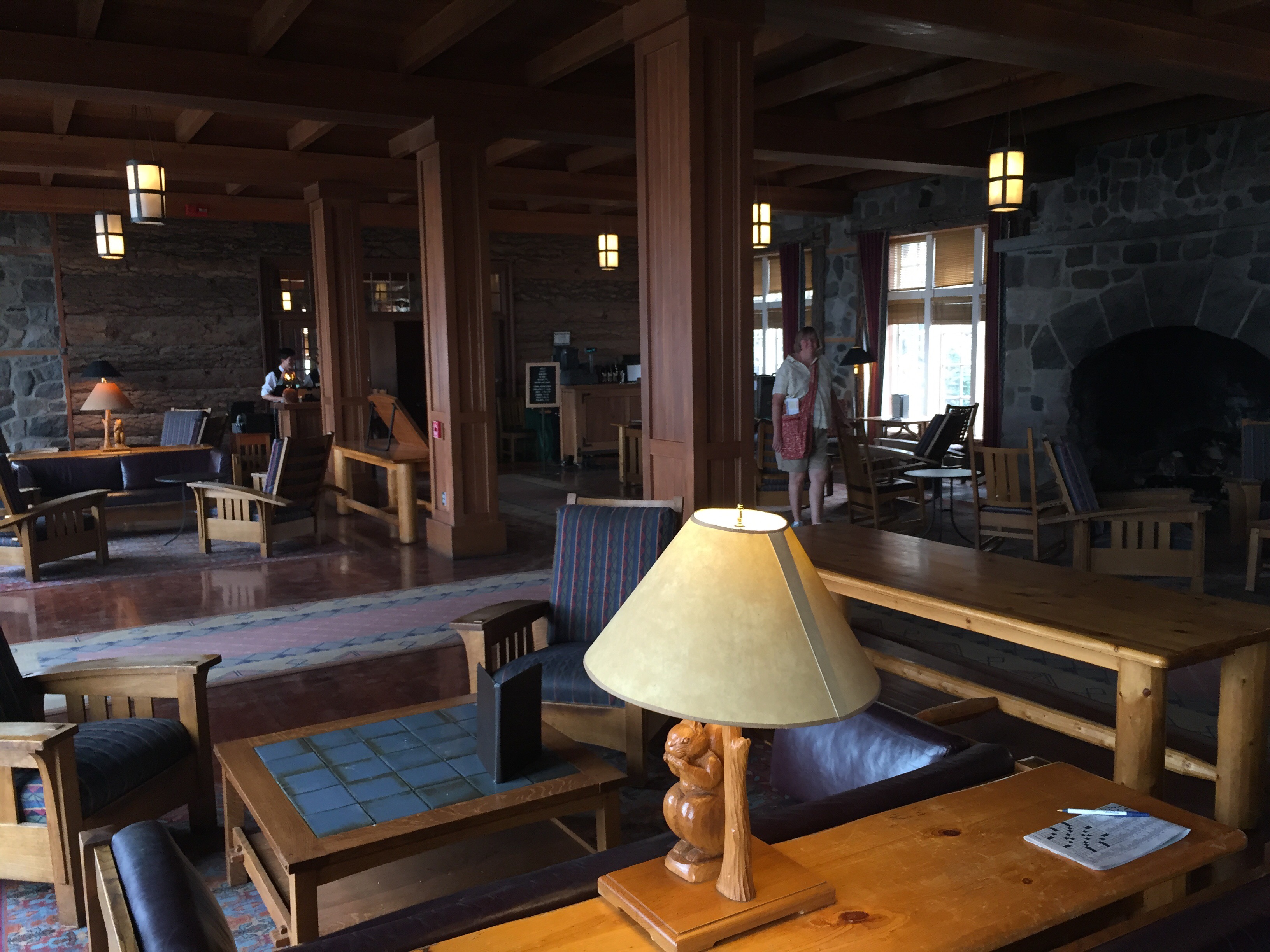
There is an inviting looking lodge at the rim. There was a comfortable sitting area and a nice dining room.

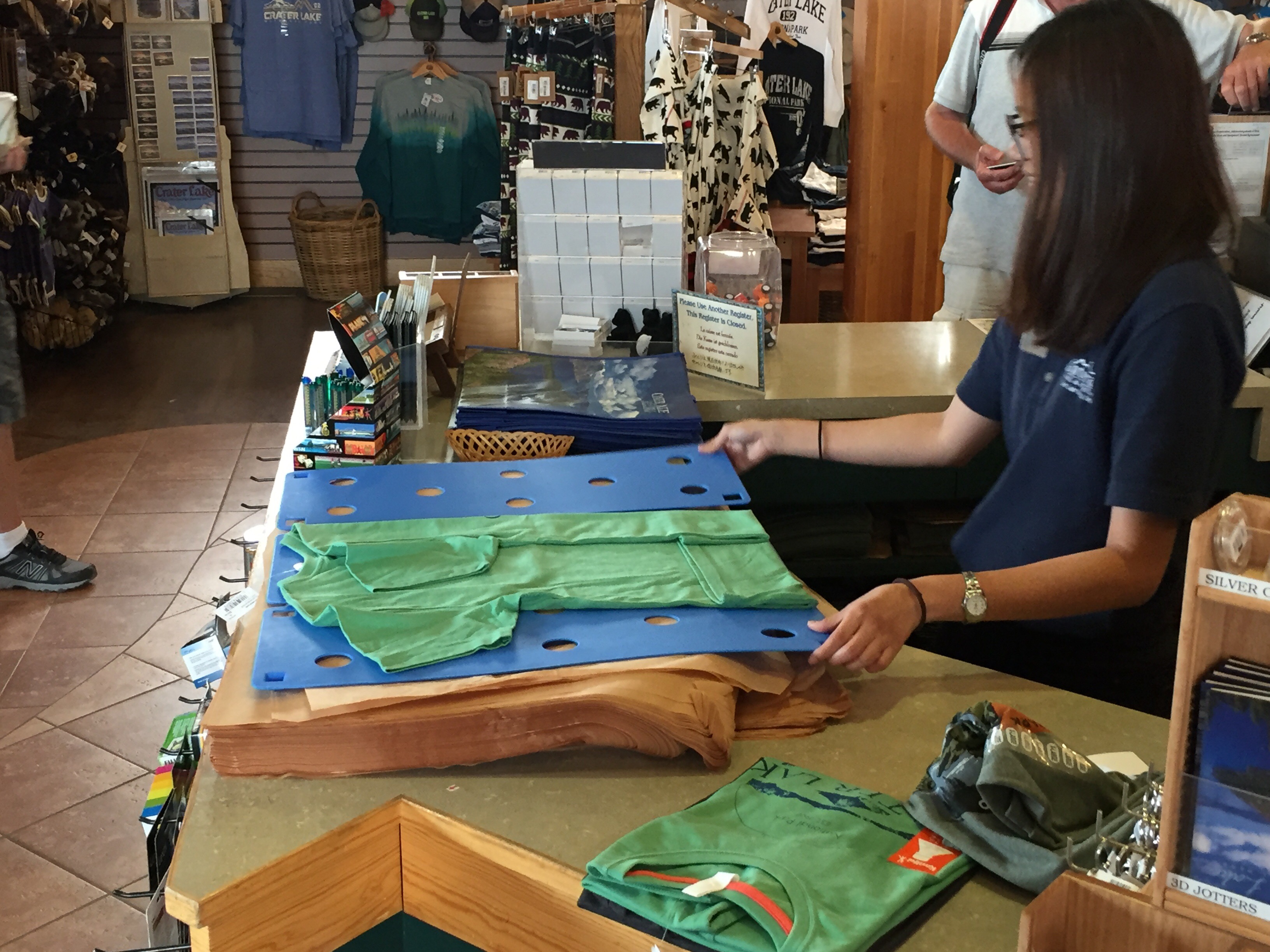
And of course, a gift shop.

I commented to the young lady folding t-shirts with the “Sheldon Folder”. She was clueless as to what I meant. I tried to explain but she said she had never watched “Big Bang Theory”. Too much YouTube I guess. Or foreign students working for the summer, that seemed pretty common. But she was pretty good at folding shirts. We bought a Crater Lake NP patch to add to our collection.

Next, on to the southern most coast of Oregon and even more smoke. We have to loop down and back up a bit in California. So at least we can say we went to California in the coach.

More later,

Roger and Susan.

Sisters, Oregon, Summer 2017.

We left Colter Bay with some reluctance but were looking forward to Oregon. We drove south through Jackson and along the Palisades Reservoir toward Idaho. The interstate from Idaho Falls loops down and back up through Mountain Home where we stopped for the night at Camp WalMart. It was a long day on the road with another one ahead across Oregon to Sisters.

The next day it was US Highway 20 from Ontario on the eastern Oregon border to Brothers to Bend to Sisters and an hour gained to Pacific time. A winding hilly way to go, two lanes mostly, some with reasonable shoulder space most without. Reports of massive wild fires in Washington and central Oregon kept us thinking about what was ahead. There was a huge fire just west of Sisters with evacuation orders and smoke warnings. We called ahead, the city campground where we were going to stay said no problem. So off we went.

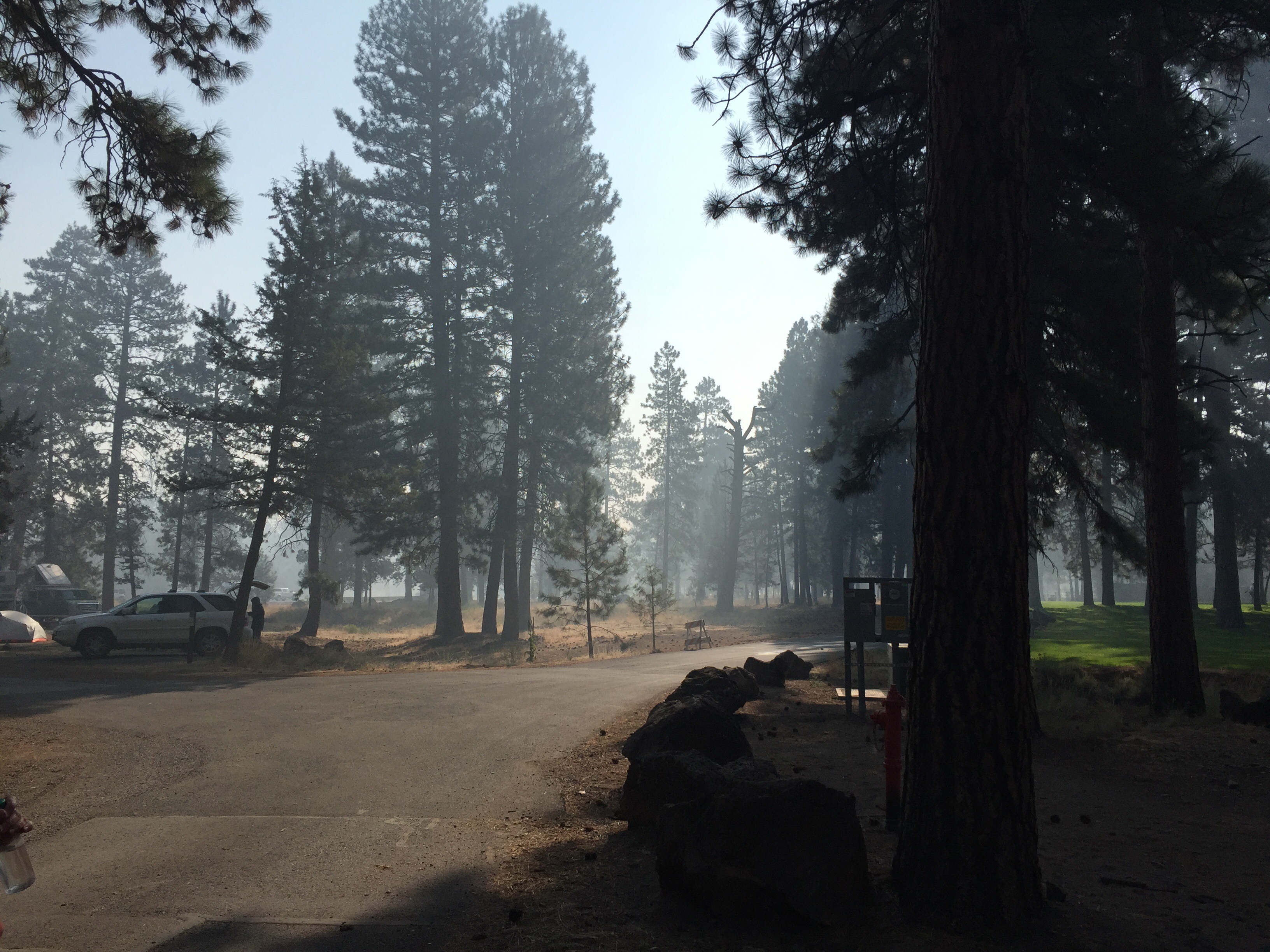
Eastern Oregon was very dusty and hazy and the further west we went the dust became smoke. By Bend it was really quite thick. By Sisters, well the campground spokesperson was a bit optimistic. While the evacuation orders had been lifted no one told the smoke.

I am reading a book that takes place in England during WWII. The refugees to the countryside called London “The Smoke”. Here we were.

In spite of the smoke the campground was pretty full. Just down the road there was an “Incident Center”. Dozens of tents set up for fire fighters, equipment tents, food prep and eating tents, showers, fire trucks, busses and more. Organized chaos.

In town a Forest Service person had a big bulletin board along a sidewalk with fire maps and information. At that time the fire was only about 10% contained in three major fire areas and less than 7 miles west of Sisters.

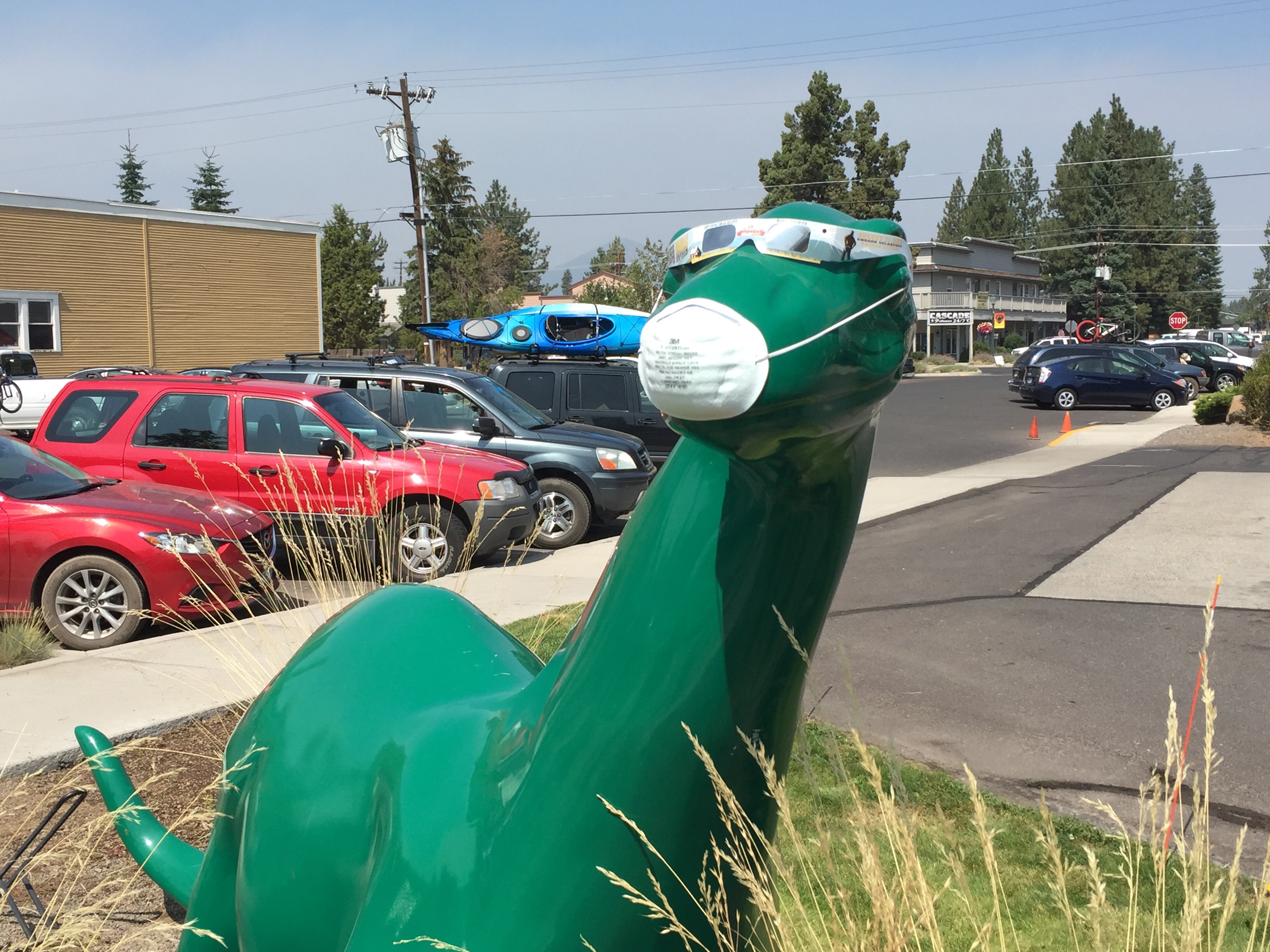
At a Sinclair gas station they were doing their best to keep a sense of humor.

A solar eclipse and now this.

We spent some time in town, it is about 8 blocks long down main street. We found a place claiming great fish and chips and they were. At the other end of town we got the Jeep washed.

That evening the sun was an odd color as it was setting.

A lot more orange than usual.

In the morning the Jeep was dusted in a white ash layer, the awnings too. We connected the Jeep and headed off to Crater Lake. And more smoke.

More later,

Roger and Susan
String Lake, Grand Teton National Park, Summer 2017.

Just north of Jenny Lake is a small narrow lake called String Lake. We left our campsite at Colter Bay and drove the Jeep down for a visit.

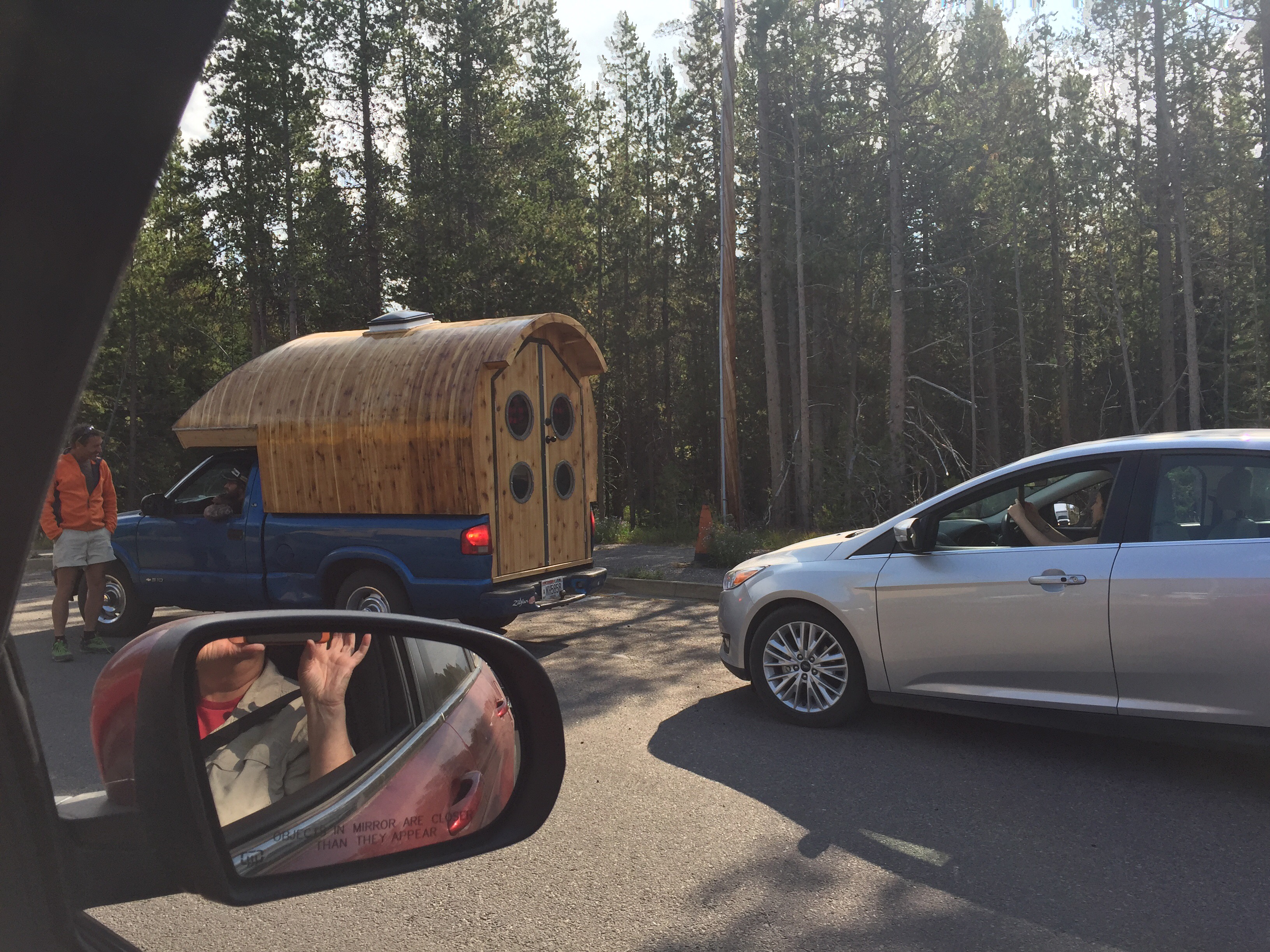
On the way out of Colter Bay we saw this camper. Just about anything you can imagine shows up.

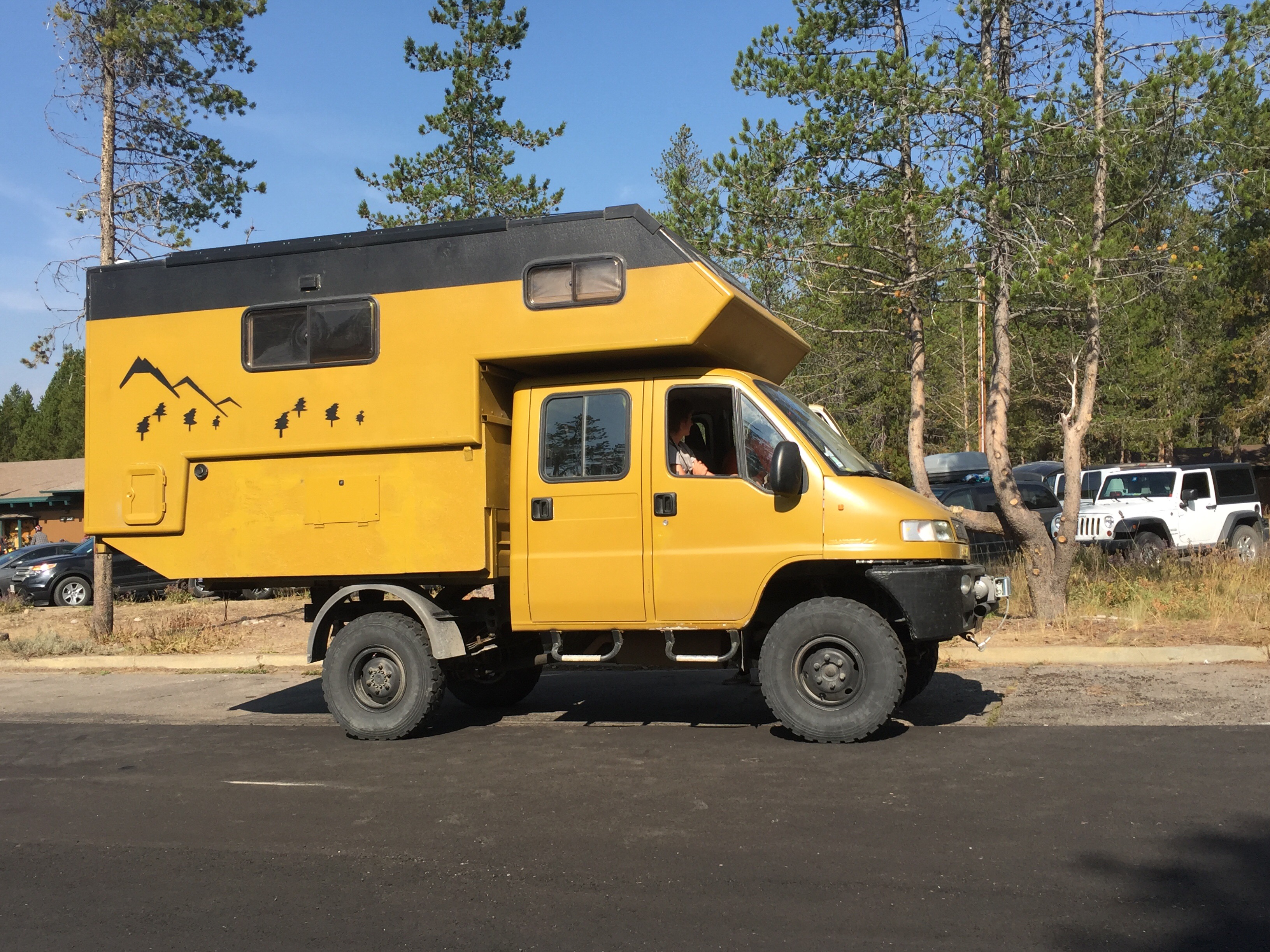
Probably a home made pickup camper, pretty neat. Everyone seemed to want a picture. And this, a European traveler who brought one with him.

We saw these folks in March at Zion NP and talked to them here. It is probably not the most efficient or comfortable way to travel and they probably will never go anywhere off-road but they were having fun.

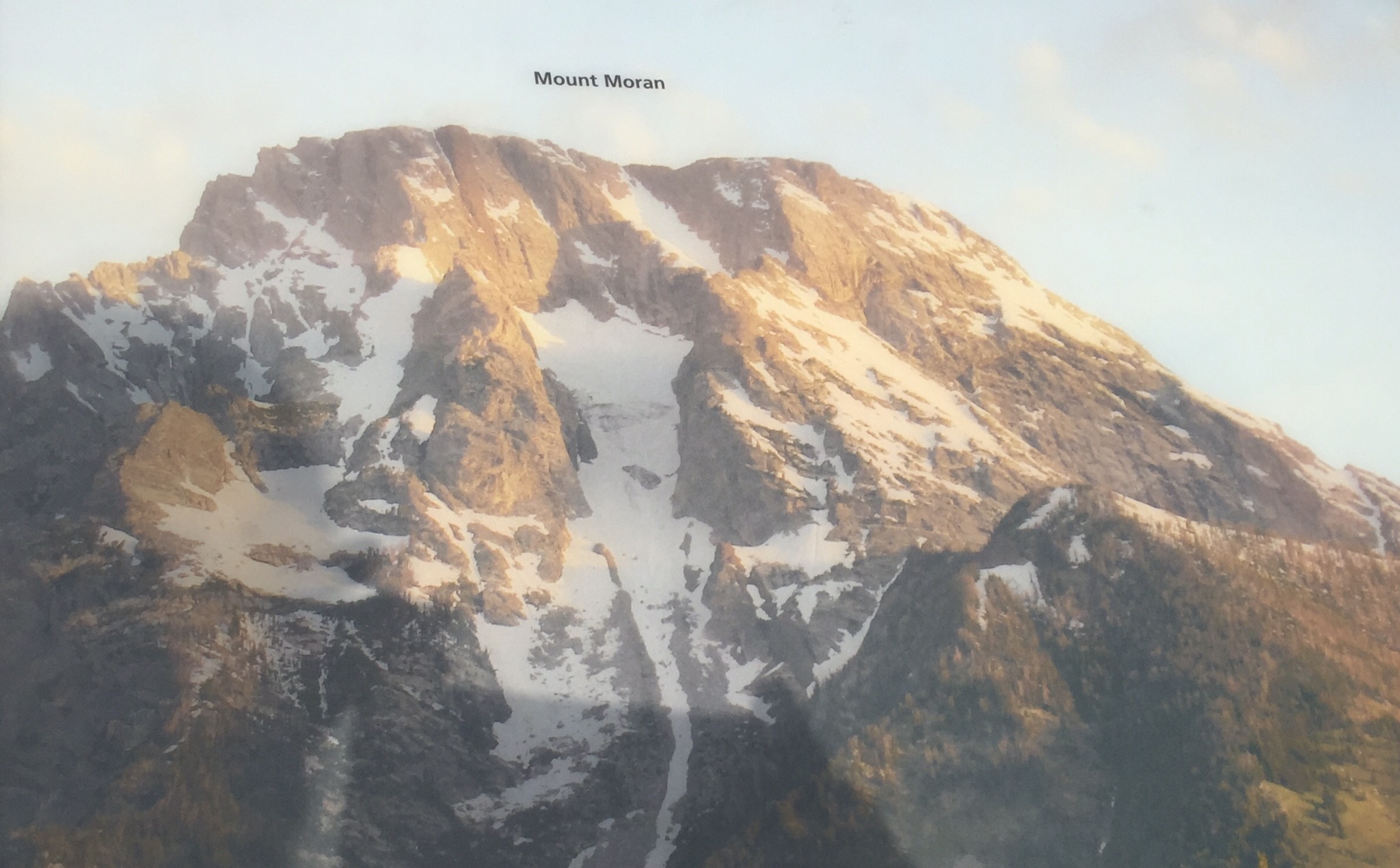
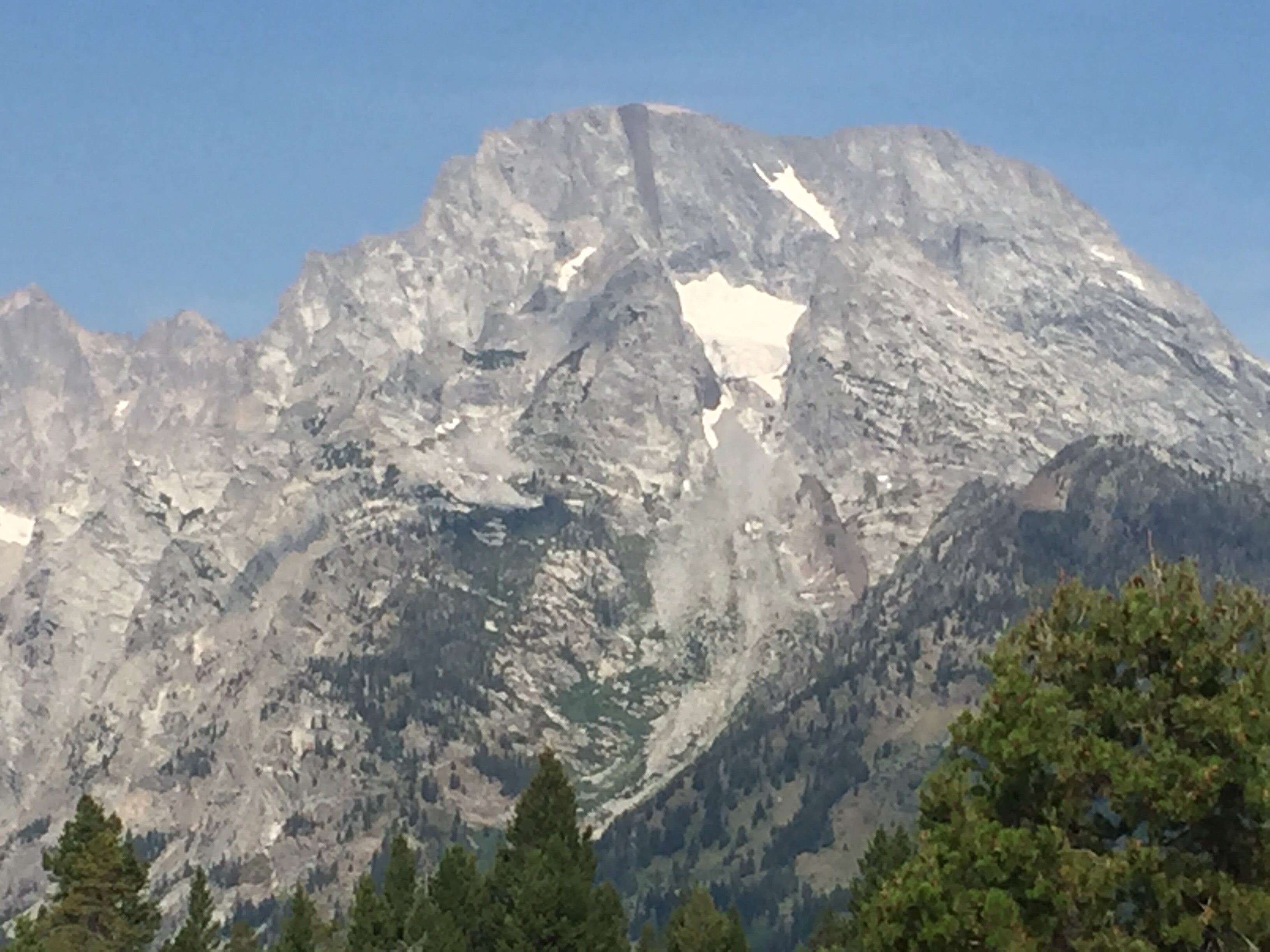
On the way to String Lake we stopped at a Mount Moran viewpoint. There was a picture from only 25 years ago showing the Skillet Glacier.

What it looks like today is quite different. Mount Moran has a distinctive dark vertical rock line near the top. These mountains are primarily volcanic and this is a wedge of rock different from the surrounding rock. It makes it pretty easy to spot.

String Lake is right along the fault line between the Teton Range and Jackson Hole. Earthquakes push the mountains up and drop the edge of the valley. They are way overdue for a significant earthquake. The last one moved the two landmasses more than 6 feet relative to each other.

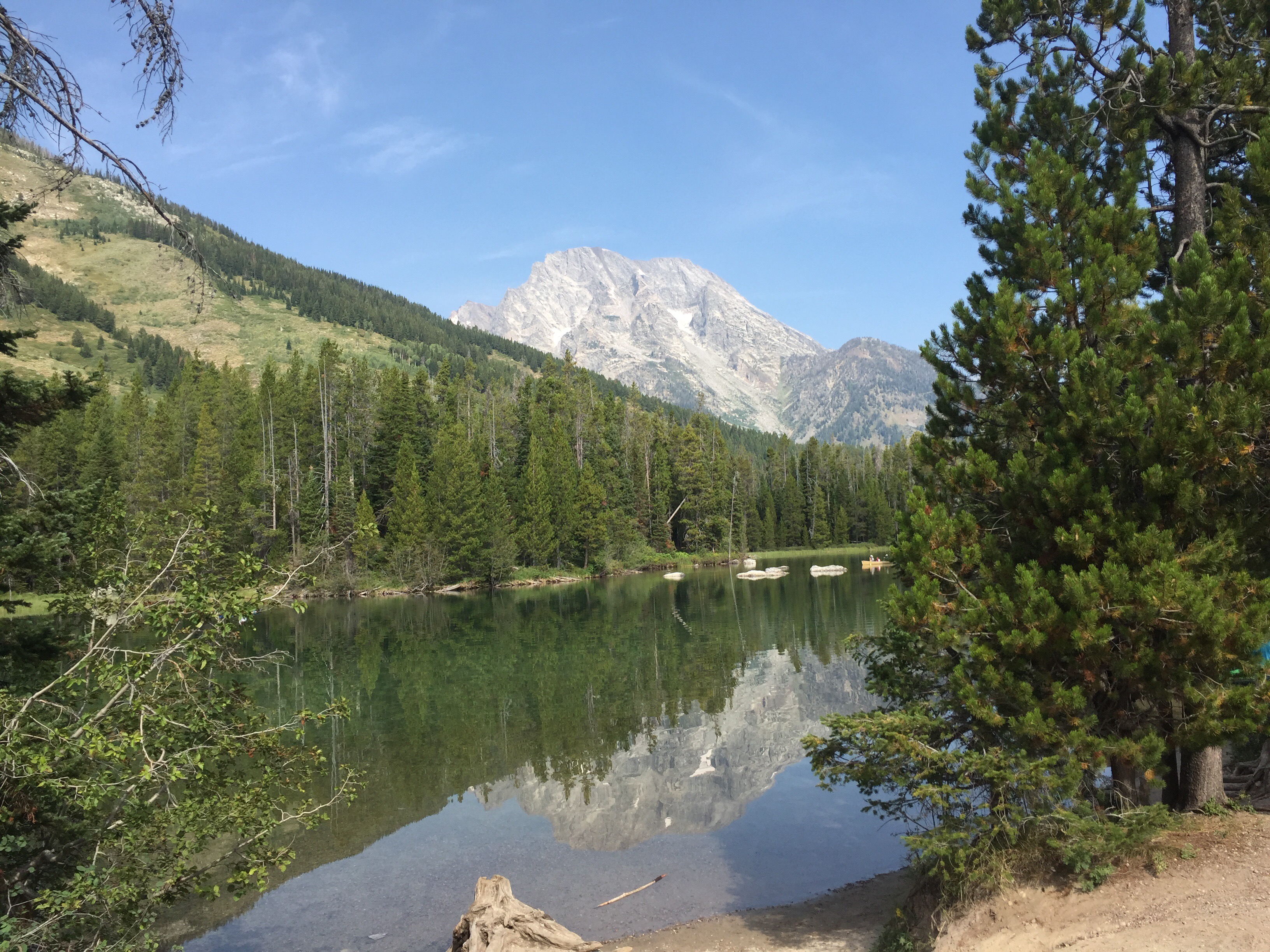
String Lake is only a few miles from Jenny Lake but far removed from the crowds, parking problems and craziness. Looking north along the lake you can see Mount Moran and some canoes. It is easy access to the lake for canoes and kayaks. And it is pretty shallow so it is popular for swimming. There are trails and picnic areas all along the lake side.

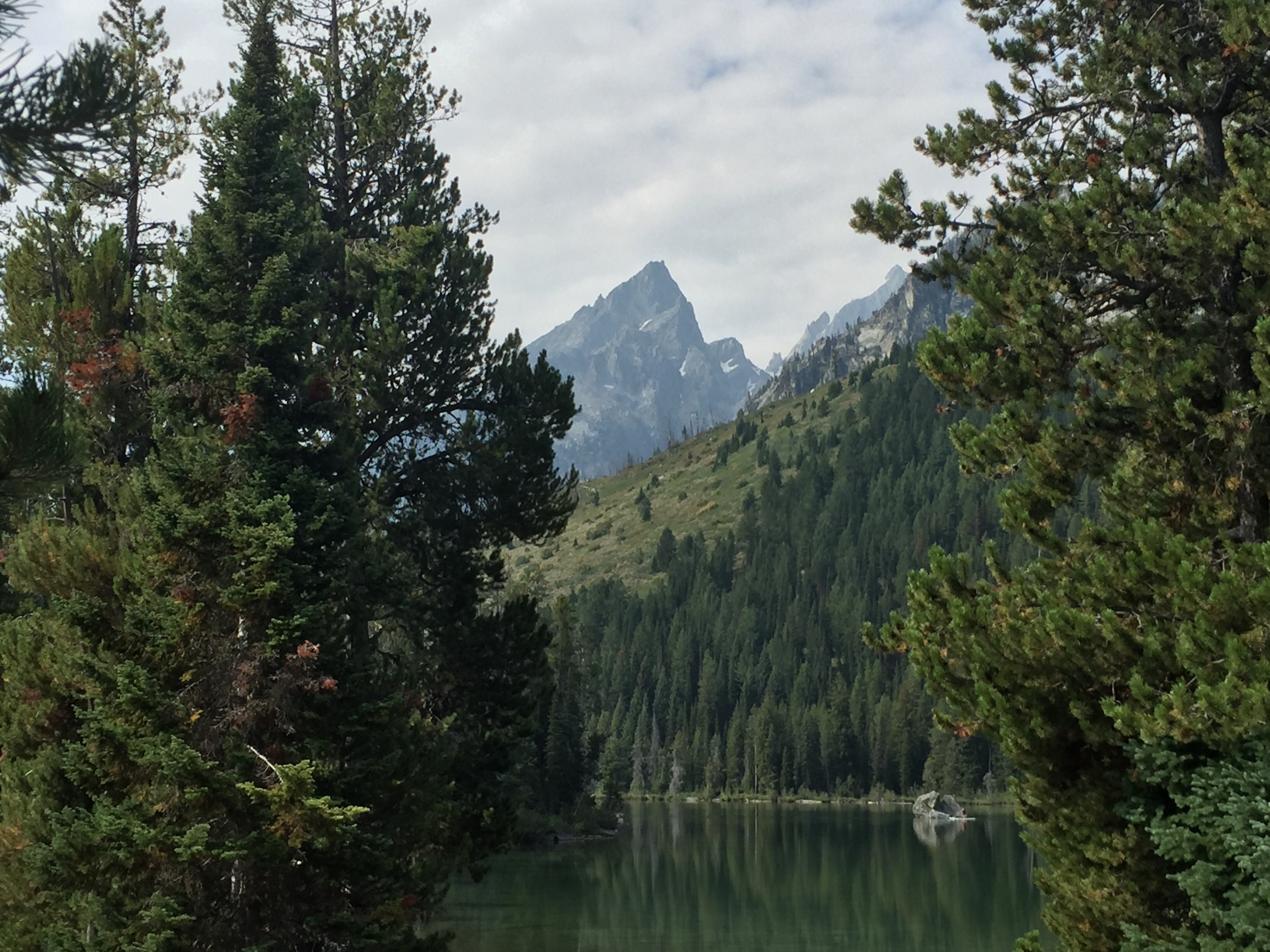
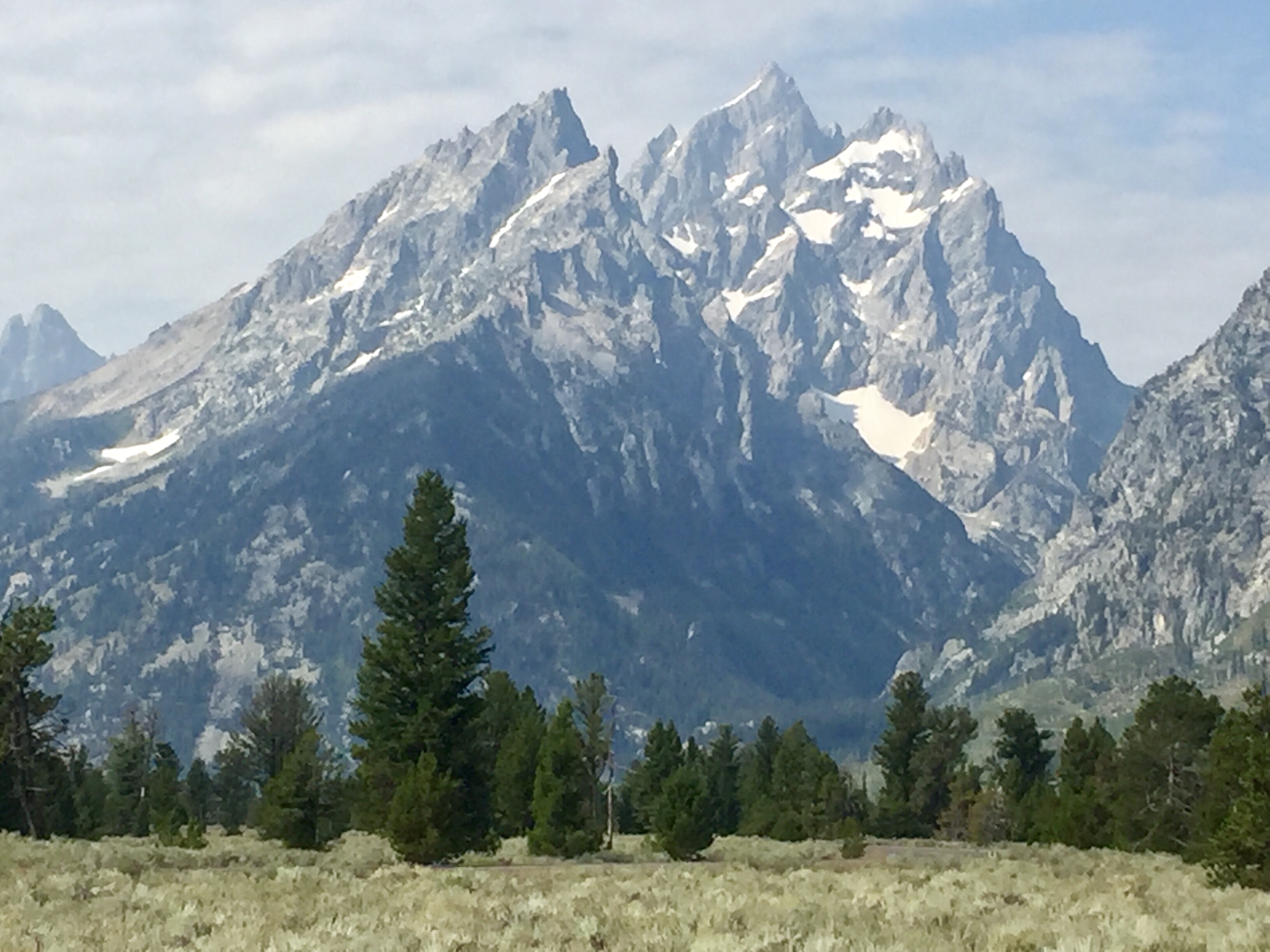
And to the south, a glimpse of the Grand Teton and the Middle Teton.

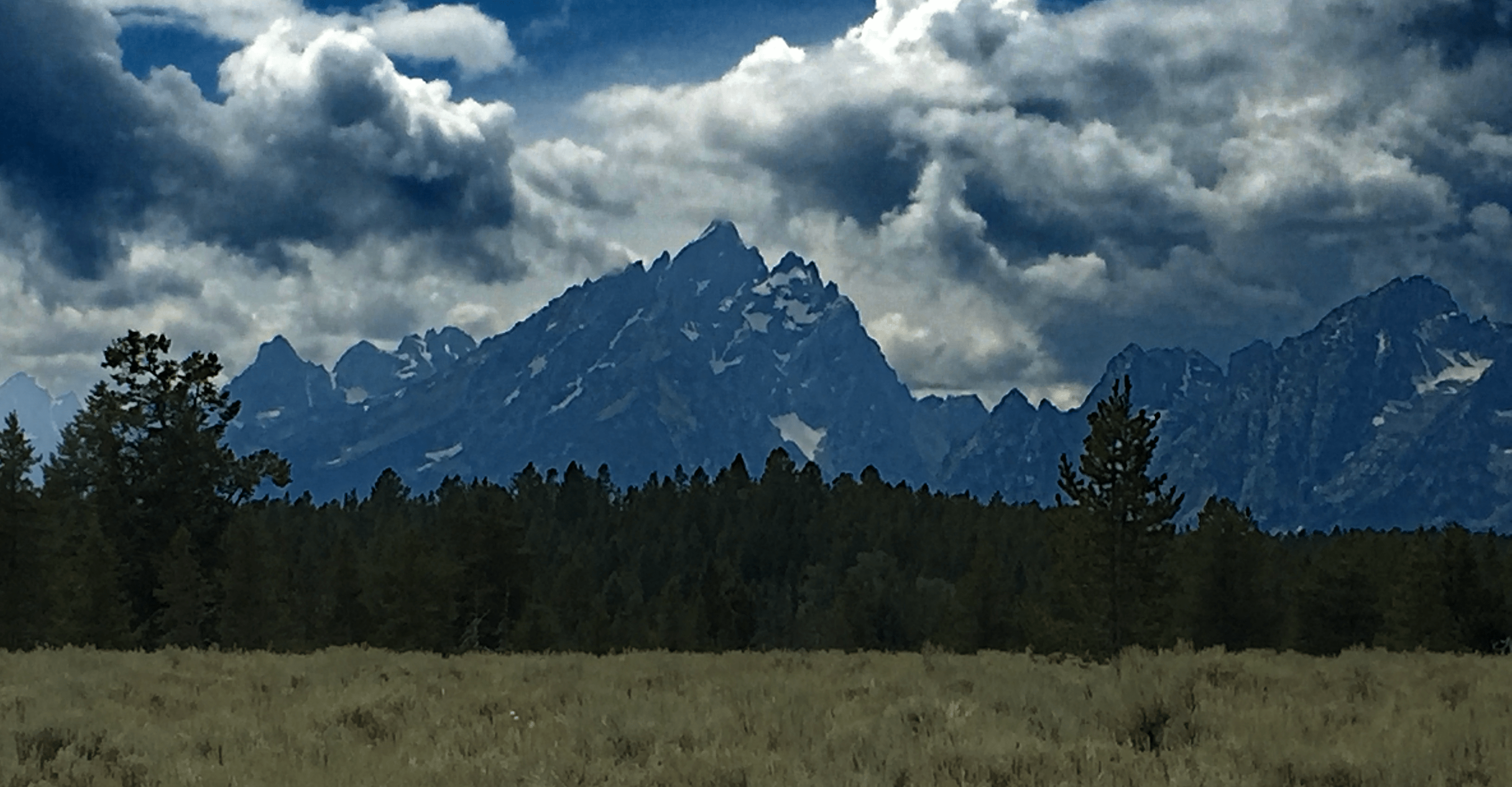
And from just a bit down the road, Mount Owen, the Grand Teton, the Middle Teton and in the distance, the South Teton. All over 12,000 ft with the Grand Teton at 13,770 ft. The Grand Teton peak is just over 7 miles away from String Lake and more than 7,000 feet above the lake level. This is what makes the Tetons different and special.

We are coming up to the end of our stay in the Tetons, time to head west to the Oregon Coast.

More later,

Roger and Susan
Laurance Rockefeller Preserve, Grand Teton National Park, Summer 2017.

The Laurance Rockefeller Preserve is at the very southern end of Grand Teton National Park. It was the JY Ranch when John D Rockefeller Jr purchased most of the land in Jackson Hole. He gave all of it except this parcel to the United Stated to form the Jackson Hole National Monument which later was the basis for the expanded Grand Teton National Park.

The family kept the JY ranch as a retreat. It eventually was owned by Laurance S Rockefeller who over time donated most of the ranch to the National Park. The final section was donated in 2001. The donation came with special preservation and maintenance restrictions, with the vision that the preserve remain a place where visitors can experience a spiritual and emotional connection to the beauty of the lake and the Teton Range.

There were several cabins around the southern end of Phelps Lake and roads leading into them. They have all been removed and the area restored to a more original condition. There is a significant network of hiking trails in this area, more than in any other part of the park.

It is a narrow two lane road to get here, nothing bigger than a car is allowed. The road is frequently closed in the late fall due to bear activity. We tried to get here two years ago when we were here but the bears had the road closed.

The Visitor Center is a short walk from a small parking lot, room for only as many cars as would fit, not many. There was a waiting area for a space to open up with Park Volunteers to help manage this flow and provided information on the Visitors Center and hiking trails. We waited for about 20 minutes. The small parking lot limited the number of visitors at any one time. It is a place for uncrowded reflection and study.

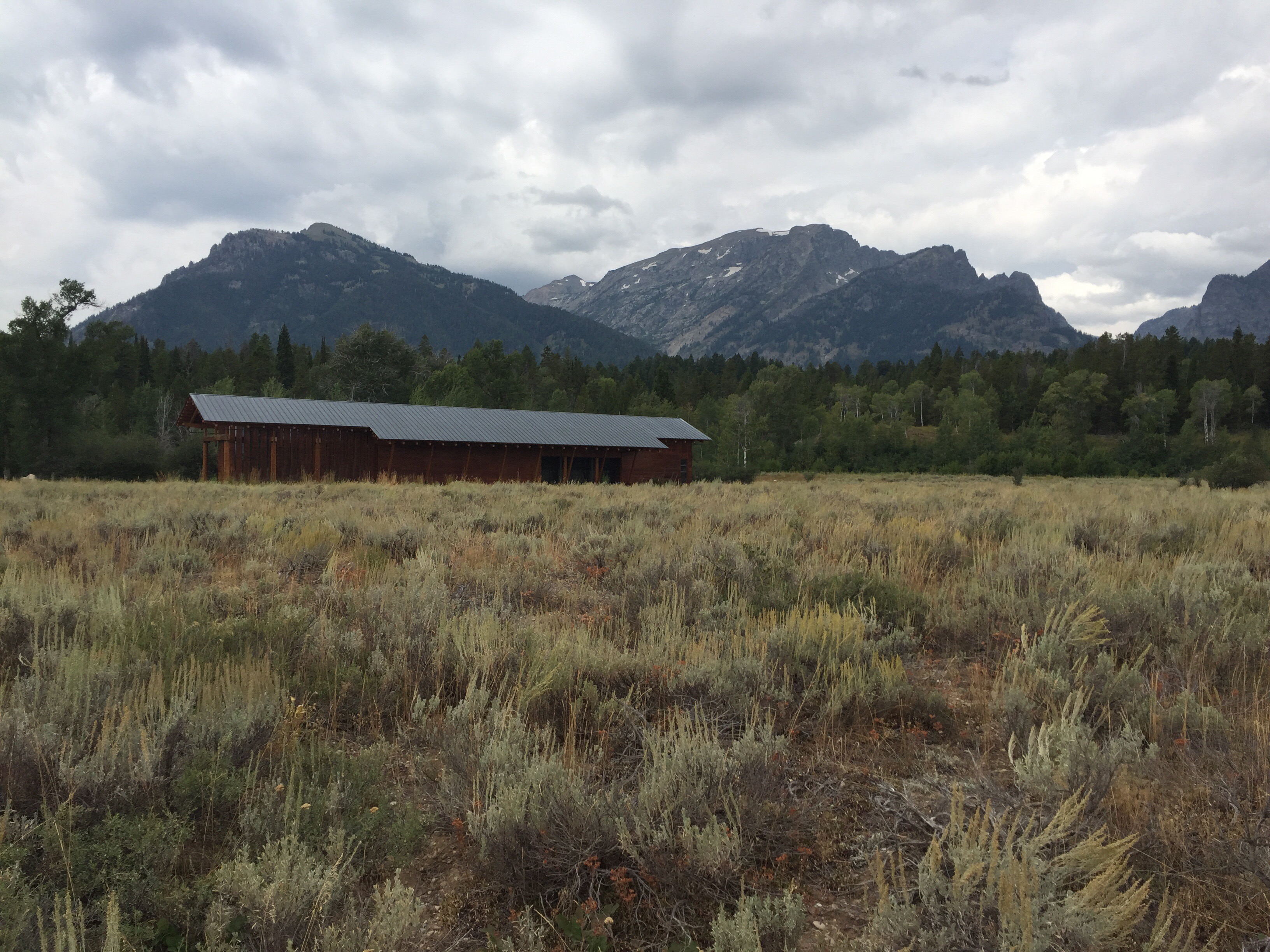
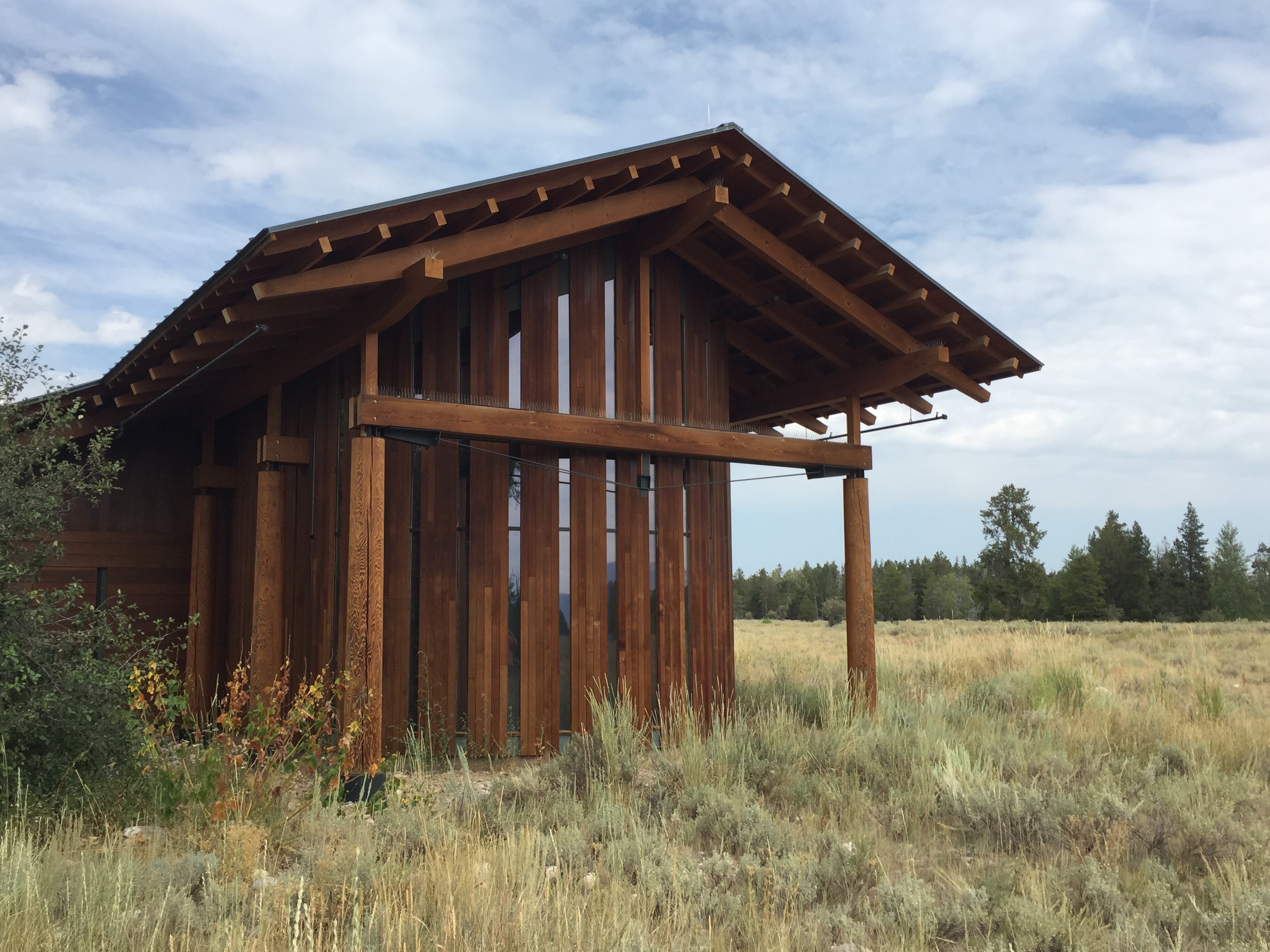
The building is interesting, almost rustic but very refined. It was built to be as green as possible with the minimum possible impact on the surroundings. The views of the Teton Range from here are very different than those further north. This is an area where moose, bear and elk are active and commonly seen.

In the Visitors Center there is a section with several large video screens of natural scenes and accompanying outdoor sounds. The images changed, moved from one screen to another as did the sources of the sounds. Without moving there was a feeling of continuous motion. Where you looked, where you listened was always changing.

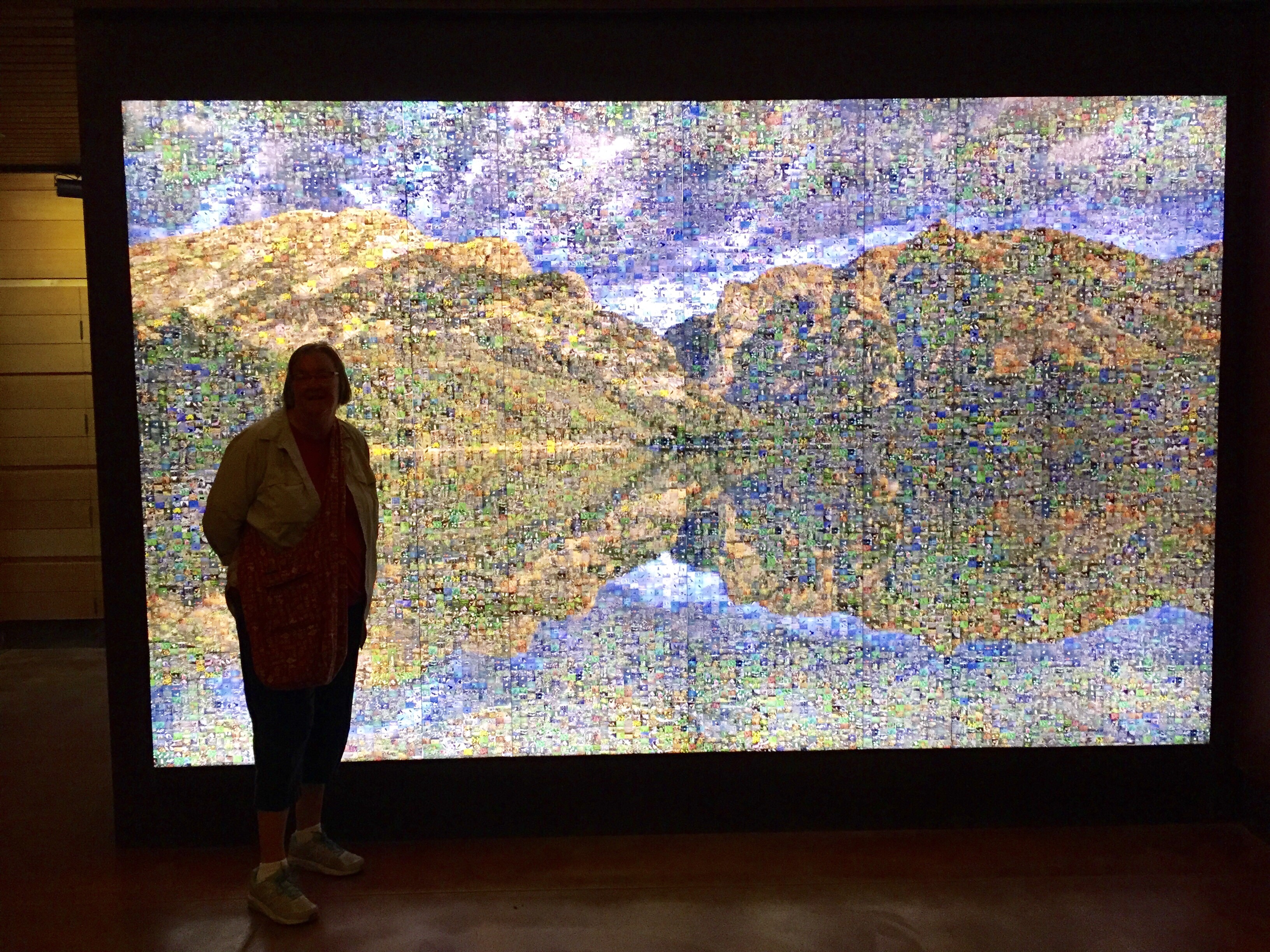
At the end of this section was a large mosaic mural.

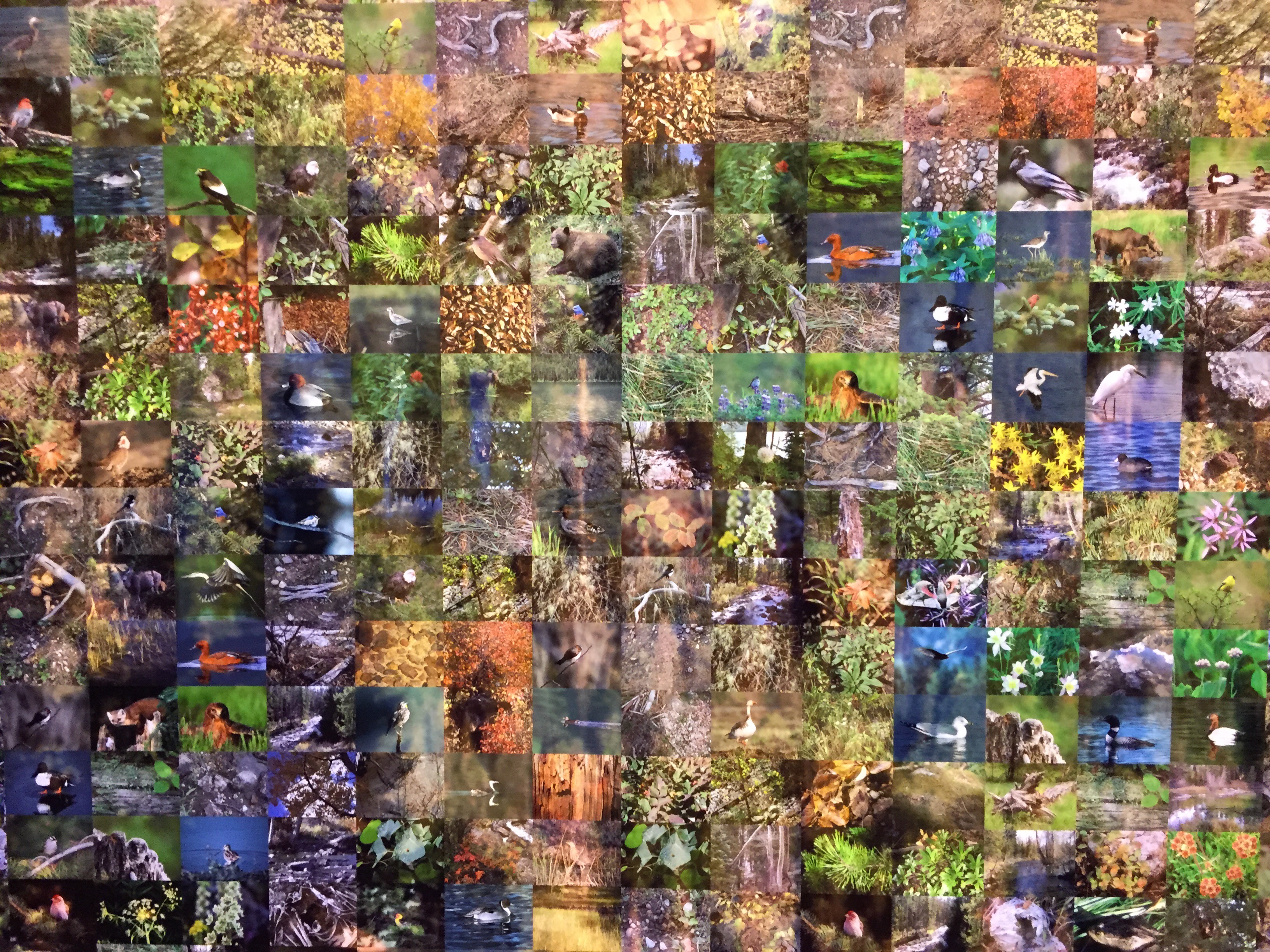
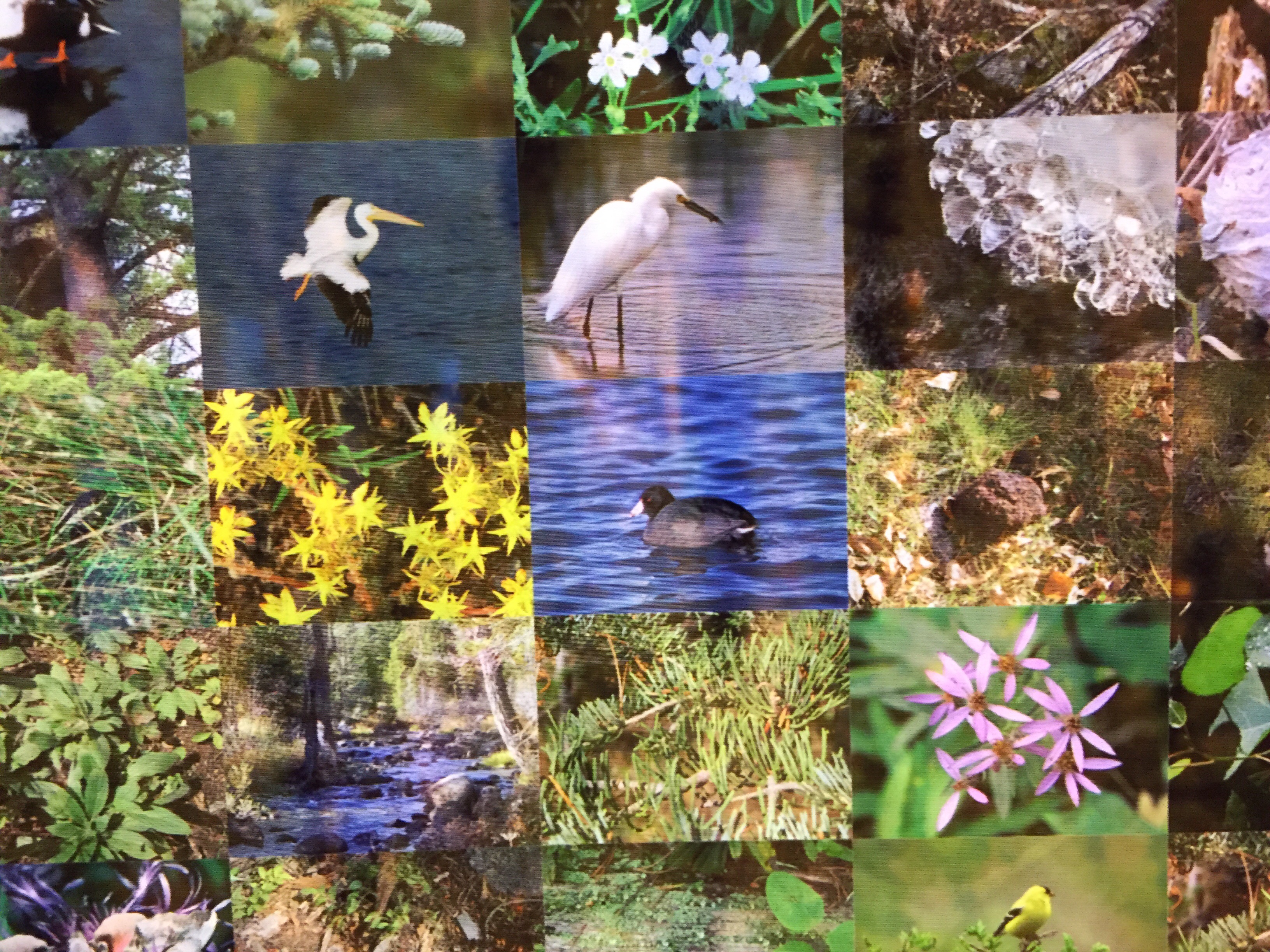
Getting closer revealed that it was made of other small pictures.

Each a very interesting picture on its own.

And then at the end past some dividing walls, a very tall circular room with benches. Small speakers surrounded you at several levels all the way to the top. Sitting quietly you were immersed in a outdoor soundscape leaving it to your imagination to see what it looks like.

This was a very nice place, very different, very calm.

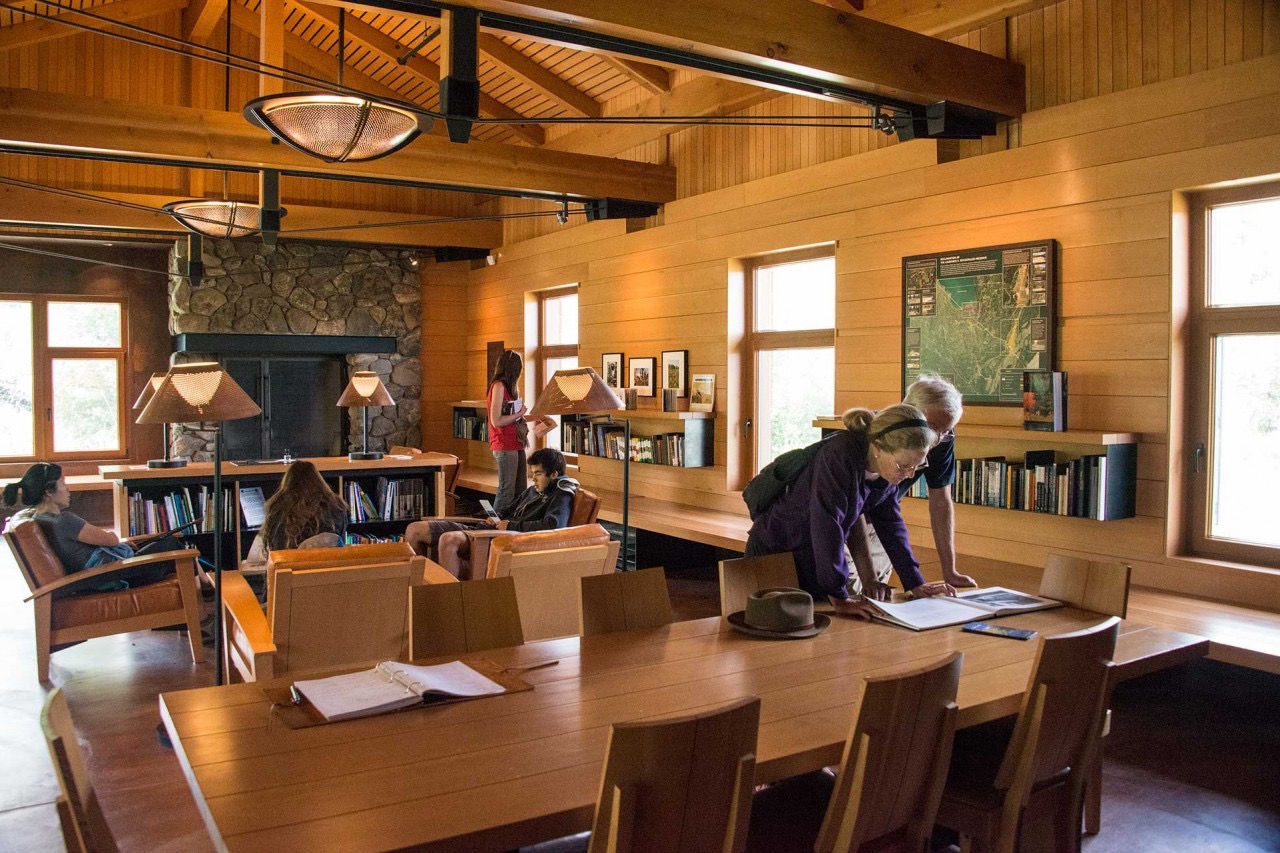
Laurance Rockefeller envisioned this place to be just as it is. Quiet and uncrowded. Just as it had been for him growing up, a place of discovery. And for us today, a reading room with amazing views, books, maps and a warm fireplace.

This is a place to return to, to follow the trails to the lake and beyond. This is another unexpected special place in Grand Teton National Park.

More later,

Roger and Susan
Polecat Hot Springs, Grand Teton National Park, Summer 2017

We went on a hike to the Polecat Hot Springs. These are actually in the John D Rockefeller Memorial Parkway area between the Tetons and Yellowstone near Flagg Ranch. The Snake River flows south out of Yellowstone through this area and into Grand Teton National Park where it becomes Jackson Lake. Fishing on this part of the Snake River is said to be very good. There are many fewer people fishing and the fish are less stressed. Access to the river seemed easy and many fish-floated the seven or eight miles from a launch point at Flagg Ranch down to Jackson Lake.

Flagg Ranch is not now nor ever was a ranch. It was an early Army outpost guarding the southern approaches to Yellowstone. It got its name from all of the flags that flew over the base. There was no explaining the double g at the end. There was a lodge, cabins and campground there for a long time until it burned down. A new log lodge was built closer to the Snake River which turned out to be a poor location as it was in the flood plain of the Snake River. So in the 1990’s they took the lodge apart and moved it about a mile to its present location.

The trailhead to Polecat Creek and the Polecat Hot Springs started near the lodge. Some maps said 1.5 miles. The signs said 1.2 miles. None were very accurate. It turned out to be closer to 4.5 miles round trip when you figured in all the connections and links from one trail to another.

The Polecat Creek is closer to a river based on what we saw there. It was pretty substantial. We didn’t see any fishing people which seemed odd but there were lots of white swans (not seen here). This water is warmed a bit by the Hot Springs.

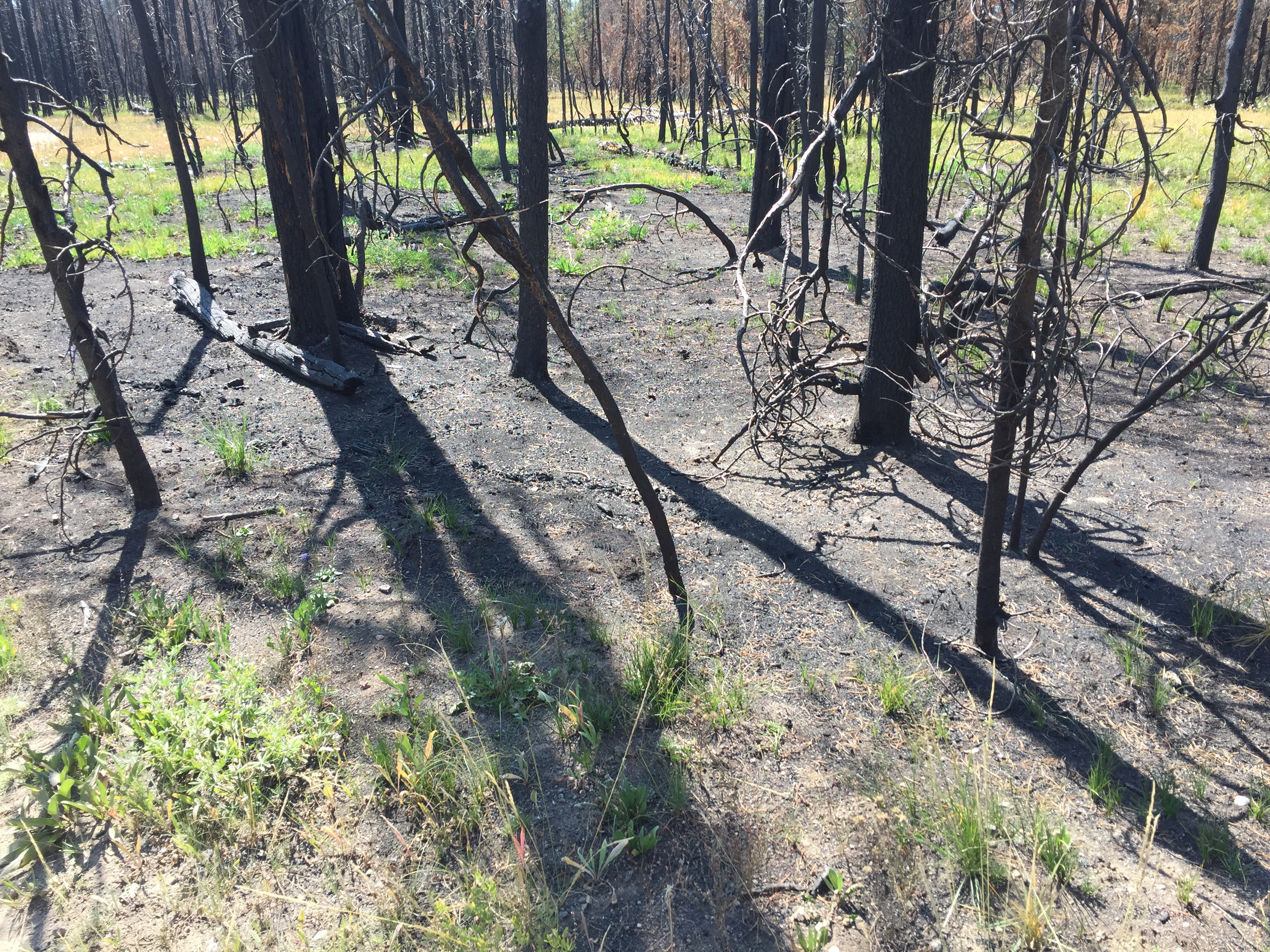
A large area north of Flagg Ranch burned in the summer of 2016. The south entrance to Yellowstone was closed for some time as was the only way into the northern entrance to the Tetons.

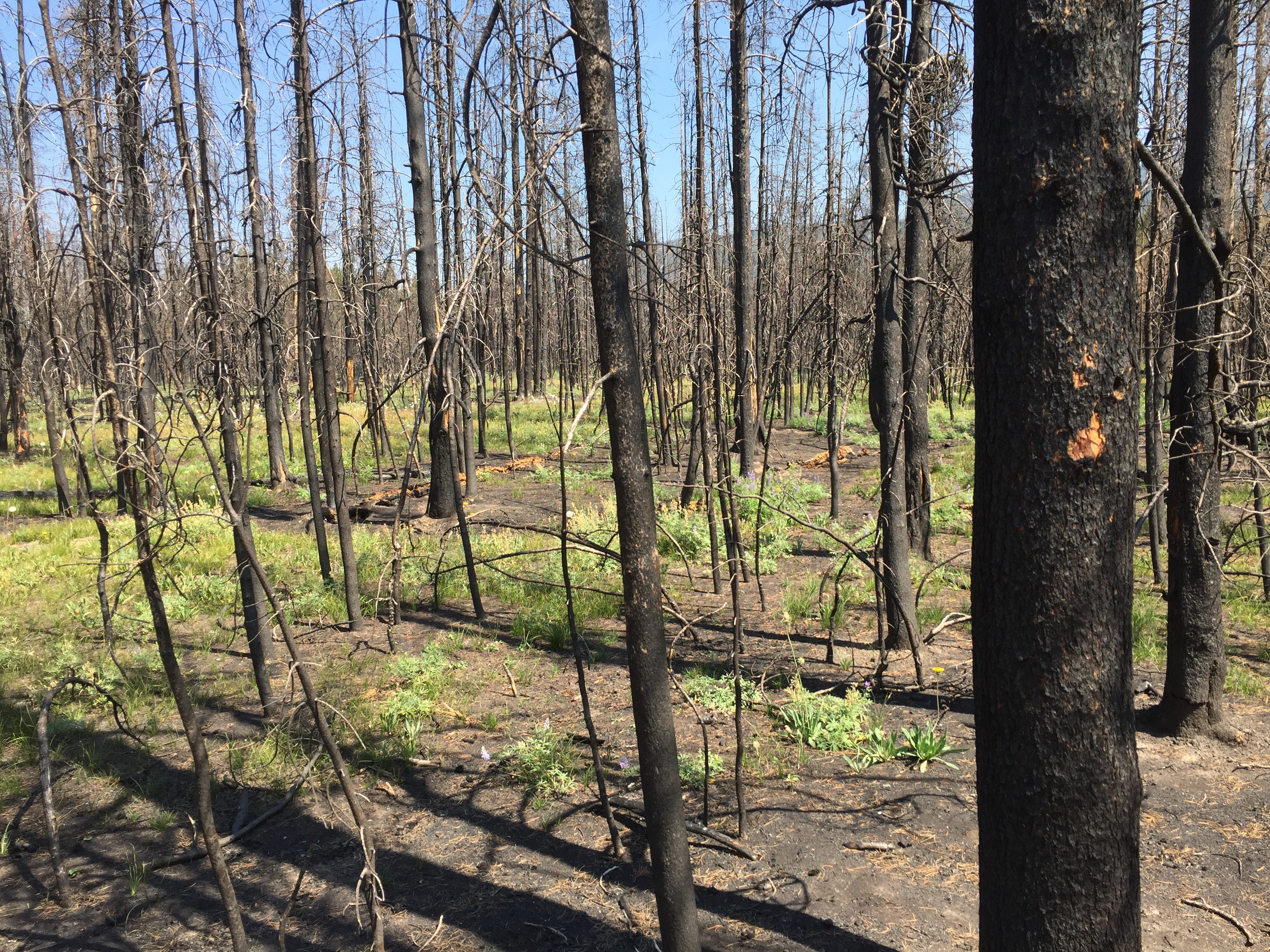
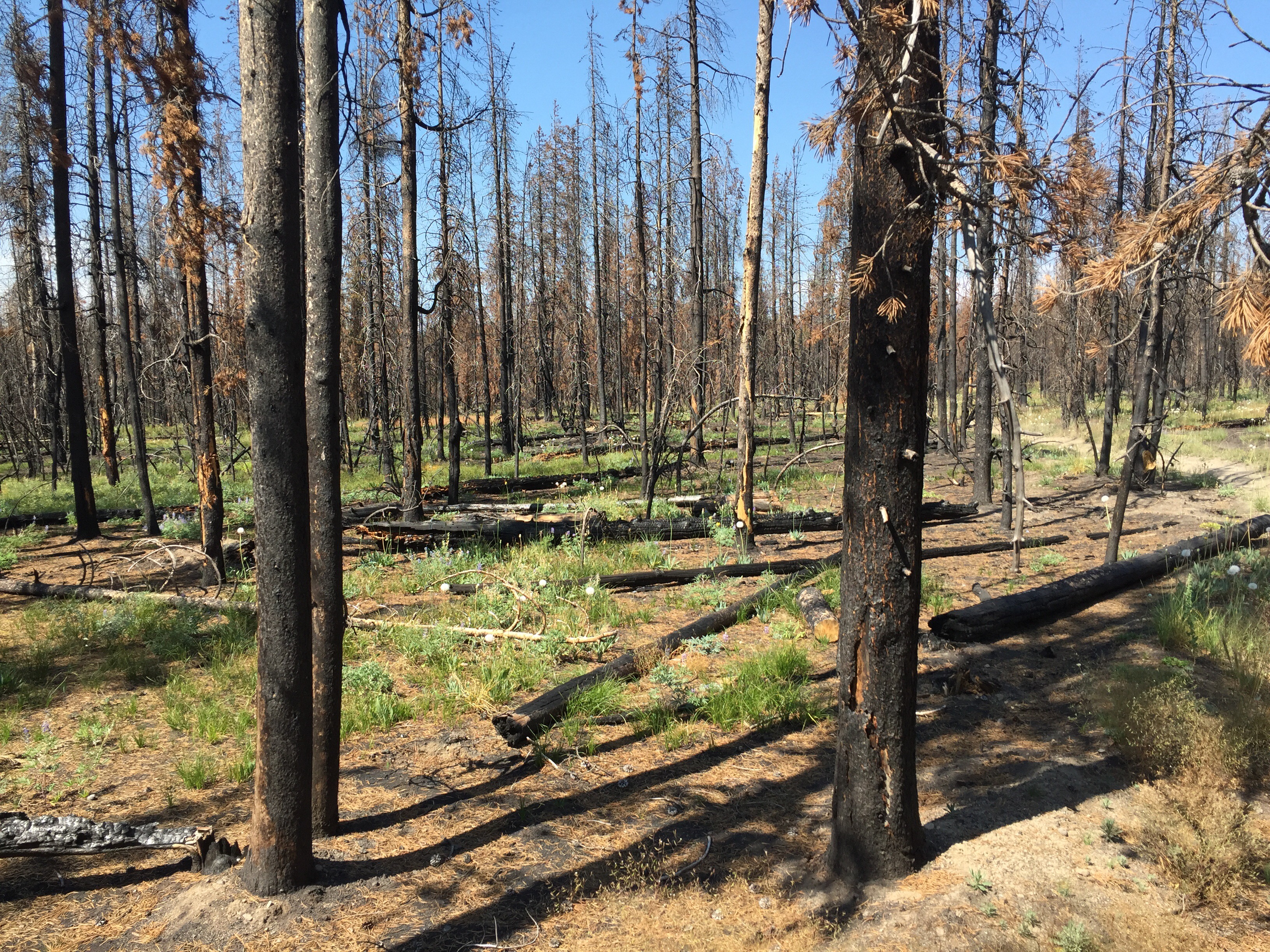
Even after a year the woods still smelled strongly of burned wood. In most places the fires moved through quickly burning everything on the ground and the trees. Not long enough to completely burn the trees, just long enough to kill them and leave them standing. The grasses and ground cover seem to be coming back in many areas. In areas where it was particularly hot they take longer.

There were areas where the only burned part on the ground was at the bases of the trees. Sparks and embers from other parts of the fire blew into the upper branches of these trees and set the tops on fire and as the fire burned down the tree the burning bits fell to the ground and burned around the tree but not enough to spread the fire along the ground.

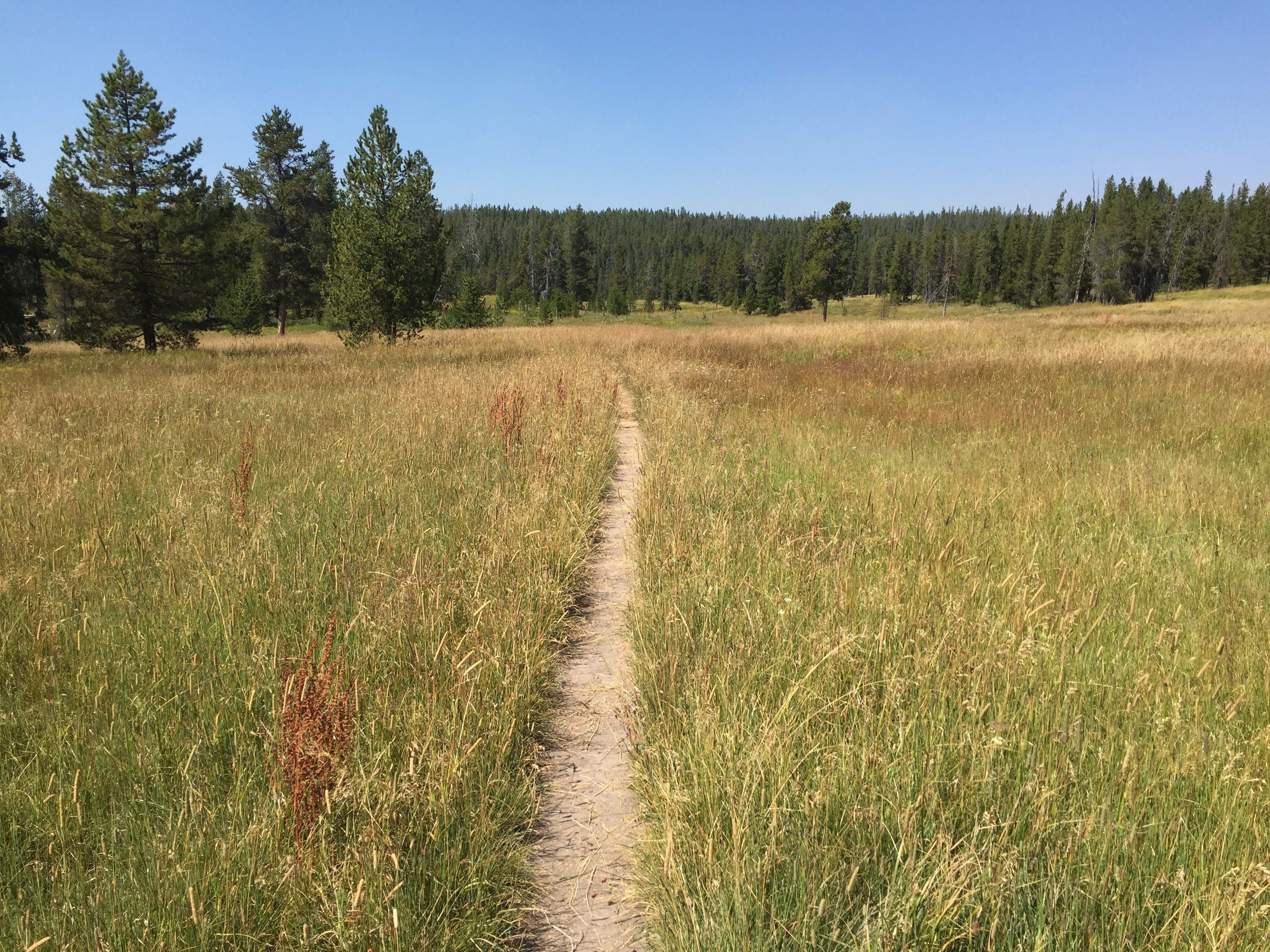
The trail mostly went through the woods and then opened up into a large grassy meadow. This seemed like an easy trail, mostly soft loose sandy material. By the end we each had a sore knee and were pretty tired. Four plus miles in soft loose sand is not as easy as it seems.

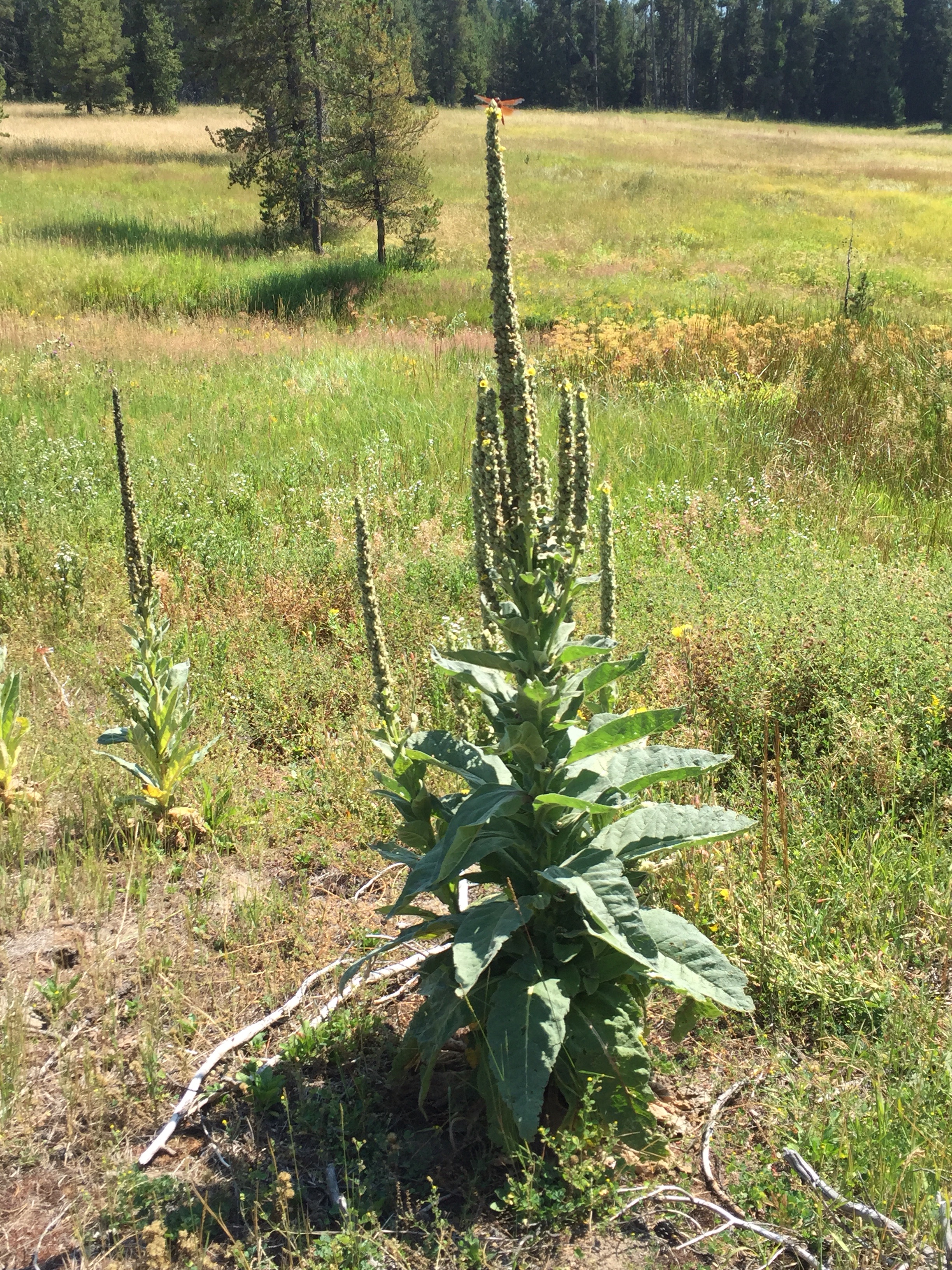
I never figured out what these plants were but they were fairly common. And big, 5-6 ft tall. And right at the top was a most curious looking red dragon fly. There were lots of them in this area near the hot springs.

The red dragonflies were about 3-4” across. If you were patient one would land on something nearby and you could get pretty close. Their wings, especially near the ends were nearly transparent. I have never seen anything like these before. Maybe it has to do with the Hot Springs which are full of sulphur and other chemicals.

These are times when I wished I had a better camera but the iPhone works pretty well. Maybe a new camera or a new iPhone X is in my future.

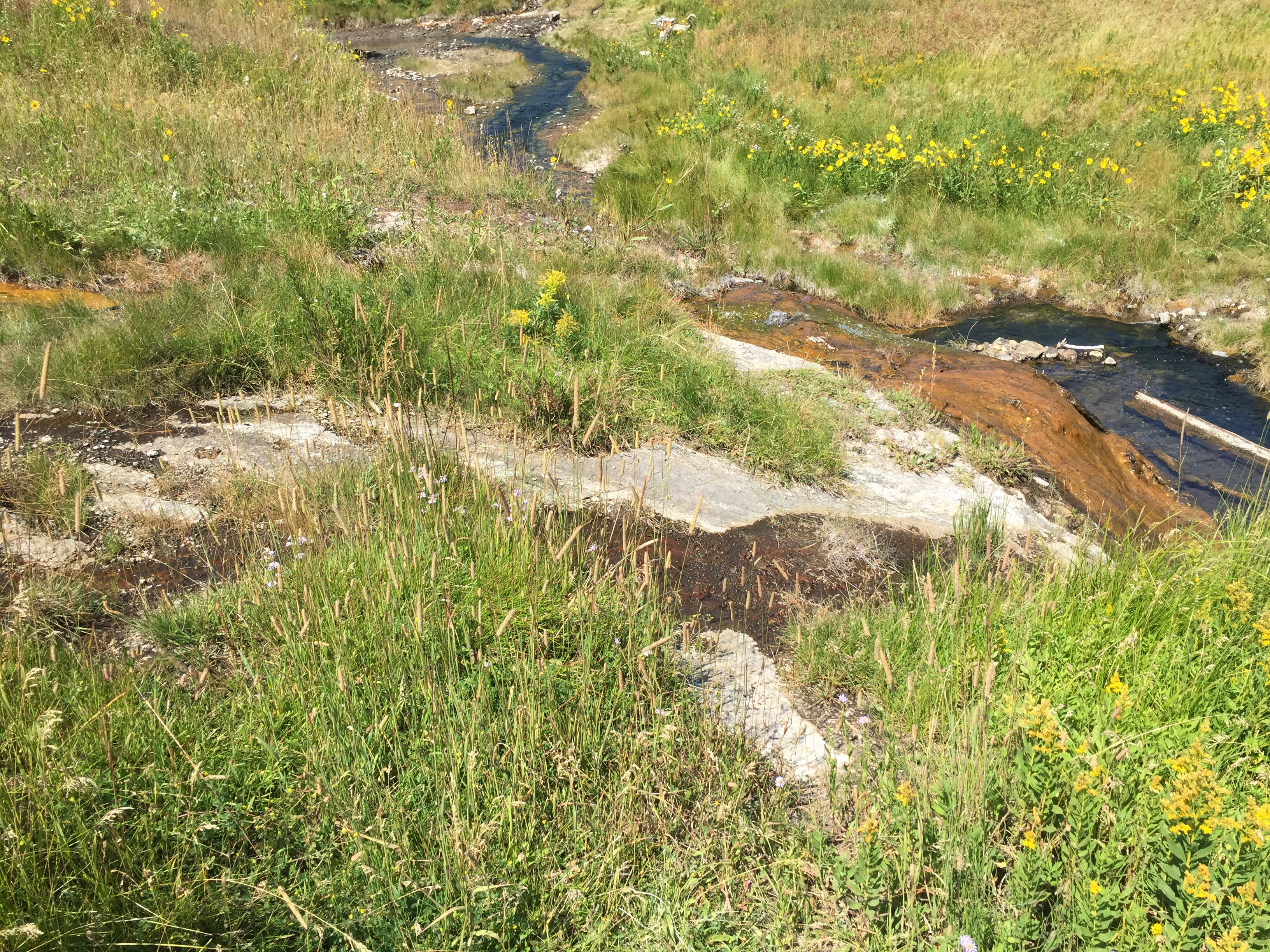
The Hot Springs are an entire meadow of oozing, hot smelly water which collects in small streams. People used to come up here to sit in the pools which at times are bigger. Signs now warn to stay out of the water because of the high temperatures (up to 180°), the nasty chemicals in the water and worse, the bacteria that grow in the water. Since this all flows down into the Polecat Creek maybe that is why there are not as many fish there.

The red area was just like the hot springs in Mammoth, a hard layer of built-up mineral deposits with water flowing over it. This water was very hot.

Further up a side branch enough flowed in from the side to make a small cascade.

The bacteria and algae formed long stands of slimy hair that swayed in the current. It was not bad looking but why would anyone get in this primordial soup of goo.

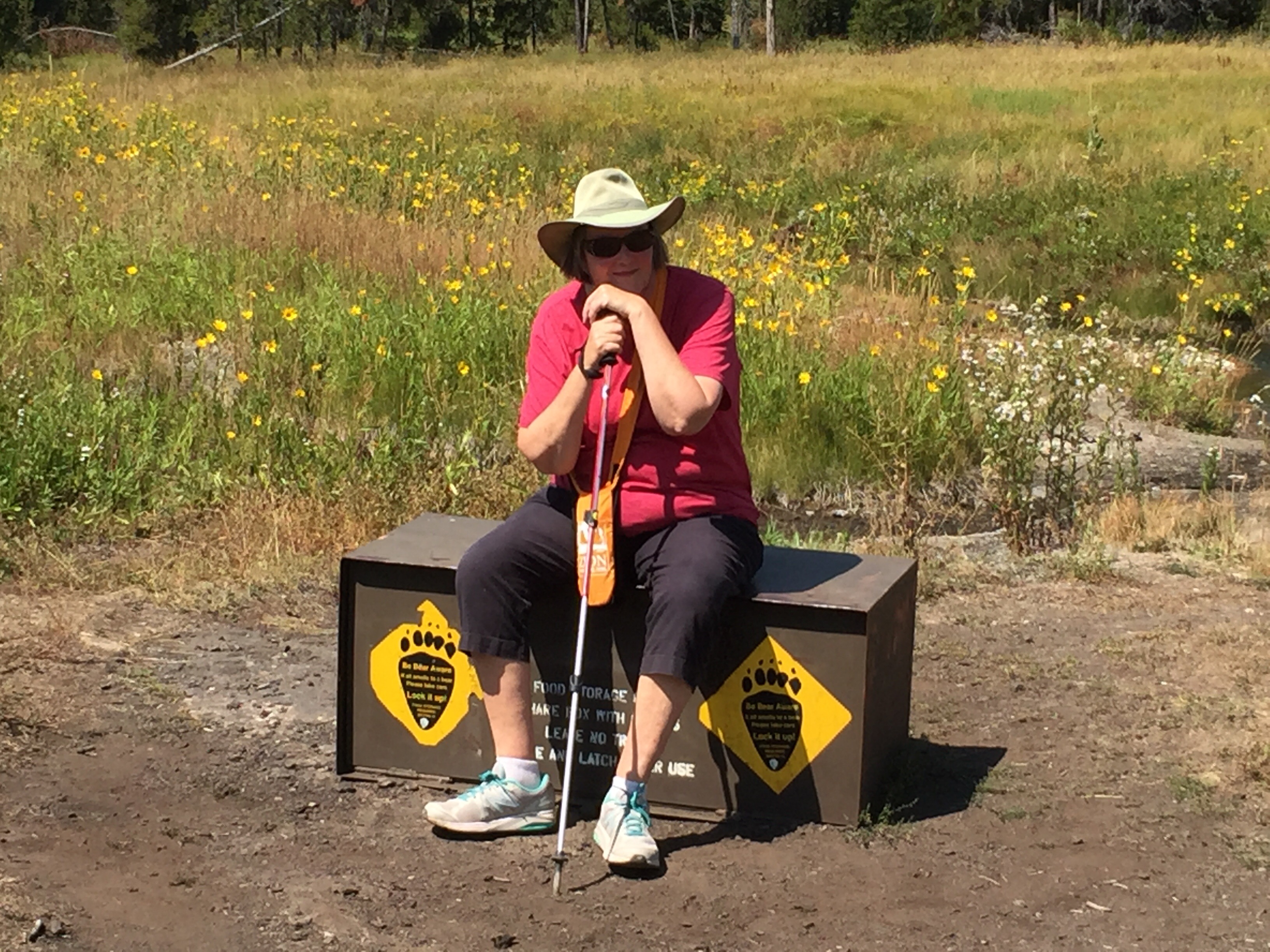
There is always time for a sit-down break, even if it is on a food storage box where the bears come looking for a snack. Hiking pole at the ready, just in case.

And of course we had our can of souvenir bear spray. They are about $50. Signs everywhere say you need them. Only about 1 in 100,000 visitors will come close enough to a bear to need it. I guess I wasn’t going be that one without it. You can’t take them on an airplane on the way home, they are not returnable. So it is now a souvenir. Maybe I can interest a mail carrier in a serious dog deterrent.

The way home lead through more burned areas.

The burned bark is like a big blister. It just peels off in big slabs. It is hard to see the forest like this but it is a natural event. The heat causes the pine cones to open and the new seeds to pop out. The burned forest floor leaves little to compete with new seedlings until they get established. It may take 30 years for the new trees to get to the size of the burned trees.

A nice hike. A wide variety of things to look at. Weeks later we are still nursing sore knees.

More later,

Roger and Susan
The Big Blink, Grand Teton National Park, August 21, 2017

Where were you on this day? The day of the total eclipse of the sun whose shadow passed across a big chunk of America. We were in Grand Teton National Park just south of Signal Mountain on a two rut road for 4WD vehicles only. Two years ago we drove the rocky road all the way to the southern end and then on into Jackson. A landslide this spring cut the road in half and a ranger we spoke two said it was unlikely it would be repaired.

When we heard about the Eclipse and where it would be visible we thought first about the summit of Signal Mountain, for a few seconds, and realized every body and their brother would think of that location. Then we remembered the 4WD Snake River Road and thought that is the spot! Not many would subject their automobiles to a road made up mostly of grapefruit sized rocks, deep dried-up mud holes and almost no chance of rescue if need be. Worst of all there wasn’t a porta-potti anywhere in sight.

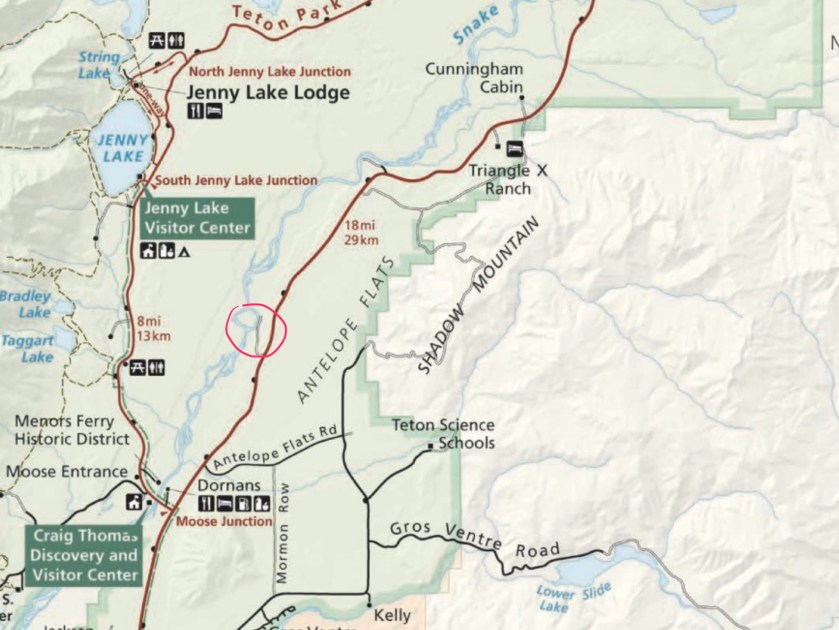
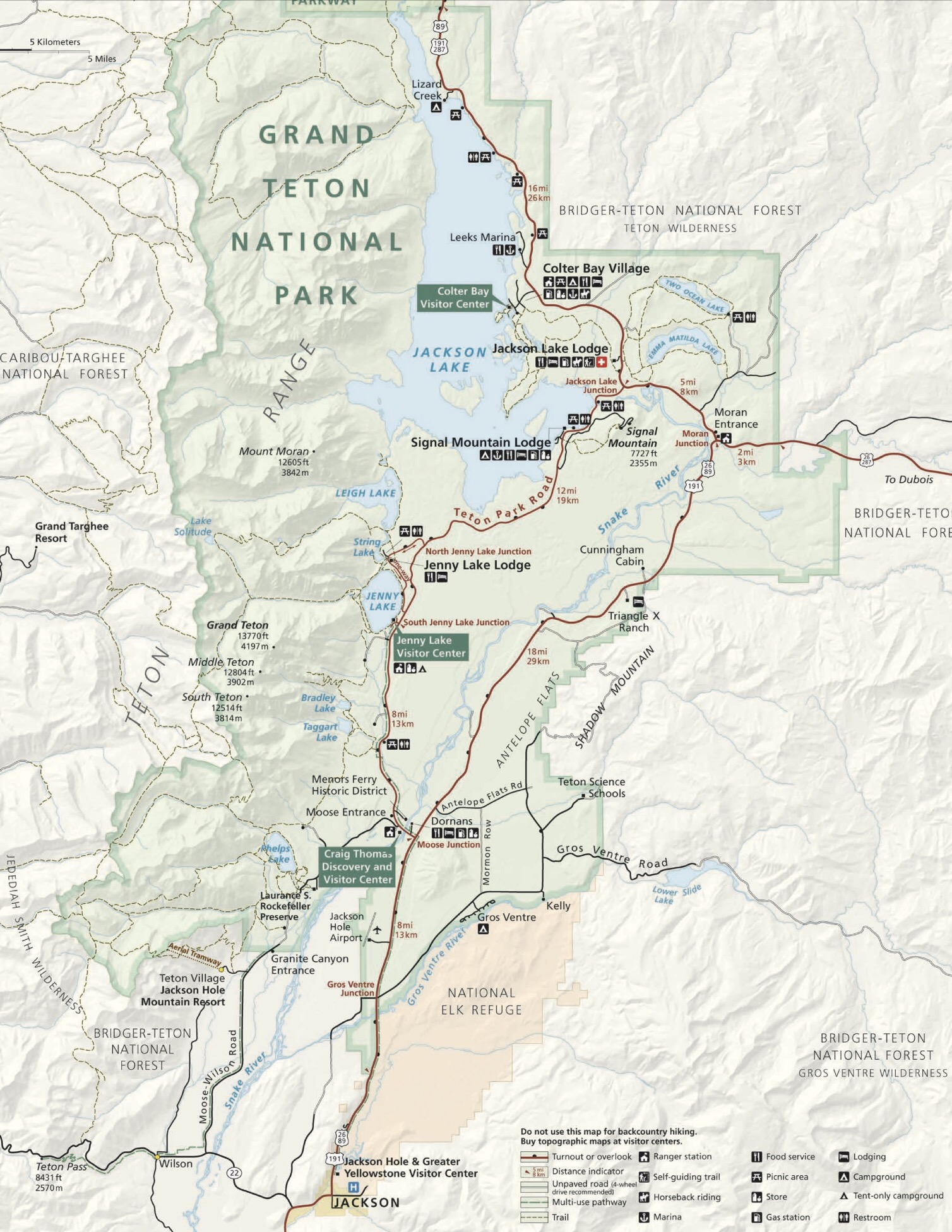
There it is on the map circled in red, our goal. The road is not marked in any way. There is a gate to close it off. The turn off is about 12 miles south of Colter Bay. We expected traffic to be a nightmare at 8 AM but it wasn’t. We talked to some other folks in the campground who left at 6 AM heading for a spot near Gros Ventre right on the line of totality. That 45 min drive took them almost 2 hours. Everyone got up early for the traffic jam.

A ranger was at the entrance to the road. He said no fires, please, and agreed that this was going to be a great place to watch the event.

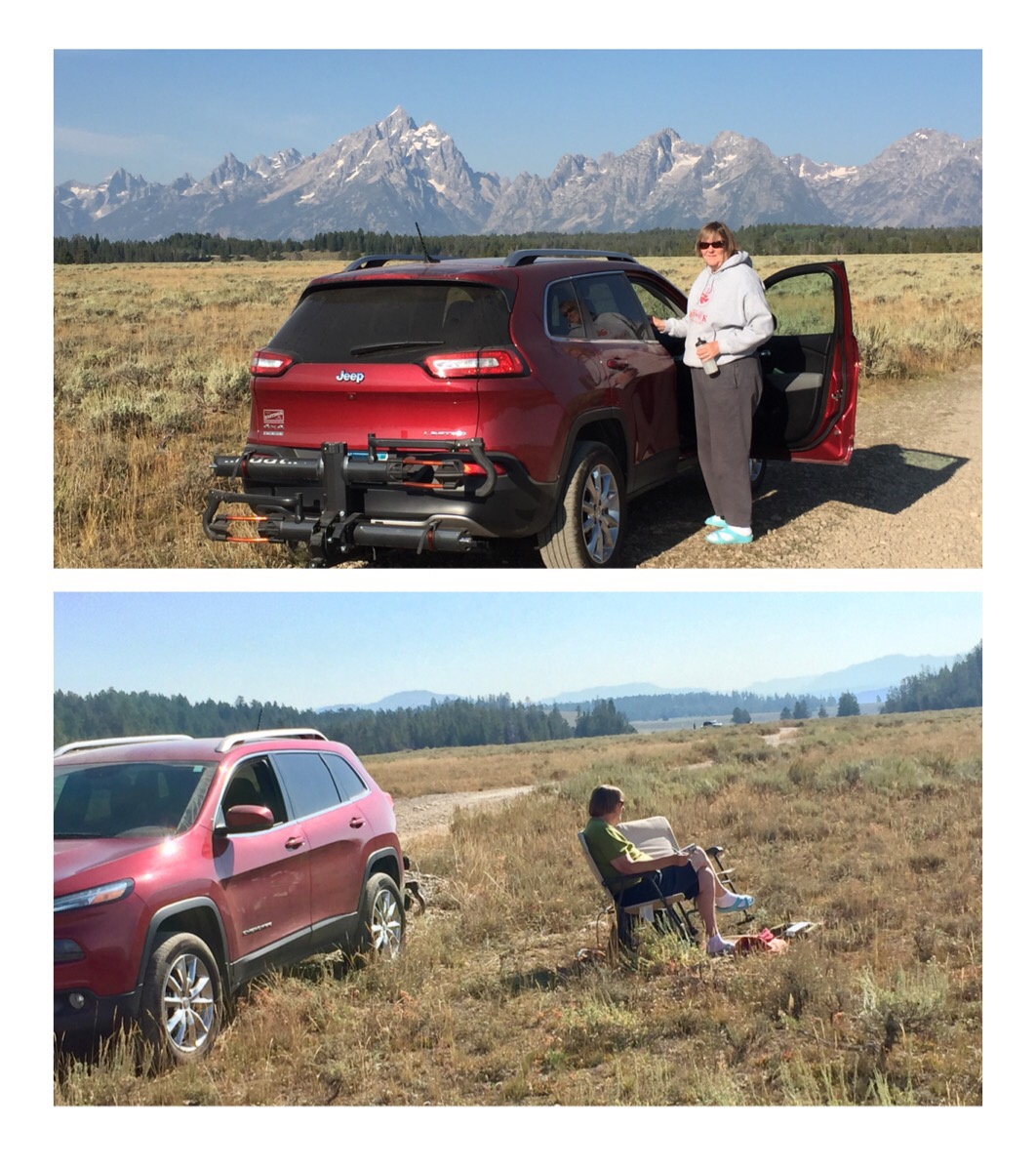
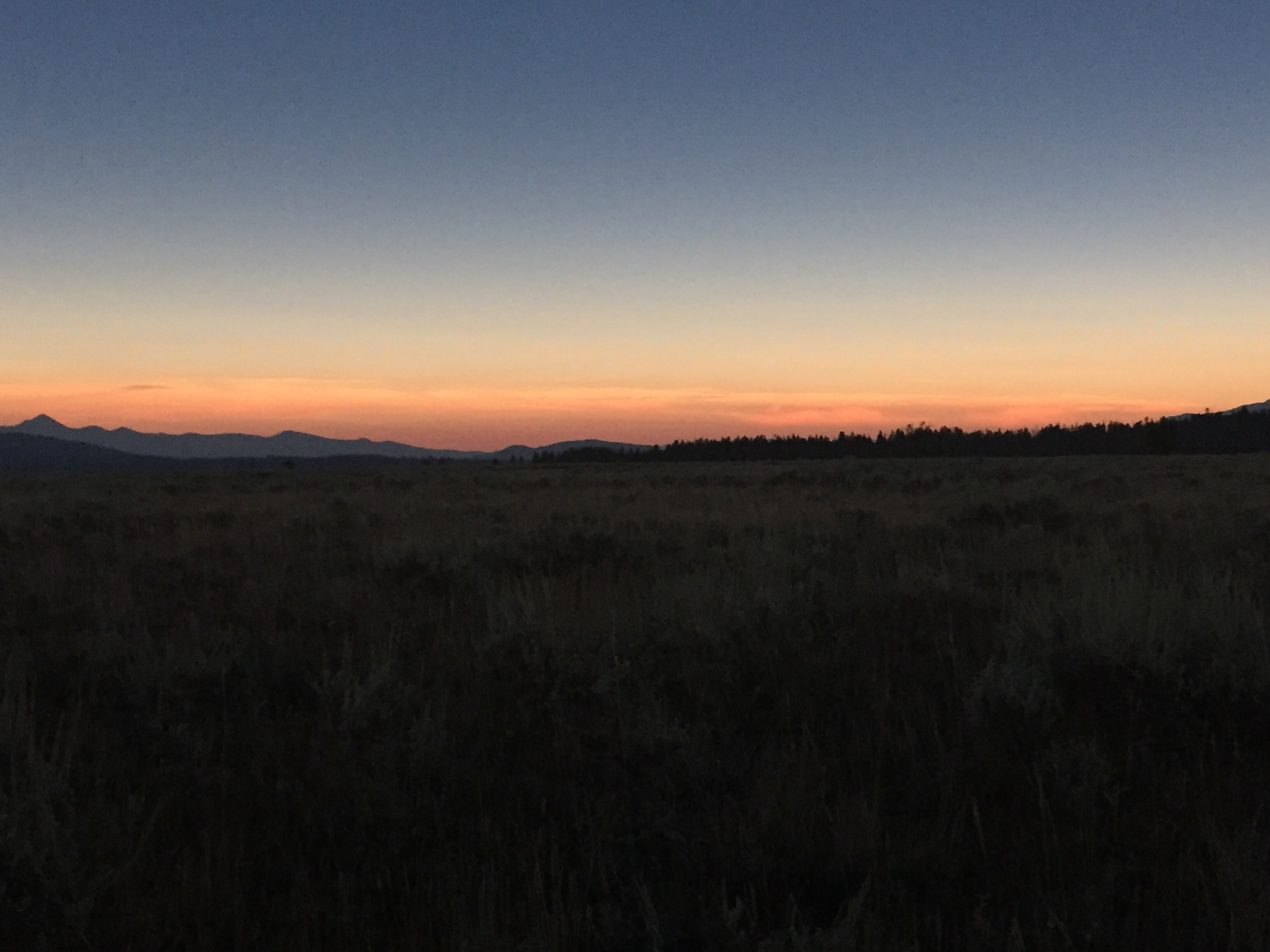
Looking north and south. Nothing much looking south. The sun at the appointed hour would be in the upper left hand corner of the lower picture. Some clouds when we got there but they moved away

Looking west towards the Tetons and east to the Snake River. You can see a car out there in the distance, the closest anyone else was to where we stopped.

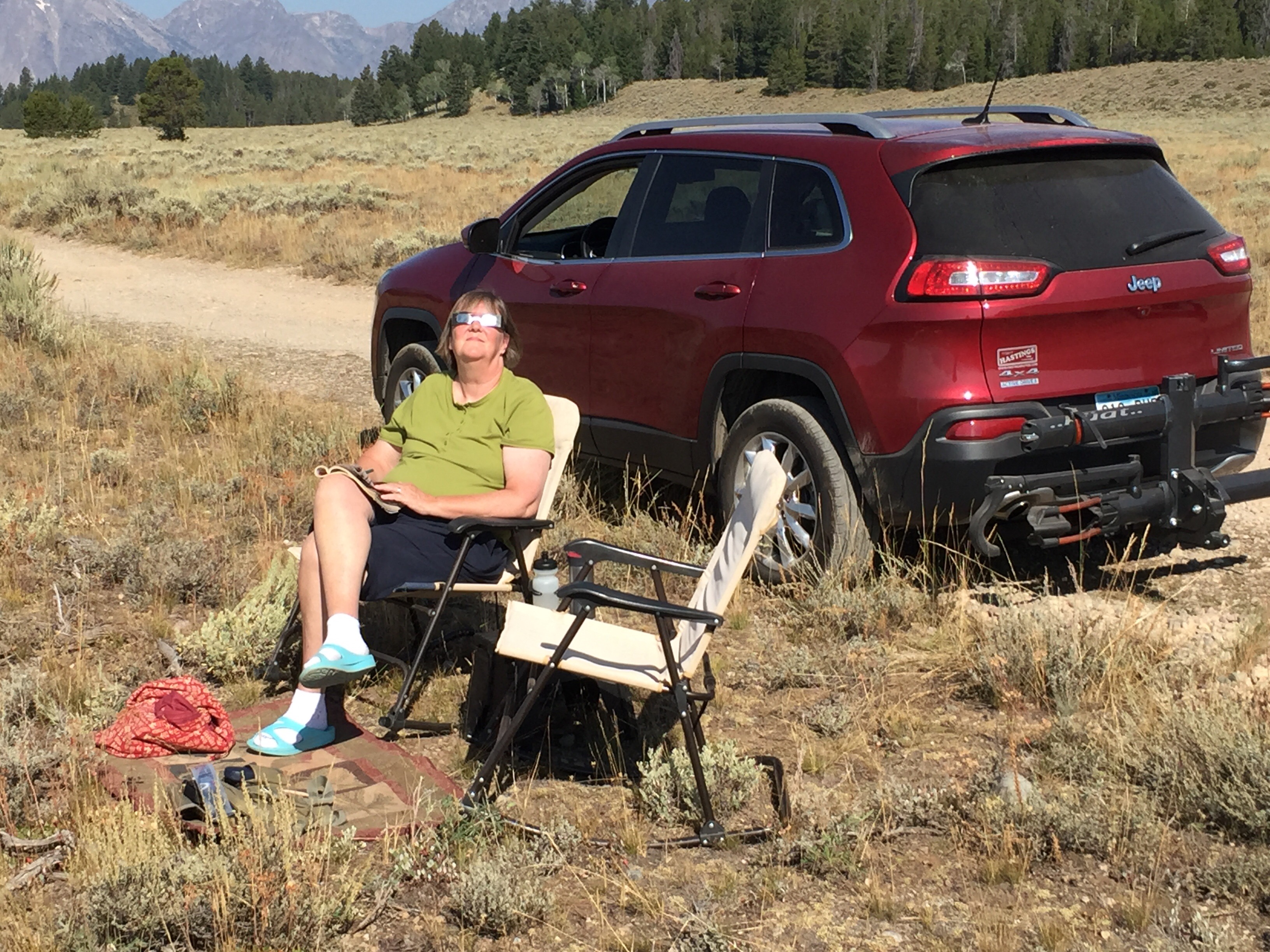
Rocking chairs, a small table, a rug, snacks, coffee, cool glasses and all was ready for the big blink.

We were so cool. In the sun it was warm, low 70’s. There was lots to get ready for. But there was plenty of time, it took at least an hour for the moon to creep across the front of the sun. I was torn between watching for the exact moment the moon covered the sun and the shadow of the moon moving across the face of the mountains. We were about 7 miles from the peaks and the shadow moved at a half mile per second. So seeing the shadow on the face of the mountains was going to be a split second sort-of-thing.

This was with the special glasses over the lens on my iPhone. The moon is starting to cover the sun.

These pictures were just seconds apart. The face of the mountains just got darker in an instant. And then it was dark.

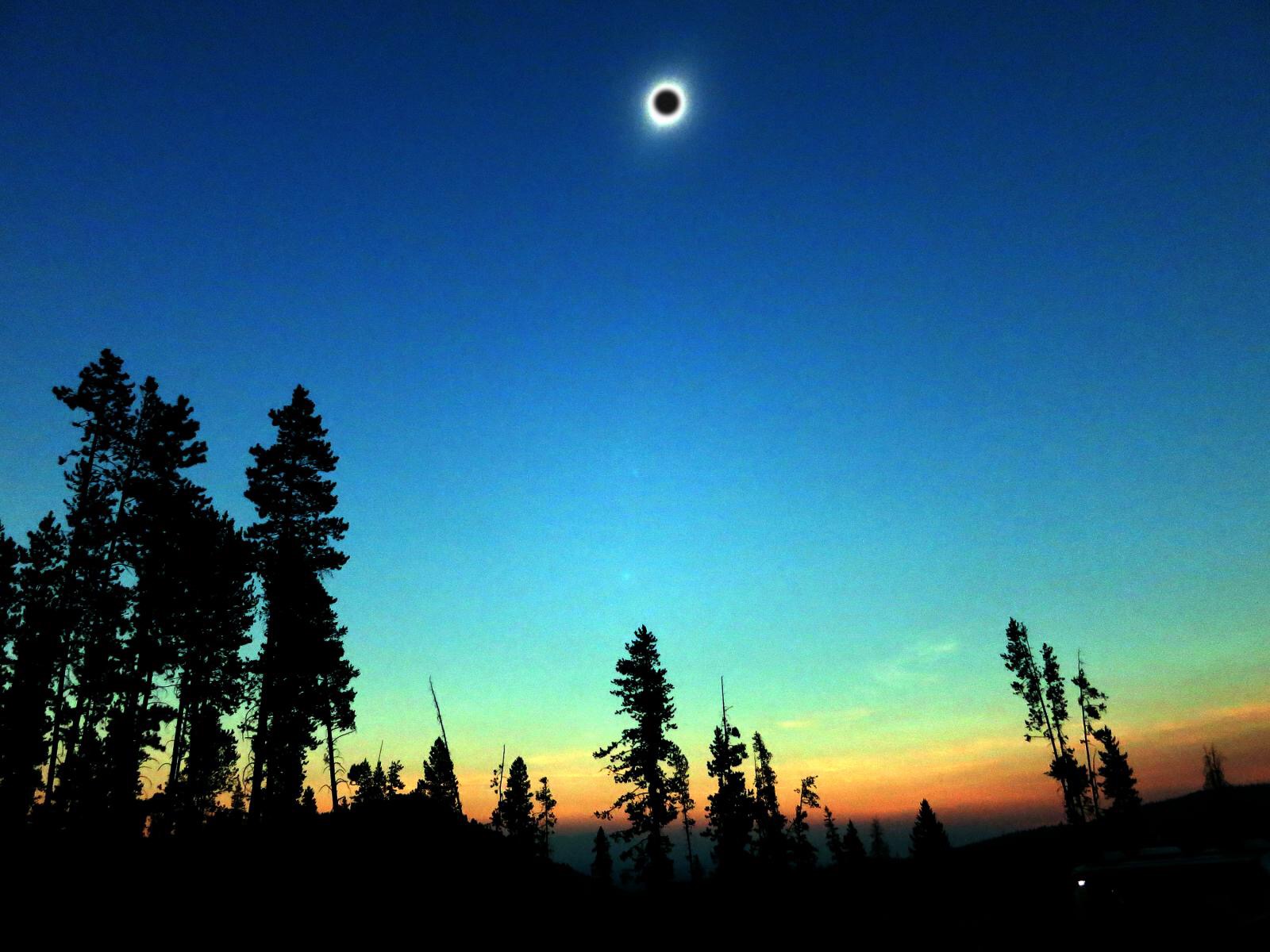
This lasted for about 1 min and 50 seconds while the moon hid the sun. The temperature dropped about 15°.

I wish I could say the next pictures were mine but they were taken by other RV travelers and posted on an RV site.

Somebody had a very big lens to get this picture.

This one looks pretty close to what we were seeing.

This one was very good. Look at the reflection on the guy’s bald head.

And then the moon moved on, slowly revealing the sun again. It was light again almost immediately. The temperature went up slowly. Most people started for home right away. We hung around for another hour enjoying the sun and the warmth. Several SUVs and trucks passed us heading back for the highway. When we were ready to leave there was no one in sight. A couple miles back to the highway. The ranger was still there, he said only nine went in and we were about the last to leave. He said radio chatter indicated lots of traffic further south.

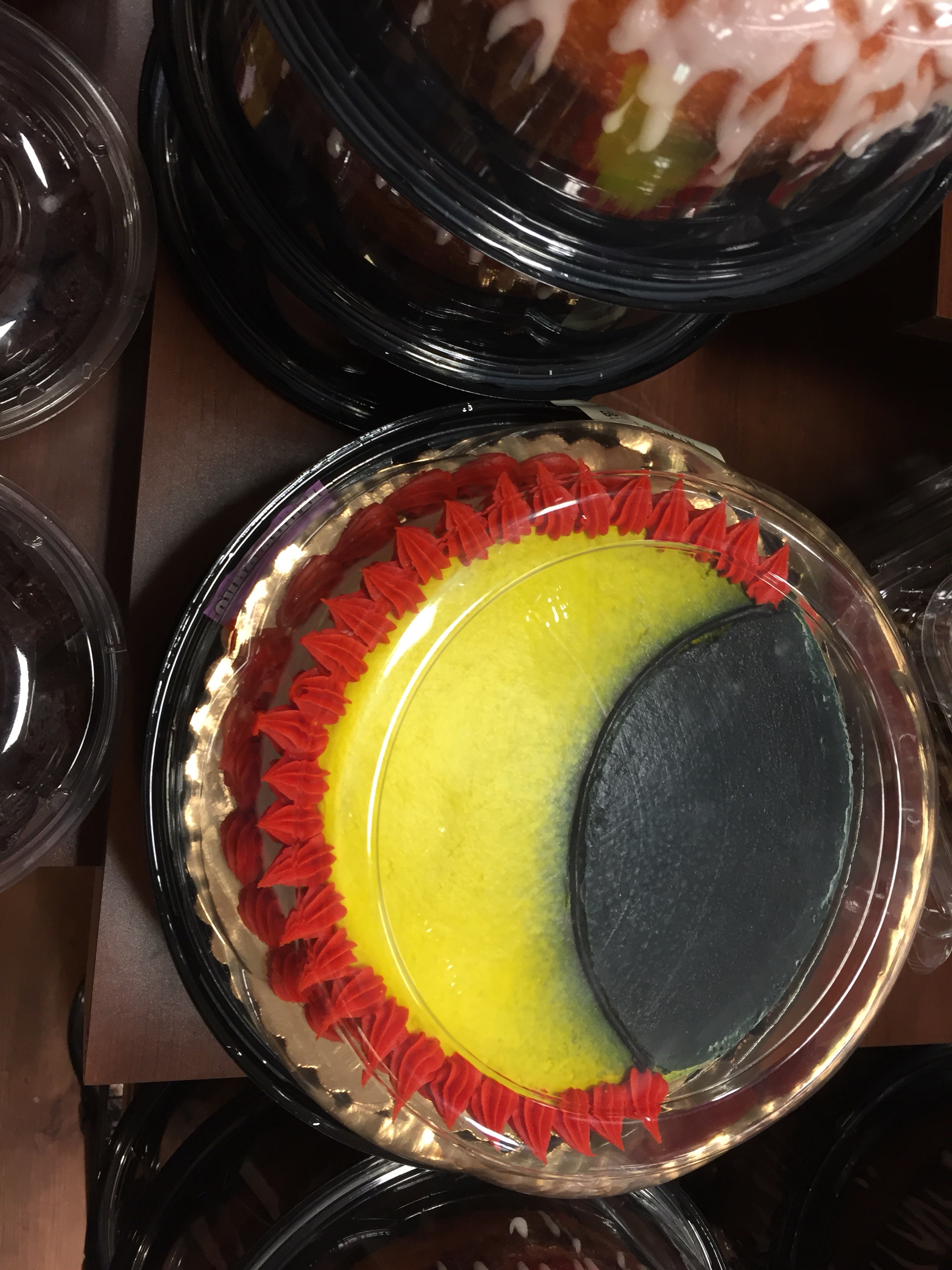
Even the local grocery store got into it.

I hope you had a chance to see it, probably on TV.

More later,

Roger and Susan
Schwabacher’s Landing, Grand Teton National Park, Summer 2017

We visited this spot two years ago, we had to go back. This landing is on the east side of the Snake River. At one time it was a real river landing. Today it is mostly a calm backwater populated with ducks, geese and beavers. The beavers have built a series of dams that have made a chain of pools. Lots of wildlife to watch and amazing views of the Tetons.

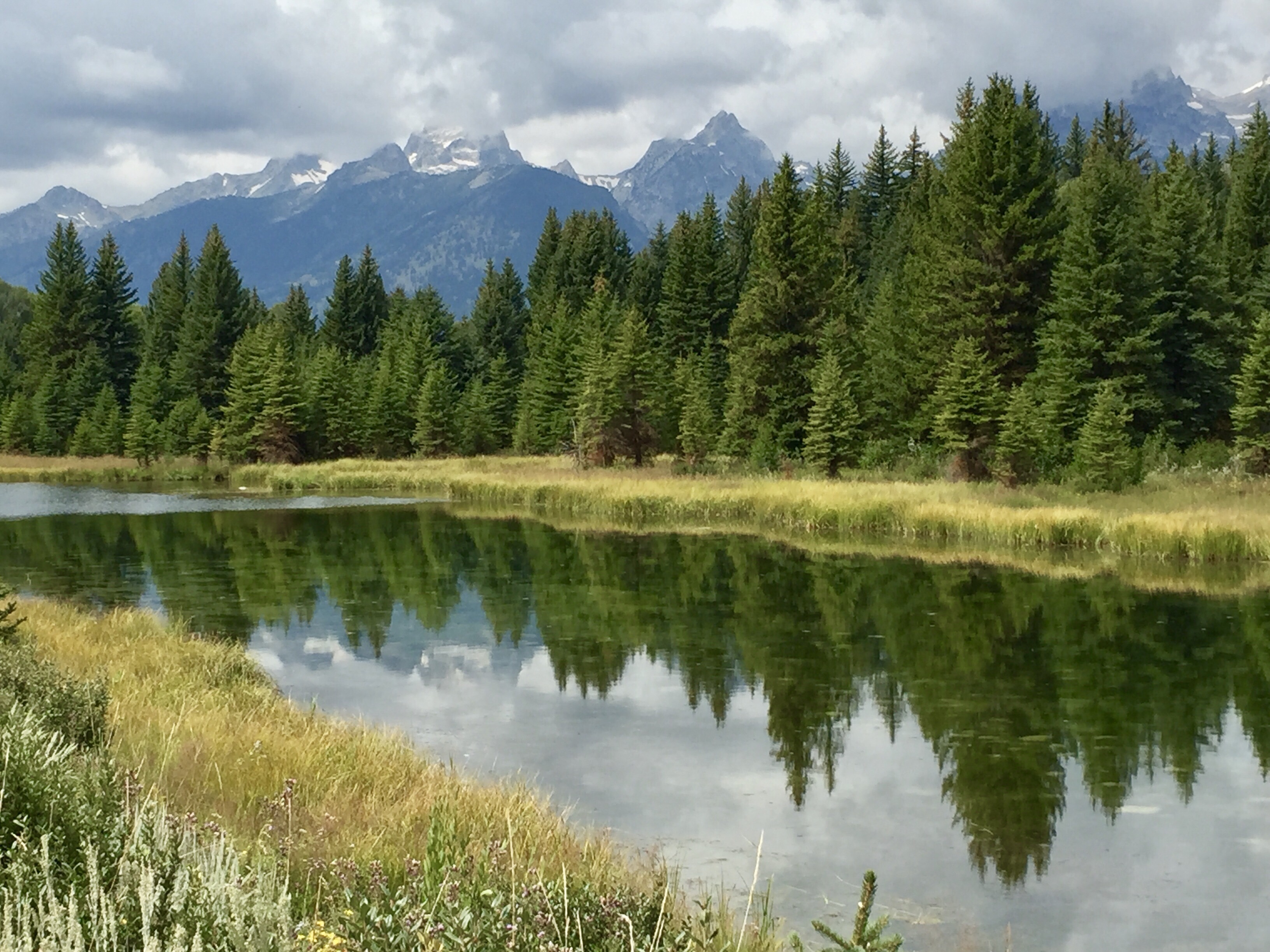
It was a cloudy day, but calm. Mountains, forests, sky, and meadows – all reflected in the ponds.

And beaver lodges. We didn’t see any beavers but there were lots of ducks. Just past the beaver lodge at the left of this pond there was an overflow across the dam to another pond a couple feet lower. The ducks were sliding down the spillway to the lower pond and then swimming on.

The interaction between the clouds and mountains was fascinating.

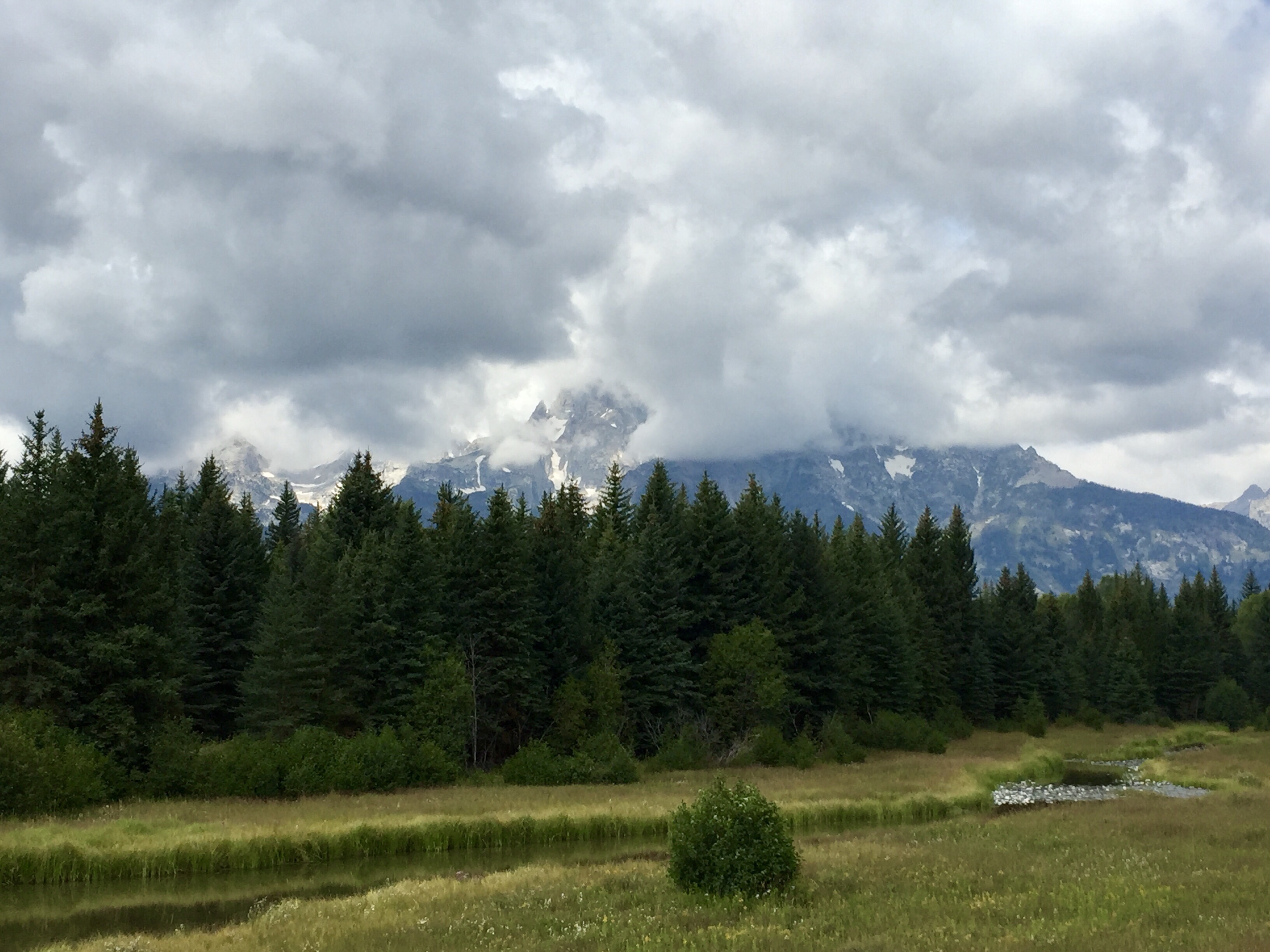
The clouds moved just enough to give a quick view of the Grand Teton with just the peak still in the clouds.

This is a really nice place to visit. A short drive down a gravel road to the parking area found maybe 10 other cars there. And a horse trailer whose occupants and riders set off cross country up the river. A very short walk along the pond trails and you are usually alone. It is a quiet place with much to look at both very near and off in the distance. A place to just sit and look and listen.

Or to paint in real time.

More later,

Roger and Susan
Back to the Tetons, Colter Bay, Summer 2017

After a week in Madison we headed back to Colter Bay.

Solar Power

Our week in Madison was a good test of our solar power. We had no electric hookup there. We were in a partially shaded area, some days were partly cloudy, we had rain one evening. But for the week we generated about 17,000 watts of power going into the batteries from the sun. It was more than we used by a slim margin but enough to keep us in power. We did run our generator for two hours one morning in the middle of the week. The diesel fired boiler side of our Aqua Hot heating system had a thermostat die so it wouldn’t fire up. Fortunately the Aquahot will also heat the coach and water using electricity. So we turned on the generator, it powered the Aqua Hot which heated water and did some battery charging as a bonus.
Our goal was to be able to go 4-5 days without running the generator, just using solar power. In Madison it worked!

Colter Bay

Colter Bay is on the east side of Jackson Lake about 2/3 of the way north through the park. There is a marina where you can rent motorboats, canoes or kayaks, buy a fishing license or schedule one of several scenic boat trips. There is an RV campground with hookups, a campground without hookups, rustic log cabins or even more rustic tent cabins for rent. No lodge. There is a visitors center, a grocery and supplies store, a laundry, a gift store, a couple of restaurants and stables where you could schedule a horseback ride. There are several trail heads right here so plenty of hiking without having to drive anywhere. Leek’s Marina is just a couple miles up the lake and they have a good pizza place.

Without a lodge here most of the people staying here are not the tour bus types. The tour busses stop here but don’t stay long. So even on a busy day it never seems congested or crowded.

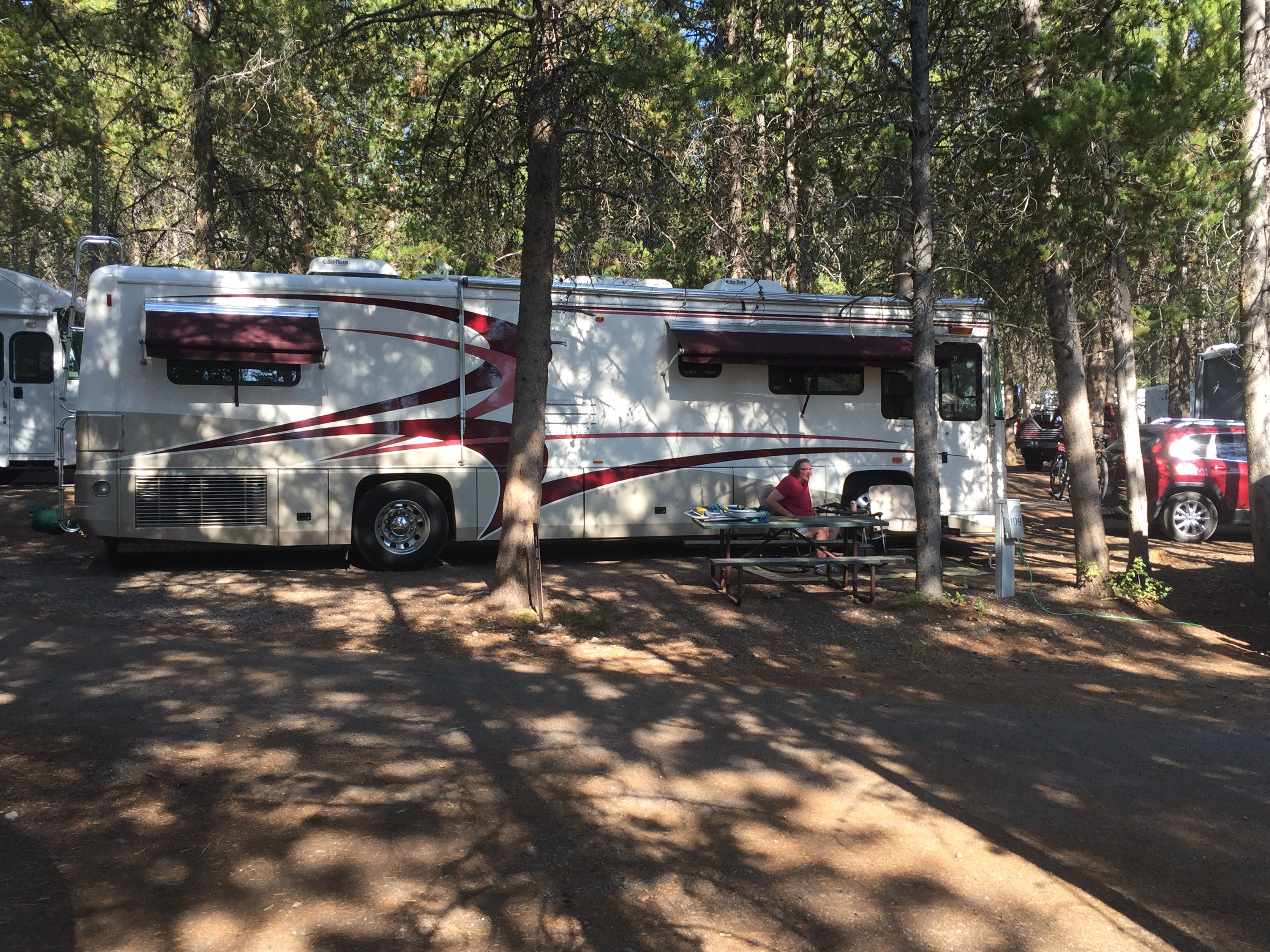
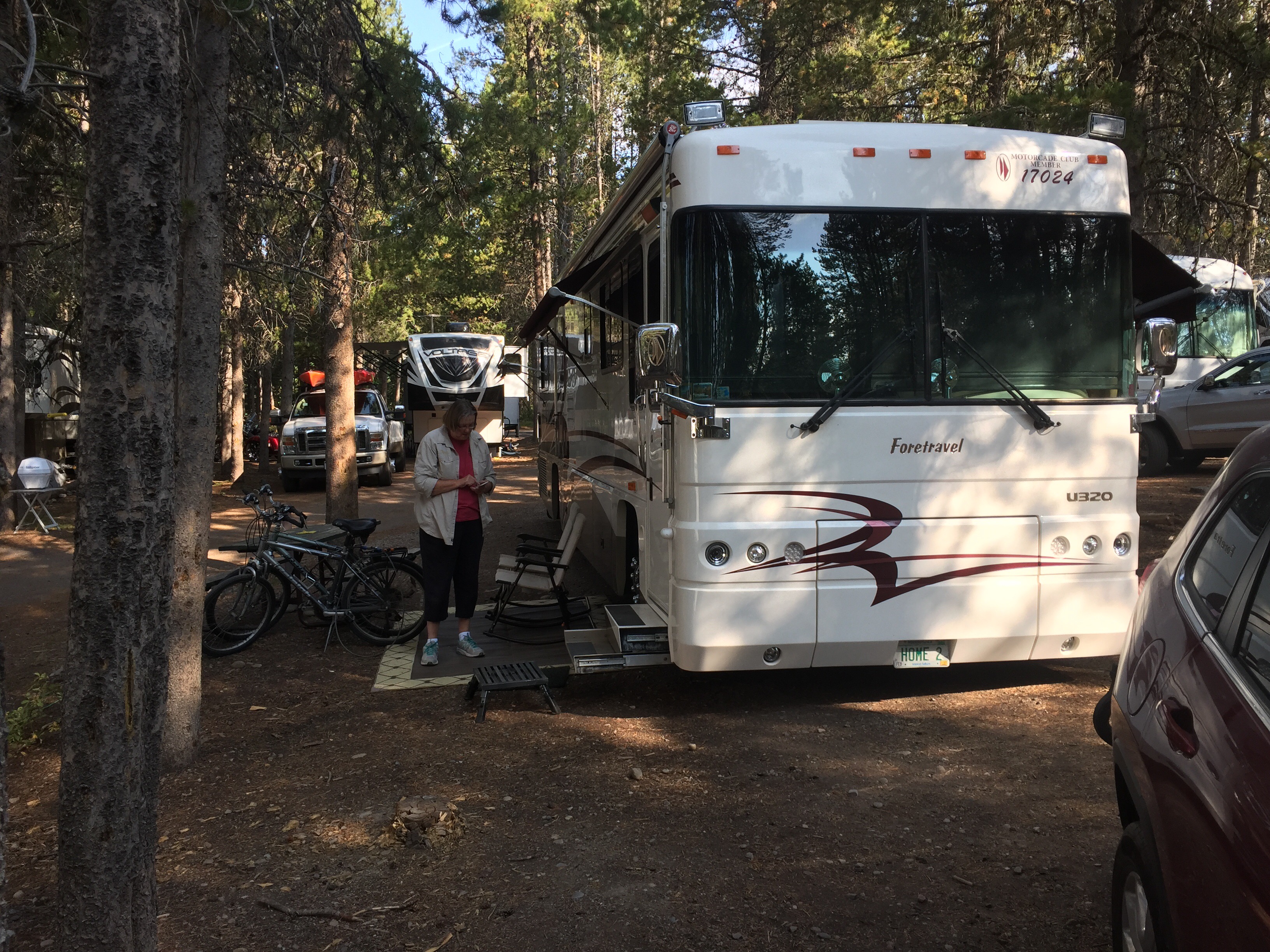
The RV campground is pretty roomy for a National Park RV campground.

Shady most of the day.

There are neighbors but this is a nice place. As campgrounds go it is somewhat expensive but for the location it is OK with us. Probably 1/3 of the spaces empty out each day and refill by the end of the day. It is full from May through the end of the season in early October when it and most of the park closes for the winter.

Being right next to Jackson Lake is one of our favorite things about this campground.

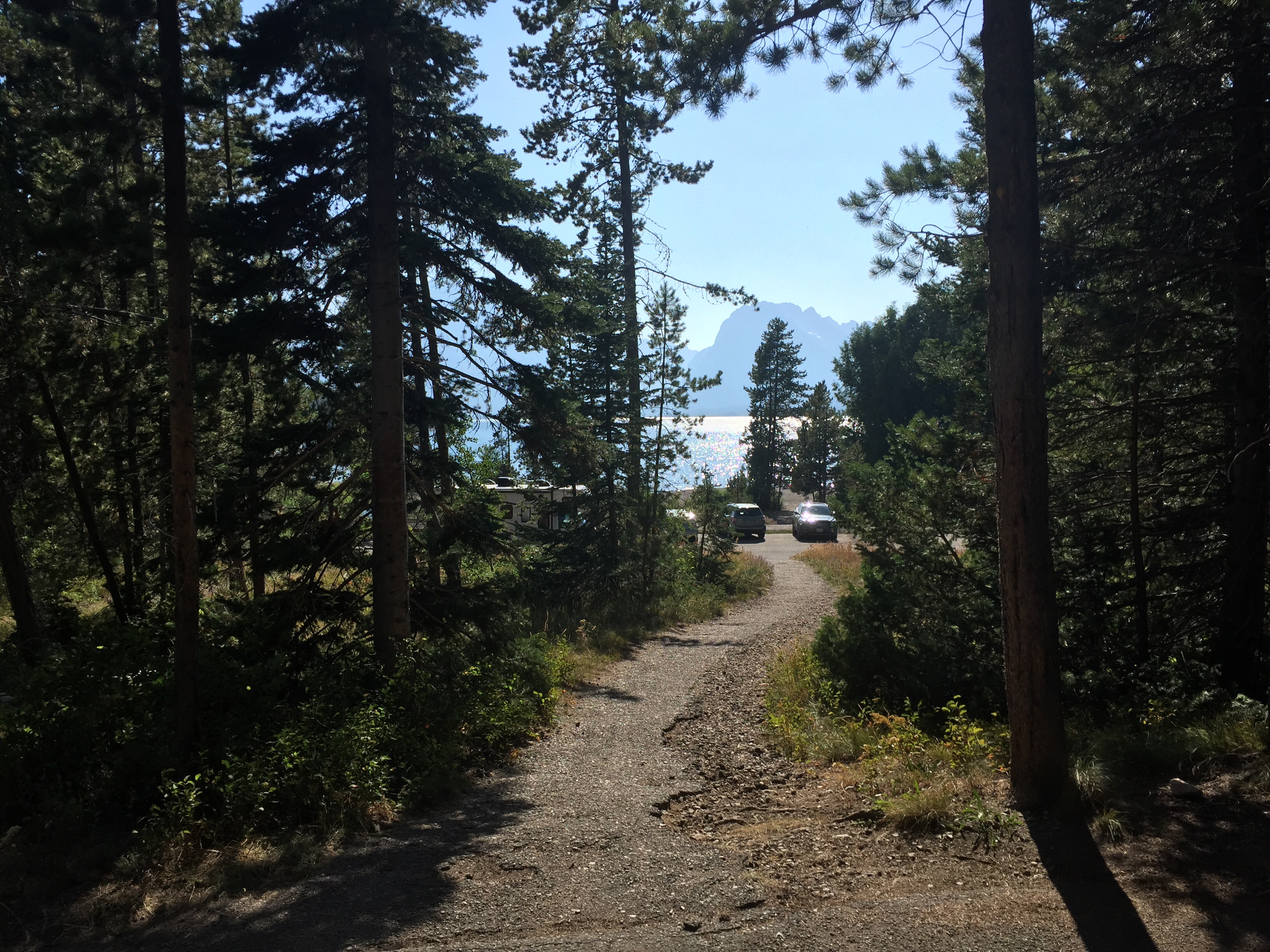
A short walk down the path and you are on the beach (round smooth rocks). It was a frequent destination in the afternoon.

Maybe not quite Hawaii like but we have our beach chairs just in case. It is usually fairly calm with a warm afternoon sun. At nearly 7,000 ft the sun felt pretty intense.

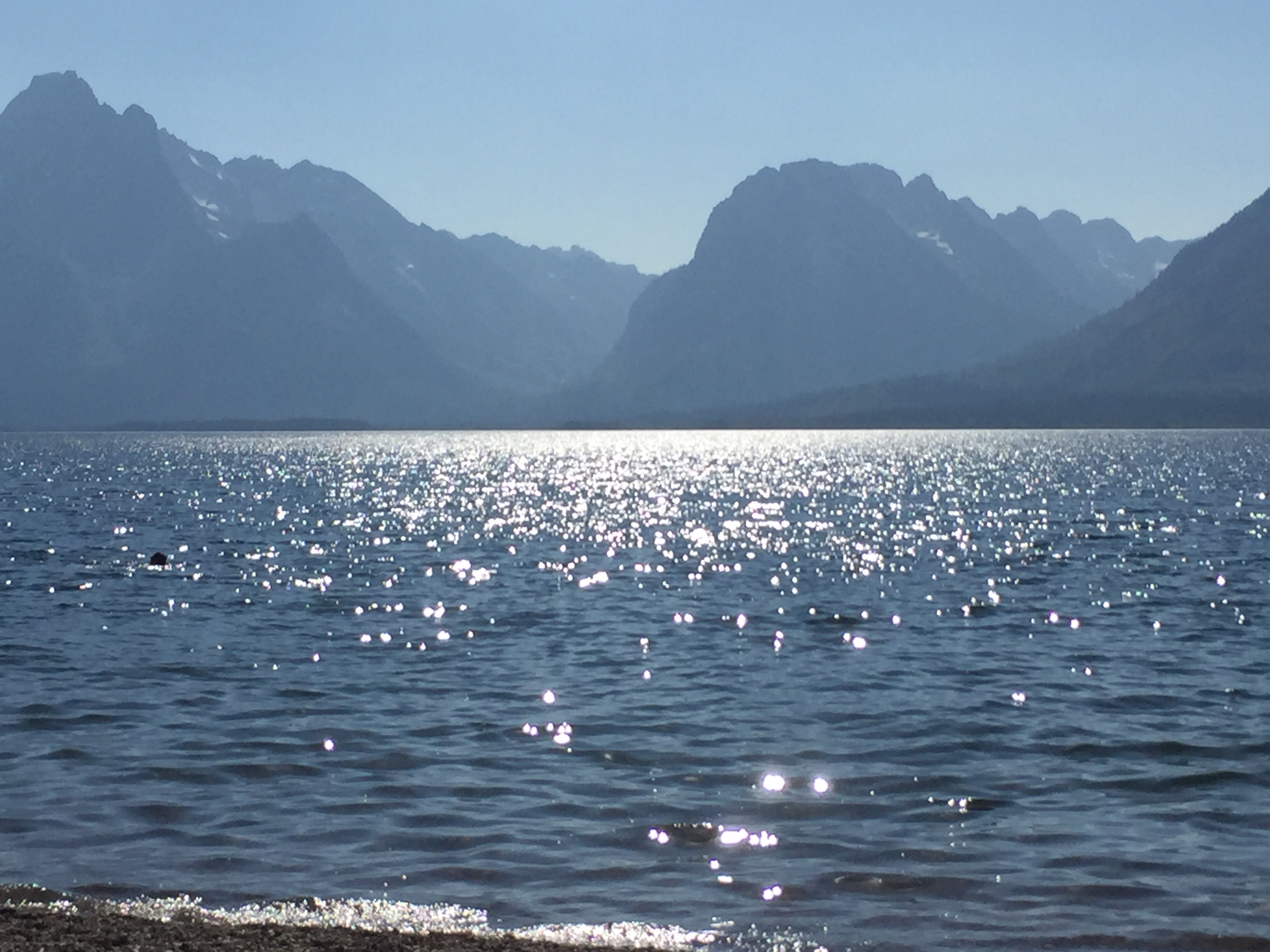
The water sparkled in the late afternoon sun which went behind the mountains long before it got dark giving us an extended twilight each evening.

And up the lake to the north, a warm evening glow.

Many days saw clouds roll across the mountains from west to east. Some days there was thunder. We had a bit of rain one evening and a sprinkle here and there. Usually by the time the sun was close to the mountains the clouds had gone away.

It is hard to describe this place, the way we feel when we are here. This part of the park feels and looks different from other parts. We like it here. It is unlike anywhere else we have been.

The mountains are very close, they just come right up out of the lake.

We were here two years ago as well. Take a look back at that post. I hope you have an opportunity to visit the Tetons and see just how wonderful this place is.

More later,

Roger and Susan