Prescott, AZ 2/27-3/1/2015

Our plans were to head from McDowell Mountain to Parker over on the Colorado River.  Judy and Bruce added a wrinkle to that plan.  After their conference in Scottsdale they wanted to spend a day in Prescott and then a couple days in Sedona.  So we decided to join them in Prescott.

On our way to Prescott, we went to Surprise, AZ in the NW corner of the Phoenix metro area where our friend Jennifer Lusk was staying with her friend Melanie for a few months during the winter. They live in a retirement community where golf carts are as common as cars.  We drove right into this maze of winding streets, parked next to Melanie’s house and joined them for a tasty lunch. It was nice to see them. And then on to Prescott.

Prescott is an old town, mostly mining then, mostly tourist now.  It is the third largest metropolitan area in Arizona behind Phoenix and Tucson.  It has that old west feel, a big central square with the brick county courthouse in the middle (we saw a lot of those in Texas.) It was a little confusing to get around, the highway going through town is labled North and South but it goes East and West. 

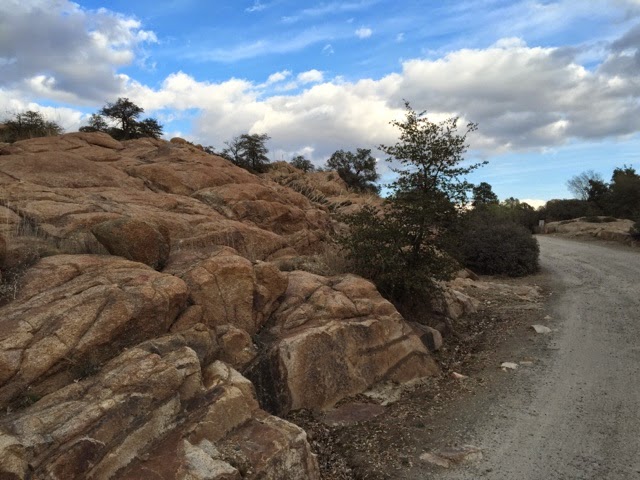
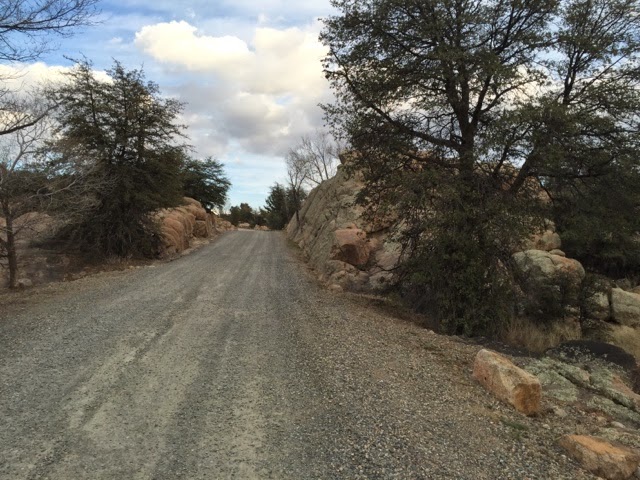
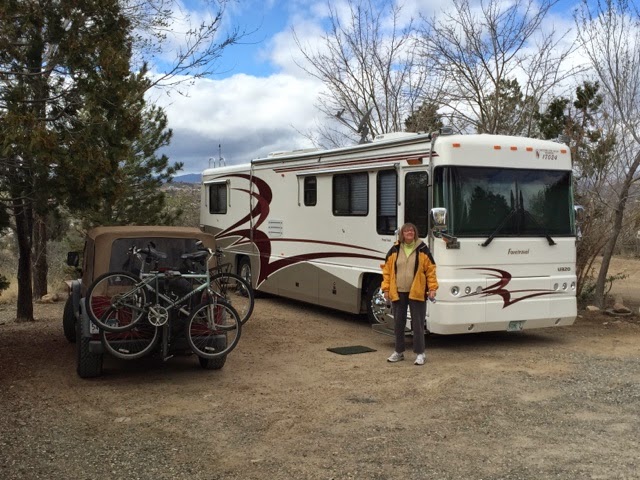
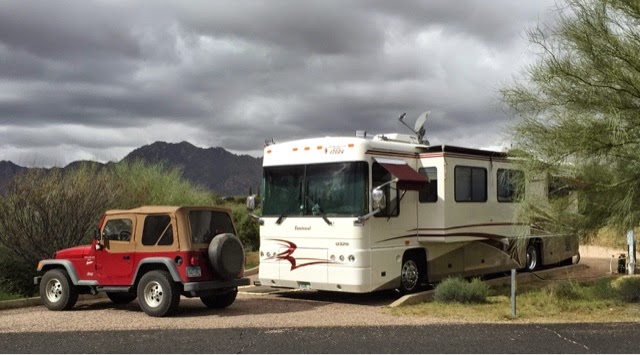
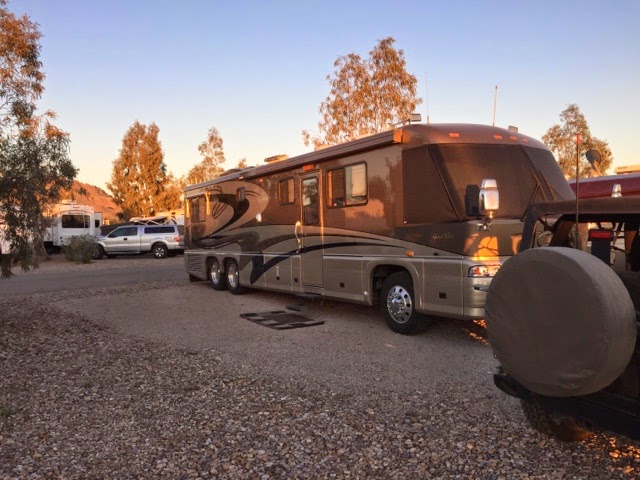
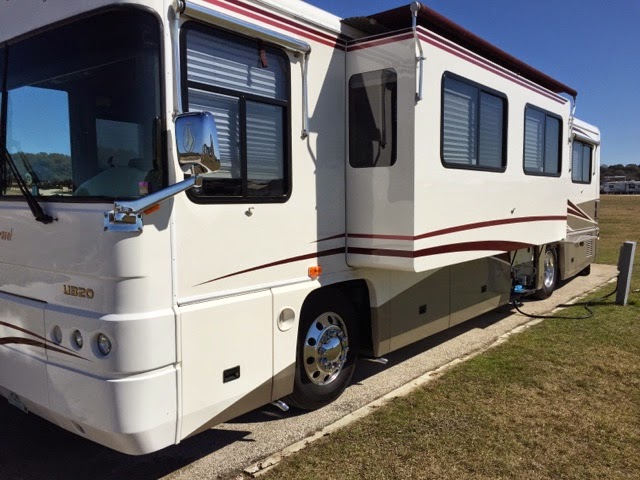
We stayed in a campground called Point of Rocks RV Park. It was right at the top of a rock mountain. This is a family owned campground. They have been here since 1978 and have kept it in good shape. It is always amazing to us that we can get the coach into these places. It is much more maneuverable than most folks would think.

Around the rocks.
Up a steep hill.

And there we are, high above Prescott.

And back in our cold weather gear.  A major storm was coming in from the west with lots of moisture. Significant snow was forecast for Sedona and 15-20″ for Flagstaff and the South Rim of the Grand Canyon.  

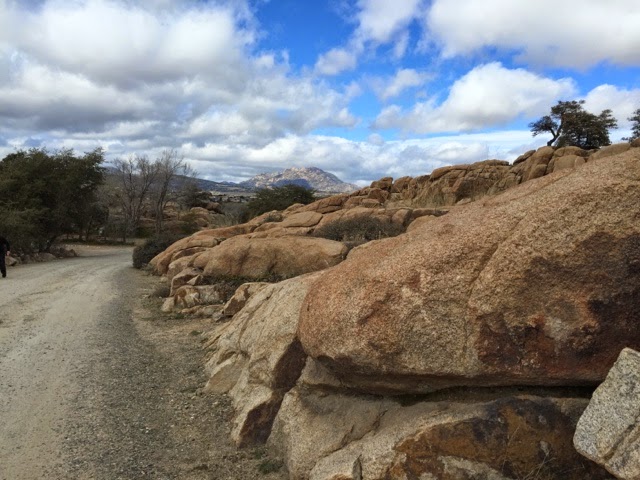
Big rocks, big views.

We met Judy and Bruce downtown and walked around the town square, in and out of just about every store and then over to a really nice spot for dinner. There was some pretty neat stores, some really boring stores and most were just stores.  I don’t do well ambling around in most stores. It doesn’t agree with my back. I can walk at a steady pace for several miles without any problem or work at Habitat all day. Maybe it is a head thing sending the wrong messages to my back. Misery likes company.

Dinner was great. Too much good food and then desert. It was nice to see Judy and Bruce. We will see them again this summer.

The next morning they headed to Sedona and the snow. We were going to go north and then west and then south to Parker.  There was snow up there.  So we went back south towards Phoenix and then west to Parker.  It was about 20 miles difference either way.  It was raining heading south and then west.  Better than snow. And in the 80’s in Parker.

Parker is on the Colorado River right across from California, about 30 miles down river from the Parker Dam which creates Lake Havasu.  

More later.  

Roger and Susan

The Heard Museum 2/26/2015

Everyone we asked said that we should go to the Heard Museum in Phoenix.  It is a museum of South West native American history and culture.  We had one day with Judy and Bruce.  We thought we might be able to get through the Heard Museum and then the Botanical Gardens.  We had heard that the Heard Museum wasn’t very large and wouldn’t take too long to see.  But we decided to go to the Heard and see how it went.  If there was time left at the end of the day maybe we could go for a walk in the desert near our campsite for our botanical hit.

We got there about 10.  There was a docent led tour of the non-permanent exhibits at 11 and a docent led tour of the permanent exhibits at 12.  We went on those.  There was way too much to see in these walk-by tours and way too much that wasn’t even mentioned.  So after a nice lunch we went back for more detail.
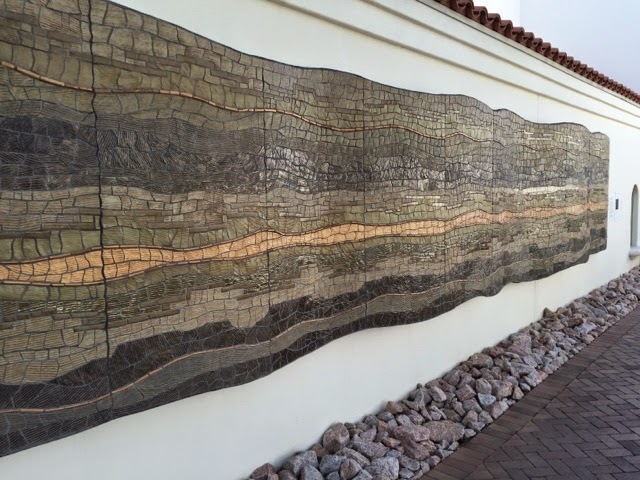
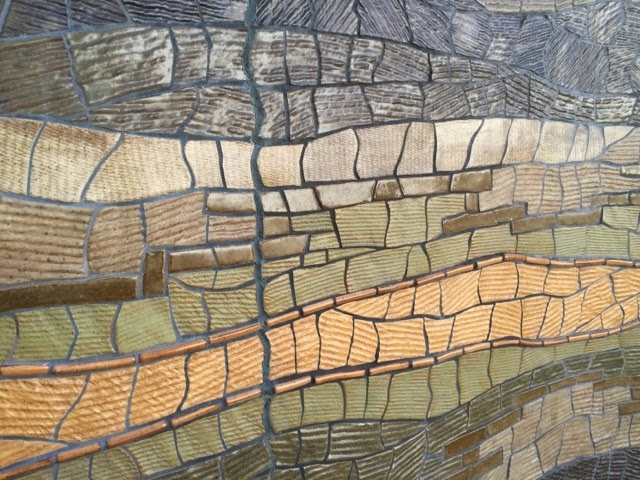
When we walked into the museum there was an undulating tile mosaic sculpture hanging on an outside wall.  It was about 5 ft tall and more than 20 ft long.  It was on a concrete backing about 3 inches thick and made in sections.
This kind of stuff just fascinates me.  All of the different colors and textures together make something quite visually stunning. It represents all of the layers in the earth we have seen in AZ.
There was a lot of very amazing sculpture inside too.
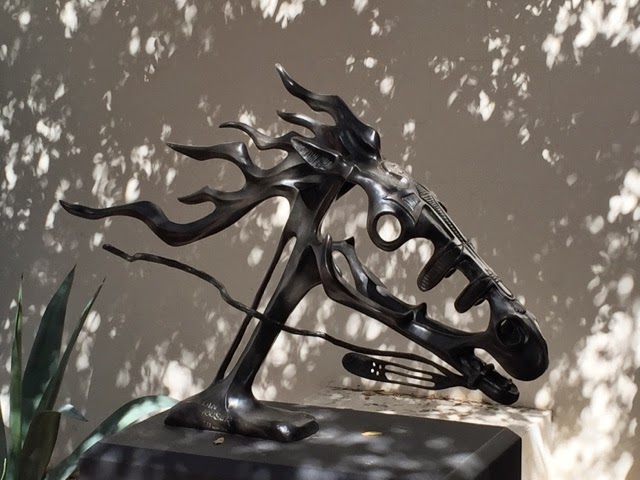
This horse head sculpture in front of a tan wall with dappled sunlight was very cool.  It looked like this for only a moment and then the light changed.
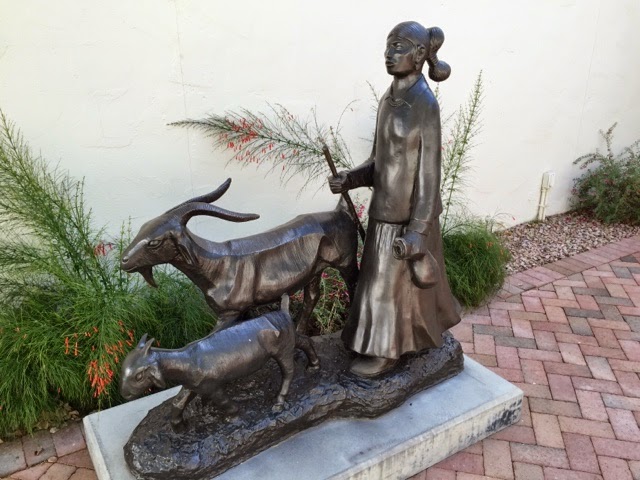
Simple lines with minimal detail show everyday life that was common to everyone.
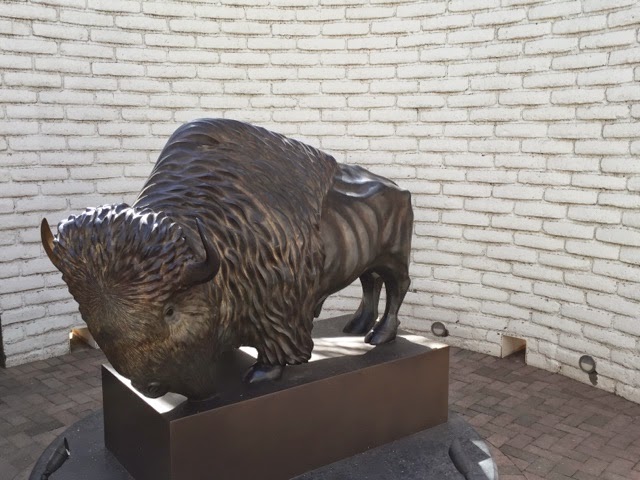
Buffalo played a big part in all aspects of life. This buffalo was an abstract, smooth polished bronze on the other side.
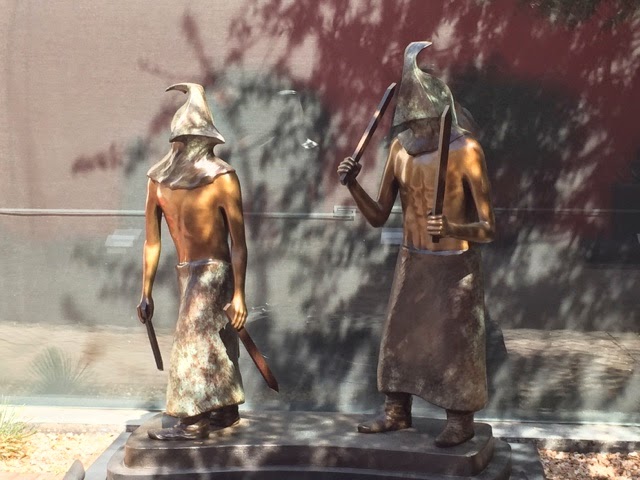
This depiction of two Apache Warriors was interesting in the use of patina on bronze to get the different colors. 
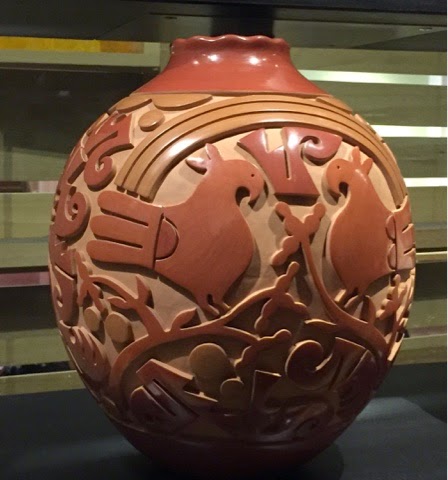
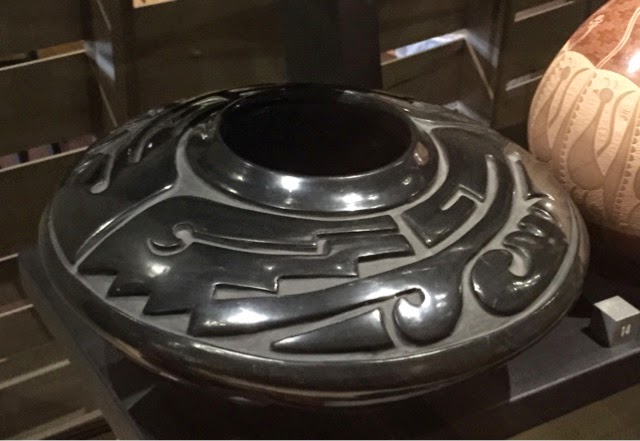
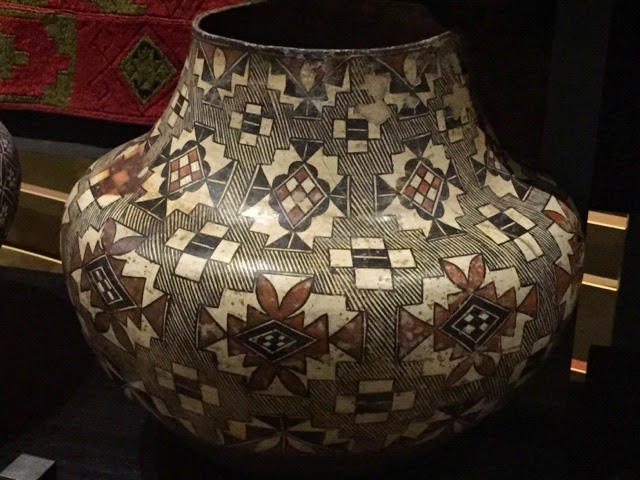
Pottery was not art a few hundred years ago, it was how the native americans stored water and food and carried seed and in the carving and decoration, preserved history through story.
Today it is an art form and there are celebrated artists from different families and pueblos. Beautiful.
Do you know what the story is here?  I don’t, but it must have been important to the story teller to have taken the time to tell it in this way.

After a long day of art, there was still enough energy left for smiles.  Aren’t they cute?

To my way of thinking there was enough at this museum for two full days.  
We went back to our campsite and went for a walk in the desert out to a big wash where yellow flowers were blooming.  We had a picnic supper outside as the sun was setting and then went into the coach for desert. I was under some intestinal distress from something I ate a day or two earlier. It was tough not feeling 100%.  It took another week for this to pass.
The next day Judy and Bruce went off to their conference and we set off for Prescott.  We would meet them there in two days for an afternoon and evening. Then they were off to Sedona and we would be heading for Parker on the Colorado River.
More later.
Roger and Susan 

McDowell Mountain Regional Park, 2/20/2015 – 2/27/2015

Phoenix is in Maricopa County.  The county has several regional parks, four have campgrounds. 

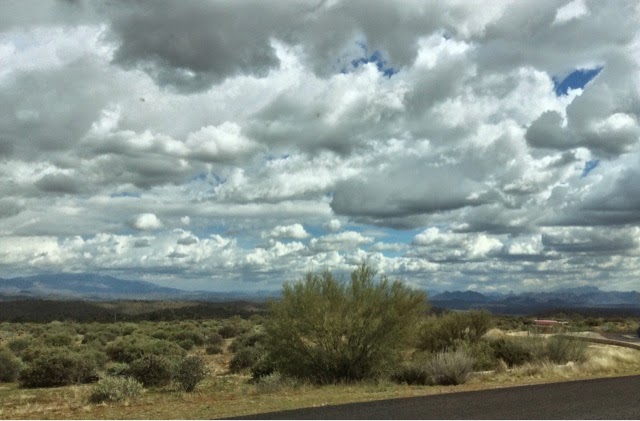
McDowell Mountain Regional Park is NE of Phoenix about 6 miles past Fountain Hills and has more than 22,000 acres of desert and mountain terrain to play in.  The campground is in a basin at about 2,000 ft elevation surrounded by mountains.  There was one day when we got some showers, a few days with big clouds rolling by and rain in the distance but mostly it was blue sky.  
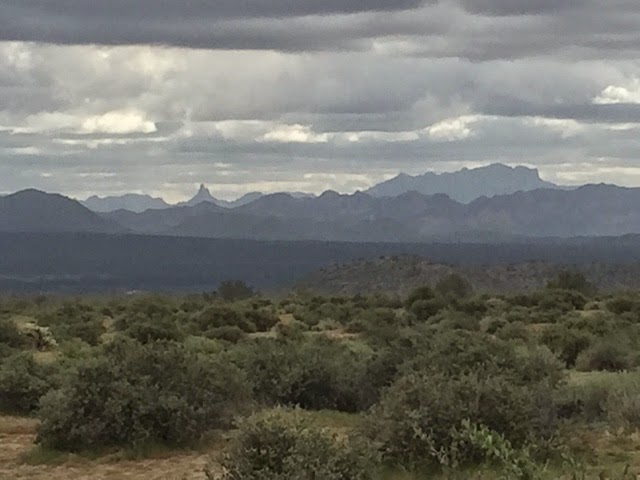
We had a really nice campsite looking out on Superstition Mountain.

That is Weaver’s Needle to the left and Superstition Mountain on the right with the sharp vertical face. The park has many miles of hiking trails, most can also be used with bikes.  Lots of fun riding through the desert on your bike.
Susan’s brother Frank and his wife Pattie have a home in Rio Verde about four miles further out from McDowell Mountain Park where they spend much of the winter.  So we got to go over their house, check out the neighborhood and go to dinner with them one day at the golf clubhouse.  Rio Verde is a senior community of nice homes around golf courses. There are no stores, no schools, no gas stations.  Everything they need is in Fountain Hills.  It is called Fountain Hills because they have a pond with a giant fountain in it that goes off once an hour.  We could see it from our camp site.  Somebody said it shoots higher than the Eiffel Tower.
We went off hiking in the desert with them one day to a recently discovered landslide that happened thousnds of years ago, probably before any humans were in this area.  The landslide was at least half of a granite mountain that slid down making a rubble field more than a mile long, nearly a half mile wide and several hundred feet thick.  After so much time had passed it looked pretty much like everything else until some geology student stubled on it and a light bulb went off.  
Sort of that Blues Brothers look.  The trail was just shy of two miles each way and plenty of up and down.  There were plants starting to bloom.

We came across a Gila Monster, a poisonous slow moving lizard.  This one was about 16″ lpng.

It is a good thing they aren’t too fast.  These are very slow metabolism desert dwellers.  They eat about three meals a year, each up to 1/2 their body weight.  The saliva of the Gila Monster has been found to be effective in helping to control type 2 diabetes.  The enzymes that make this happen have been isolated and are being synthesized to make drugs.

After our grueling hike 😉 we headed off to the Greasewood Flats Bar.  It is a cross between biker bar, cowbow bar, tourist destination and outdoor one man band venue.
You go into a building with money stapled to every surface to order, pay and get a number.  Some time later when your number is up (that sounds wrong) you go in another building and get your food.  It was pretty tastey.  
This place has been there forever but this spring is it’s final days.  The wrecking ball of progress is approaching to tear everything down to make way for lots more expensive homes.
Water is very scarce in this area.  Virtually no one has lawns, just desert gardens.  Scottsdale is a well to do suburb.  On the news the other night they reported that there were several thousand homes in Scottsdale with monthly water bills over $500. That seems like a lot to me, homes and money.
It was nice to see Frank and Pattie.  They have been after us to visit for several years and we finally made it.
My sister Judy and brother-in-law Bruce are coming to visit us on Wednesday the 25th.  Actually they are in Phoenix for a Lymphoma Conference on the 27th. So we get to see them for a day in Phoenix and then for another day up in Prescott.
More later.
Roger and Susan

Saguaro National Park

2/14 – 2/20/2015


A short way north of the Diamond J Campground through the Tucson Mountain Park is the western section of the Saguaro National Park.  We stopped there a couple days earlier to get maps and hiking suggestions. We had two places in mind, both off a 4WD unimproved road.  The first was an old mine trail that led up into the higher ground.  This trail then connected to a long cross country trail that followed the ridges by way of a long series of switchbacks.  We went as far as the switchbacks where the trail got significantly steeper and the sun was hot.


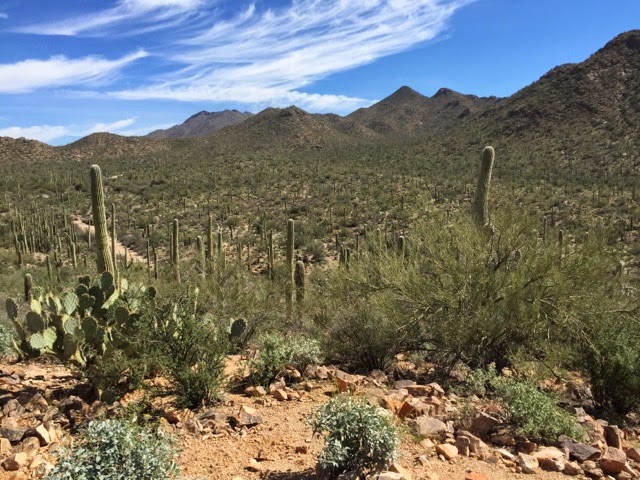
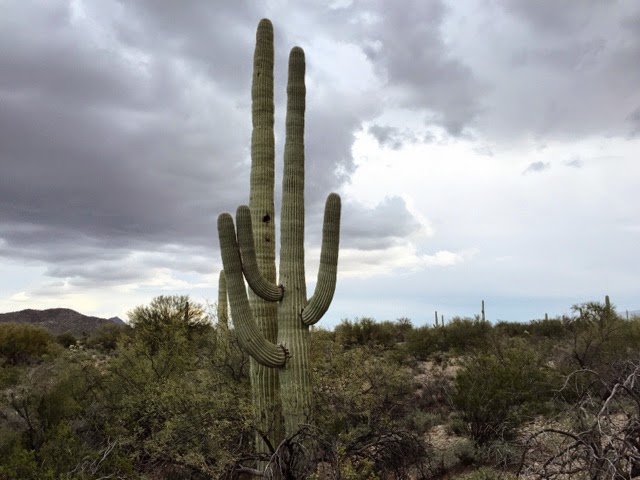
The saguaro are everywhere.  It is like a forest of them, I imagine they are as close together as the environment will support, maybe every 30-40 ft.  Pretty surprising in an arid landscape of sand, gravel and rock.  Something seems to be growing everyhere in between as well.  It may look bleak but a closer look and the desert is a vibrant growing community.  

Wa have spent a lot of time in the desert and have come to appreciate what it offers.  Coming from Minnesota it seems so stark but it is actually quite nice.
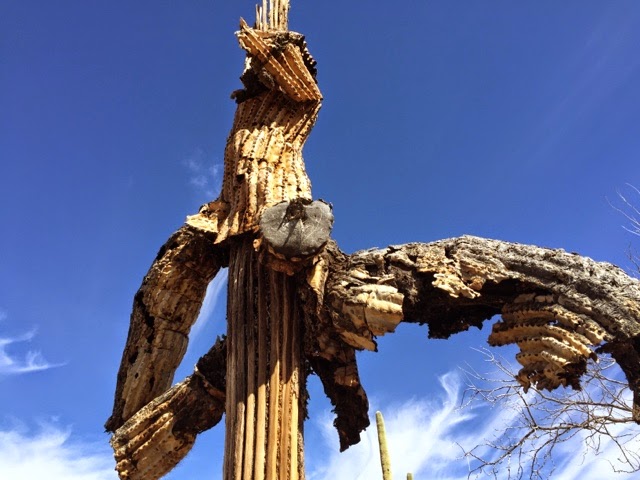
The saguaro can live for 150 years, get as tall as 70 ft although the largest one known today is about 45 ft, and more than 3 ft in diameter. They may or may not grow arms and many grow arms on arms.  Arms start to grow when the saguaro is about 75 years old.  More ends means more flowers which means more seeds which is how the saguaro propogate.
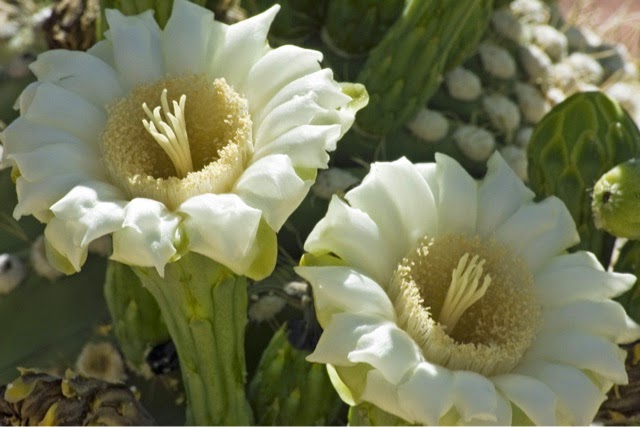
White flowers on the ends ot the arms and a red fruit below. Desert blooms are incredible.
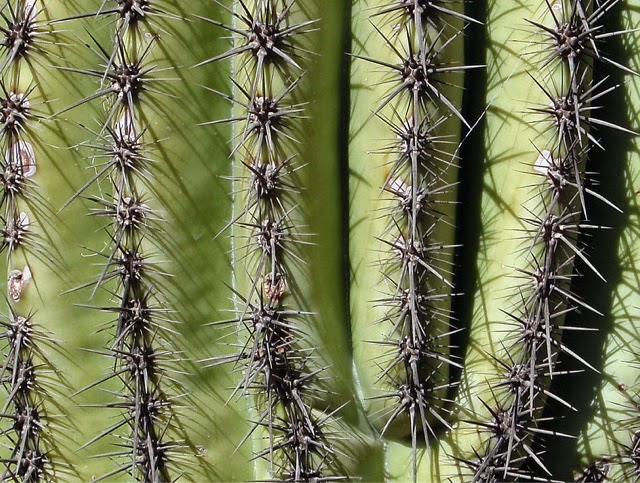
When it rains the saguaro sucks up as much water as possible and stores it in the green fleshy outer layer which is protected by sharp, stiff spines. The saguaro swell up as they absorb water.  The pleated outside layer makes that easier.
You might be wondering as I was, how these stand up. What keeps them from just falling over? 
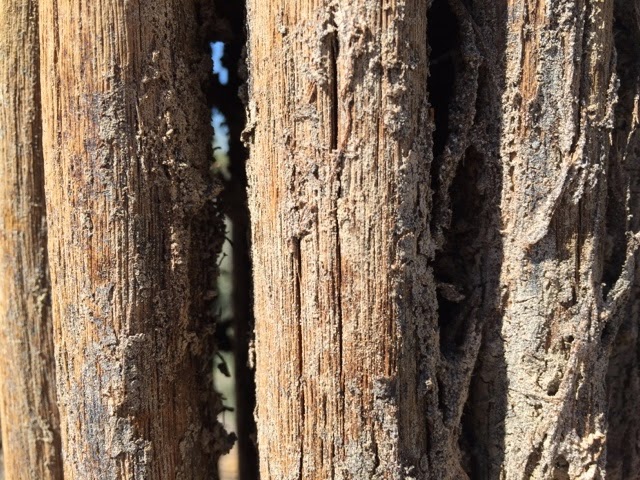
The inside of the saguaro is a bundle of wooden trunks connected by fiberous tissue. These trunks are an inch to and inch and a half in diameter and the bundle is most of the inside of the saguaro.
This one is dead and you can see the core where the fleshy outer layer has come off.

The cores are all interconnected but there is space between them.  The dead saguaro are collected and the wooden poles that make up the core are used for poles in roof structures and fences and just about everything that could use something like these.

The saguaro also provide nesting sites for a dozen or more species of birds.  Two bird species will peck a hole through the outer layer and make a nest.  When they are done the other species move in. Some saguaro had a dozen holes in them.
Probably more than you ever wanted to know about saguaro, right?   Learning about the plants and animals and the geology and natural history of the desert makes it just that much more interesting to us.
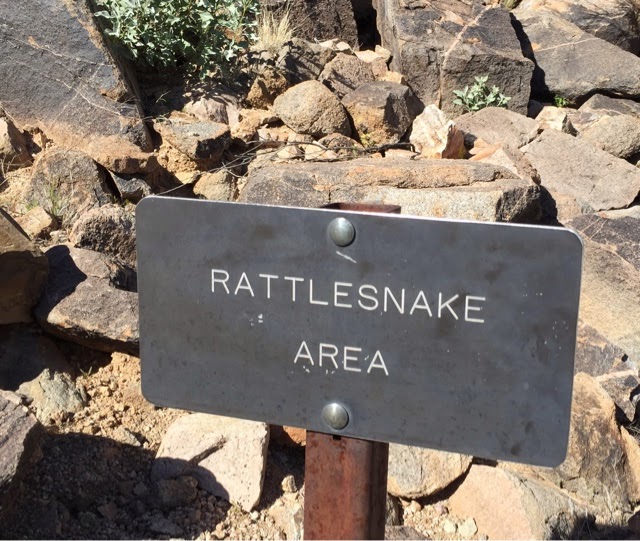
Our other destination was Signal Hill.  It is at the end of a half mile triail that was built by the CCC back in the 1930’s.  They want you to stay on the trail so they put up signs.

We didn’t see any which was OK but there are much smaller and even more dangerous scorpions out here.  Didn’t see any of those either except in displays at the visitor’s center. 


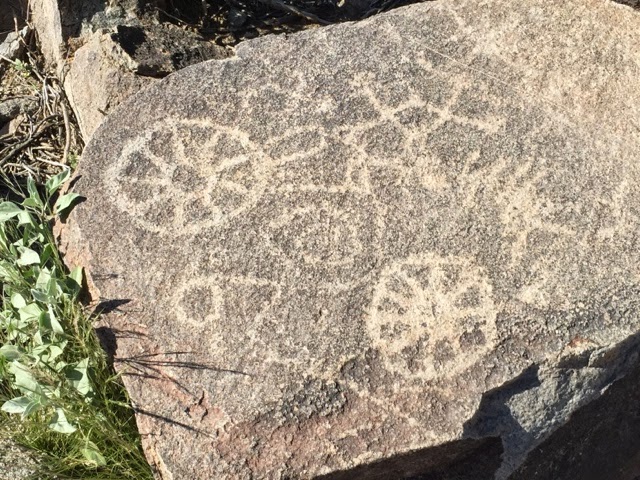
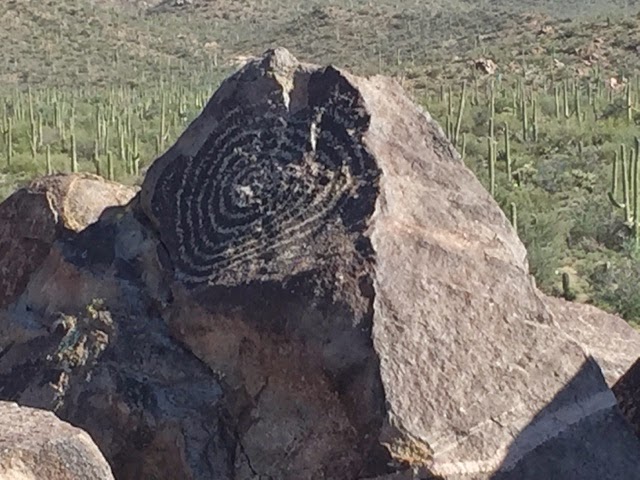
Signal Hill is a high hill that can be seen for a long way.  They probably built signal fires on it at one time.  The main attraction today is to see the petroglyphs left by the Hohokam people, who inhabited this area from 500 to 1100 A.D.   The blue sky is pretty blue as well.

These were scratched into the rock surface. It is really amazing that they survived this long and have not been vandalized 
The signs at the top of Signal Hill said that no one is sure why they are here or what they mean or what their significance is.  They were just interesting and reading about the people who were here long ago is good enough for us. The climate here was much milder and wetter than it is now.  Most of the early people of AZ and NM were here in the same time frame. Most left in the 1100-1400 time frame most likely due to climate change and competition for food and water.
We have been in the Tucson area for almost a week.  We have met some wonderful Foretravelers. We have been here just enough to sample a few things.  This seems like an area where we could come back and spend much more time.
Off to NE of Phoenix to McDowell Mountain Regional Park in the next day or two.
More later.
Roger and Susan.

Pima Air Museum, The Boneyard. Tucson, AZ

Davis-Monthan Airforce Base is located in the city limits of Tucson.  Of course out west city limits seem to extend 30 or 40 miles outside of what one would consider the end of town. Probably has to do with water.

It is desert here, higher altitude, about 2000 ft, dry, sunny, pleasant in the winter, really hot in the summer.  And the soil here is hard.  There is a name for it but it is just hard.  Hard enough that they can move aircraft around without any pavement and when it rains, the aircraft don’t sink.
Davis-Monthan Airforce Base is the home of the Airforce’s 355th Fighter Wing which flies A-10 Warthogs. It is also their primary pilot traing center for this aircraft.  The A-10 is a close ground support fighter plane.  It carries missles, bombs and it’s claim to fame, a 7 barrel Gattling gun like cannon which can fire 4,500 1-1/4″ depleted uranium cannon shells per minute.  They are particularly effective at blowing up tanks and they have earned the nickname Tank Busters.
They are very tough aircrft and are a welcome sight to troops when they need one.
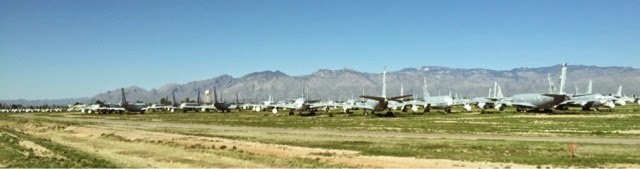
The other function at the D-M Airforce Base is the 309th Aerospace Maintenance and Regeneragtion Group (AMARG) usually called the Boneyard. This is the primary storage, rehab, reclamation and disposal facitlity for all of the US Armed Services as well as many foreign counties.  This is where that hard dirt comes into play.  There are about 3,800 aircraft of every type here.  They have four storage classes from Ready-to-Fly on very short notice, to Ready-to-Fly in a month or so, to never going to fly again but good for parts and no useful parts left, waiting for disposal.

The first two types are prepared for storage and all openings are covered with a spray on latex mask to keep out sun, water, dust, bugs and everything else.  The very short notice ready to fly means a matter of days.  Storage fluids are flushed and refilled with whatever needs to be there, electronics are energized and tested, the covers are removed and the planes are tested and certified for flight.

There are only three Airforce officers that work there.  Everyone of the 550 other folks are civilian contractors.  Orders come from all over for this part or another and if they aren’t already in inventory they go out and take one off a waiting airplane, crate it up and ahip it out.  When the planes are ready for disposal they are sold as scrap at auction.  Then the airplanes are cut up and run through a shredder and pieces not bigger than a dollar bill are loaded into containers for the scrap buyer to haul away.  When they are done there is nothing left.  More planes fly in.

For every dollar of expenditure that all of this operation costs, the US government gets $11 in revenue back.  But of course we paid hundreds of billions of dollars for the aircraft sittimg there when they were new.

To see the boneyard you have to go to the Pima Air Museum and buy a ticket for the Boneyard Bus Tour.  The Pima Air Museum has one or more of just about every aircraft used by the US after WWII and many from WWII.  The WWII aircraft are stored inside. Most of the post WWII aircrafts are outside, there are hundreds of them.  A tram tour lasting about 75 minutes takes you around to see most of them. And then you can walk back to see them close up.
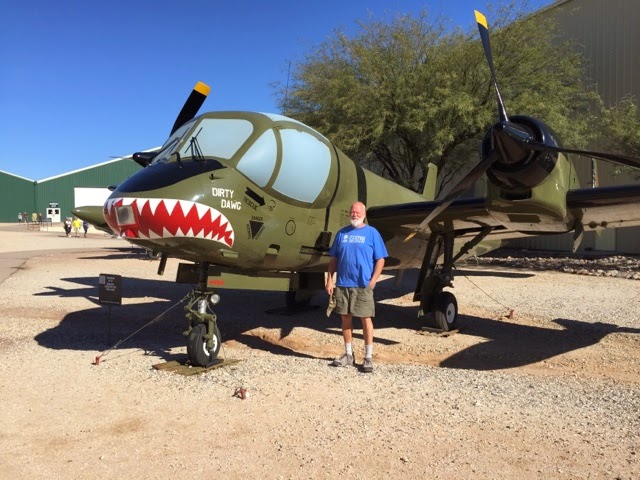
This Army observation plane is a Grumman OV-1C Mohawk used from 1953-1996.  I liked the way it looked, big bug eye windows.  It was probably expensive to fly and maintain but it would make quite a statement as a privately owned plane.  I have never seen one at Oshkosh.
 
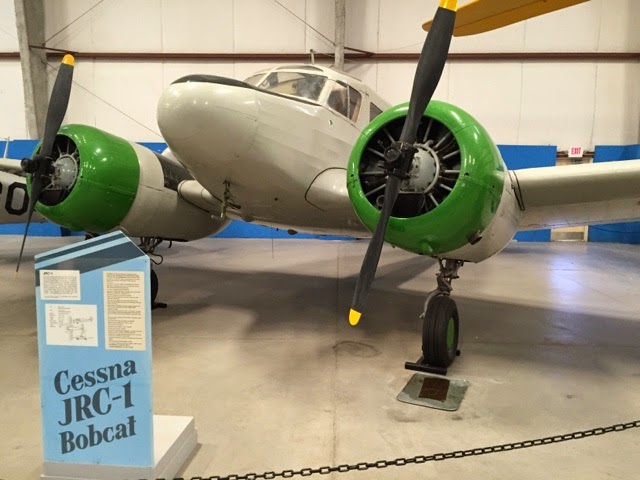
This is another plane we don’t see very often. Out of the clear blue of the western sky comes Sky King in his Cessna Bobcat.  Some of you might remember this was the plane flown by Sky King and Penny in the first 40 of that shows 72 episodes. These were also known as the Bamboo Bomber.  Probably because they were made with wooden framing.  Sky King’s plane was retired when wood rot was discovered.

There were many planes here including an SR71 Blackbird spy plane, the Airforce 1 plane used by LBJ and a Constellation used by Eisenhower.  There was a smaller private jet also used by LBJ and Lady Bird to fly to the short runway at their ranch.  LBJ called it Air Force 1/2. There were all types of helicopters, old tankers, every type of B-52 bombers and all of its predecessors.  We have been to many aircraft museums and beyond the number of planes here the number of different types of planes that we have never seen anywhere else was exceptional.


The bus trip trhough the Boneyard was interesting but everything was over there as the bus went by. Lots of planes, row after row.  Many half disassembled.  Pretty odd to see an airplane missing one wing propped up a wooden structure.  Or a missing landing gear or a missing rudder.

There is another commercial aircraft boneyard north of Tucson where big white older passenger jets are lined up for miles.


So, that’s enough for this post.  Internet access where we are is better in the morning, worse in the afternoon and usually pretty slow.

More later.

Roger and Susan

Tucson

We got to the Diamond J RV park after hours so we stayed in the dry camp area (no hookups) overnight.  We weren’t there more than 5 minutes when a guy on a three wheeled tricycle-like bike with a hand crank mechanism for propelling it showed up.  He was over a couple rows with his Foretravel coach, a 40′, 2000, single slide. His name was Frank and his wife’s name was Susan and they were full timing with a home base in Maine.  One row away was a 1992 Foretravel GranVilla that had been restored at the factory including a full body paint job in 2009.  They were Kent and Peggy mostly full timing from Oklahoma.


The park office opened on Sunday morning about 11 AM so we checked in and moved to a new spot about four down the row from Kent and Peggy.  This campground is on the SW outskirts of the Tucson area. There is a ridge of mountains between where we were and Tucson proper so we were away from the city lights, traffic and other distractions.  The park backs uo to the Tucson County Mountain Park.  The park has its own campground and many miles of trails that are open to hikers and bikers and some to horseback.

This area is where the Saguaro cactus grows.  In many areas they are like a forest. They are big things, some 20-24″ in diameter and 20′ or more tall.  I’ve never quite figured out why they have arms the way they do.  Some have one. Some have many. Some have arms on arms. I suppose it is like why trees have branches the way they do. Don’t over think it or your head will hurt.
So off we went hiking and biking on the trails.  Our maps were pretty minimal so it was good that there were a few trail signs, mostly painted on small rocks near intersections.
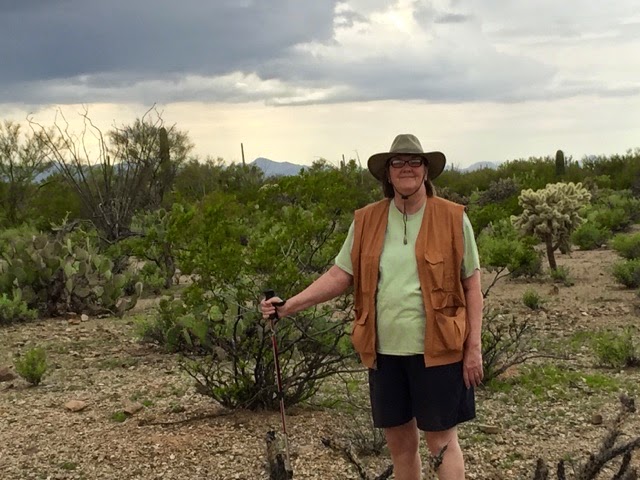
Susan brought her trusty hiking pole which would double as a snake defense tool or for fighting off the javelinas. Thankfully we saw no snakes here, but rabbits and birds.  Javelinas were seen elsewhere. It was late in the day, the clouds were gathering, we could see rain in the distance and felt a few drops ourselves on the way pack to the campground.
Clouds make sunsets more spectacular and every night we were there as the sun went down it was pretty amazing.
The next day we were heading for the Arizona-Sonoran Desert Museum.  This museum is inside the Tucson County Mountain Park only six miles or so from our campground.  A couple miles beyond that is the Saguaro National Park where we stopped first for a trip to the Visitor’s Center to pick up maps, a recommendation for hiking and a stroll through the nearby cactii gardens where everything was labeled. And then back to the Desert Museum.

The Desert Museum is a combination of zoo and museum.  There was several exhibits about geology and the history of the people in the area.  There was a large aquarium, a hummingbird walk through aviary, a walk through butterfly enclosure, several eating spots, long walks through plants of the desert, a cave to go through which highlighted the geological and natural history of the many caves in the area.  And finally there were animal enclosures that showed many of the animals, snakes, tortoises, scorpions and birds found in the desert.

There was a Mexican gray wolf, mountain lions, a bobcat and more.

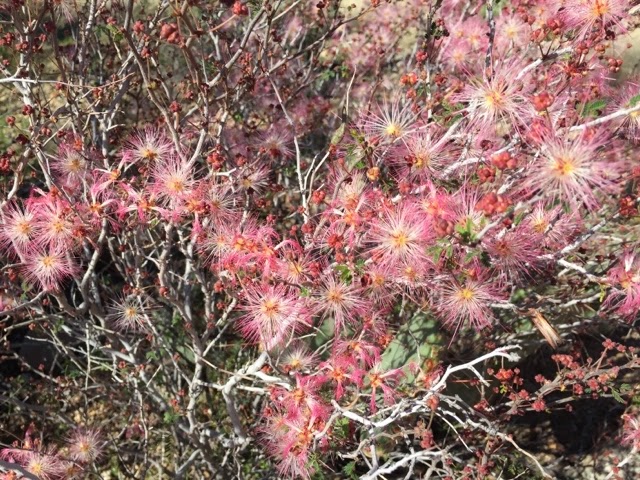
When the desert begins bloomomg it is spectacular. Everything blooms with flowers.  These were very delicate looking flowers on a very tough thorny bush.

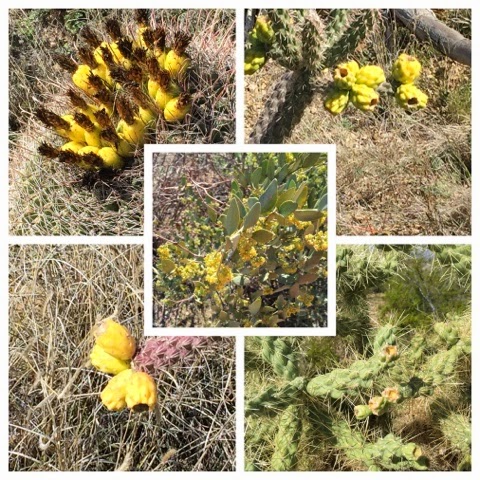
Yellow flowers seemed common.  The saguaro get white flowers on the ends of thier arms and have a red fleshy fruit that is harvested to make wine and jams by the local native american tribal people.

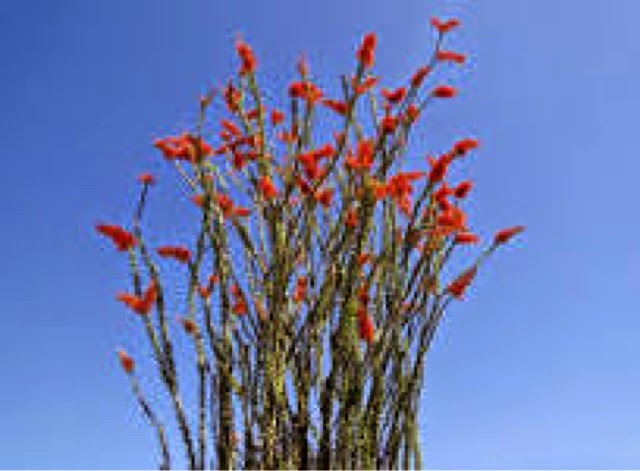
Ocotillio are tall and slender with small leaves and big thorns.  They have red flowers in the tips of the stalk when they bloom.  

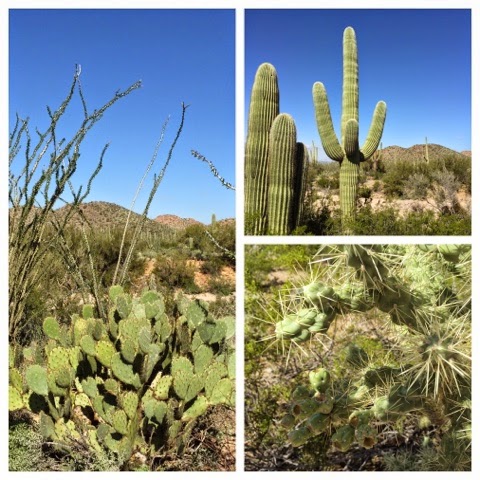
Then there are the flat prickly pear cactus and in the bottom right a very interesting cactus whose new growth looks like fruit but the older growth has very sharp barbed spines.  Pieces break off to start new plants.  They are called jumping cactus because they seem to jump at you and embed themselves into your fingers.  At least that is what happened to me.  It took 10 minutes to get the small piece off of me and pull all of the quills out.  I had to use a pliers.

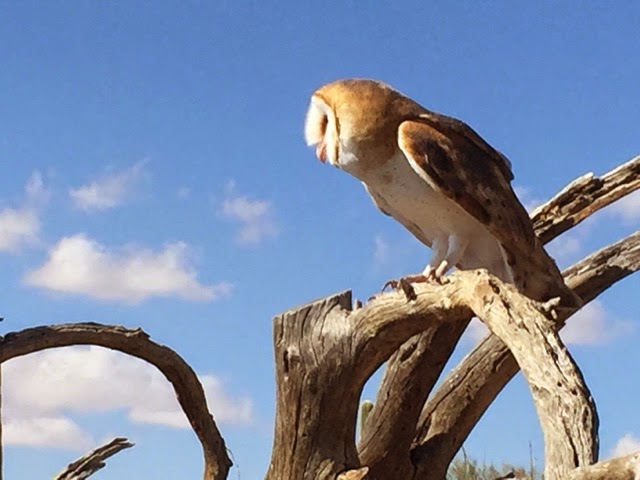
They had a bird display where desert birds were shown close up.
Barn owls live almost everywhere, even in the desert.  And there were hawks as well.

The birds flew very close to us, almost skimming our hair.

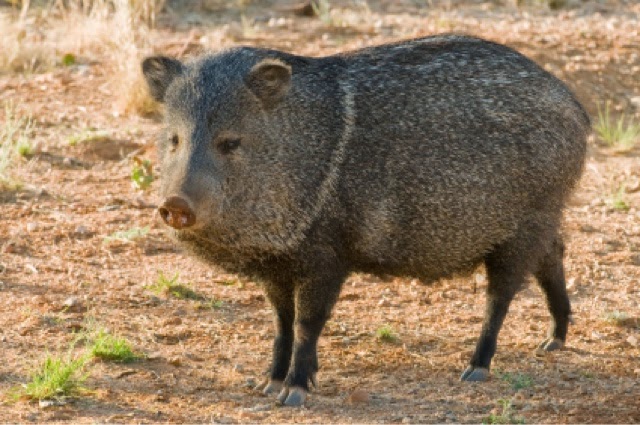
We went to the Desert Museum with Kent and Peggy, Ken and Dori and Carol, all Foretravel owners.  After we went to Carol and her husband Jeff’s house for cool drinks.  There we saw coyotes and Javelinas up close. Javelinas look sort of like pigs but they are peccaries. They have big sharp tusks and travel in groups and can be pretty aggressive.  They are pretty good size and stink.
When we got back to the Diamond J there was a new neighbor.

It was a 2003, 40′ GranVilla.  It is unique because it is the only one ever built with a tag axle (second rear axle) and it is the last one ever built. It belonged to Ed from California who drove over to see his friend who was there in a SOB (some other brand).

The next day we were off to the Davis Monthan Airforce Base where there is a museum of old planes and the BoneYard where all of the US services and many from other countries store old planes, lots of old planes.  Susan went with, bless her heart for putting up with another airplane museum.
More later.
Roger and Susan


Demming, NM

I have to apologize for being tardy getting blog posts done.  We seem to have been very busy.  That is usually a good thing.

Deming, NM
Deming looks like a very sleepy town, not much going on.  There was a row of RV parks on the way into town.  They were mostly for folks there for the winter or in many cases the rest of their lives.  Lots of older trailers pretty well planted for the duration.  We stopped at the Sunrise RV park.  Sunset would have described it better.  A grizzled old man was in the office/hut wher he lived. He didn’t want us to fill out a form, he didn’t need our name or what we were driving or where we were from.  It was $17 so we paid cash and got a hand written receipt.  He showed us where our site was and we drove in.  There was an old lady with a barking dog next to us in a house paint decorated trailer that hadn’t moved in years.  
We went down to the WalMart to get some groceries.  It seemed like a big WaMart for the size of the town.  We then drove down what looked like the main street past several car parts places and repair shops. Probably a good business in a small, older rural town.  There was a movie theater, a few restraunts, some churches and a sign pointing to ‘<-Museum'.  We drove down that way a couple blocks and found the museum.  It looked like a large old church at first glance but didn't  have a bell tower or anything like that.  The sign said it was closed but it would reopen the next morning at 9.  So we thought we could get up and return for a quick visit in the morning before moving on toward Tucson.
This is the Luna County historical museum.  It is in what used to be an armory from about WWI. It was expanded and made into a USO facility during WWII. We seemed to recall from something on PBS that Deming was a stop on the E-W railroad and that during WWII the USO people would come out and give the troops on the train sandwiches and things through the windows because they didn’t have time to get off.  We also seemed to recall a program about the Harvey Hotels and the Harvey girls.  And both were there in Deming.
A couple of chatty senior citizens greeted us, gave us a map of the museum and the five minute chin wag about the how and why.  This is a museum run entirely by volunteers.  It gets no money from the city or the county.  These two were from elsewhere visiting for the winter and busy volunteering.  Deming was a ranching and mining center back in the later 1800’s.  Big ranches, big mines for minerals, little mines looking for gold and such.  It had an Army Fort here.  During WWII it was a training center for bombardiers. All of that is long gone.  Today it is a small town servicing the needs of the the folks who live here, winter here and work on the ranches in the area. It is also a big rock hound area. There are lots of rocks to choose from. 
Susan remembers coming down to Deming with her family in about 1958.  They drove from Duluth, Charlie and Gerry, Frank, Myra, Susan and little Nancy all in their red and white Ford station wagon all the way to  Deming, NM to the Spanish Stirrup Ranch owned by the May family for a working ranch experience. They went on horse back rides, ranch things, kid things.  They stayed in rooms in the big ranch house and ate with the family.  It wasn’t really a dude ranch experience.  They were just there at a working ranch to participate as much or little as they wanted to. The ranch is still there.  Thet have a rock shop now.  Mrs. May was active in the Museum and donated many things to it.  She died in 2010.
The museum is huge! There was a big room full of Old Timers Club memorabilia.  This was a club of familys who had been there for a long time, many since the mid 1800’s.  Lots of pictures from the 50’s when they had picnics and a parade and those long panorama pictures of all the Old Timers.
There was a whole room devoted to dolls.  They had more than 1000 dolls from old 1800’s German dolls to Raggedy Anns.  No Barbies, nothing much past the 50’s.

There was also more tha 1000 decorative whiskey bottles.  Some of these made up complete chess sets. Cars, birds, horses, knights.  I seem to remember a couple of these my folks had.  Someone down here was a serious collector/drinker.

There was an extensive collection of very old pottery made by the Membres Indians all before about 1100 AD.  Those people are long gone but they buried their dead with pottery.  Most of the pottery was broken over time and then dug up and reassembled for display. Most of this activity came before WWII when archeological preservation was not well practiced.  So where much of the pottery was found, how the graves were arranged, what artifacts were included was not recorded.  
There were lots of ancient indian tools, beads, jewelery, arrow and spear points too.  No baskets, clothing or anything else like that.  At that time the Indians of the SW traveled long distances to trade with other groups. The shells used for decorative jewelery probably came from the Sea of Cortez in Mexico.
The folks that lived in Deming in the early 20th century were pretty well off. Business must have been good.  There was an extensive collection of very fancy clothes, dresses and men’s formal wear.  They all looked very warm for the desert climate. 
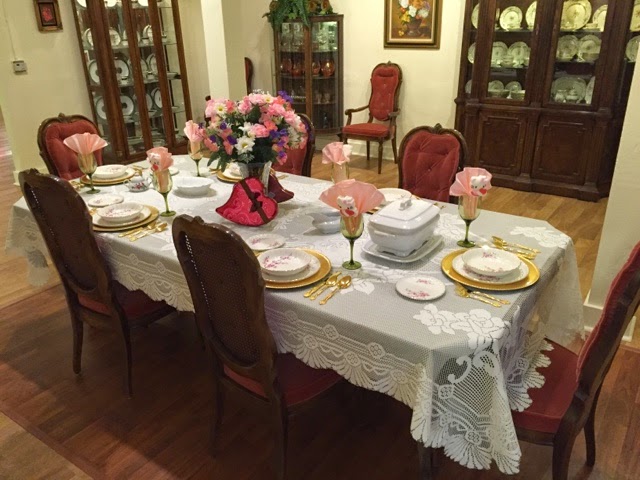
One big room has a very formal dining room set up for Valentines Day complete with a lace table cloth, gold rimmed plates and gold tableware.  There were cabinets all around with collections of dishes and silver.  All of these were quite stunning as was the furniture.  There was money here at one time.
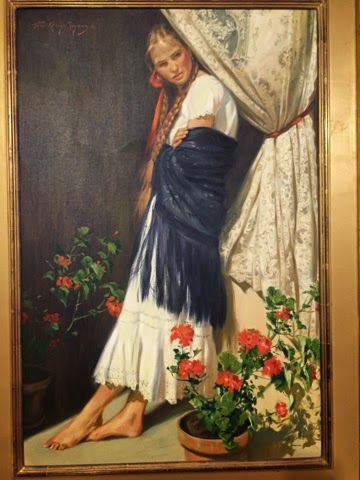
There was lots of art too.  This painting really caught my eye. It was about four feet tall and very captivating to look at. The artist is well known but i found no prints of this painting.
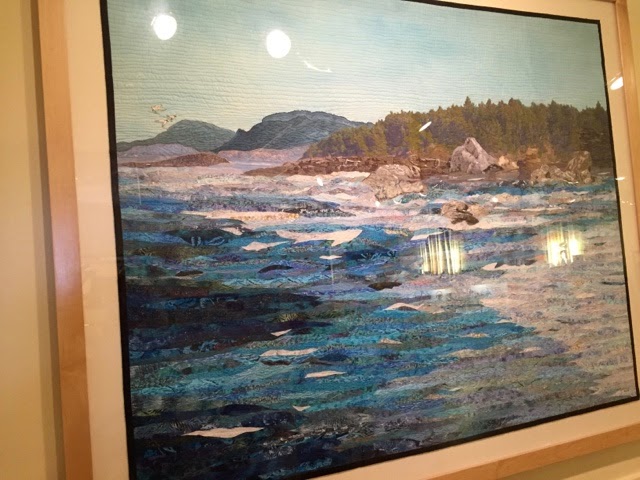
And quilts.  This one was made on thousands of small pieces of fabric, almost like painting.  It was behind glass, hard to get a good picture.

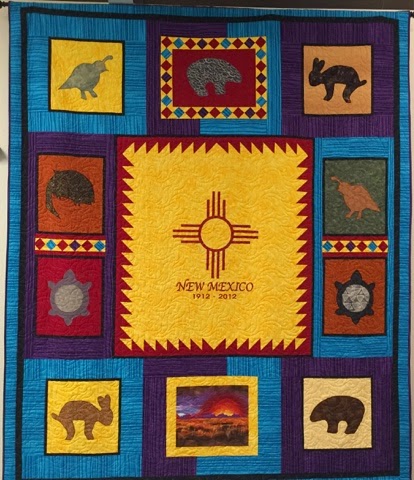
And a nice NM quilt.

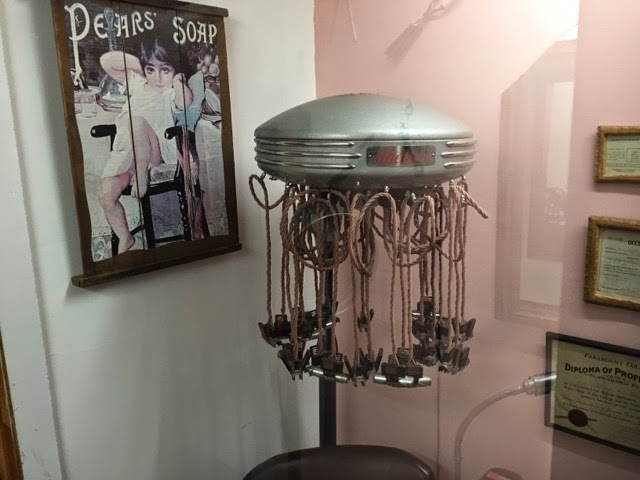
They had saved Main Street as well.  The Doctor’s office, the Dentists office, the barber shop, the pharmacy, a saddle shop (that had a saddle from the Spanish Stirrup Ranch) and many more store fronts.  Imagine getting your hair curled with this.
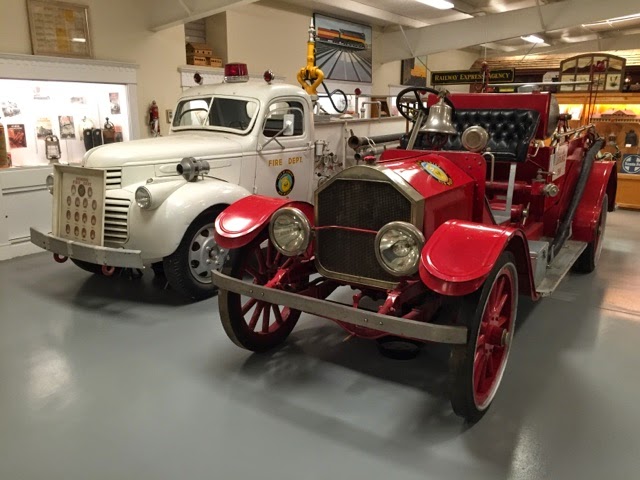
The fire department was there.
Even the Soap Box Derby racers.

And lots more RR stuff.

There was a large WWII exhibit dedicated to the men from Luna County who went to war.   Before WWII there was a large Army Coastal Guard reserve unit in the county.  Almost all the men were part of it.  In 1940 before the US entered the War, the reserve unit was activated and sent to the Philippines.  They were all there, almost 1800 men, all from the Deming area at the time of Pearl Harbor.  At the same time the Japanese Army and Navy invaded the Philippines.  These men were captured at the battle of Corregidor.  More than 900 died on the Battan Death March and subsequent imprisonment. Pretty tough on the local community.
There were other memorials to all of the service men and women in the different conflicts.  
So after about three hours we were due to head to Tucson, four hours estimated , five and a half as we did it.  We came into Tucson from the south, down hill most of the way with a tail wind.  A good fuel milege day. We were heading for Dustin’s Diamond J RV park on the SW part of the Tucson area.

We were leaving the very bleak West Texas and southern NM desert and heading into more brush, a bit greener landscape and saguaro cactus.
All is well here.
More later, actually sooner I hope.
Roger and Susan
New Braunfels, Texas Hill County

We left Nacogdoches heading west towards Arizona. Texas is very big.  I am told it is almost 800 miles from NAC to the western border in a straight line but there are no straight line roads.  Se we set off thinking it would be nice to stop in the Texas Hill Country to see what this area was all about.  Other folks from NAC were going to be on the Guadalupe River north of New Braunfels so we figured that sounded good. We were a day ahead if ourselves so we looked at options and there is a Corps of Engineering campground about 15 miles from where we were going to end up so we went there.

Another great COE campground, good electrical hookups, right on a lake.  The coach looked nice in the sun.  Potter’s Creek Campground on Canyon Lake.  There were actually four COE campgrounds on the Canyon Lake Reservoir.
 
The Canyon Lake reservoir controls the flow of the Guadalupe River.  This is the most popular tubing and rafting river in the area.  Folks were telling us that it is just packed in the summer.  But now it was very quiet.

The Lazy L&L campground is on a big turn in the river.  The family that owns the campground owns thousands of acres of ranch land and several miles of river frontage.  All of the river frontage is privately owned.  There are summer cabins that run from very modest to big “Southfork” like estates. Nothing in the way of zoning controls.

There really are very big hills in the Hill Country.  This area was ancient sea bed upthrust by tectonic plate action millions of years ago. It is a fairly large area of hills, at least half the size of Minnesota.  Since this area is only 20 miles from New Braunfels and maybe only 50 from San Antonio it is a very popular vacation destination.  The RV campsite at the Lazy L$L are all along the river.  There are some tent sites as well.  In the summer this entire field is said to be filled with some 500 tents on a busy tubing weekend.  This campground also has huge covered dance hall with live music on the weekends just to attract more people.

There only a single winding two lane road into this area.  It took us about a half hour to get to a big grocery store near New Braunfels.  That has to be a couple hours in the summer.
The folks we met there we intereting.  Several of them come here every year in February.  The same bunch (Susan calls them “Pods”) goes to Fredricksburg, TX in April when the flowers re blooming and to the mountains in NE New Mexico in the summer for 6-8 weeks when it is very hot in Texas.  It is a very social group.  A big coffee pot is on early and the menfolk gather for coffee early.  Many of them go shopping or to the store and then out for lunch almost every day. Late afternoon the lawn chairs are  gathered and circled, usually twenty or more, for a social hour.  One night when we were there  and someone ws leaving the next day they decided to have a pot luck upper. There were more than 40 people there and as is always the case, way too much food.
It was nice to get together with these folks. We are a bit more “doing-our-own-thing” types so this was at the edges of our experience.  But everywhere we have been on this trip we are running into very nice friendly people.

I came across this old bath tub.  I am pretty sure that was what it is.  Looks a bit nautical at this end. The other was round and sloped.  It was about 14 inches wide at the narrow end and about 4-1/2′ long.  It was tapered toward the other end but not that much wider.  A hundred years ago most people were much smaller than they are today.

After our stay in the Hlill Country it was time to continue west.  There are three routes across Texas.  The very southern route follows state and US highways. Two years ago when we came up from Big Bend we went that way.  It is bleak, dry, empty route.  Very long.  The other two,are in I10 through San Antonio ot I20 through Dallas.  The I20 route goes through Midland and Odessa where the oil fields ar busy, road constuction goes on for endless miles and traffic levels are high.  The I10 route was our choice.  From New Braunfels it takes two days to get to the other side of Texas. All three routes end up at El Paso.
The I10 choice leads through Fort Stockton for an overnight and then on towards El Paso.  It is a long boring drive but way better then the more southern route.

It was hilly for a while and then the wide open, very sparse West Texas view.  Some distant hills.  The on/off ramps are 20-50 miles apart.  There are no fences in most places along the sides of the interstate so where ever an on ramp or exit or cross over was needed the ranchers just made one of their own.  We could see cattle occasionally but not many.  An occasional oil well. Not much going on except traffice going by.

Our second day across Texas went through about 15 miles of stop and go construction in El Paso and then on to Demming, NM.  A very interesting stop.
More later.
Roger and Susan

Done in NAC

Five weeks after leaving Hastings we are finally leaving Nacogdoches.  It has been a long visit but much has been done.

The last stop was three days at the detail shop.  One guy worked on our coach from 7:30 each morning until about 5 on Thursday and Friday.  He started at 7:30 on Saturday and finished up about 4 in the afternoon.
All the detail, pretty amazing.  They even clened the insides of all of the bay doors, painted the insides of the wheelwell, shined the wheels and shined up the tires.  Very nice work.  So we went back to Camp Foretravel.  We had a dinner date with three other Foretravel owners, all full timers.
The Millers have been at Xtreme for more than two months and more to go. They are a nice older couple, we guessed in the their 80’s. They have been on the road for 11 years.
 

Doug and Amanda. Almost 2 years into it.

John and Kathy in their now to them Foretravel, ready to hit the road for day one.

Susan and Roger off towards New Braunfels.

My cute weather girl!
And over to Canyon Lake Corps of Engineering Campground.  On the lake, 50 amp hookups, water, $13/night.
We are going to be at the Lazy L&L campground for three nights.  We know some other folks here. Just a few days to decompresss after a month in NAC.
And then towards AZ.
Roger and Susan

Done at Xtreme

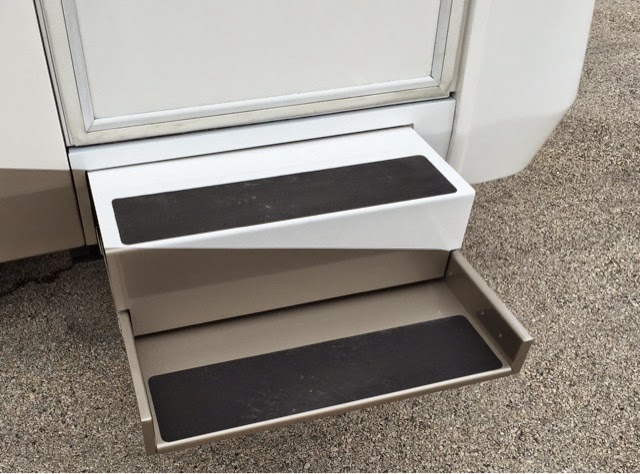
We finally finished at Xtreme this morning.  Three weeks and two days. Everything was done last night but they wanted to wait until this morning to reinstall the painted steps and the backup lights to give the new paint a bit more cure time.


So when all was done, the coach washed, money changed hands, hands were shaken we left and went to Motorhomes of Texas to get our slide adjusted. The factory service center was not too promising about sneaking us in so I checked over at MOT and they said they could get us in this AM.  So 1 hr and 40 min after we arrived we were ready to depart with an adjusted slide.  Happy campers.  So we moved to Camp Foretravel for the night (take on water and make a waste deposit),  There are about a dozen coaches here today.
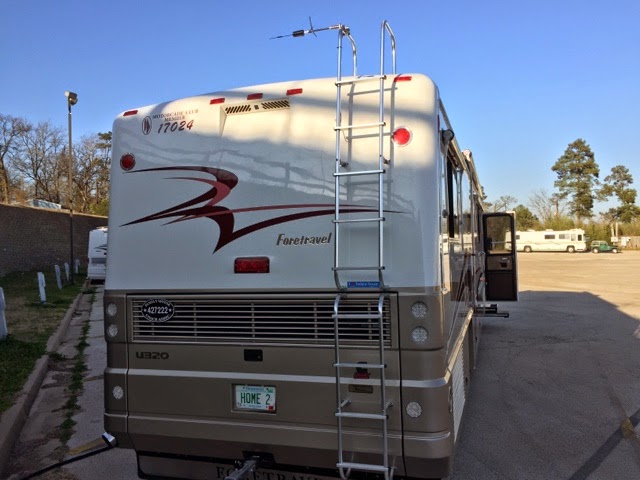
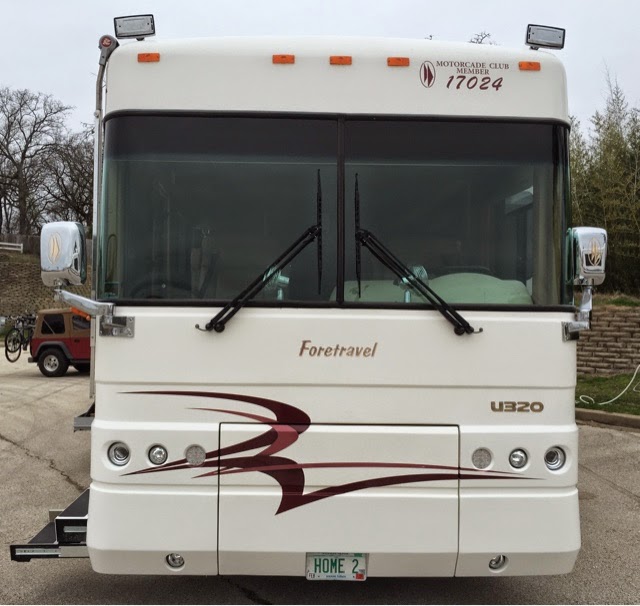
New peepers.  Nice and bright!
And steps.

And a bright tail.

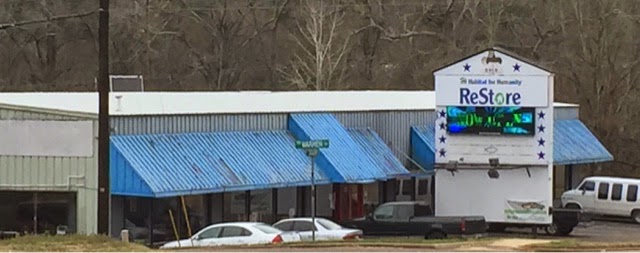
We saw a HFH ReStore in town.  I checked with the local affiliate and unfortunately they are not building anything right now o no hammer time.

Tonight we are having dinner with John and Kathy who have sold their home, bought a motorhome, the first one they have had, sold their cars and are buying another car suitable for towing and are setting off as recently retired full timers.  Dough and Amanda, also full timers are joining us as well.  We are going to Auntie Pasta’s, a great Italian place that we tried last week and wanted to go back.

Tomorrow AM we move to the detail shop for the full beauty spa treatment.  I should probably get the Jeep spiffed up too, or not.
We will actually start heading West on Sunday, about 200 miles to the Texas Hill Country.
More later,
Roger and Susan